Why grow Jaune du Doubs?
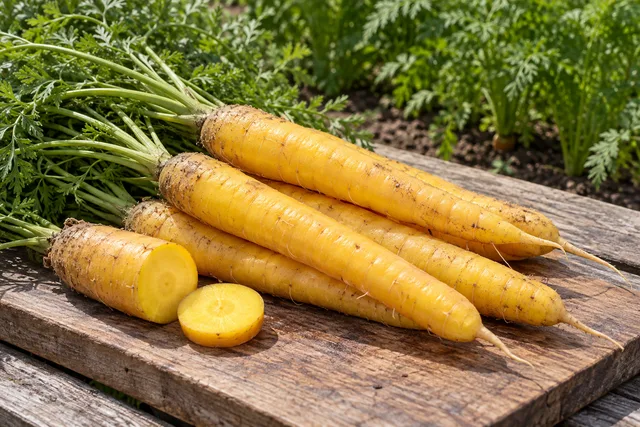
Yellow storage carrot with a rounded tip.
Choose this variety for yellow winter carrots and storage use. Give some room to grow and harvest a few young roots to compare kitchen character.
How this choice tastes
The supplier describes Jaune du Doubs as sweet and mild. The yellow colour mainly adds harvest variety; no fixed difference in sugar content has been measured.
From harvest to kitchen
Slice yellow carrots for raw salads or cut into thick sticks for roasting. Combine with orange carrot to show the colour difference in the same dish.
What needs attention when growing
Sow directly in deeply loosened soil and keep the germination layer moist. Thin for desired root thickness and protect against local carrot fly with well-sealed insect mesh.
Once growth is sufficient, lift with a fork beside the row. For storage, remove foliage and keep undamaged roots cool in material that prevents drying out.
Choose by flavour, shape and use
Jaune du Doubs: Yellow storage carrot with a rounded tip. Slice yellow carrots for raw salads or cut into thick sticks for roasting. Combine with orange carrot to show the colour difference in the same dish.
The supplier describes Jaune du Doubs as sweet and mild. The yellow colour mainly adds harvest variety; no fixed difference in sugar content has been measured.
Nantes 2: Sweet summer carrot for fresh harvests. Slice summer carrots thinly for raw salads or cook briefly so they retain some bite. Fresh carrots also work as small sticks on a platter with dip.
Nantes 2 is described as having a sweet carrot flavour. The young root has a fresh bite; perceived sweetness also depends on ripeness and preparation.
Flakkee 2: Large orange winter carrot for growing a supply to store. Dice for soup or cut into generous wedges for roasting. Cook large pieces for long enough and cut all carrots to similar sizes in a mixed dish.
Flakkee 2 is described as sweet. The large root size gives more substantial pieces per plant, suited to stews and soup; preparation affects mouthfeel.
Blanche des Vosges: White carrot with broad shoulders, best used young in the kitchen. Slice young white carrots for a light raw salad or cook equal-sized pieces with other carrot colours. The white colour adds variety without a separate sauce.
The source describes the root as tasty when harvested young. Large mature roots were also used as a fodder crop; for a fine meal, therefore, try a young root in good time.
Choosing a suitable root crop
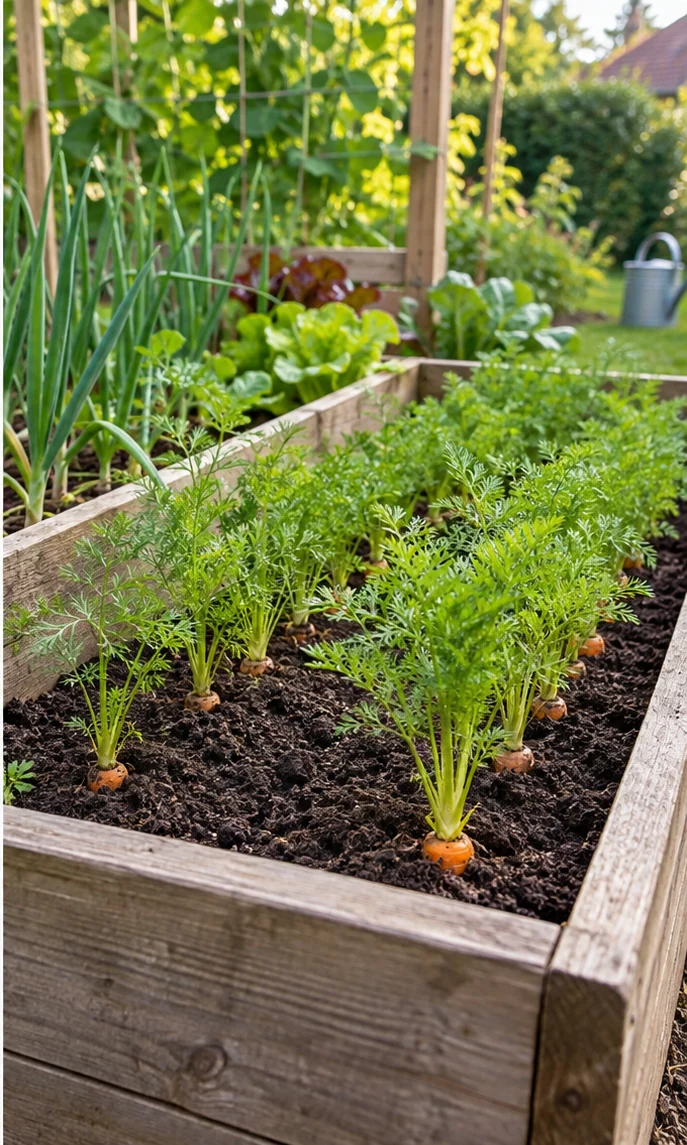
Summer carrots, winter carrots and short, round types need different space and time. Choose what fits your soil and pot first. A long root in a shallow container has no room to grow straight; a short type is more logical there.
Make room underground
Feel whether the soil is loose enough below the top layer. A fine surface can hide a hard layer. Carefully relieve obstructive compaction when the soil is workable. Avoid fresh, coarse manure directly in a row where straight roots need to develop.
Sow in the final position
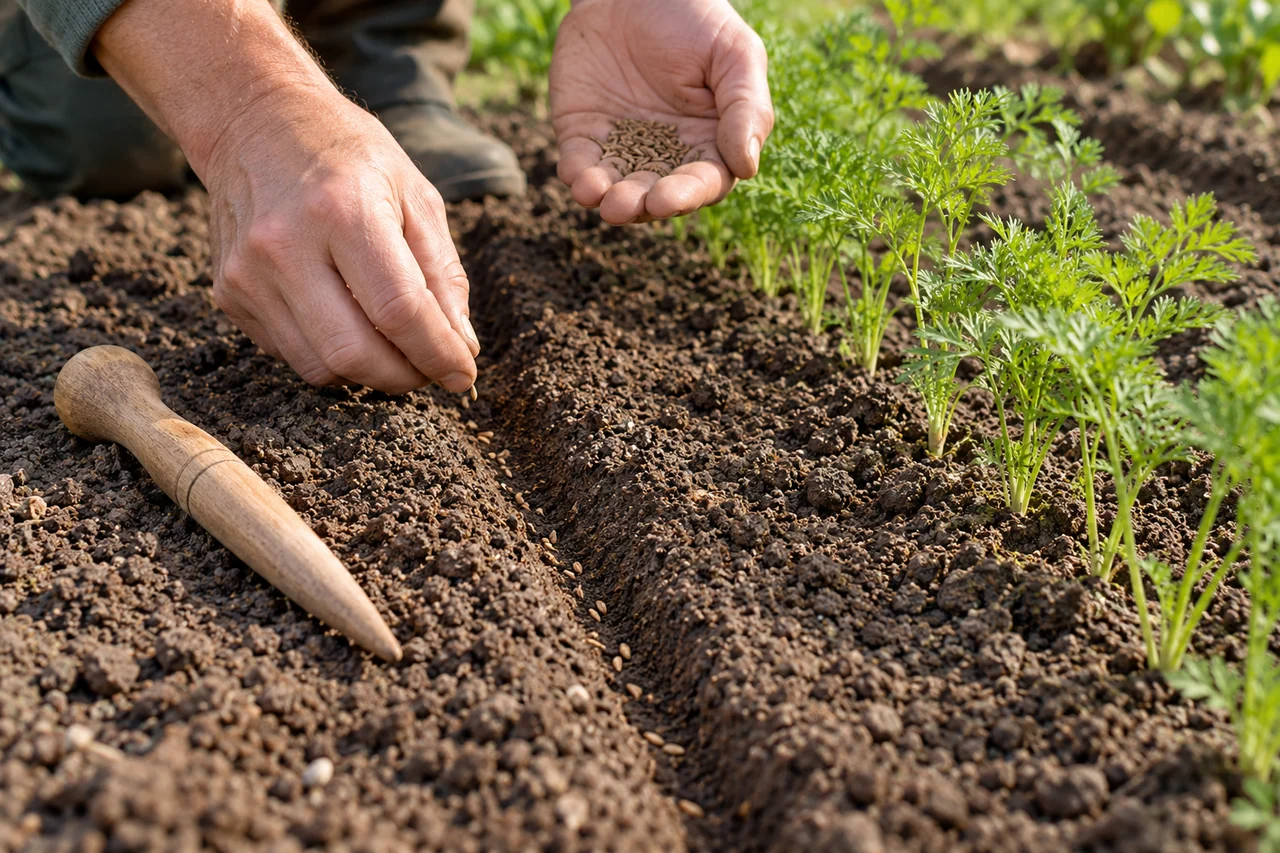
Sow directly in a fine, cleared seedbed. Keep the surface moist during sometimes slow emergence and mark the row. Transplanting is inconvenient for an ordinary carrot crop because the young taproot damages easily and may branch as a result.
The surface layer deserves attention
After sowing, keep the germination zone evenly moist. A hard crust and drying can hold back small plants. Water with a fine rose and do not walk over the row. A label helps you find the sowing position before recognisable leaves appear.
Give every young plant its own space
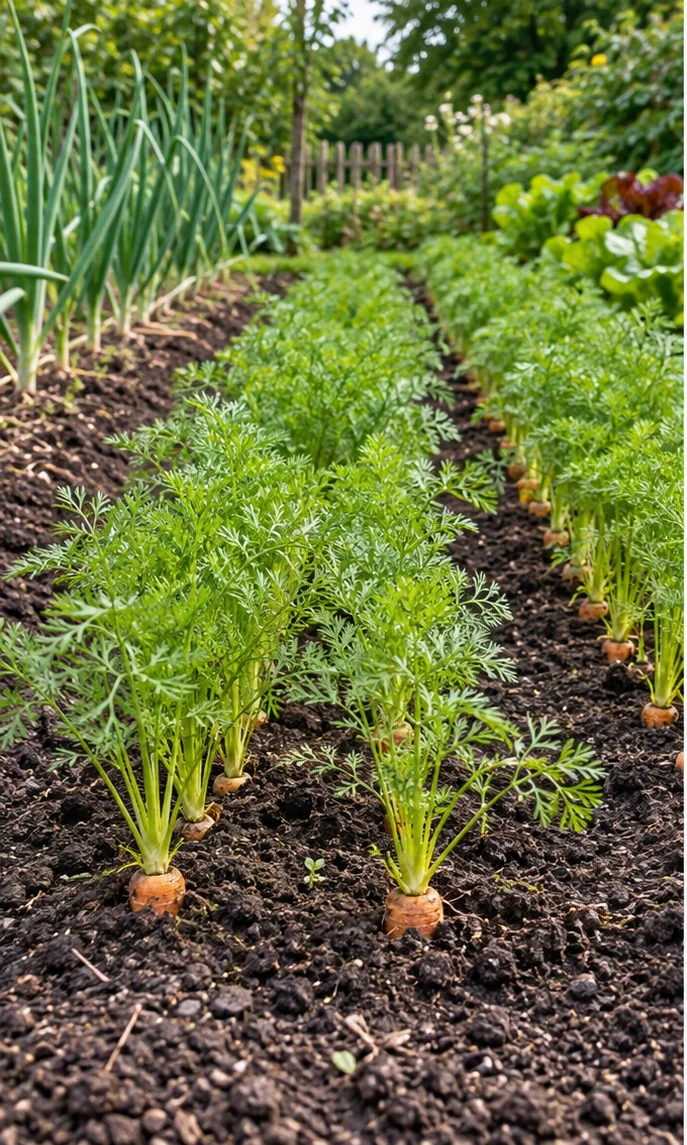
Thin small groups in good time so each root can thicken. Keep to the cultivar's final spacing and work carefully. Sow thinly enough to avoid excessive pulling. An evenly spaced row is more useful than a dense carpet that mainly produces foliage.
Growing without large fluctuations
During dry periods, check moisture below the surface. Young plants and containers need more frequent watering checks than a well-rooted crop in a bed. Water according to need and let it soak down; a wet surface every day tells you little about the root zone.
Take time over the first one
Harvest gradually from a useful root size. Loosen heavy soil first with a fork so the foliage does not tear away. For a storage cultivar, let sound roots mature according to cultivar advice and harvest vulnerable or damaged specimens earlier.
An unusual root tells you something
Forked roots may relate to stones, compacted soil or damage to the young root. Carrot fly makes tunnels; where necessary, protect with suitable mesh and seal the edges. Fluctuating moisture can cause splitting. Choose a following growing position with better soil structure.
Start with a sound harvest
Use damaged roots first and store only sound ones, following guidance for the type and cultivar. Cool conditions and suitable humidity help limit drying, but check for deterioration. Storage advice for one winter cultivar is not a shelf-life promise for the whole species.