
Wortelpeterselie: een witte wortel met een vertrouwd aroma
Root parsley provides a winter vegetable of its own: a white root with a parsley aroma. Use a little of the foliage, but leave enough to let the root grow. Sow directly in deep, loose soil and allow time for germination.
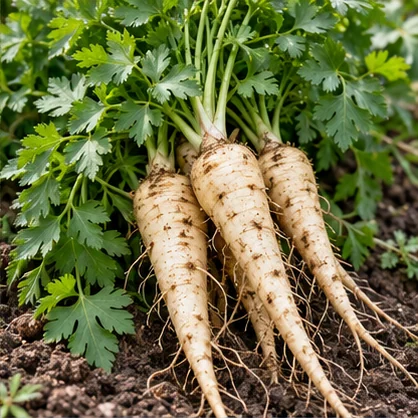
This image was created with AI from described plant characteristics and growing advice. It shows a possible situation and is not a photograph of a verified cultivar.
- Sowing
- Voorjaar, rechtstreeks op de eindplek
- Harvesting
- Herfst tot voorjaar op een geschikte plek
- Location
- Diepe, vochtige maar doorlatende grond
- Blad
- Beperkt oogsten als de wortel het hoofdproduct is
This growing advice helps you choose. Your variety, growth stage, weather and conditions in your space determine the actual timing.
Sowing under cover and raising seedlings
Direct zaaien · Root parsley
Maart–april; volg het soort- en rasadviesZaai op de definitieve plek in diep bewerkbare grond. Wacht bij kou of waterverzadiging.
- Germination and temperature
- Wacht op bewerkbare, opgewarmde grond; volg de minimale zaaitemperatuur van het ras.
- After emergence
- Houd de zaairij gelijkmatig vochtig tijdens de opkomst en herkenbaar met een label.
- Pricking out and potting on
- Niet verspenen. Dun ter plekke uit; verplanten kan de penwortel beschadigen.
- Hardening off and planting out
- Blijft op de zaaiplek; afharden en uitplanten zijn bij directe zaai niet nodig.
Deze penwortelteelt blijft op haar zaaiplek. Pastinaak vraagt vers zaad en kan traag kiemen; volg voor schorseneer, haverwortel en wortelpeterselie hun eigen zaadadvies.
Sources and use
RHS · pastinaak ↗Britse teeltrichtlijn voor een gematigd klimaat; de genoemde perioden zijn richtlijnen voor Nederland en Vlaanderen.
De Bolster · Wortelpeterselie oogsten ↗Nederlandse producent of teeltbron; de rasinstructie blijft leidend.
Guideline periods for the Netherlands and Flanders. Check the variety, available light, soil and measured temperatures. Greenhouse heating does not guarantee enough winter light.
A different flavour, a different harvest.
Choose by more than the name. Discover how these varieties and crop types taste, what you can use them for and what growing them involves.
1 of 1 choices · 0 named varieties
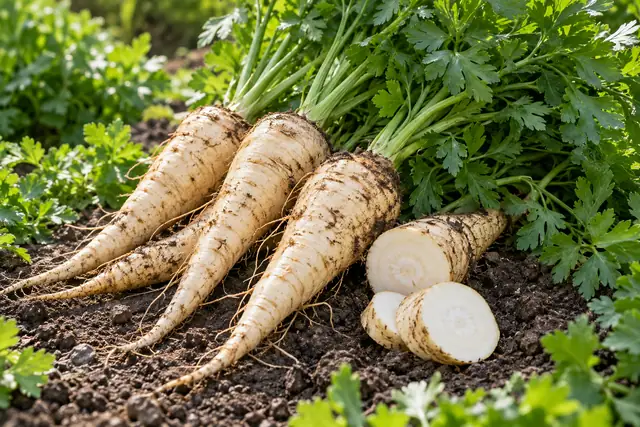
This image was created with AI from described plant characteristics and growing advice. It shows a possible situation and is not a photograph of a verified cultivar.
Wortelpeterselie
Aromatische witte keukenwortel met ook bruikbaar peterselieloof.
Kies dit gewastype wanneer je wortel en kruidig loof wilt gebruiken. Er is geen extra rasnaam opgegeven; de keuze draait om het gewas en zijn dubbele keukenbestemming.
Flavour, kitchen and growing
How does it taste?
Wortelpeterselie heeft een herkenbaar peterseliearoma met een lichte zoetheid. Dat geeft een ander keukenaccent dan pastinaak, ook als de lichte wortelvorm erop lijkt.
This flavour description applies to the crop; there is no separate tasting result for this variety.In the kitchen
Gebruik blokjes in soep of rooster parten met tijm. Snipper gezond loof als peterselie; neem tijdens groei slechts een bescheiden hoeveelheid zodat de wortel verder kan ontwikkelen.
A space in the garden
Zaai direct in diep losse grond en houd de trage opkomst vochtig. Gebruik voor een pot een diepe bak en laat de penwortel ongestoord op zijn plaats.
Harvesting
Rooi na voldoende groei in het najaar voorzichtig met een vork. Gebruik verse wortels of bewaar gave exemplaren koel tegen uitdrogen; verwerk beschadigde delen eerst.
Read the source notes →Choose your way to grow
From a garden bed to a suitable pot or support: give your plant a place that suits your garden and the care you can provide.
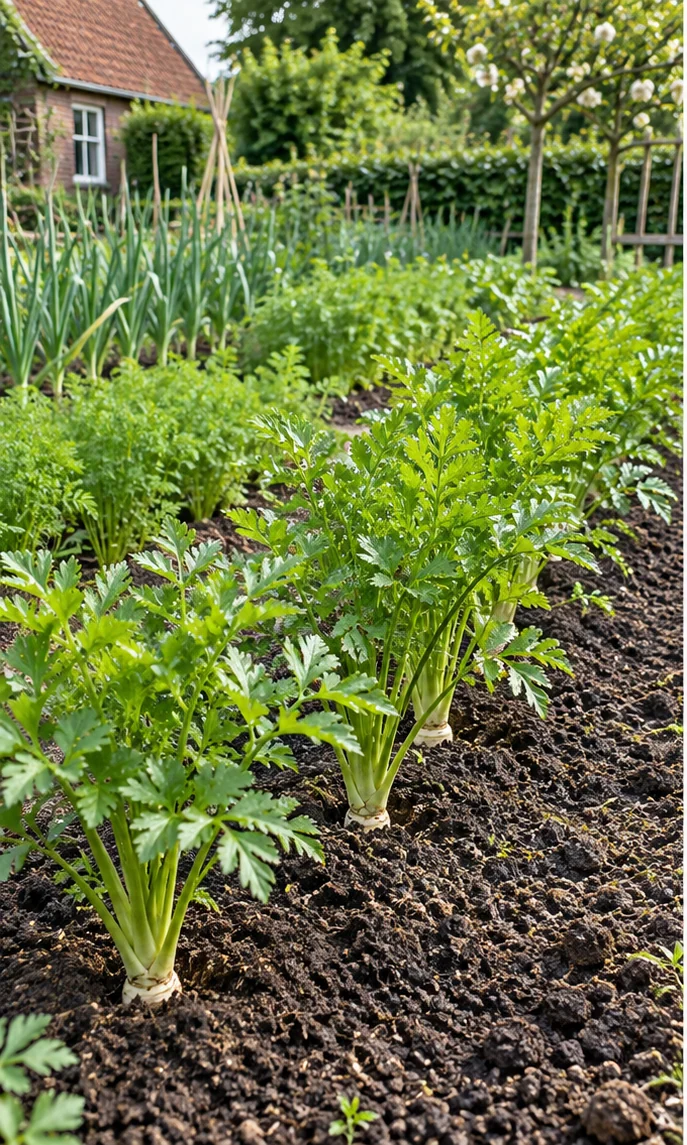
This image was created with AI from described plant characteristics and growing advice. It shows a possible situation and is not a photograph of a verified cultivar.
Sowing directly into a cleared bed
A root builds its harvest underground. First choose workable soil and a spot that will stay available for long enough. Sow directly and keep the row identifiable, even while seedlings are still small.
- Remove stones, weeds and hard clods without smearing wet clay into a compacted surface.
- Sow at the depth for the cultivar and keep the germination zone moist.
- Thin in time and harvest a first test specimen.
For anyone with a suitable bed and enough root space.
Tick off your supplies →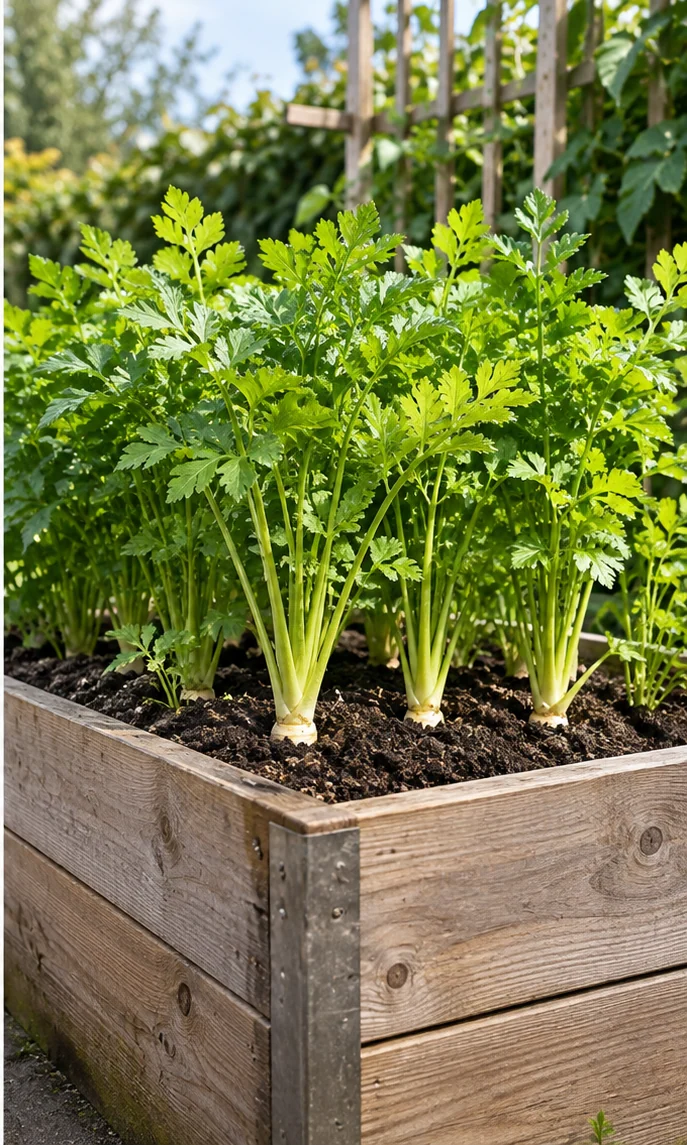
This image was created with AI from described plant characteristics and growing advice. It shows a possible situation and is not a photograph of a verified cultivar.
A small trial in a suitable container
Een diepe bak past bij een kleine proef met wortelpeterselie. De grond moet voldoende diepte, afwatering en vocht bieden. Zaai direct in de eindbak en geef de wortels ruimte; een ondiepe kruidenpot is bedoeld voor blad, niet voor lange wortels.
- Check the cultivar’s expected root size.
- Choose a container with enough depth and unobstructed drainage.
- Sow directly and check moisture more often than in the ground.
For limited space, provided the container suits the root shape.
Tick off your supplies →Choose by flavour, shape and use
Wortelpeterselie: Aromatische witte keukenwortel met ook bruikbaar peterselieloof. Gebruik blokjes in soep of rooster parten met tijm. Snipper gezond loof als peterselie; neem tijdens groei slechts een bescheiden hoeveelheid zodat de wortel verder kan ontwikkelen.
Wortelpeterselie heeft een herkenbaar peterseliearoma met een lichte zoetheid. Dat geeft een ander keukenaccent dan pastinaak, ook als de lichte wortelvorm erop lijkt.
Choosing a suitable root crop
Wortelpeterselie is een peterselietype dat voor zijn wortel wordt geteeld. Gewone bladpeterselie geeft niet automatisch dezelfde bruikbare wortel. Controleer dus de typeaanduiding en kies een plaats waar de penwortel diep kan groeien zonder hardnekkige kluiten.
Make room underground
Feel whether the soil is loose enough below the top layer. A fine surface can hide a hard layer. Carefully relieve obstructive compaction when the soil is workable. Avoid fresh, coarse manure directly in a row where straight roots need to develop.
Sow in the final position
Zaai direct in een fijn zaaibed en houd de bovenlaag tijdens de langzamere kieming vochtig. Geef de rij een label en verwijder alleen onkruid dat je goed herkent. Een droge bovenlaag kan de opkomst verstoren voordat je de eerste blaadjes ziet.
The surface layer deserves attention
After sowing, keep the germination zone evenly moist. A hard crust and drying can hold back small plants. Water with a fine rose and do not walk over the row. A label helps you find the sowing position before recognisable leaves appear.
Give every young plant its own space
Dun de opgekomen planten uit op de rasafstand. Werk voorzichtig rond de jonge wortels en geef de overblijvende planten ruimte. Wie voornamelijk wortels wil oogsten laat het meeste blad staan; het blad voedt de groei onder de grond.
Growing without large fluctuations
During dry periods, check moisture below the surface. Young plants and containers need more frequent watering checks than a well-rooted crop in a bed. Water according to need and let it soak down; a wet surface every day tells you little about the root zone.
Take time over the first one
Maak de grond los met een vork voordat je de witte wortels optilt. Je kunt vanaf een bruikbare maat oogsten, doorgaans in het najaar. Op een geschikte plek blijven ze langer in de grond; natte of bevroren grond maakt oogsten lastiger.
An unusual root tells you something
Weinig opkomst kan bij een uitdrogende kiemzone passen; een dunne wortel kan ook het gevolg van te dichte planten of veel bladoogst zijn. Controleer bodemstructuur, ruimte en verzorging voordat je extra voeding geeft. Neem beschadigde wortels eerder mee naar de keuken.
Start with a sound harvest
Use damaged roots first and store only sound ones, following guidance for the type and cultivar. Cool conditions and suitable humidity help limit drying, but check for deterioration. Storage advice for one winter cultivar is not a shelf-life promise for the whole species.
What you need
Tick what you already have. The extras depend on how you grow.
0 of 5 ticked off
Your ticks are saved in this browser.
Discover and grow more
More background, sources and image information
SeedSteps editorial team · updated on 11 October 2026. The AI images illustrate species and practical growing situations; they do not prove an exact cultivar, observations from your own garden or yield.
Britse gewasadviezen worden gecombineerd met Nederlandse en Vlaamse informatie waar beschikbaar. Amerikaanse Extension-bronnen ondersteunen plantprincipes en herkenning; hun kalenderdata, lokale plaagdruk, bestrijdingsmiddelen en mestdoseringen worden niet rechtstreeks op Nederland of Vlaanderen toegepast. Vorst, bodemwarmte, standplaats en expliciete rasinformatie blijven de lokale controle. Commerciële bronnen onderbouwen uitsluitend benoemde ras- en plantkenmerken; zij zijn geen affiliate-aanbeveling.
- World Checklist of Vascular Plants — 4 juni 2026Royal Botanic Gardens, Kew · accessed 2026-10-07
- Wortelpeterselie oogstenDe Bolster · accessed 2026-10-11
- Wortel peterselieFeggies · accessed 2026-10-11
- De Bolster — Wortelpeterselie oogstenDe Bolster · accessed 2026-10-10
- Wortelpeterselie — professionele teeltinformatieJohnny’s Selected Seeds · accessed 2026-10-10
Supporting evidence by chapter: Choose by flavour, shape and use: Feggies, De Bolster. Choosing a suitable root crop: Johnny’s Selected Seeds, De Bolster. Make room underground: Johnny’s Selected Seeds, De Bolster. Sow in the final position: Johnny’s Selected Seeds, De Bolster. The surface layer deserves attention: Johnny’s Selected Seeds, De Bolster. Give every young plant its own space: Johnny’s Selected Seeds, De Bolster. Growing without large fluctuations: Johnny’s Selected Seeds, De Bolster. Take time over the first one: Johnny’s Selected Seeds, De Bolster. An unusual root tells you something: Johnny’s Selected Seeds, De Bolster. Start with a sound harvest: Johnny’s Selected Seeds, De Bolster.