Why grow Zwarte reus uit Rusland?
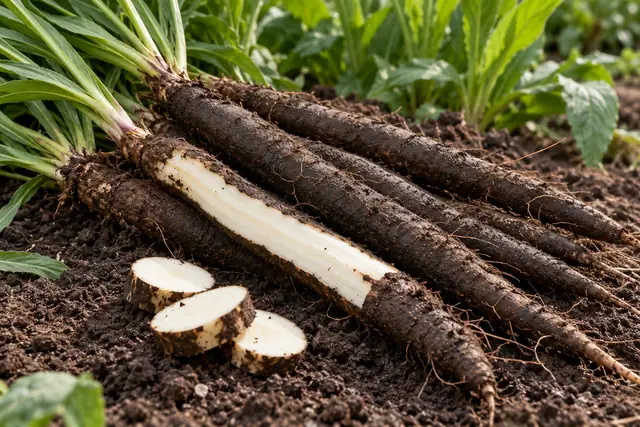
Long, cylindrical root with black skin and a white interior.
Choose this variety for long, white kitchen roots beneath dark skin. It is true scorzonera, Scorzonera hispanica, and remains separate from white salsify.
How this choice tastes
After cooking, scorzonera has a soft, mild vegetable aroma. The source mentions good flavour, but no proven difference from other black salsify varieties.
From harvest to kitchen
Peel carefully and put pieces straight into water with a little lemon to prevent browning. Cook equal pieces and serve with butter or a light white sauce.
What needs attention when growing
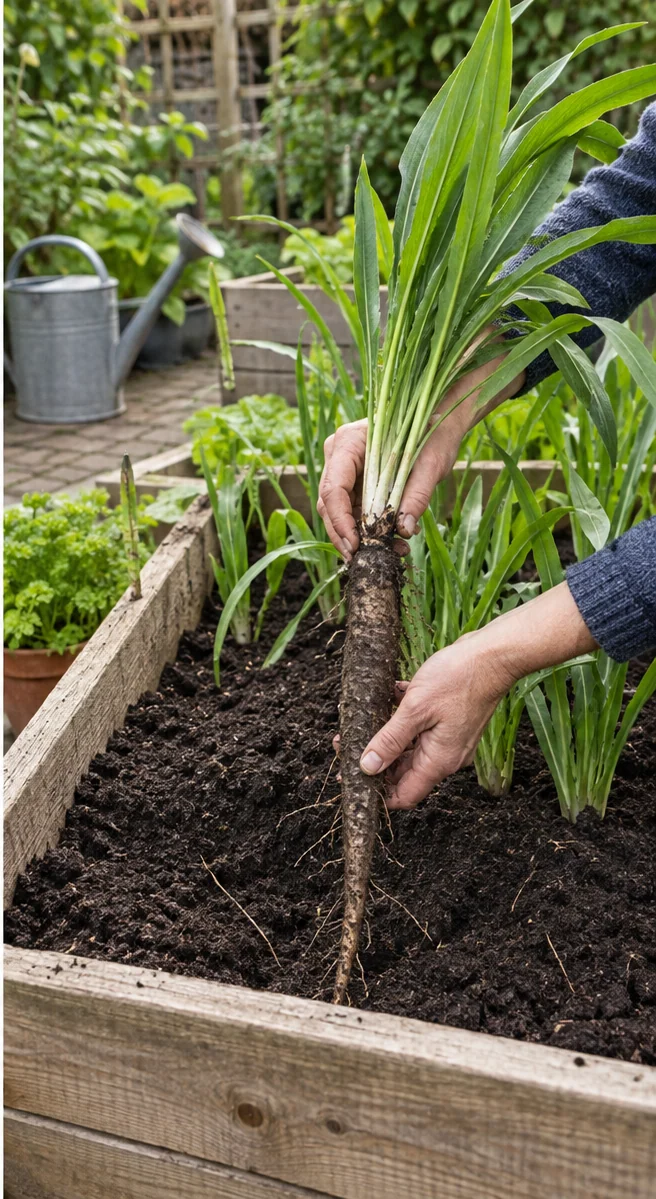
Sow directly in deeply loosened, stone-free soil. Give long roots a full growing season and keep the first small plants free from strong weed competition.
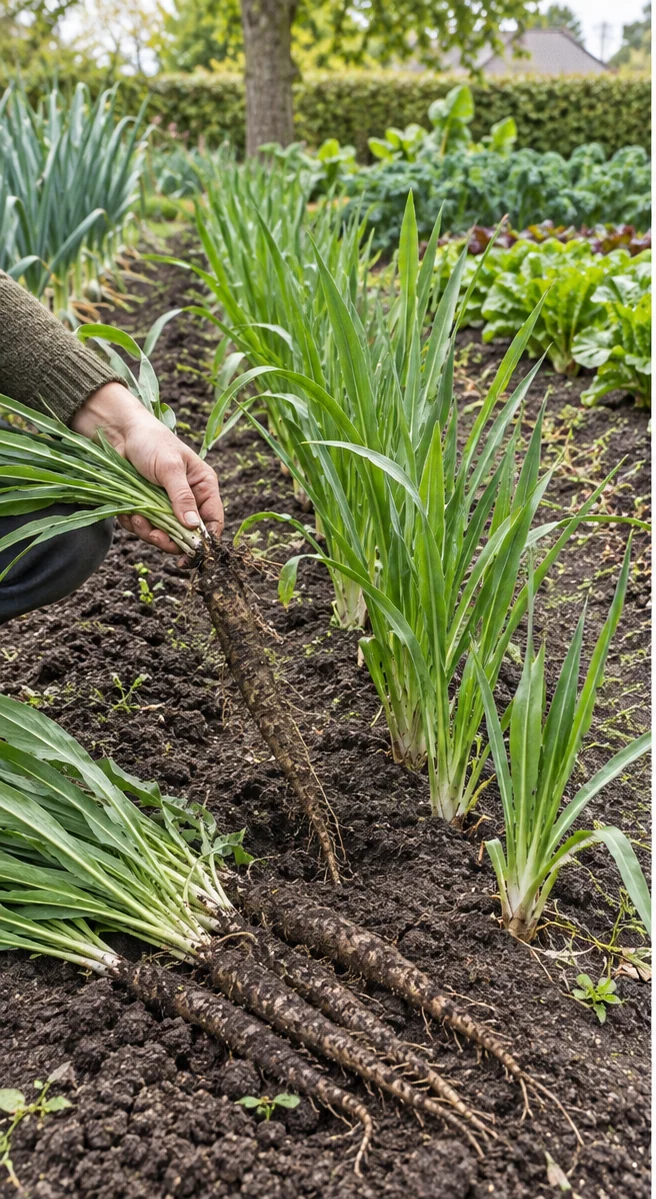
Lift with a fork well beside the row and loosen the soil deeply. A whole root is easier to process; use broken parts first and continue harvesting as needed.
Choose by flavour, shape and use
Zwarte reus uit Rusland: Long, cylindrical root with black skin and a white interior. Peel carefully and put pieces straight into water with a little lemon to prevent browning. Cook equal pieces and serve with butter or a light white sauce.
After cooking, scorzonera has a soft, mild vegetable aroma. The source mentions good flavour, but no proven difference from other black salsify varieties.
Choosing a suitable root crop
Black salsify is not the same species as white salsify. Choose the correct seed and a bed where it can stay a long time, avoiding a slow root crop having to give way to another plant mid-season.
Make room underground
Feel whether the soil is loose enough below the top layer. A fine surface can hide a hard layer. Carefully relieve obstructive compaction when the soil is workable. Avoid fresh, coarse manure directly in a row where straight roots need to develop.
Sow in the final position
Sow directly in spring in deep, loose soil. Keep the seedbed moist during germination and let the young taproot grow in its final position. Sowing in trays and pricking out offer little advantage here and increase the risk of a misshapen root.
The surface layer deserves attention
After sowing, keep the germination zone evenly moist. A hard crust and drying can hold back small plants. Water with a fine rose and do not walk over the row. A label helps you find the sowing position before recognisable leaves appear.
Give every young plant its own space
Thin in good time following variety advice. Narrow young leaves appear to need little room, but a firm root must form underground. Keep weeds small through shallow work, rather than repeatedly digging deeply between plants.
Growing without large fluctuations
During dry periods, check moisture below the surface. Young plants and containers need more frequent watering checks than a well-rooted crop in a bed. Water according to need and let it soak down; a wet surface every day tells you little about the root zone.
Take time over the first one
Insert a fork beside the row and loosen soil generously. Pull the long root only once free. Scorzonera breaks easily; use damaged roots first. Harvest only from workable soil, not through frozen ground.
An unusual root tells you something
Branching can reflect stony or compacted soil. Major moisture fluctuations can affect quality, although not every crack has a definite cause. Move the next crop to better-prepared soil and avoid fresh manure just before sowing.
Start with a sound harvest
Use damaged roots first and store only sound ones, following guidance for the type and cultivar. Cool conditions and suitable humidity help limit drying, but check for deterioration. Storage advice for one winter cultivar is not a shelf-life promise for the whole species.