
Schorseneren: een rustige teelt voor lange winterwortels
Scorzonera takes patience but provides a harvest when many summer crops have gone. A long, dark root grows beneath the narrow leaves. Give it deep, loose soil and take your time lifting it intact at harvest.
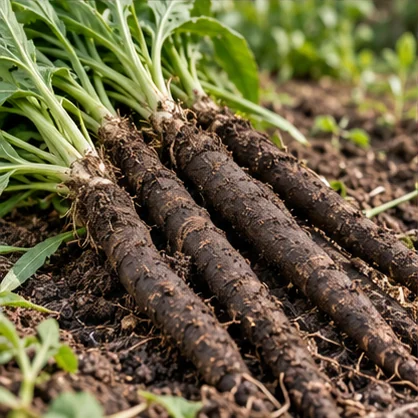
This image was created with AI from described plant characteristics and growing advice. It shows a possible situation and is not a photograph of a verified cultivar.
- Sowing
- Voorjaar, rechtstreeks in bewerkbare grond
- Harvesting
- Herfst en winter; op een geschikte plek langer mogelijk
- Location
- Zon en diepe, losse grond
- Carrot
- Breekbaar; oogsten met een vork
This growing advice helps you choose. Your variety, growth stage, weather and conditions in your space determine the actual timing.
Sowing under cover and raising seedlings
Direct zaaien · Scorzonera
Maart–april; volg het soort- en rasadviesZaai op de definitieve plek in diep bewerkbare grond. Wacht bij kou of waterverzadiging.
- Germination and temperature
- Wacht op bewerkbare, opgewarmde grond; volg de minimale zaaitemperatuur van het ras.
- After emergence
- Houd de zaairij gelijkmatig vochtig tijdens de opkomst en herkenbaar met een label.
- Pricking out and potting on
- Niet verspenen. Dun ter plekke uit; verplanten kan de penwortel beschadigen.
- Hardening off and planting out
- Blijft op de zaaiplek; afharden en uitplanten zijn bij directe zaai niet nodig.
Deze penwortelteelt blijft op haar zaaiplek. Pastinaak vraagt vers zaad en kan traag kiemen; volg voor schorseneer, haverwortel en wortelpeterselie hun eigen zaadadvies.
Sources and use
RHS · pastinaak ↗Britse teeltrichtlijn voor een gematigd klimaat; de genoemde perioden zijn richtlijnen voor Nederland en Vlaanderen.
De Bolster · De Bolster — Schorseneren telen ↗Nederlandse producent of teeltbron; de rasinstructie blijft leidend.
Utah State University Extension · USU Extension — schorseneer in de tuin ↗Soort- of productgebonden bron; buitenlandse perioden zijn geen vaste Nederlandse zaaidatum.
Guideline periods for the Netherlands and Flanders. Check the variety, available light, soil and measured temperatures. Greenhouse heating does not guarantee enough winter light.
A different flavour, a different harvest.
Choose by more than the name. Discover how these varieties and crop types taste, what you can use them for and what growing them involves.
1 of 1 choices · 1 named varieties
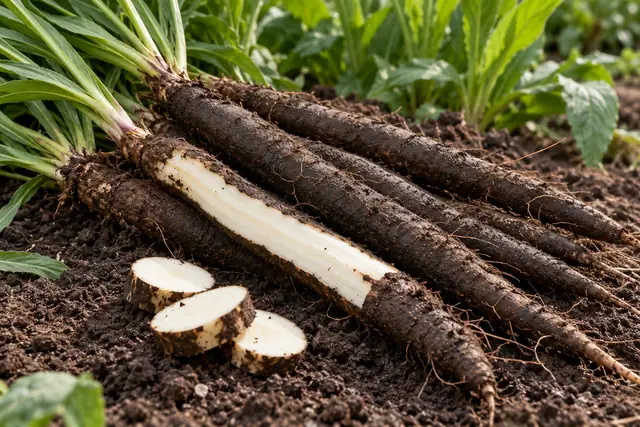
This image was created with AI from described plant characteristics and growing advice. It shows a possible situation and is not a photograph of a verified cultivar.
Zwarte reus uit Rusland
Lange cilindrische wortel met zwarte schil en witte binnenkant.
Kies dit ras voor lange witte keukenwortels onder een donkere schil. Het is echte schorseneer, Scorzonera hispanica, en blijft apart van witte haverwortel.
Flavour, kitchen and growing
How does it taste?
Na garen heeft schorseneer een zacht, mild groentearoma. De bron noemt goede smaak, maar geen bewezen verschil tegenover andere zwarte schorseneerrassen.
This flavour description applies to the crop; there is no separate tasting result for this variety.In the kitchen
Schil voorzichtig en leg stukken direct in water met wat citroen tegen bruin worden. Gaar gelijke stukken en serveer met boter of een lichte witte saus.
A space in the garden
Zaai rechtstreeks in diep losse, steenvrije grond. Geef de lange wortels een volledig groeiseizoen en houd de eerste kleine planten zonder sterke onkruidconcurrentie.
Harvesting
Rooi met een vork ruim naast de rij en maak de grond diep los. Een hele wortel verwerkt gemakkelijker; gebruik gebroken delen eerst en oogst verder naar behoefte.
Read the source notes →Choose your way to grow
From a garden bed to a suitable pot or support: give your plant a place that suits your garden and the care you can provide.
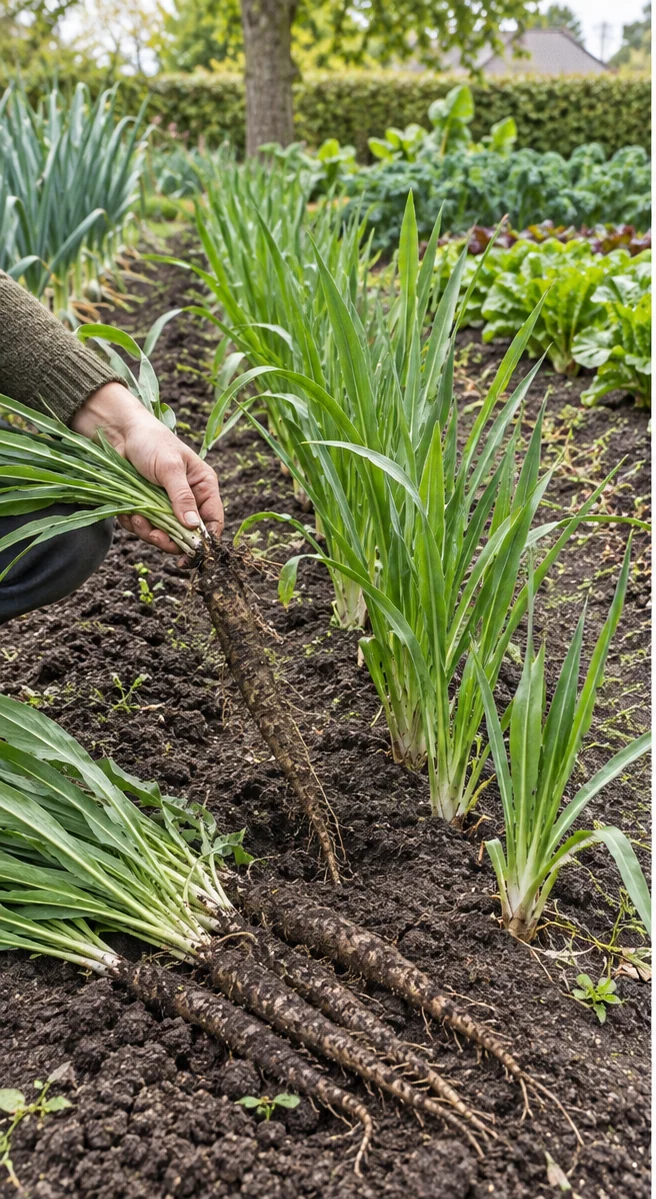
This image was created with AI from described plant characteristics and growing advice. It shows a possible situation and is not a photograph of a verified cultivar.
Sowing directly into a cleared bed
A root builds its harvest underground. First choose workable soil and a spot that will stay available for long enough. Sow directly and keep the row identifiable, even while seedlings are still small.
- Remove stones, weeds and hard clods without smearing wet clay into a compacted surface.
- Sow at the depth for the cultivar and keep the germination zone moist.
- Thin in time and harvest a first test specimen.
For anyone with a suitable bed and enough root space.
Tick off your supplies →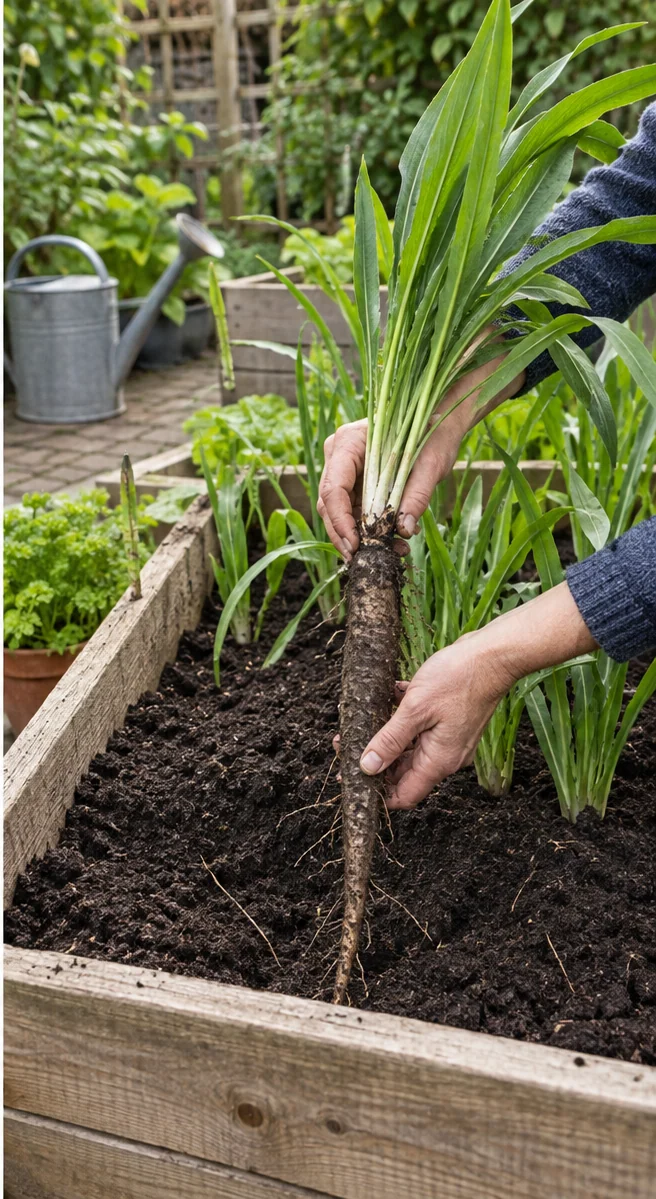
This image was created with AI from described plant characteristics and growing advice. It shows a possible situation and is not a photograph of a verified cultivar.
A small trial in a suitable container
Een diepe teeltbak kan een kleine proef ondersteunen als de wortels voldoende lengte krijgen. Controleer de uiteindelijke rasmaat voordat je een bak kiest. Een gewone ondiepe pot is geen logisch alternatief voor een lang schorsenerenbed.
- Check the cultivar’s expected root size.
- Choose a container with enough depth and unobstructed drainage.
- Sow directly and check moisture more often than in the ground.
For limited space, provided the container suits the root shape.
Tick off your supplies →Explore the varieties
See the confirmed differences. Characteristics without supporting evidence are left blank.
0 of 0 varieties
No matching variety found. Try another name or clear the filters.
Choose two to four varieties to compare their source data side by side.
Choose by flavour, shape and use
Zwarte reus uit Rusland: Lange cilindrische wortel met zwarte schil en witte binnenkant. Schil voorzichtig en leg stukken direct in water met wat citroen tegen bruin worden. Gaar gelijke stukken en serveer met boter of een lichte witte saus.
Na garen heeft schorseneer een zacht, mild groentearoma. De bron noemt goede smaak, maar geen bewezen verschil tegenover andere zwarte schorseneerrassen.
Choosing a suitable root crop
Zwarte schorseneer is niet dezelfde soort als de witte haverwortel die ook salsify wordt genoemd. Kies het juiste zaad en een bed waar het gewas lang kan blijven. Dat voorkomt dat de rustige wortelteelt midden in het seizoen moet wijken voor een andere plant.
Make room underground
Feel whether the soil is loose enough below the top layer. A fine surface can hide a hard layer. Carefully relieve obstructive compaction when the soil is workable. Avoid fresh, coarse manure directly in a row where straight roots need to develop.
Sow in the final position
Sow directly in spring in deep, loose soil. Keep the seedbed moist during germination and let the young taproot grow in its final position. Sowing in trays and pricking out offer little advantage here and increase the risk of a misshapen root.
The surface layer deserves attention
After sowing, keep the germination zone evenly moist. A hard crust and drying can hold back small plants. Water with a fine rose and do not walk over the row. A label helps you find the sowing position before recognisable leaves appear.
Give every young plant its own space
Dun tijdig uit volgens het rasadvies. Smalle jonge bladeren lijken weinig ruimte te vragen, maar ondergronds moet een stevige wortel ontstaan. Houd onkruid klein met oppervlakkig werk en steek niet telkens diep tussen de planten.
Growing without large fluctuations
During dry periods, check moisture below the surface. Young plants and containers need more frequent watering checks than a well-rooted crop in a bed. Water according to need and let it soak down; a wet surface every day tells you little about the root zone.
Take time over the first one
Steek een vork naast de rij en maak de grond ruim los. Trek de lange wortel pas op als hij vrij kan komen. Schorseneren breken makkelijk; een beschadigde wortel verwerk je eerst. Oogst alleen wanneer de bodem bewerkbaar is, niet door bevroren grond heen.
An unusual root tells you something
Vertakkingen passen soms bij een stenige of verdichte bodem. Sterke wisselingen in vocht kunnen de kwaliteit beïnvloeden, al heeft niet iedere scheur een zekere oorzaak. Verplaats een volgende teelt naar een beter voorbereid bed en voorkom verse mest vlak voor de zaai.
Start with a sound harvest
Use damaged roots first and store only sound ones, following guidance for the type and cultivar. Cool conditions and suitable humidity help limit drying, but check for deterioration. Storage advice for one winter cultivar is not a shelf-life promise for the whole species.
What you need
Tick what you already have. The extras depend on how you grow.
0 of 5 ticked off
Your ticks are saved in this browser.
Discover and grow more
More background, sources and image information
SeedSteps editorial team · updated on 11 October 2026. The AI images illustrate species and practical growing situations; they do not prove an exact cultivar, observations from your own garden or yield.
Britse gewasadviezen worden gecombineerd met Nederlandse en Vlaamse informatie waar beschikbaar. Amerikaanse Extension-bronnen ondersteunen plantprincipes en herkenning; hun kalenderdata, lokale plaagdruk, bestrijdingsmiddelen en mestdoseringen worden niet rechtstreeks op Nederland of Vlaanderen toegepast. Vorst, bodemwarmte, standplaats en expliciete rasinformatie blijven de lokale controle. Commerciële bronnen onderbouwen uitsluitend benoemde ras- en plantkenmerken; zij zijn geen affiliate-aanbeveling.
- World Checklist of Vascular Plants — 4 juni 2026Royal Botanic Gardens, Kew · accessed 2026-10-07
- Schorseneer zwarte reus uit Rusland zadenFeggies · accessed 2026-10-11
- De Bolster — Schorseneren telenDe Bolster · accessed 2026-10-10
- USU Extension — schorseneer in de tuinUtah State University Extension · accessed 2026-10-10
Supporting evidence by chapter: Choose by flavour, shape and use: Feggies. Choosing a suitable root crop: Utah State University Extension, De Bolster. Make room underground: Utah State University Extension, De Bolster. Sow in the final position: Utah State University Extension, De Bolster. The surface layer deserves attention: Utah State University Extension, De Bolster. Give every young plant its own space: Utah State University Extension, De Bolster. Growing without large fluctuations: Utah State University Extension, De Bolster. Take time over the first one: Utah State University Extension, De Bolster. An unusual root tells you something: Utah State University Extension, De Bolster. Start with a sound harvest: Utah State University Extension, De Bolster.