Choose by flavour, shape and use
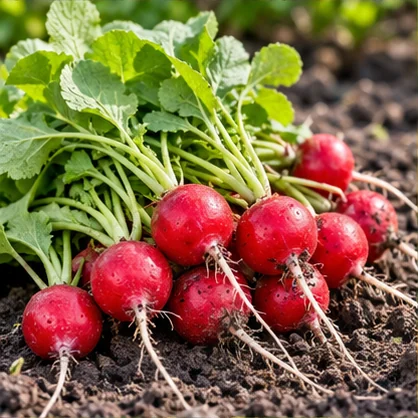
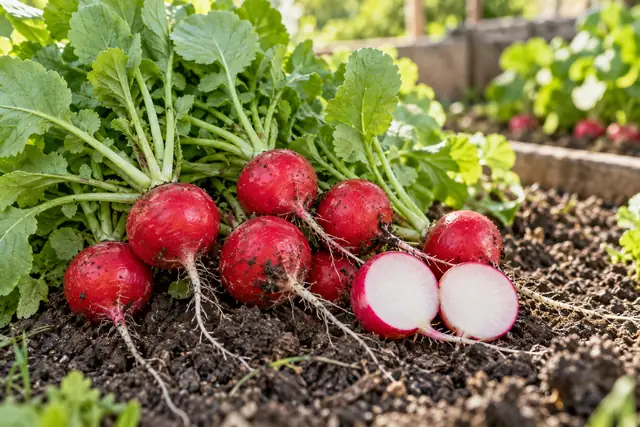
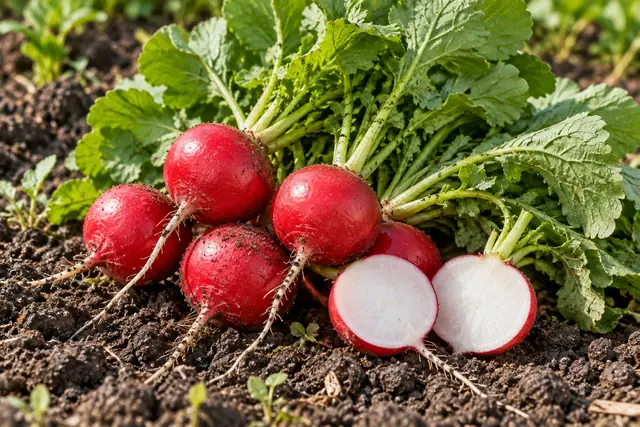
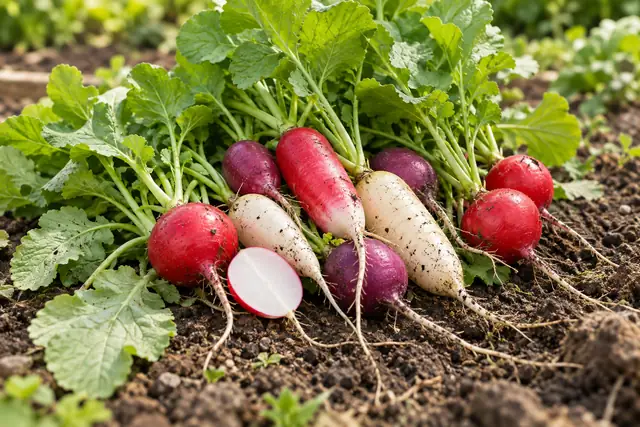
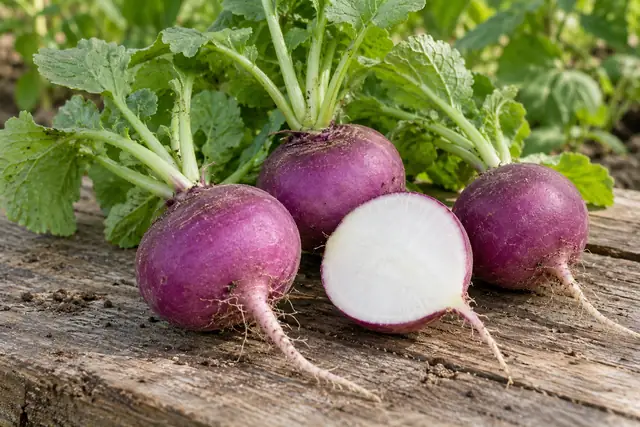
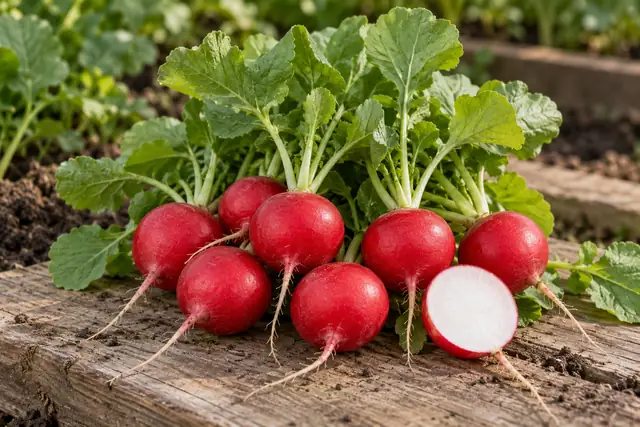
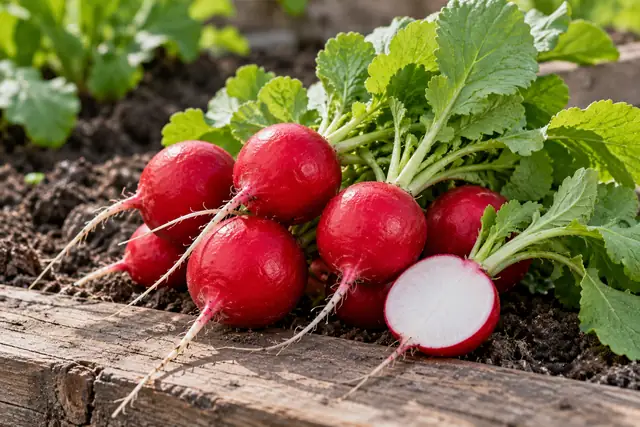
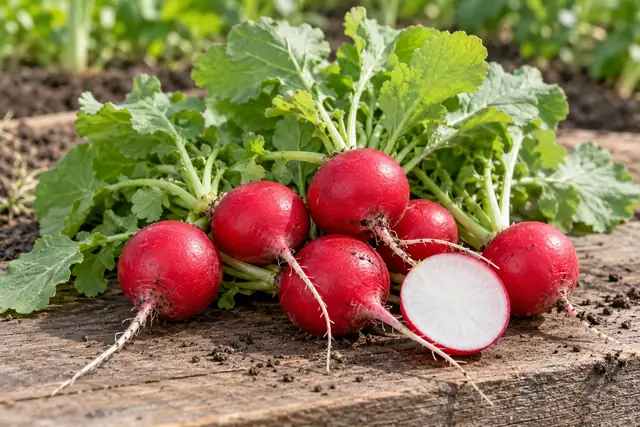
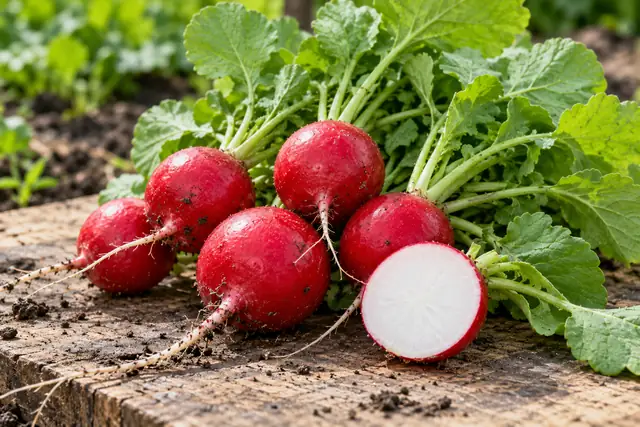
Cherry Bell: Round red radish for small, repeated harvests. Cut into rounds for bread or halve for a salad. Combine with something creamy when you want to soften the fresh, lightly peppery note.
Cherry Bell is described as not very hot. Harvesting young and watering evenly help a crisp bite; drought may make the result sharper.
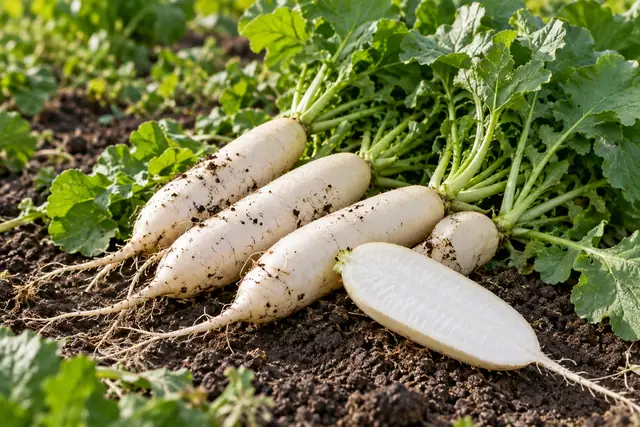
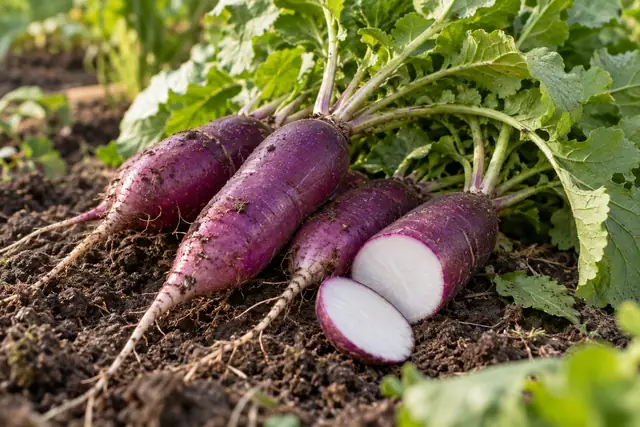
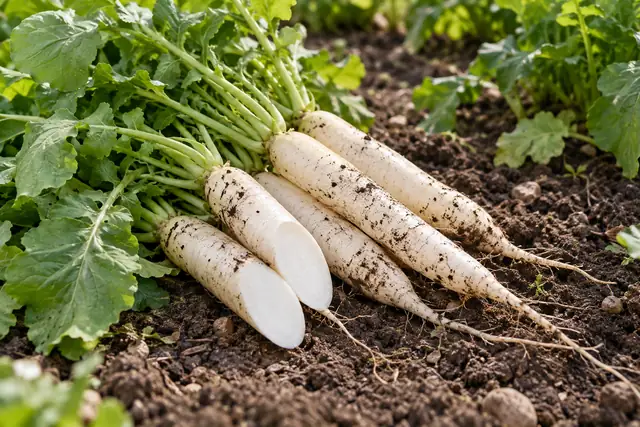
Marché de Zurich: Long white radish for a different harvest shape. Cut thin diagonal slices for raw salads or grate some alongside carrot. Its flavour adds a fresh note to a salad with a creamy dressing.
The source describes white, aromatic flesh. The elongated white root gives a different size from a small round radish; taste the heat at a young size.
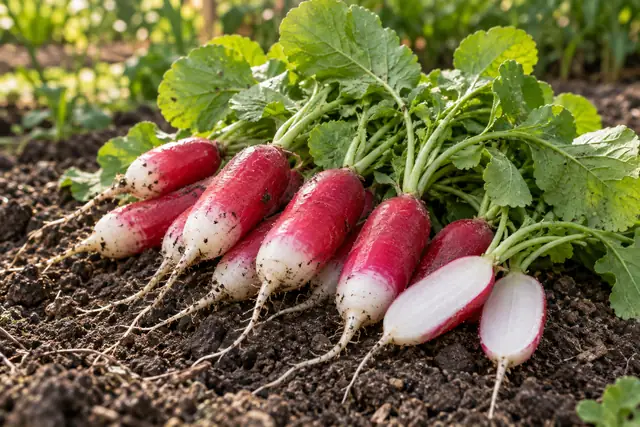
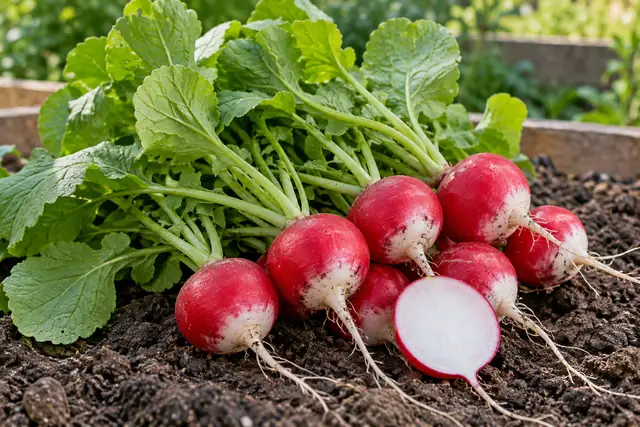
French Breakfast 2: Half-long red radish with a white tip. Halve the radish lengthways so that both red and white remain visible. Serve with butter on bread or cut into fine strips for a fresh salad.
The crisp flesh gives a fresh radish character. The bicoloured elongated shape is the clear difference; the name says nothing about a fixed mildness.
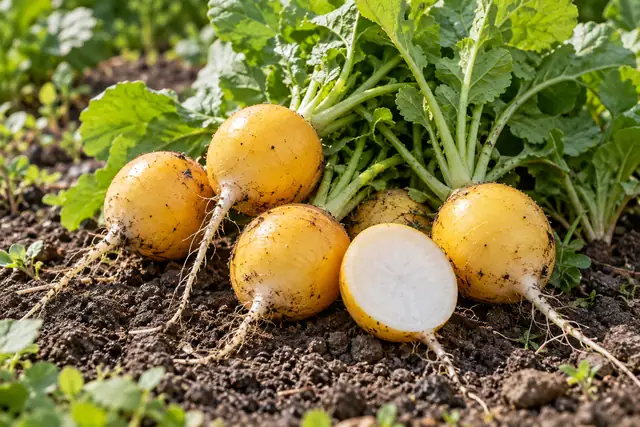
Helios: Golden-yellow radish, round to slightly elongated. Slice young yellow radishes with their skin for a raw vegetable platter. A mix of yellow and red slices adds colour without complicated preparation.
Helios has a crisp radish character with a fresh, sharp note. Its golden-yellow skin is the unusual characteristic; colour does not prove a sweeter flavour.
Choosing a suitable root crop
Small salad radishes grow differently from large winter radishes. For a quick row, choose a true salad type. Colour and shape may vary, but maximum size is not a good harvest aim. Young, firm roots are usually a better reason to pick.
Make room underground
Feel whether the soil is loose enough below the top layer. A fine surface can hide a hard layer. Carefully relieve obstructive compaction when the soil is workable. Avoid fresh, coarse manure directly in a row where straight roots need to develop.
Sow in the final position
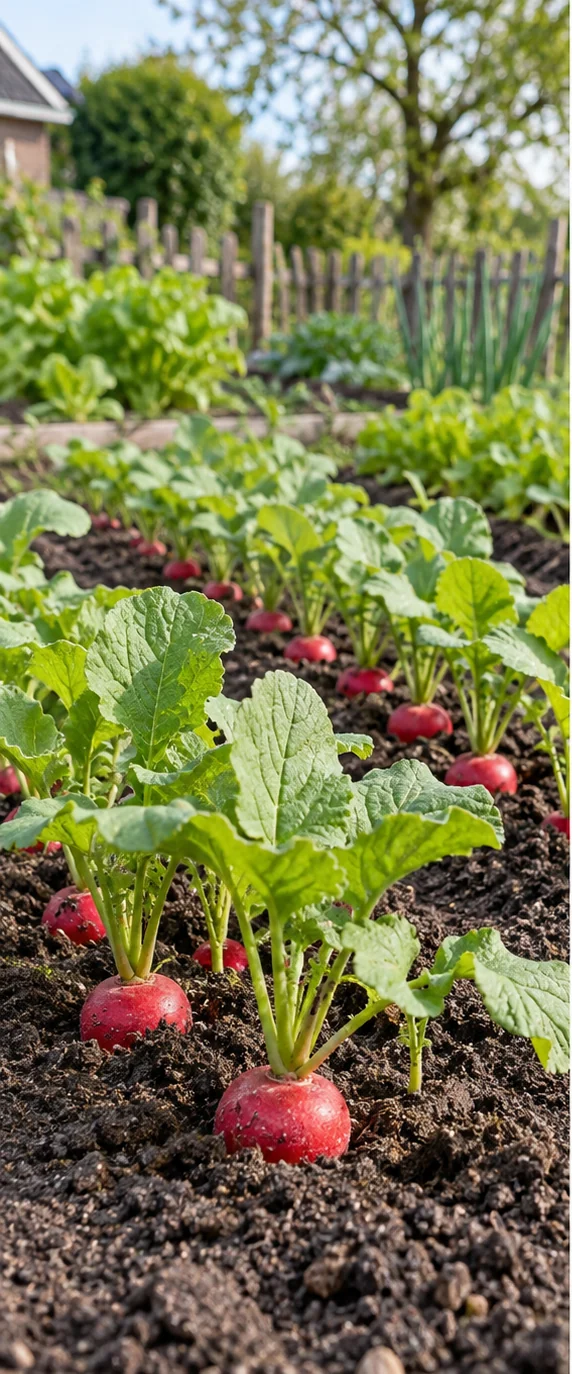
Sow thinly and directly where you want to harvest. A short row every few weeks spreads the harvest. Keep the soil moist during germination. Start a new batch in mild weather rather than in the middle of hot, dry days.
The surface layer deserves attention
After sowing, keep the germination zone evenly moist. A hard crust and drying can hold back small plants. Water with a fine rose and do not walk over the row. A label helps you find the sowing position before recognisable leaves appear.
Give every young plant its own space
Overcrowded germination produces plenty of leaves and little room for the root. Thin early to the cultivar spacing and aim for the stated harvest size. For salad radishes, that spacing is measured in centimetres, rather than the large space needed by winter radish.
Growing without large fluctuations
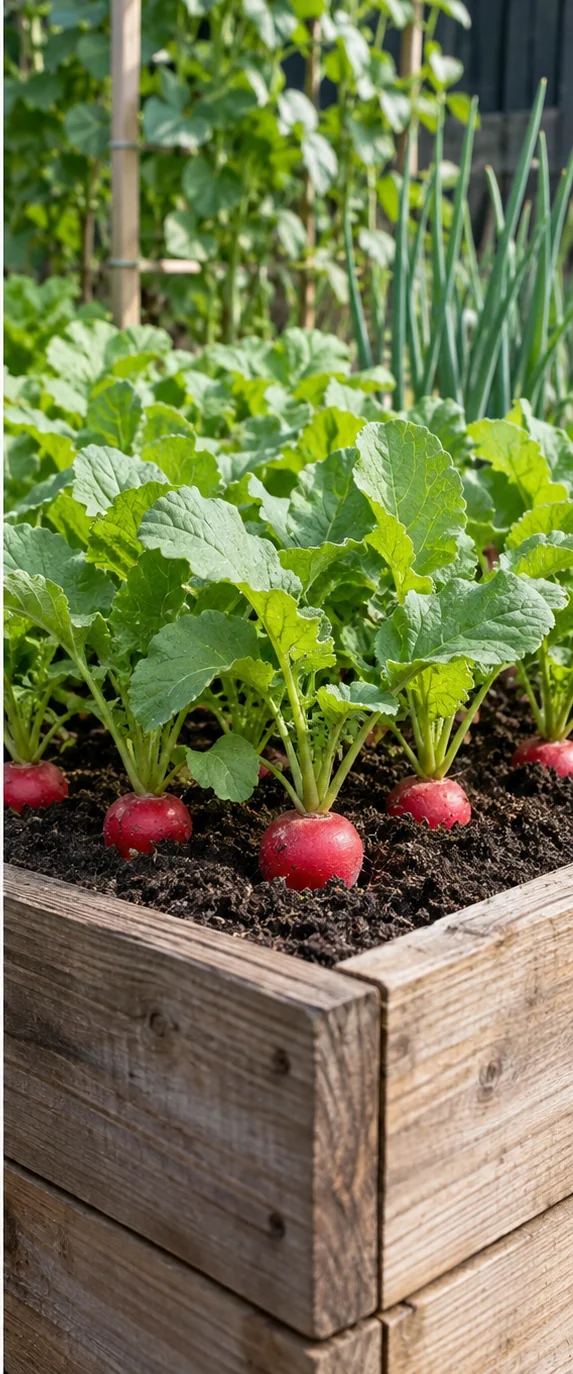
During dry periods, check moisture below the surface. Young plants and containers need more frequent watering checks than a well-rooted crop in a bed. Water according to need and let it soak down; a wet surface every day tells you little about the root zone.
Take time over the first one
Check the root shoulders early and harvest a test radish once the size looks useful. Pick the row gradually. A radish left too long can become pithy or pungent; do not wait until every one is exactly the same size.
An unusual root tells you something
Plenty of leaves and hardly any root can be associated with heat, drought or overcrowding. Small holes in the leaves may be caused by flea beetles. Protect young rows with fine mesh where needed and improve the timing of the next sowing; extra fertiliser is not a standard solution.
Start with a sound harvest
Use damaged roots first and store only sound ones, following guidance for the type and cultivar. Cool conditions and suitable humidity help limit drying, but check for deterioration. Storage advice for one winter cultivar is not a shelf-life promise for the whole species.