
Rapen: jong oogsten voor een zachte, knapperige wortel
A turnip does not have to become a large winter root. Young turnips suit a small crop and can be grown alongside other vegetables. Match an early or late variety to your sowing date and give the root room to swell.
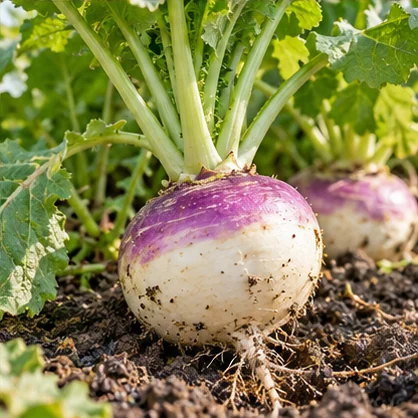
This image was created with AI from described plant characteristics and growing advice. It shows a possible situation and is not a photograph of a verified cultivar.
- Sowing
- Voorjaar tot late zomer volgens het ras
- Harvesting
- Jonge wortels; najaar bij latere zaai
- Location
- Zon en vochtvasthoudende, doorlatende grond
- Groep
- Koolgewas; opnemen in de koolrotatie
This growing advice helps you choose. Your variety, growth stage, weather and conditions in your space determine the actual timing.
Sowing under cover and raising seedlings
Direct zaaien voor jong blad of wortels · Turnip
Voorjaar of najaar, bij geschikt rasZaai direct in kasgrond of bak, houd licht en ventileer.
- Germination and temperature
- Wacht op bewerkbare, opgewarmde grond; volg de minimale zaaitemperatuur van het ras.
- After emergence
- Houd de zaairij gelijkmatig vochtig tijdens de opkomst en herkenbaar met een label.
- Pricking out and potting on
- Zaai dun en dun waar nodig op de definitieve plek uit. Voor snijblad hoeft niet elke zaailing apart te staan.
- Hardening off and planting out
- Blijft op de zaaiplek; afharden en uitplanten zijn bij directe zaai niet nodig.
Een koele, gelijkmatige start helpt. Bij hitte, droogte of een verkeerd rasvenster kunnen planten snel schieten.
Sources and use
RHS · radijs ↗Britse teeltrichtlijn voor een gematigd klimaat; de genoemde perioden zijn richtlijnen voor Nederland en Vlaanderen.
Royal Horticultural Society · RHS — raap kweken ↗Soort- of productgebonden bron; buitenlandse perioden zijn geen vaste Nederlandse zaaidatum.
Utah State University Extension · USU Extension — raap in de tuin ↗Soort- of productgebonden bron; buitenlandse perioden zijn geen vaste Nederlandse zaaidatum.
Guideline periods for the Netherlands and Flanders. Check the variety, available light, soil and measured temperatures. Greenhouse heating does not guarantee enough winter light.
A different flavour, a different harvest.
Choose by more than the name. Discover how these varieties and crop types taste, what you can use them for and what growing them involves.
5 of 5 choices · 4 named varieties
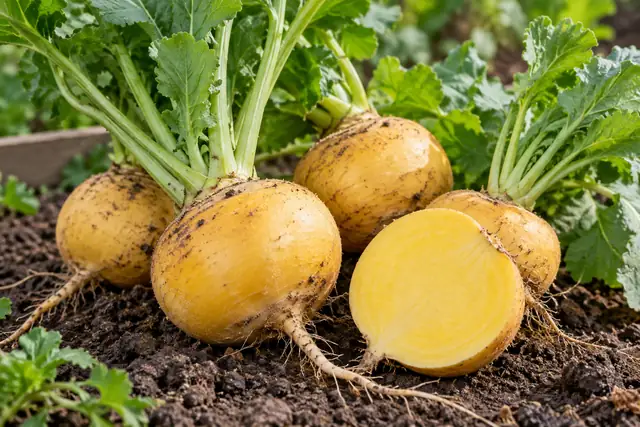
This image was created with AI from described plant characteristics and growing advice. It shows a possible situation and is not a photograph of a verified cultivar.
Goldana
Ronde gele meiraap met ook eetbaar jong blad.
Kies Goldana voor een snelle gele knol en een mogelijke bladoogst. Bij een herfstteelt kan een selectie gave wortels ook voor wintergebruik worden bewaard.
Flavour, kitchen and growing
How does it taste?
Goldana heeft het zachte raapkarakter wanneer je jong oogst. De gele binnenkant is een zichtbaar verschil naast witvlezige rapen, zonder een bewezen smaakrangorde.
This flavour description applies to the crop; there is no separate tasting result for this variety.In the kitchen
Gaar kleine gele parten kort of maak een gemengde raappuree. Jong gezond blad kun je apart als raapstelen verwerken in een roerbakgerecht.
A space in the garden
Zaai in het voorjaar of de late zomer en dun tijdig uit. Houd voldoende ruimte voor de ronde knollen en zorg bij droogte voor gelijkmatige vochtvoorziening.
Harvesting
Oogst jong voor een fijne structuur. Laat voorraadrapen verder groeien, rooi ze voor strenge vorst en bewaar ze koel beschermd tegen uitdroging.
Read the source notes →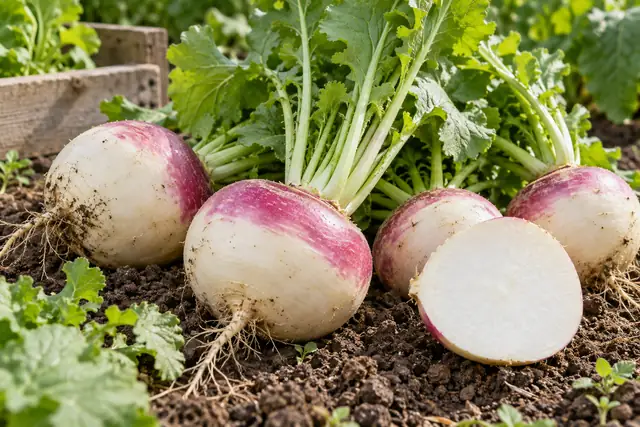
This image was created with AI from described plant characteristics and growing advice. It shows a possible situation and is not a photograph of a verified cultivar.
Milanese Witte Roodkop
Witte meiraap met een gekleurde roodachtige schouder.
Kies dit ras voor twee kleuren en zowel voorjaars- als najaarsteelt. De relatief snelle ontwikkeling maakt het bruikbaar in een bed dat later opnieuw beplant wordt.
Flavour, kitchen and growing
How does it taste?
Jonge Milanese rapen hebben een frisse raapsmaak en een malse beet. De tweekleurige knol geeft vooral uiterlijk verschil, geen vastgestelde extra pittigheid.
This flavour description applies to the crop; there is no separate tasting result for this variety.In the kitchen
Snijd kleine knollen dun voor rauwkost of stoom gelijke stukjes kort. Laat de gekleurde schouder zichtbaar bij een eenvoudige schotel met meerdere raapkleuren.
A space in the garden
Zaai dun en dun uit tot elke plant ruimte heeft. In het warme deel van de zomer vraagt het gewas meer aandacht voor vocht en het voorkomen van taaie wortels.
Harvesting
Oogst als jonge knollen een bruikbare doorsnede hebben, vaak rond zes tot acht centimeter. Te lang wachten op meer gewicht kan een grovere structuur geven.
Read the source notes →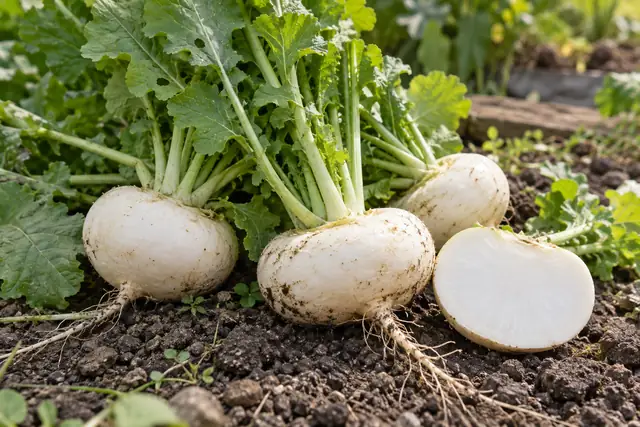
This image was created with AI from described plant characteristics and growing advice. It shows a possible situation and is not a photograph of a verified cultivar.
Platte Witte Mei
Platrond witvlezig raapje dat jong mals wordt geoogst.
Kies deze witte raap voor verse zomer- of herfstmaaltijden. De platte vorm is gemakkelijk te zien boven de bodem en helpt om het oogstmoment te volgen.
Flavour, kitchen and growing
How does it taste?
Bij een jonge oogst is Platte Witte Mei mals met het milde raapkarakter. De platte bolvorm geeft een ander snijresultaat dan een ronde of lange wortel.
This flavour description applies to the crop; there is no separate tasting result for this variety.In the kitchen
Stoom kleine partjes of rasp jonge knollen voor rauwkost. Snijd gelijkmatig zodat het delicate vruchtvlees niet onnodig lang hoeft te worden gekookt.
A space in the garden
Zaai rechtstreeks in een fijn zaaibed en dun op tijd uit. Spreid enkele korte rijtjes zodat je verschillende keren jonge knolletjes kunt eten.
Harvesting
Oogst jong op keukenmaat en verwerk snel. Voor een tweede oogst plant je opnieuw in plaats van alle rapen lang te laten doorgroeien tot grof formaat.
Read the source notes →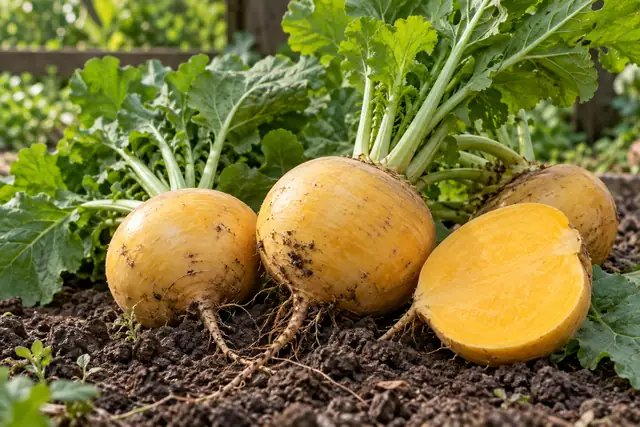
This image was created with AI from described plant characteristics and growing advice. It shows a possible situation and is not a photograph of a verified cultivar.
Boule d’Or
Ronde gladde raap met geel-oranje vruchtvlees.
Kies dit ras voor een gladde ronde vorm en een beschreven zoet aroma. Het past bij een vroege verse oogst en verschillende kleine zaairondes.
Flavour, kitchen and growing
How does it taste?
De bron beschrijft stevig, zoet en geurig vruchtvlees. Dat maakt Boule d’Or een interessante proef naast witvlezige rapen, zonder dezelfde smaak in elke bodem te garanderen.
In the kitchen
Snijd jonge wortels voor rauwkost of gaar gelijke blokjes in een groentestoof. De gele tot oranje binnenkant geeft herkenbare kleur naast aardappel of witte raap.
A space in the garden
Zaai rechtstreeks volgens de verpakking en geef tijdig ruimte door uitdunnen. Houd de wortelzone vochtig, omdat een onderbroken groei een grovere knol kan opleveren.
Harvesting
Oogst op bruikbare maat en proef een eerste wortel voordat je de rest groot laat worden. Voor rauw gebruik is jong, fijn gesneden vruchtvlees het prettigst.
Also listed as: Boule d'Or.
Read the source notes →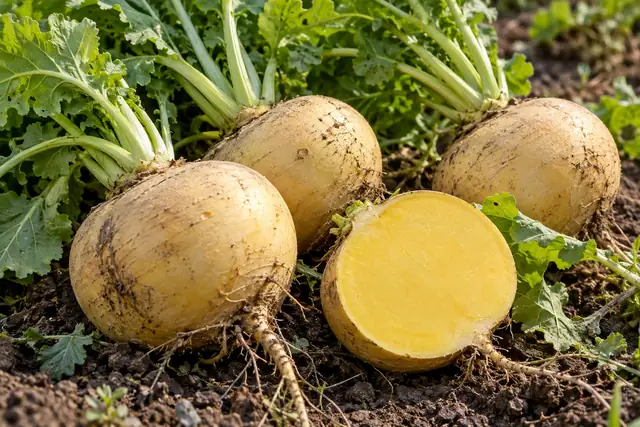
This image was created with AI from described plant characteristics and growing advice. It shows a possible situation and is not a photograph of a verified cultivar.
Raapkool geel
Algemeen aangeboden groot geelvlezig raaptype.
Kies dit aanbod voor grotere geelvlezige rapen en een later keukenmoment. Controleer de botanische naam op het zakje, zodat je de juiste teeltperiode en uiteindelijke wortelmaat plant.
Flavour, kitchen and growing
How does it taste?
Dit type heeft het aardse raapkarakter; een specifiek rasaroma ontbreekt. De productbron vermeldt Brassica campestris, waardoor een smaakvergelijking met koolraap niet automatisch past.
This flavour description applies to the crop; there is no separate tasting result for this variety.In the kitchen
Snijd de grote gele wortel in gelijke blokken en gaar voor een stoof of puree. Proef een deel korter gaar voor beet en een deel zacht gestampt.
A space in the garden
Controleer de botanische naam op de verpakking voor het kiezen van zaaitijd en afstand. Geef de grotere wortels ruimte en laat ze op een los, vochtvasthoudend bed ontwikkelen.
Harvesting
Oogst op het gewenste formaat en gebruik gave wortels. Bewaar koele exemplaren tegen uitdrogen beschermd; beoordeel eerst de werkelijke oogst voordat je een grote voorraad plant.
Read the source notes →Choose your way to grow
From a garden bed to a suitable pot or support: give your plant a place that suits your garden and the care you can provide.
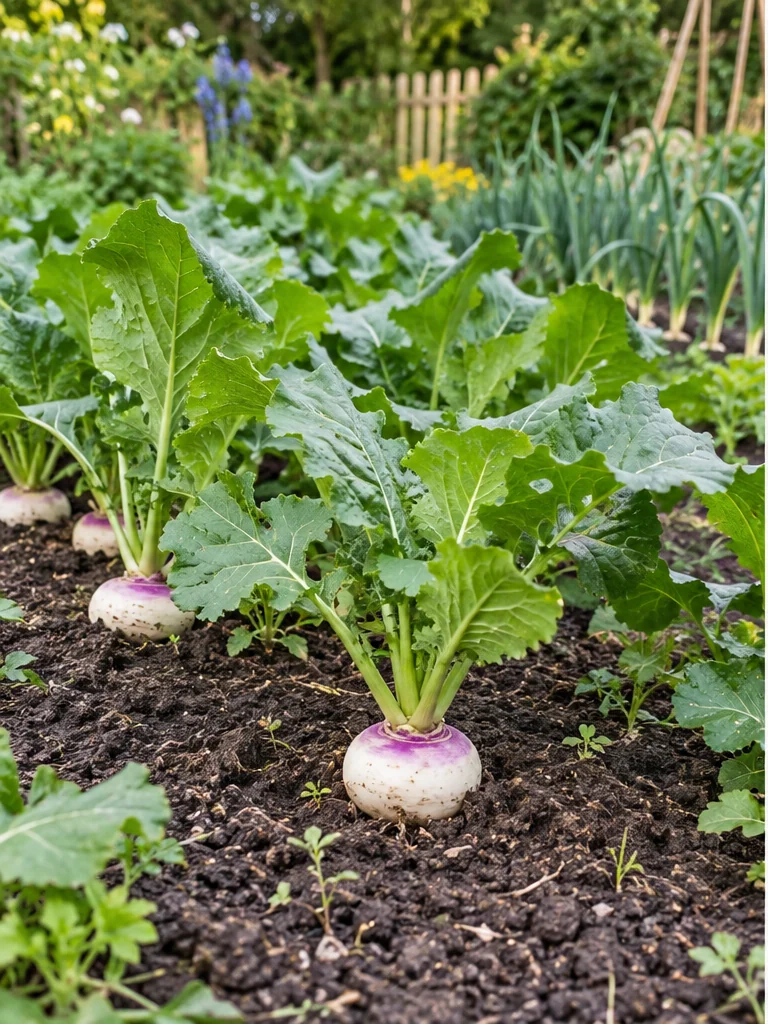
This image was created with AI from described plant characteristics and growing advice. It shows a possible situation and is not a photograph of a verified cultivar.
Sowing directly into a cleared bed
A root builds its harvest underground. First choose workable soil and a spot that will stay available for long enough. Sow directly and keep the row identifiable, even while seedlings are still small.
- Remove stones, weeds and hard clods without smearing wet clay into a compacted surface.
- Sow at the depth for the cultivar and keep the germination zone moist.
- Thin in time and harvest a first test specimen.
For anyone with a suitable bed and enough root space.
Tick off your supplies →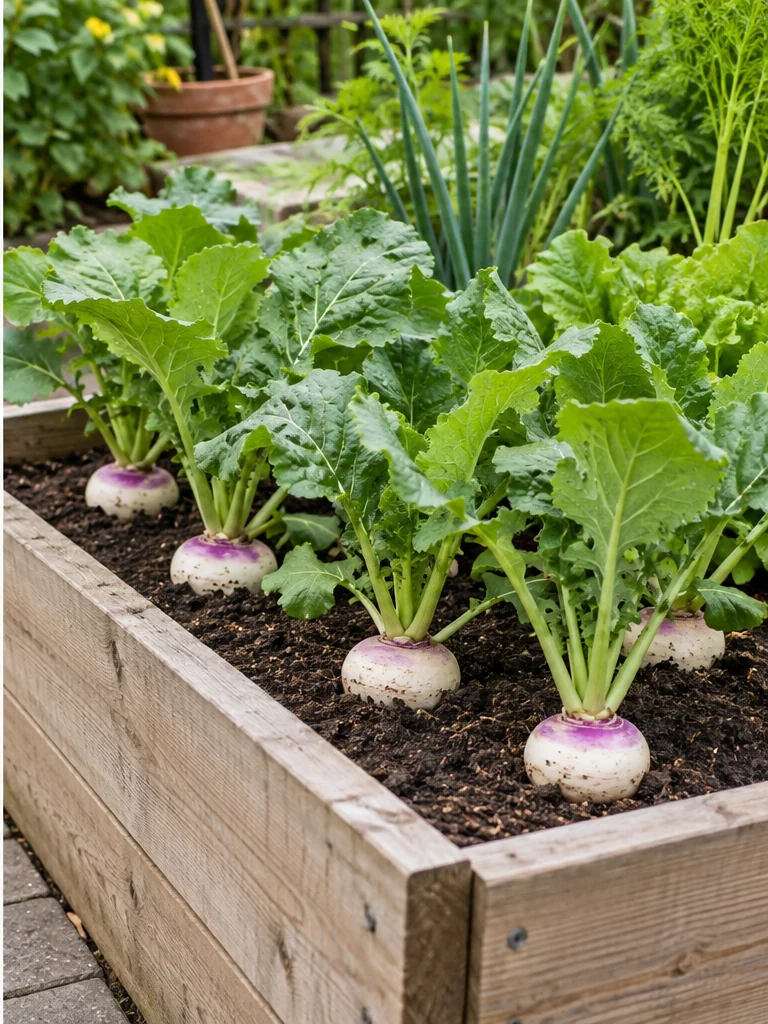
This image was created with AI from described plant characteristics and growing advice. It shows a possible situation and is not a photograph of a verified cultivar.
A small trial in a suitable container
For small turnips, use a wide pot with drainage and enough depth. Sow directly in the final pot and thin out. Pots need moisture checks more often than beds; a small root harvest is a sensible aim here.
- Check the cultivar’s expected root size.
- Choose a container with enough depth and unobstructed drainage.
- Sow directly and check moisture more often than in the ground.
For limited space, provided the container suits the root shape.
Tick off your supplies →Explore the varieties
See the confirmed differences. Characteristics without supporting evidence are left blank.
2 of 2 varieties
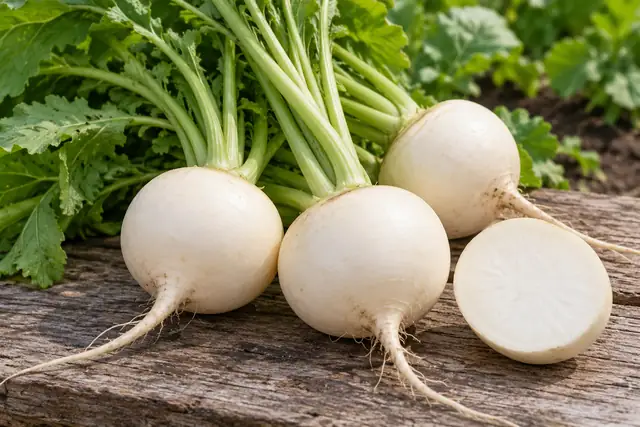
This image was created with AI from described plant characteristics and growing advice. It shows a possible situation and is not a photograph of a verified cultivar.
Oasis
Explore this variety and use the growing guide to choose a place for your plant.
View variety →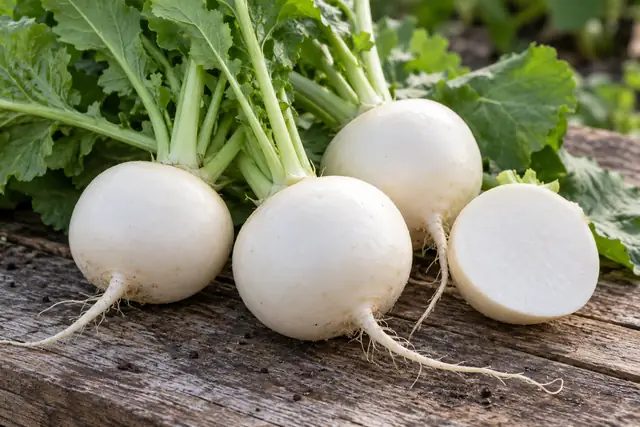
This image was created with AI from described plant characteristics and growing advice. It shows a possible situation and is not a photograph of a verified cultivar.
Tokyo Cross
Explore this variety and use the growing guide to choose a place for your plant.
View variety →Choose two to four varieties to compare their source data side by side.
Choose by flavour, shape and use
Goldana: Round yellow early turnip with edible young leaves too. Cook small yellow wedges briefly or make a mixed turnip mash. Young, healthy leaves can be cooked separately as turnip greens in a stir-fry.
Goldana has the mild character of turnip when harvested young. The yellow interior is a visible difference alongside white-fleshed turnips, without a proven flavour ranking.
Milanese Witte Roodkop: Witte meiraap met een gekleurde roodachtige schouder. Snijd kleine knollen dun voor rauwkost of stoom gelijke stukjes kort. Laat de gekleurde schouder zichtbaar bij een eenvoudige schotel met meerdere raapkleuren.
Young Milanese turnips have a fresh turnip flavour and a tender bite. The two-coloured root mainly differs in appearance, without any established extra pungency.
Platte Witte Mei: Flat-round, white-fleshed turnip harvested young and tender. Steam small wedges or grate young roots for a raw salad. Cut evenly so the delicate flesh does not need unnecessarily long cooking.
Harvested young, Platte Witte Mei is tender with the mild character of turnip. The flat bulb shape gives a different cutting result from a round or long root.
Boule d’Or: Ronde gladde raap met geel-oranje vruchtvlees. Snijd jonge wortels voor rauwkost of gaar gelijke blokjes in een groentestoof. De gele tot oranje binnenkant geeft herkenbare kleur naast aardappel of witte raap.
The source describes firm, sweet and fragrant flesh. This makes Boule d’Or interesting to taste alongside white-fleshed turnips, without guaranteeing the same flavour in every soil.
Choosing a suitable root crop
Raap en koolraap zijn verschillende teelten. Bij gewone rapen kun je jonge wortels oogsten of een later ras voor de herfst kiezen. Volg dat onderscheid op het zakje. Voor klein geoogste rapen hoef je niet dezelfde ruimte aan te houden als voor grote bewaarknollen.
Make room underground
Feel whether the soil is loose enough below the top layer. A fine surface can hide a hard layer. Carefully relieve obstructive compaction when the soil is workable. Avoid fresh, coarse manure directly in a row where straight roots need to develop.
Sow in the final position
Zaai rechtstreeks in een fijn zaaibed en verdeel de teelt over kleine porties. Koeler weer is gunstig. Een zomerse zaai lukt alleen als de kiemzone niet uitdroogt; wacht bij grote hitte liever op een beter moment binnen het rasvenster.
The surface layer deserves attention
After sowing, keep the germination zone evenly moist. A hard crust and drying can hold back small plants. Water with a fine rose and do not walk over the row. A label helps you find the sowing position before recognisable leaves appear.
Give every young plant its own space
Dun de opkomst tijdig uit zodat de wortels kunnen verdikken. De precieze afstand hangt af van ras en oogstmaat. Je kunt jonge uitgedunde plantjes als bladgroente gebruiken wanneer het eetbare raapplanten zijn; neem niet alle bladeren van de overblijvende wortelplanten weg.
Growing without large fluctuations
During dry periods, check moisture below the surface. Young plants and containers need more frequent watering checks than a well-rooted crop in a bed. Water according to need and let it soak down; a wet surface every day tells you little about the root zone.
Take time over the first one
Oogst rapen jong en proef een wortel van bruikbare maat. Laat ze niet groeien alleen om een grotere kilo-oogst te krijgen: bij veel typen neemt de malsheid af. Maak de grond zo nodig los en trek zonder het loof van de wortel te scheuren.
An unusual root tells you something
A small, hard root can sometimes be associated with drought, too little space or an unsuitable growing season. As turnip is a brassica, flea beetles, cabbage root fly and clubroot may also play a part. Identify the damage and include the crop in your brassica rotation.
Start with a sound harvest
Use damaged roots first and store only sound ones, following guidance for the type and cultivar. Cool conditions and suitable humidity help limit drying, but check for deterioration. Storage advice for one winter cultivar is not a shelf-life promise for the whole species.
What you need
Tick what you already have. The extras depend on how you grow.
0 of 5 ticked off
Your ticks are saved in this browser.
Discover and grow more
More background, sources and image information
SeedSteps editorial team · updated on 11 October 2026. The AI images illustrate species and practical growing situations; they do not prove an exact cultivar, observations from your own garden or yield.
Britse gewasadviezen worden gecombineerd met Nederlandse en Vlaamse informatie waar beschikbaar. Amerikaanse Extension-bronnen ondersteunen plantprincipes en herkenning; hun kalenderdata, lokale plaagdruk, bestrijdingsmiddelen en mestdoseringen worden niet rechtstreeks op Nederland of Vlaanderen toegepast. Vorst, bodemwarmte, standplaats en expliciete rasinformatie blijven de lokale controle. Commerciële bronnen onderbouwen uitsluitend benoemde ras- en plantkenmerken; zij zijn geen affiliate-aanbeveling.
- World Checklist of Vascular Plants — 4 juni 2026Royal Botanic Gardens, Kew · accessed 2026-10-07
- Meiraap 'Goldana' BiologischFeggies · accessed 2026-10-11
- Meiraap 'Milanese Witte Roodkop' BiologischFeggies · accessed 2026-10-11
- Organic Raap Platte Witte Mei zadenFeggies · accessed 2026-10-11
- Raap Boule d'Or zadenFeggies · accessed 2026-10-11
- Raapkool Geel zadenFeggies · accessed 2026-10-11
- RHS — raap kwekenRoyal Horticultural Society · accessed 2026-10-10
- USU Extension — raap in de tuinUtah State University Extension · accessed 2026-10-10
Supporting evidence by chapter: Choose by flavour, shape and use: Feggies, Feggies, Feggies, Feggies. Choosing a suitable root crop: Royal Horticultural Society, Utah State University Extension. Make room underground: Royal Horticultural Society, Utah State University Extension. Sow in the final position: Royal Horticultural Society, Utah State University Extension. The surface layer deserves attention: Royal Horticultural Society, Utah State University Extension. Give every young plant its own space: Royal Horticultural Society, Utah State University Extension. Growing without large fluctuations: Royal Horticultural Society, Utah State University Extension. Take time over the first one: Royal Horticultural Society, Utah State University Extension. An unusual root tells you something: Royal Horticultural Society, Utah State University Extension. Start with a sound harvest: Royal Horticultural Society, Utah State University Extension.