
Radijs: een korte rij voor een snelle, knapperige oogst
Radishes quickly show you what a good seedbed and regular watering can achieve. Sow a short row, harvest young and make room for something else. This makes them a small recurring garden ritual rather than one large harvest peak.
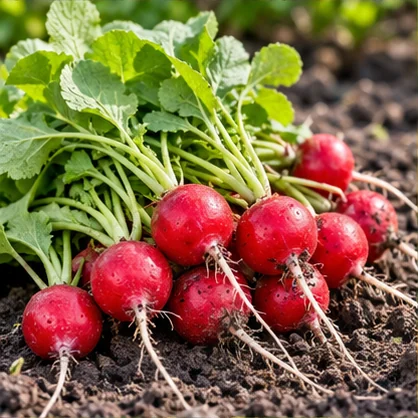
This image was created with AI from described plant characteristics and growing advice. It shows a possible situation and is not a photograph of a verified cultivar.
- Sowing
- Voorjaar en late zomer; vermijd grote hitte
- Harvesting
- Jong, zodra de wortel bruikbaar is
- Location
- Zon; bij zomerse hitte lichte schaduw
- Pot
- Geschikt voor een brede pot
This growing advice helps you choose. Your variety, growth stage, weather and conditions in your space determine the actual timing.
Sowing under cover and raising seedlings
Direct zaaien voor jong blad of wortels · Radish
Voorjaar of najaar, bij geschikt rasZaai direct in kasgrond of bak, houd licht en ventileer.
- Germination and temperature
- Wacht op bewerkbare, opgewarmde grond; volg de minimale zaaitemperatuur van het ras.
- After emergence
- Houd de zaairij gelijkmatig vochtig tijdens de opkomst en herkenbaar met een label.
- Pricking out and potting on
- Zaai dun en dun waar nodig op de definitieve plek uit. Voor snijblad hoeft niet elke zaailing apart te staan.
- Hardening off and planting out
- Blijft op de zaaiplek; afharden en uitplanten zijn bij directe zaai niet nodig.
Een koele, gelijkmatige start helpt. Bij hitte, droogte of een verkeerd rasvenster kunnen planten snel schieten.
Sources and use
Royal Horticultural Society · RHS — radijs kweken ↗Soort- of productgebonden bron; buitenlandse perioden zijn geen vaste Nederlandse zaaidatum.
Utah State University Extension · USU Extension — radijs in de tuin ↗Soort- of productgebonden bron; buitenlandse perioden zijn geen vaste Nederlandse zaaidatum.
Guideline periods for the Netherlands and Flanders. Check the variety, available light, soil and measured temperatures. Greenhouse heating does not guarantee enough winter light.
A different flavour, a different harvest.
Choose by more than the name. Discover how these varieties and crop types taste, what you can use them for and what growing them involves.
9 of 9 choices · 7 named varieties
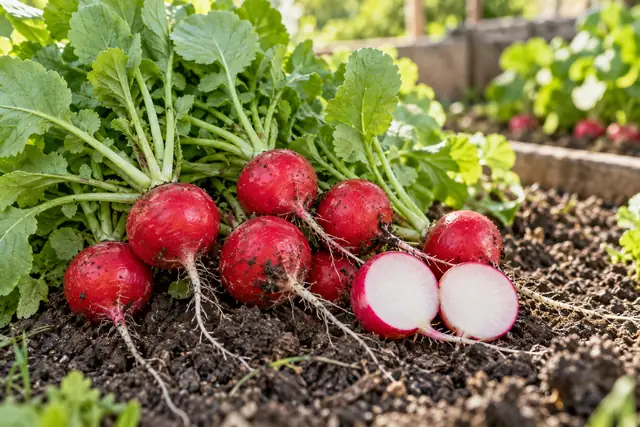
This image was created with AI from described plant characteristics and growing advice. It shows a possible situation and is not a photograph of a verified cultivar.
Cherry Bell
Ronde rode radijs voor kleine, herhaalde oogsten.
Kies Cherry Bell voor een herkenbare ronde rode oogst in een korte rij. Gespreid zaaien geeft meer jonge porties dan één grote zaai.
Flavour, kitchen and growing
How does it taste?
Cherry Bell wordt als niet erg pittig beschreven. Een jonge oogst en gelijkmatige watergift helpen bij een knapperige beet; droogte kan het resultaat scherper maken.
In the kitchen
Snijd rondjes voor brood of halveer de radijs voor een salade. Meng met iets romigs wanneer je het frisse, lichte peperaccent wilt verzachten.
A space in the garden
Zaai rechtstreeks in koele voorjaars- of nazomergrond. Dun de planten op tijd uit en houd de wortelzone vochtig zonder afwisselend uitdrogen en kletsnat maken.
Harvesting
Oogst zodra de ronde wortels goed gevormd zijn. Trek geregeld een proefradijs; wacht niet tot de hele rij dik wordt en de structuur grover kan worden.
Read the source notes →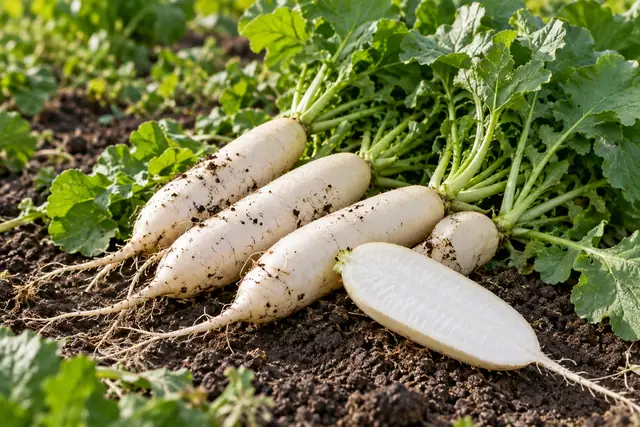
This image was created with AI from described plant characteristics and growing advice. It shows a possible situation and is not a photograph of a verified cultivar.
Marché de Zurich
Langwerpige witte raapradijs voor een andere oogstvorm.
Kies Marché de Zurich wanneer je een witte, langwerpige radijs wilt proberen. De bron noemt ook beschutte teelt; de winkelterm winter vervangt geen passende zaaitijd.
Flavour, kitchen and growing
How does it taste?
De bron beschrijft wit, aromatisch vruchtvlees. De langwerpige witte wortel geeft een ander formaat dan een klein kogelradijsje; proef de pittigheid op jonge maat.
This flavour description applies to the crop; there is no separate tasting result for this variety.In the kitchen
Snijd dunne schuine plakken voor rauwkost of rasp een portie bij wortel. Het aroma geeft een frisse aanvulling op een salade met een romige dressing.
A space in the garden
Zaai volgens de verpakking op een los bed en geef meer wortelruimte dan aan kleine radijsjes. Houd de groei vochtig zodat de wortel gelijkmatig kan ontwikkelen.
Harvesting
Oogst per wortel op een bruikbaar formaat. Beoordeel de structuur met een eerste proefwortel en gebruik jonge wortels vers in plaats van alles groot te laten worden.
Read the source notes →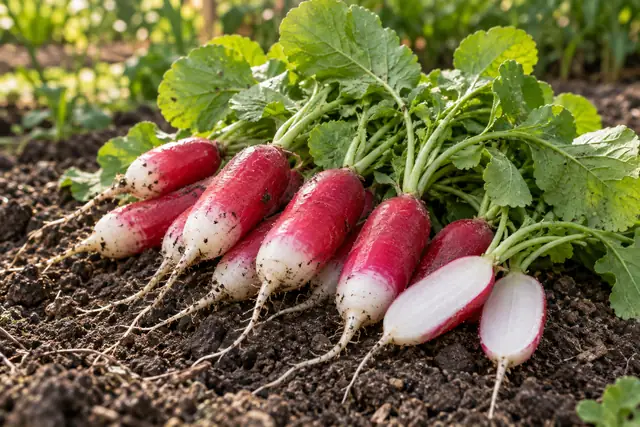
This image was created with AI from described plant characteristics and growing advice. It shows a possible situation and is not a photograph of a verified cultivar.
French Breakfast 2
Halflange rode radijs met een witte punt.
Kies French Breakfast 2 voor een andere vorm dan ronde radijzen. In een korte rij kun je regelmatig jonge wortels met hun witte uiteinde oogsten.
Flavour, kitchen and growing
How does it taste?
Het knapperige vruchtvlees geeft het frisse radijskarakter. De tweekleurige langwerpige vorm is het duidelijke verschil; de naam vertelt niets over een vaste mildheid.
This flavour description applies to the crop; there is no separate tasting result for this variety.In the kitchen
Halveer de radijs in de lengte zodat rood en wit zichtbaar blijven. Serveer met boter op brood of snijd fijne reepjes voor een frisse salade.
A space in the garden
Zaai direct en dun uit zodat de wortels niet tegen elkaar worden gedrukt. Vermijd een harde onderlaag en houd de bodem gelijkmatig vochtig.
Harvesting
Oogst jong zodra de vorm goed herkenbaar is. Laat een lang worteltje niet onbeperkt doorgroeien voor extra lengte; controleer beet en pittigheid met een proefradijs.
Read the source notes →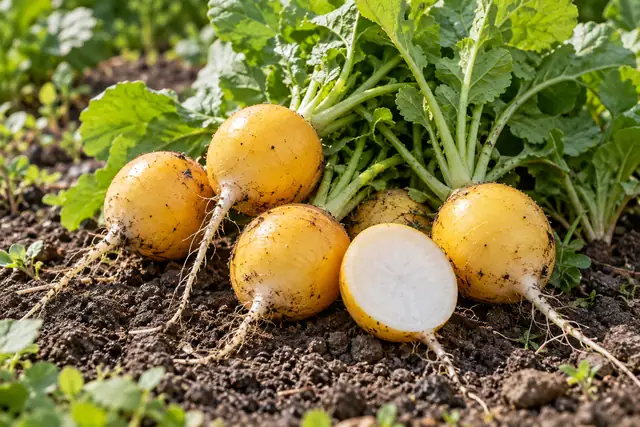
This image was created with AI from described plant characteristics and growing advice. It shows a possible situation and is not a photograph of a verified cultivar.
Helios
Goudgele radijs, rond tot iets langwerpig.
Kies Helios voor een duidelijke kleurvariant op klassieke rode radijs. Zaai een klein rijtje naast een ander ras en vergelijk zelf vorm en beet.
Flavour, kitchen and growing
How does it taste?
Helios heeft het knapperige radijskarakter met een frisse scherpe toets. De goudgele huid is de bijzondere eigenschap; de kleur bewijst geen zoetere smaak.
This flavour description applies to the crop; there is no separate tasting result for this variety.In the kitchen
Snijd jonge gele radijsjes met de schil voor een rauwkostschaal. Een mix van gele en rode schijfjes geeft kleur zonder ingewikkelde bereiding.
A space in the garden
Zaai rechtstreeks en dun uit zodat de wortels rond kunnen uitgroeien. Kies een periode met gematigde temperaturen en voorkom droogtestress bij de kleine planten.
Harvesting
Controleer de wortels vroeg en oogst jong om knapperigheid te behouden. De opgegeven dagen zijn indicatief; wachten op alle planten tegelijk kan kwaliteitsverlies geven.
Read the source notes →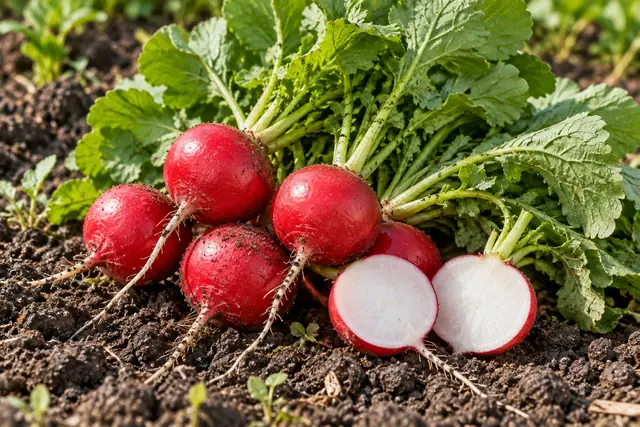
This image was created with AI from described plant characteristics and growing advice. It shows a possible situation and is not a photograph of a verified cultivar.
Sora
Ronde helderrode radijs met stevig vruchtvlees.
Kies Sora voor een klassieke ronde rode radijs en een compacte oogst. Met meerdere kleine zaaisels kun je steeds jonge wortels proeven.
Flavour, kitchen and growing
How does it taste?
Sora heeft stevig vruchtvlees met de frisse radijssmaak. Er is geen onderbouwde smaakrangorde met Cherry Bell; beoordeel de pittigheid aan een jonge eigen oogst.
This flavour description applies to the crop; there is no separate tasting result for this variety.In the kitchen
Snijd de ronde radijs in gelijkmatige schijfjes voor brood of een aardappelsalade. Laat de rode schil zitten om de kleur op het bord te behouden.
A space in the garden
Zaai dun rechtstreeks in fijn losgemaakte grond. Dun tijdig en geef bij droogte kleine regelmatige watergiften zodat de wortels gelijkmatig doorgroeien.
Harvesting
Trek een proefwortel zodra de schouder zichtbaar wordt. Gebruik de oogst vers en zaai opnieuw voor een volgende ronde in plaats van oude radijsjes langer te laten staan.
Read the source notes →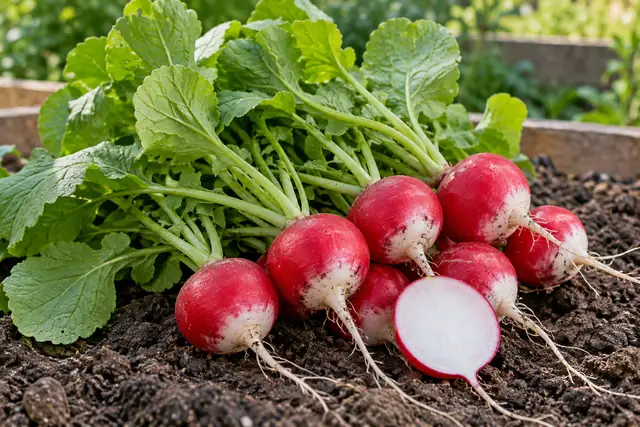
This image was created with AI from described plant characteristics and growing advice. It shows a possible situation and is not a photograph of a verified cultivar.
Sparkler 2
Korte radijsteelt voor een eerste oogst in kleine ruimte.
Kies Sparkler 2 voor een korte teelt op balkon of in een klein bed. Een bescheiden eerste zaai helpt om zonder grote voorraad zelf te leren oogsten.
Flavour, kitchen and growing
How does it taste?
Verwacht de frisse, knapperige radijssmaak. Sparkler 2 wordt vooral met snelle groei beschreven; een afwijkende smaaknoot is niet vastgesteld.
This flavour description applies to the crop; there is no separate tasting result for this variety.In the kitchen
Snijd de jonge oogst vlak voor de maaltijd voor brood of rauwkost. Begin met een kleine hoeveelheid en pas een romige dressing aan de eigen pittigheid aan.
A space in the garden
Zaai rechtstreeks in een bak met afvoergaten of een fijn zaaibed. Dun de planten uit en controleer in een bak vaker of de potgrond nog vochtig is.
Harvesting
De leverancier noemt ongeveer vier tot zes weken, afhankelijk van groeiomstandigheden. Trek een proefwortel en oogst zodra beet en maat goed zijn voor je gerecht.
Read the source notes →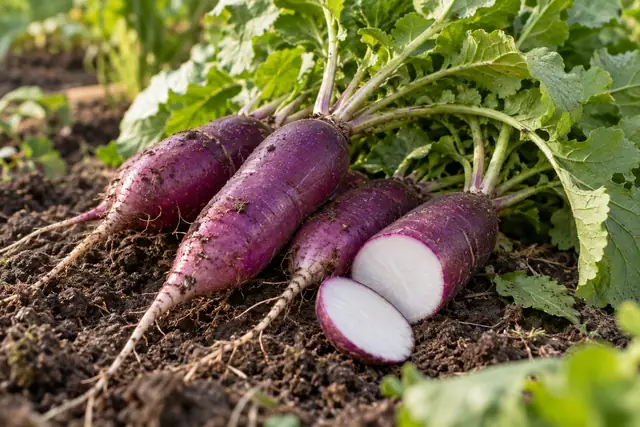
This image was created with AI from described plant characteristics and growing advice. It shows a possible situation and is not a photograph of a verified cultivar.
Violet de Gournay
Paarse langwerpige winterradijs met een witte binnenkant.
Kies dit ras voor een paarse huid en een grotere late wortel. De producent plaatst hem bij winterradijs; plan hem daarom anders dan een snelle voorjaarsradijs.
Flavour, kitchen and growing
How does it taste?
De producent beschrijft Violet de Gournay als geurig en pittig. Dat is een winterradijskarakter, met vaak een steviger smaak dan een jong klein radijsje.
In the kitchen
Rasp een bescheiden portie door rauwkost of snijd dunne plakken bij brood. Gaar stukken in soep wanneer je de pittigheid zachter wilt laten overkomen.
A space in the garden
Zaai voor een late oogst in de zomer volgens de verpakking. Geef ongeveer tien centimeter wortelruimte en houd de lange wortels zonder droogteonderbreking groeiend.
Harvesting
Rooi voordat strenge vorst schade kan geven. Gave late wortels kun je koel bewaren; gebruik beschadigde exemplaren direct en controleer de voorraad tegen uitdrogen.
Read the source notes →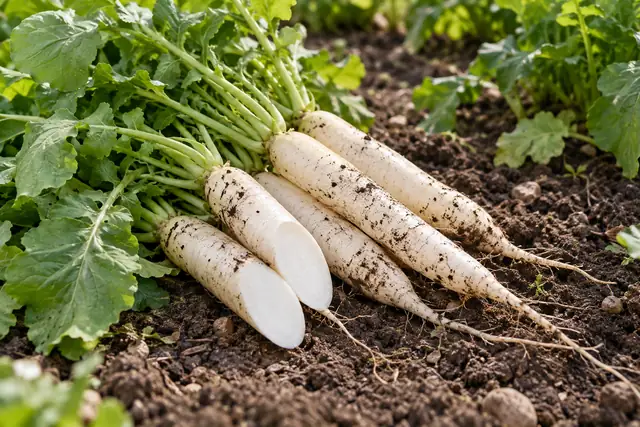
This image was created with AI from described plant characteristics and growing advice. It shows a possible situation and is not a photograph of a verified cultivar.
Daikon
Lang wit radijstype voor een andere keukenmaat.
Kies Daikon voor lange witte wortels en een zomerse zaai. Het blijft een type, omdat de minimuminventaris geen afzonderlijke cultivarnaam opgeeft.
Flavour, kitchen and growing
How does it taste?
Daikon wordt met een milde radijssmaak beschreven. Het grote, witte worteltype geeft ruimte voor rauwe en warme bereidingen; mildheid blijft afhankelijk van oogst en groei.
This flavour description applies to the crop; there is no separate tasting result for this variety.In the kitchen
Snijd fijne reepjes voor salade of plakken voor een soep. De lange wortel maakt gelijke stroken gemakkelijk; proef eerst een klein deel voordat je veel rauwe radijs gebruikt.
A space in the garden
Zaai in diep losse grond volgens het aangeboden type en dun ruimer uit dan bij kleine radijs. De lange wortel vraagt zowel voldoende diepte als vocht.
Harvesting
Oogst op gewenste keukenmaat in de late zomer of herfst. Maak de grond naast de wortel los en voorkom breuk; verwerk beschadigde delen het eerst.
Read the source notes →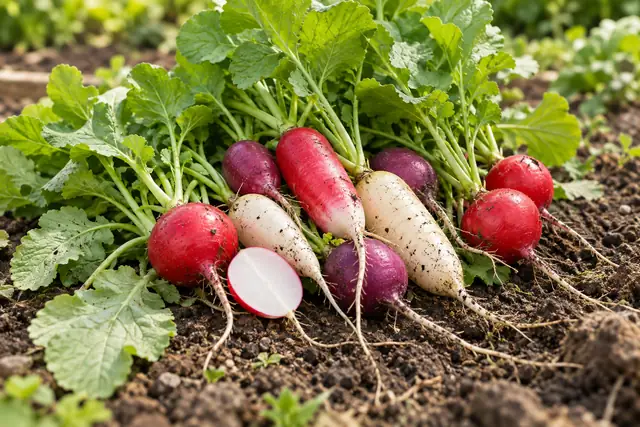
This image was created with AI from described plant characteristics and growing advice. It shows a possible situation and is not a photograph of a verified cultivar.
Gemengd
Radijsmengsel met verschillende kleuren, vormen en groeisnelheden.
Kies gemengd als je in één korte rij wilt ontdekken. De verschillende groeisnelheden spreiden de oogst, maar vragen ook controle per plant.
Flavour, kitchen and growing
How does it taste?
Een mengsel geeft geen uniforme pittigheid of beet. Proef enkele jonge wortels apart en ontdek welke vorm je in rauwkost het prettigst vindt.
This flavour description applies to the crop; there is no separate tasting result for this variety.In the kitchen
Maak een schaal met dunne schijfjes en gehalveerde kleine radijzen. Verschillende vormen en kleuren geven variatie zonder voor elk type een apart gerecht te maken.
A space in the garden
Zaai rechtstreeks en dun uit met ruimte voor de grootste wortels. Houd het rijtje gelijkmatig vochtig en laat kleine late planten staan als vroege wortels worden geoogst.
Harvesting
Oogst op individuele maat in meerdere rondes. Eén oogstdatum voor de hele rij past niet bij dit mengsel; controleer geregeld een wortel onder het loof.
Read the source notes →Choose your way to grow
From a garden bed to a suitable pot or support: give your plant a place that suits your garden and the care you can provide.
This image was created with AI from described plant characteristics and growing advice. It shows a possible situation and is not a photograph of a verified cultivar.
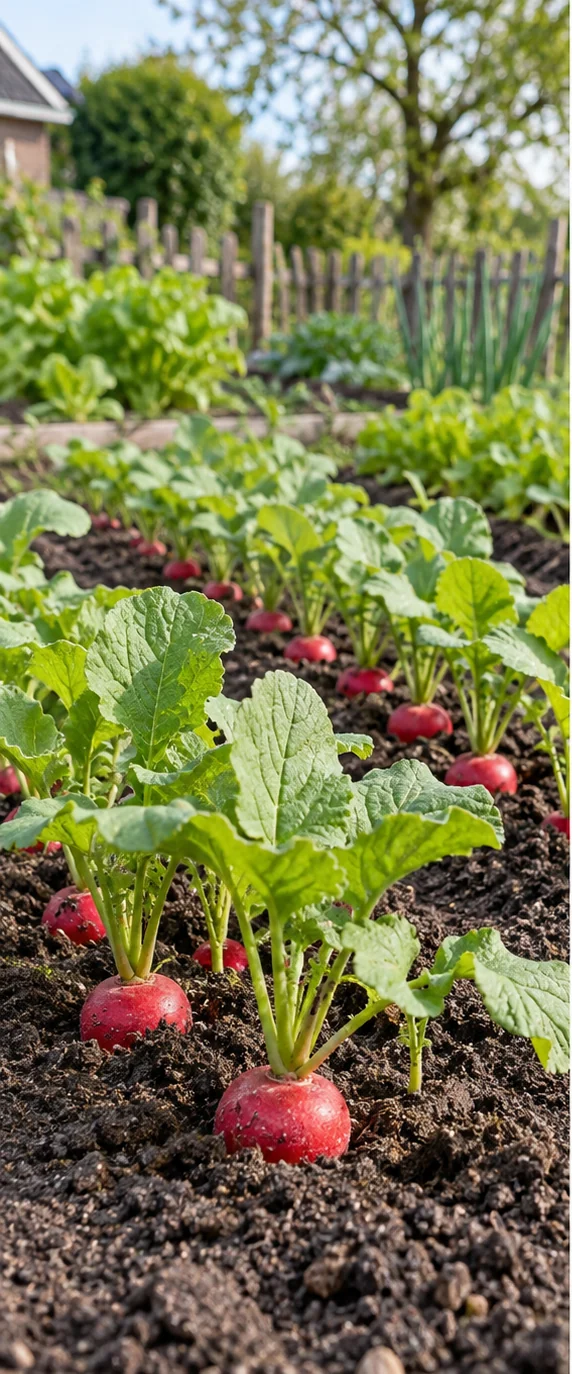
Sowing directly into a cleared bed
A root builds its harvest underground. First choose workable soil and a spot that will stay available for long enough. Sow directly and keep the row identifiable, even while seedlings are still small.
- Remove stones, weeds and hard clods without smearing wet clay into a compacted surface.
- Sow at the depth for the cultivar and keep the germination zone moist.
- Thin in time and harvest a first test specimen.
For anyone with a suitable bed and enough root space.
Tick off your supplies →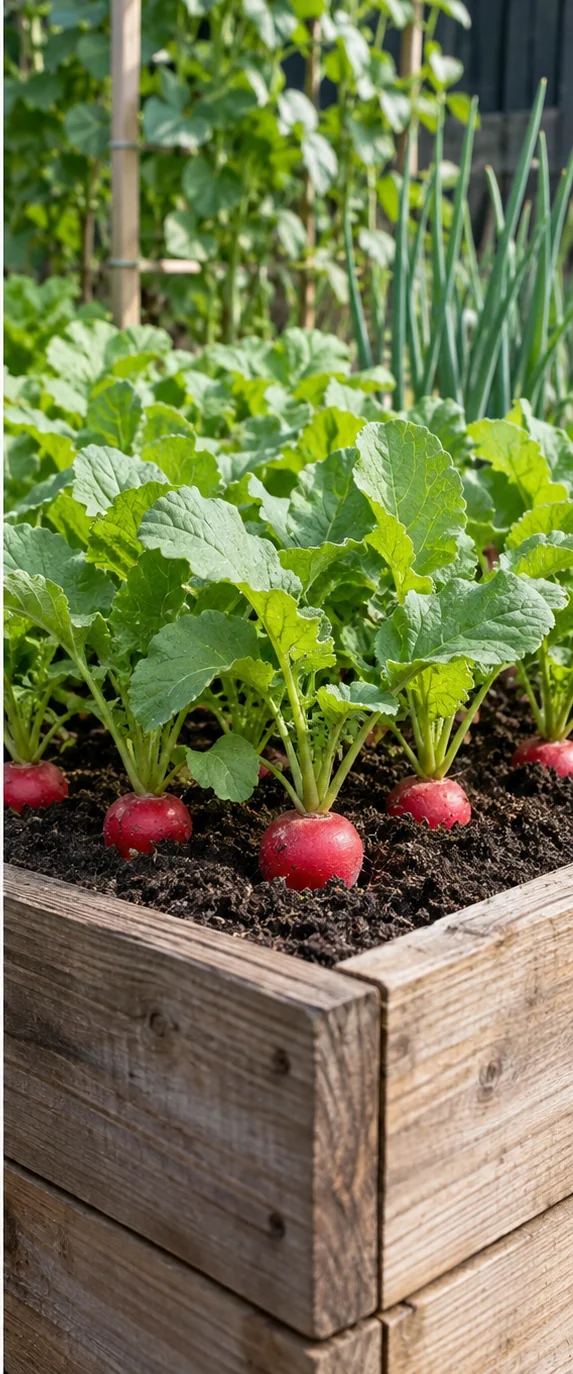
This image was created with AI from described plant characteristics and growing advice. It shows a possible situation and is not a photograph of a verified cultivar.
A small trial in a suitable container
Een brede pot met afvoergaten is genoeg voor een kleine salade-radijsoogst. Zaai direct en geef de worteltjes ruimte. De bovenlaag droogt snel; controleer ook bij zachte regen of de kiemzone werkelijk vochtig is.
- Check the cultivar’s expected root size.
- Choose a container with enough depth and unobstructed drainage.
- Sow directly and check moisture more often than in the ground.
For limited space, provided the container suits the root shape.
Tick off your supplies →Explore the varieties
See the confirmed differences. Characteristics without supporting evidence are left blank.
5 of 5 varieties
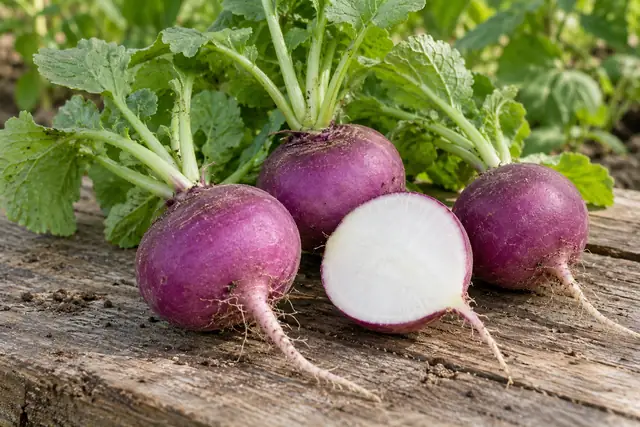
This image was created with AI from described plant characteristics and growing advice. It shows a possible situation and is not a photograph of a verified cultivar.
Amethyst
Explore this variety and use the growing guide to choose a place for your plant.
View variety →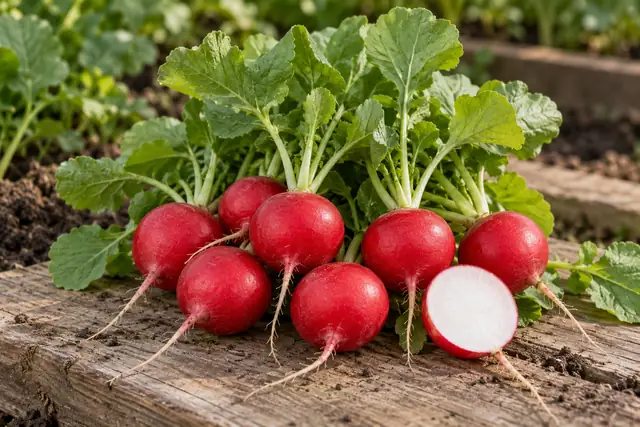
This image was created with AI from described plant characteristics and growing advice. It shows a possible situation and is not a photograph of a verified cultivar.
Celesta
Explore this variety and use the growing guide to choose a place for your plant.
View variety →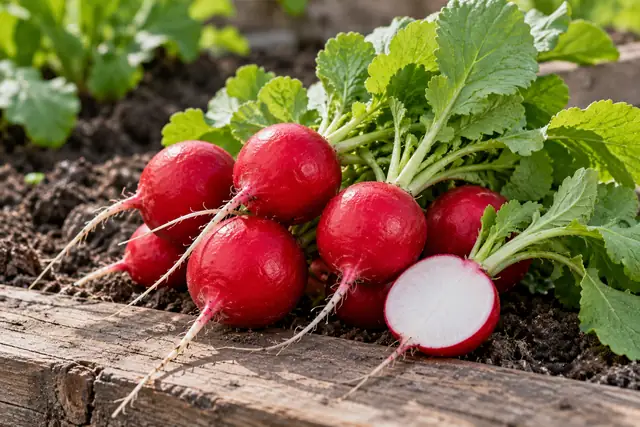
This image was created with AI from described plant characteristics and growing advice. It shows a possible situation and is not a photograph of a verified cultivar.
Escala
Explore this variety and use the growing guide to choose a place for your plant.
View variety →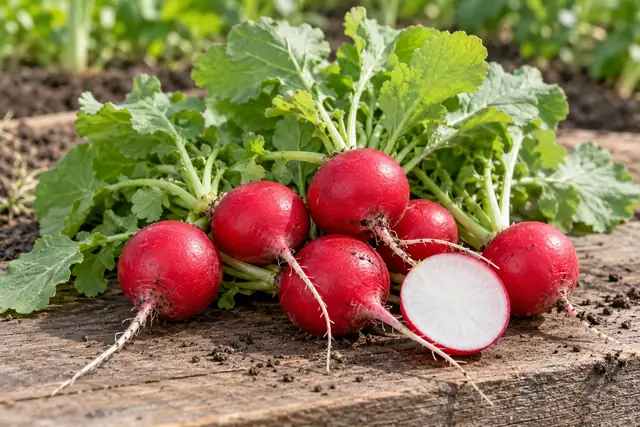
This image was created with AI from described plant characteristics and growing advice. It shows a possible situation and is not a photograph of a verified cultivar.
Rudolf
Explore this variety and use the growing guide to choose a place for your plant.
View variety →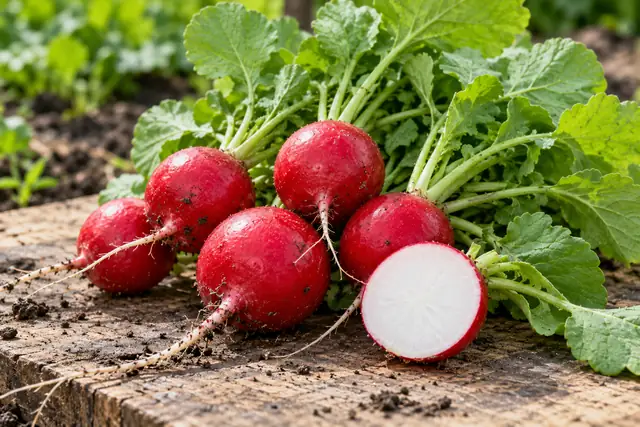
This image was created with AI from described plant characteristics and growing advice. It shows a possible situation and is not a photograph of a verified cultivar.
Scarlet Globe
Explore this variety and use the growing guide to choose a place for your plant.
View variety →Choose two to four varieties to compare their source data side by side.
Choose by flavour, shape and use
Cherry Bell: Round red radish for small, repeated harvests. Cut into rounds for bread or halve for a salad. Combine with something creamy when you want to soften the fresh, lightly peppery note.
Cherry Bell is described as not very hot. Harvesting young and watering evenly help a crisp bite; drought may make the result sharper.
Marché de Zurich: Long white radish for a different harvest shape. Cut thin diagonal slices for raw salads or grate some alongside carrot. Its flavour adds a fresh note to a salad with a creamy dressing.
The source describes white, aromatic flesh. The elongated white root gives a different size from a small round radish; taste the heat at a young size.
French Breakfast 2: Half-long red radish with a white tip. Halve the radish lengthways so that both red and white remain visible. Serve with butter on bread or cut into fine strips for a fresh salad.
The crisp flesh gives a fresh radish character. The bicoloured elongated shape is the clear difference; the name says nothing about a fixed mildness.
Helios: Golden-yellow radish, round to slightly elongated. Slice young yellow radishes with their skin for a raw vegetable platter. A mix of yellow and red slices adds colour without complicated preparation.
Helios has a crisp radish character with a fresh, sharp note. Its golden-yellow skin is the unusual characteristic; colour does not prove a sweeter flavour.
Choosing a suitable root crop
Small salad radishes grow differently from large winter radishes. For a quick row, choose a true salad type. Colour and shape may vary, but maximum size is not a good harvest aim. Young, firm roots are usually a better reason to pick.
Make room underground
Feel whether the soil is loose enough below the top layer. A fine surface can hide a hard layer. Carefully relieve obstructive compaction when the soil is workable. Avoid fresh, coarse manure directly in a row where straight roots need to develop.
Sow in the final position
Sow thinly and directly where you want to harvest. A short row every few weeks spreads the harvest. Keep the soil moist during germination. Start a new batch in mild weather rather than in the middle of hot, dry days.
The surface layer deserves attention
After sowing, keep the germination zone evenly moist. A hard crust and drying can hold back small plants. Water with a fine rose and do not walk over the row. A label helps you find the sowing position before recognisable leaves appear.
Give every young plant its own space
Overcrowded germination produces plenty of leaves and little room for the root. Thin early to the cultivar spacing and aim for the stated harvest size. For salad radishes, that spacing is measured in centimetres, rather than the large space needed by winter radish.
Growing without large fluctuations
During dry periods, check moisture below the surface. Young plants and containers need more frequent watering checks than a well-rooted crop in a bed. Water according to need and let it soak down; a wet surface every day tells you little about the root zone.
Take time over the first one
Check the root shoulders early and harvest a test radish once the size looks useful. Pick the row gradually. A radish left too long can become pithy or pungent; do not wait until every one is exactly the same size.
An unusual root tells you something
Plenty of leaves and hardly any root can be associated with heat, drought or overcrowding. Small holes in the leaves may be caused by flea beetles. Protect young rows with fine mesh where needed and improve the timing of the next sowing; extra fertiliser is not a standard solution.
Start with a sound harvest
Use damaged roots first and store only sound ones, following guidance for the type and cultivar. Cool conditions and suitable humidity help limit drying, but check for deterioration. Storage advice for one winter cultivar is not a shelf-life promise for the whole species.
What you need
Tick what you already have. The extras depend on how you grow.
0 of 5 ticked off
Your ticks are saved in this browser.
Discover and grow more
More background, sources and image information
SeedSteps editorial team · updated on 11 October 2026. The AI images illustrate species and practical growing situations; they do not prove an exact cultivar, observations from your own garden or yield.
Britse gewasadviezen worden gecombineerd met Nederlandse en Vlaamse informatie waar beschikbaar. Amerikaanse Extension-bronnen ondersteunen plantprincipes en herkenning; hun kalenderdata, lokale plaagdruk, bestrijdingsmiddelen en mestdoseringen worden niet rechtstreeks op Nederland of Vlaanderen toegepast. Vorst, bodemwarmte, standplaats en expliciete rasinformatie blijven de lokale controle. Commerciële bronnen onderbouwen uitsluitend benoemde ras- en plantkenmerken; zij zijn geen affiliate-aanbeveling.
- World Checklist of Vascular Plants — 4 juni 2026Royal Botanic Gardens, Kew · accessed 2026-10-07
- Radijs 'Cherry Bell' zaden BiologischFeggies · accessed 2026-10-11
- Radijs DaikonFeggies · accessed 2026-10-11
- Radijs French Breakfast 2 zadenFeggies · accessed 2026-10-11
- Radijs geel Helios zadenFeggies · accessed 2026-10-11
- Radijs gemengd zadenFeggies · accessed 2026-10-11
- Radijs Rond écarlate Sora zadenFeggies · accessed 2026-10-11
- Radijs sparkler 2 – biologische groentezaden (snelgroeiend)Feggies · accessed 2026-10-11
- Radijs (Winter-) Marché de Zurich zadenFeggies · accessed 2026-10-11
- Violet de Gournay – biologische radijszaden (Heirloom)Feggies · accessed 2026-10-11
- Radis d’hiver Violet de GournaySemailles · accessed 2026-10-11
- Radis d’hiver: teelt en gebruikSemailles · accessed 2026-10-11
- RHS — radijs kwekenRoyal Horticultural Society · accessed 2026-10-10
- USU Extension — radijs in de tuinUtah State University Extension · accessed 2026-10-10
Supporting evidence by chapter: Choose by flavour, shape and use: Feggies, Feggies, Feggies, Feggies. Choosing a suitable root crop: Royal Horticultural Society, Utah State University Extension. Make room underground: Royal Horticultural Society, Utah State University Extension. Sow in the final position: Royal Horticultural Society, Utah State University Extension. The surface layer deserves attention: Royal Horticultural Society, Utah State University Extension. Give every young plant its own space: Royal Horticultural Society, Utah State University Extension. Growing without large fluctuations: Royal Horticultural Society, Utah State University Extension. Take time over the first one: Royal Horticultural Society, Utah State University Extension. An unusual root tells you something: Royal Horticultural Society, Utah State University Extension. Start with a sound harvest: Royal Horticultural Society, Utah State University Extension.