Why grow Jaune du Poitou?
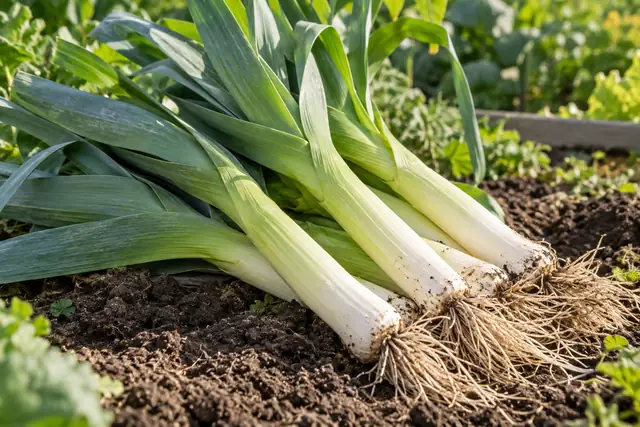
Jaune du Poitou is an early, fast-growing summer leek with pale green leaves. The source emphasises a relatively large shank diameter.
Choose this variety for early leeks and a bed needed later. The selection is described as more frost-sensitive.
How this choice tastes
A distinct cultivar aroma is not described. The summer growing window offers a more reliable reason for choosing it than an unproven flavour difference.
From harvest to kitchen
Cook young shanks in longer pieces or use rings in a summer vegetable dish. Harvesting tender provides several possible uses.
What needs attention when growing
Plan propagation for a warm growing period and do not leave plants deep into winter without assessment.
Harvest at usable shank thickness during the summer crop. Earliness means monitoring development regularly.
Choose by flavour, shape and use
Herfstreuzen: Herfstreuzen is intended for a late autumn crop. The name emphasises timing, but does not guarantee an exceptional size in every bed. Slice the shank into rings for soup or cook longer pieces gently. Wash away any soil left between the leaf layers.
A distinct aroma profile for this selection is lacking. Mild onion-like use is given as general leek information.
St Victor: St Victor is a winter-focused leek with upright blue-purple leaves. The source describes a half-long shaft and compact winter development. Use the shaft in soup or a slowly cooked dish. Healthy green leaves can be included in a stock base.
The product source gives no specific St Victor aroma. Leaf colour says nothing about a proven difference in sweetness.
Jaune du Poitou: Early, fast-growing summer leek with blond-green leaves. The source emphasises relatively broad shanks. Cook young shanks in longer pieces or use rings in a summer vegetable dish. Harvesting tender provides several possible uses.
A distinct cultivar aroma is not described. The summer growing window offers a more reliable reason for choosing it than an unproven flavour difference.
Start with the desired harvest time
Summer, autumn and winter leeks follow different growing paths. An early leek is not an automatic replacement for a winter cultivar. Read the sowing time on the packet and first choose when to harvest; then optionally divide two cultivars across the bed.
From thin shoot to sturdy plant
Sow thinly in fine seed compost in spring, about 1–1.5 cm deep. Keep the surface slightly moist and provide light. A seedbed saves main-bed space, while starting in pots makes germination and care more visible.
Make room for the white shaft
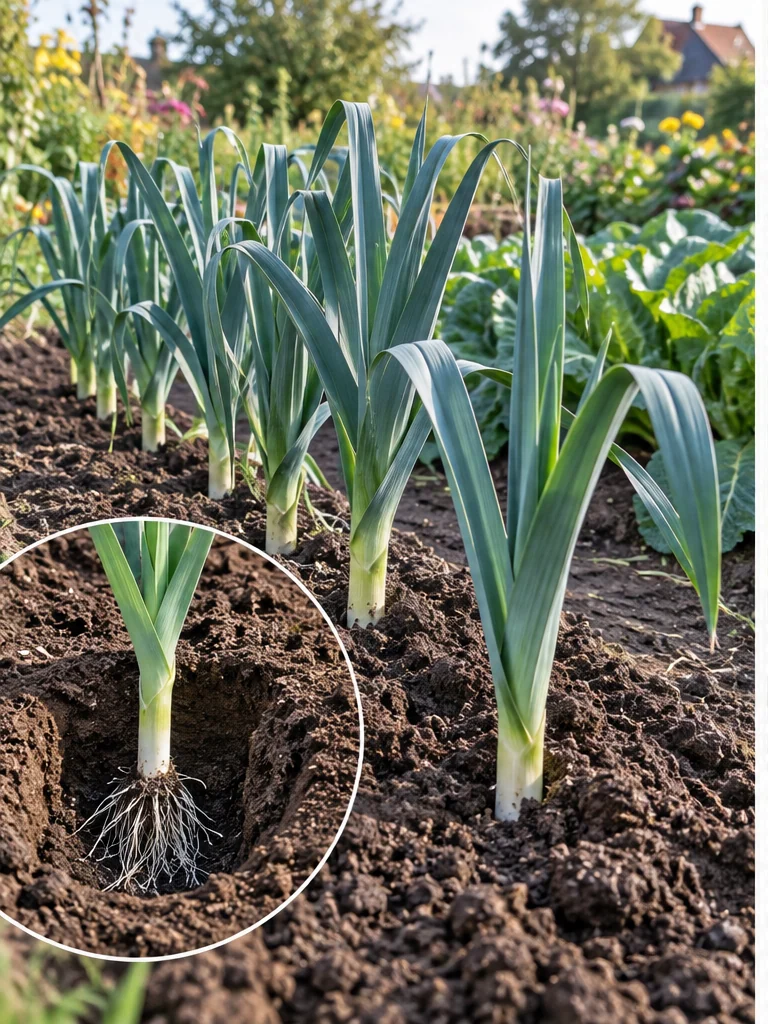
Transplant once sturdy enough to handle. Ease roots apart carefully and do not let them dry. Plant deeper than in the seed tray, keeping the growing point free. Watering settles loose soil around roots without firm pressing.
Feeding without wet soil
Work mature compost into the bed or use a well-rotted surface layer. Leeks stay in place for a long time and benefit from cared-for soil. Avoid standing water and rotate the onion family with other crops in following years.
Keep the young row open
Narrow foliage barely covers soil. Weed regularly, by hand near shanks. Water soil generously during prolonged drought. Containers hold less: even in cool weather, check whether the root zone is drying.
Blanch without sand in the heart
For a longer white portion, draw loose soil against the lower shaft in several small stages. Do not fill the leaf heart. A large heap at once increases the chance of soil between leaves; a shorter white portion is perfectly usable too.
Rust, feeding damage and a flower stalk
Orange patches can indicate leek rust; airy spacing and soil-level watering reduce wet foliage. Shank tunnels or damage may indicate insects. Consider closed mesh and remove badly affected plants. Bolting toughens the centre: harvest promptly.
Lift only what you will use
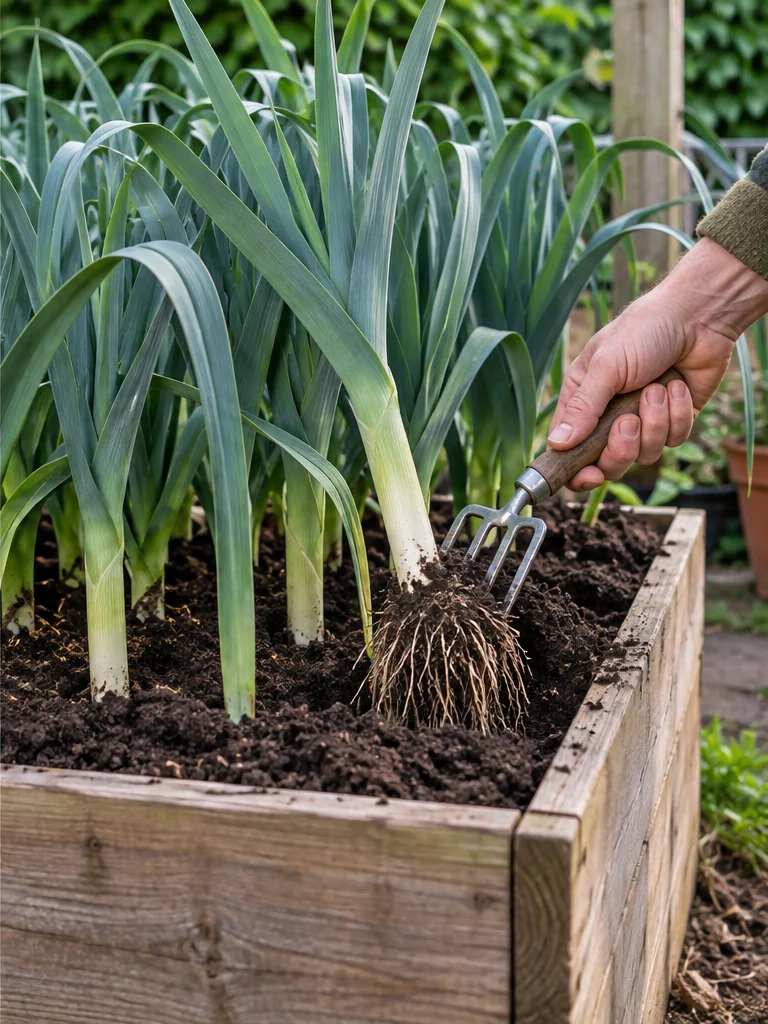
Loosen soil beside the row with a fork, then ease leeks upwards. Harvest alternately if remaining plants can grow. Only suitable winter varieties should stay outside long; frozen ground can temporarily prevent harvesting.
Use the healthy greens too
Rinse carefully between leaf layers after harvest. Both white and healthy green parts are usable, although firm greens often need longer cooking. Store leeks cool and use damaged ones first. Record shaft thickness and harvest period to improve next year’s cultivar choice.