AI illustration
This image was created with AI from described plant characteristics and growing advice. It shows a possible situation and is not a photograph of a verified cultivar.
 SeedStepsYour vegetable garden, one step at a time.My garden
Vegetables, fruit, flowers and herbs. Start with a plant and discover its varieties.
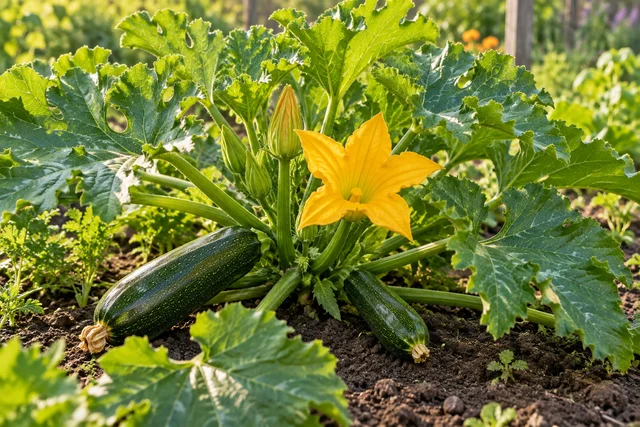
This image was created with AI from described plant characteristics and growing advice. It shows a possible situation and is not a photograph of a verified cultivar.
Discover round, striped, yellow and trailing courgettes, their flavours and ways to grow them.
Discover courgettes →Small, purple cherry tomatoes with light stripes: a colourful snack variety with its own name. Choose Purple Bumble Bee for sweet, small, striped fruits instead of uniformly dark Black Cherry.
Read moreDark reddish-brown, wrinkled tomatoes with striking lobes. Choose these when you want a distinctive shape alongside classic smooth rounds. The medium-sized, flattened fruits create a different look from a dark round cherry tomato.
Read moreA large-flowered gladiolus in the RHS selection.
Read morePurple Frills combines strongly divided leaves with deep purple colour. A small amount therefore stands out in a bowl. Choose Purple Frills when leaf colour and fine structure both matter. It is an accent crop, not heading lettuce.
Read moreElongated, plum-shaped tomatoes ripen dark pink to purplish-red or chocolate-brown: dark fruit with abundant juicy flesh. Choose Purple Russian for a dark tomato usable fresh and cooked rather than a small, round cherry.
Read moreStraight, purple pods that turn green after cooking. Choose this low-growing bean if you want a purple harvest without climbing supports. The colour difference makes young pods recognisable among the plant's green leaves.
Read moreDeep violet-blue with a dark eye.
Read morePurple-brown fruits with thick flesh: a dark chilli for substantial, hot sauces. Choose Purple for dark ripening colour and fleshy, hot fruits rather than thin chillies for quick drying.
Read morePurple-grey foliage as a visible culinary variant.
Read moreBronze fennel for strongly visible foliage contrast.
Read moreQueue de Truite has green leaves with red speckles and forms a small cos lettuce. It is Lactuca lettuce despite the shop alias 'Witloof panaché'. Choose this selection for speckled leaves and a compact romaine shape. Use the alias when searching, not to create a different crop.
Read moreThis image was created with AI from described plant characteristics and growing advice. It shows a possible situation and is not a photograph of a verified cultivar.
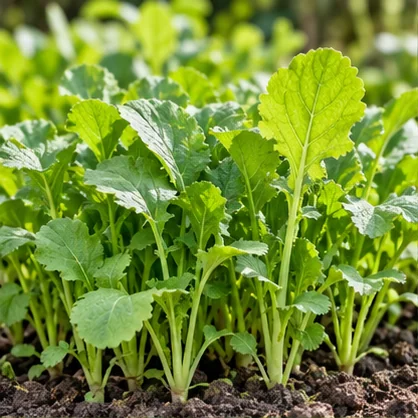
This image was created with AI from described plant characteristics and growing advice. It shows a possible situation and is not a photograph of a verified cultivar.
A short row of turnip greens provides a usable leafy vegetable while still young. You grow them for stalks and leaves, not to form large turnips. This makes them suitable for a small spring sowing or a space between two larger crops.
Read the growing guide →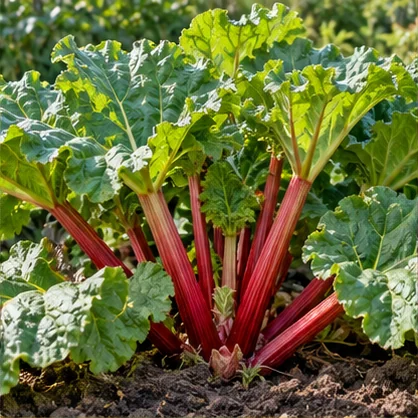
This image was created with AI from described plant characteristics and growing advice. It shows a possible situation and is not a photograph of a verified cultivar.
Rhubarb gives the vegetable garden volume early in the season, with large leaves above juicy stalks. Give it a permanent space and time to build its roots. The reward is a returning spring harvest; only the leaf stalks go to the kitchen.
Read the growing guide →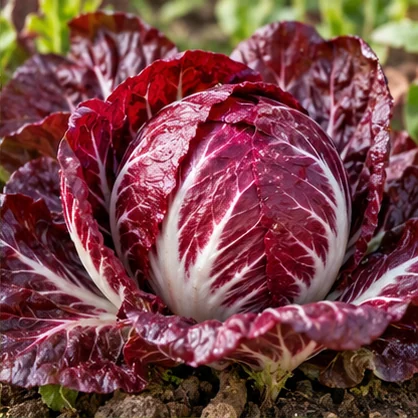
This image was created with AI from described plant characteristics and growing advice. It shows a possible situation and is not a photograph of a verified cultivar.
A red head of radicchio makes a striking finish to summer growing. The leaves have a distinctive bitter note, raw or briefly grilled. You can also harvest young leaves, but variety choice and enough space matter when growing closed heads.
Read the growing guide →Radichetta produces broad, dark green, cut leaves without a closed lettuce heart. The shape supports repeated cutting or picking. Choose Radichetta for dark green, loose-leaf lettuce. The name does not mean it is a Cichorium radicchio.
Read more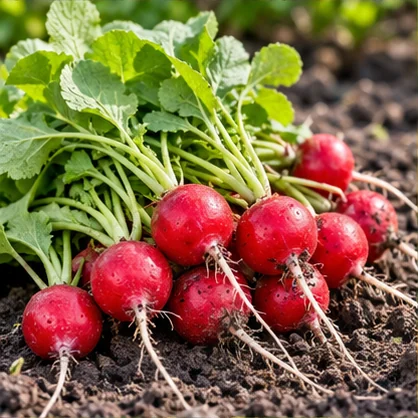
This image was created with AI from described plant characteristics and growing advice. It shows a possible situation and is not a photograph of a verified cultivar.
Radishes quickly show you what a good seedbed and regular watering can achieve. Sow a short row, harvest young and make room for something else. This makes them a small recurring garden ritual rather than one large harvest peak.
Read the growing guide →Yellow snack peppers about 7–8 cm long on strong, short plants: a sunny colour for small fresh portions. Choose Radja for yellow snacks and a relatively short crop. The variety description clearly establishes colour and size.
Read moreRound, yellow-green cherry tomatoes stay greener near the stalk in small trusses often containing several fruits. Choose Raisin Vert for small, green-ripe fruits as a manageable alternative to large Aunt Ruby’s German Green.
Read more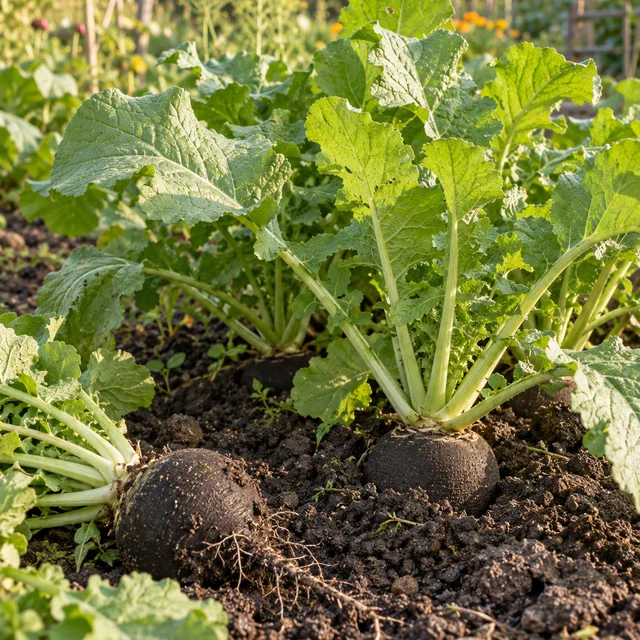
This image was created with AI from described plant characteristics and growing advice. It shows a possible situation and is not a photograph of a verified cultivar.
Winter radish offers a different harvest time from a quick-growing radish. The root gets more time and space and can be used raw or in cooked dishes. Choose a summer or winter type deliberately, rather than sowing everything according to the ordinary radish calendar.
Read the growing guide →Ranunculus flowers look like little tissue-paper blooms: layer upon layer forms a round rosette. For the cutting garden, this means Ranunculus asiaticus and its selections. Do not confuse them with the buttercups that grow spontaneously in lawns or ditches. These spring flowers need a different approach from summer bloomers: cool growth, controlled moisture and protection from cold and waterlogged roots determine the result.
Read more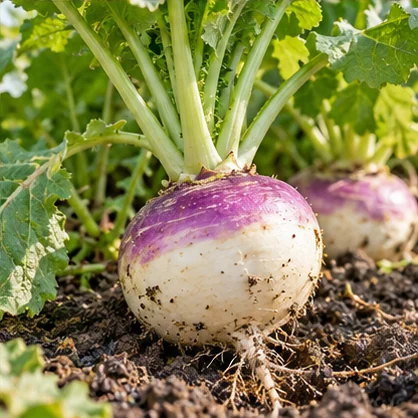
This image was created with AI from described plant characteristics and growing advice. It shows a possible situation and is not a photograph of a verified cultivar.
A turnip does not have to become a large winter root. Young turnips suit a small crop and can be grown alongside other vegetables. Match an early or late variety to your sowing date and give the root room to swell.
Read the growing guide →Elongated salad potato with firm flesh and a nutty description. Choose Ratte if flavour and an unusual meal matter more than maximum kilograms. The producer mentions lower yield; a few plants allow a focused comparison.
Read moreElongated, pointed sweet peppers turning green to bright red: a traditional European variety with a recognisable slender shape. Choose Red Augsburger for a traditional red, pointed shape without the short bell shape of a snack pepper.
Read more