
Rocket: a spicy picking border near the kitchen
A few rocket leaves immediately give a salad character. Sow short rows for young leaves or choose wild rocket, which grows differently. Bear that difference in mind: one general sowing calendar does not suit both types.
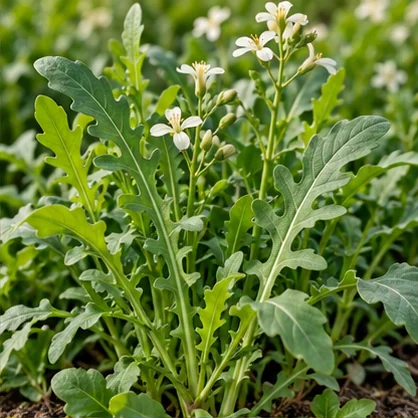
This image was created with AI from described plant characteristics and growing advice. It shows a possible situation and is not a photograph of a verified cultivar.
- Sowing
- Spring to autumn, according to species and variety
- Harvesting
- Young leaves; repeat small sowings
- Location
- Sun, with a cooler bright position in hot weather
- Pot
- Suitable for a wide pot or planter
This growing advice helps you choose. Your variety, growth stage, weather and conditions in your space determine the actual timing.
Sowing under cover and raising seedlings
Sow directly for young leaves or roots · Rocket
Spring or autumn, with a suitable cultivarSow directly into greenhouse soil or a container, provide light and ventilate.
- Germination and temperature
- Wait for workable, warmed soil; follow the cultivar’s minimum sowing temperature.
- After emergence
- Keep the seed row evenly moist during emergence and identifiable with a label.
- Pricking out and potting on
- Sow thinly and thin in the final position where needed. For cutting leaves, every seedling need not stand separately.
- Hardening off and planting out
- Stays where sown; hardening off and planting out are unnecessary for direct sowing.
A cool, even start helps. Heat, drought or an unsuitable cultivar window can make plants bolt quickly.
Sources and use
RHS · radijs ↗Britse teeltrichtlijn voor een gematigd klimaat; de genoemde perioden zijn richtlijnen voor Nederland en Vlaanderen.
De Bolster · De Bolster — Rucola: soorten, groeivormen en teelt ↗Nederlandse producent of teeltbron; de rasinstructie blijft leidend.
Royal Horticultural Society · RHS — rucola kweken ↗Soort- of productgebonden bron; buitenlandse perioden zijn geen vaste Nederlandse zaaidatum.
Guideline periods for the Netherlands and Flanders. Check the variety, available light, soil and measured temperatures. Greenhouse heating does not guarantee enough winter light.
A different flavour, a different harvest.
Choose by more than the name. Discover how these varieties and crop types taste, what you can use them for and what growing them involves.
2 of 2 choices · 1 named varieties
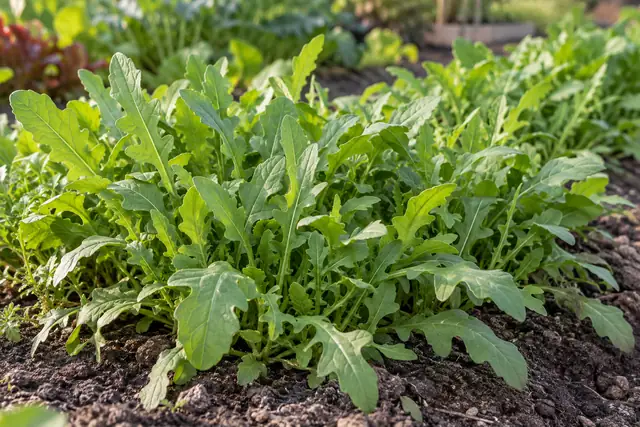
This image was created with AI from described plant characteristics and growing advice. It shows a possible situation and is not a photograph of a verified cultivar.
Cultivated
Cultivated rocket has relatively broad leaves and is offered as a quick leafy crop. General rocket products are grouped here as the same practical type choice.
Choose this type for broad leaves and easy picking. Compare with Wasabi, botanically a wild rocket.
Flavour, kitchen and growing
How does it taste?
The source describes cultivated rocket as milder and aromatic. Its usual pepperiness is not a fixed heat level.
This flavour description applies to the crop; there is no separate tasting result for this variety.In the kitchen
Pick young leaves for salad or add them at the end of a cooked dish. A small proportion may suffice.
A space in the garden
Direct-sow small amounts and keep soil moist. Pots need extra checks because a small rootball dries out faster.
Harvesting
Harvest young leaves and retain the heart for repeated picking. Resow when bolting overtakes tender leaf production.
Also listed as: Rucola, Gecultiveerde rucola.
Read the source notes →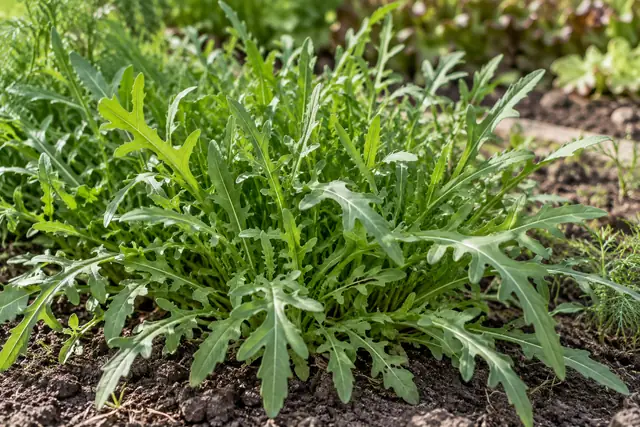
This image was created with AI from described plant characteristics and growing advice. It shows a possible situation and is not a photograph of a verified cultivar.
Wasabi
In this Semailles offering, Wasabi is a named wild rocket selection of Diplotaxis tenuifolia, with finely cut leaves. It is not a true wasabi plant.
Choose this offering if you want peppery, finely cut leaves. The trade name Wasabi is also used elsewhere, so always check the botanical name with a new purchase.
Flavour, kitchen and growing
How does it taste?
The source describes a strong flavour reminiscent of wasabi. The comparison is culinary and says nothing about botanical relationship.
In the kitchen
Use a little young leaf in sandwiches or salad. Controlled quantities let you match the sharp accent to the dish.
A space in the garden
Sow in free-draining soil or a container and preferably pick young. Keep moisture regular for continued leaf growth.
Harvesting
Harvest tender, young leaves in small portions. Taste a single leaf before using the same amount as you would of milder rocket.
Read the source notes →Choose your way to grow
From a garden bed to a suitable pot or support: give your plant a place that suits your garden and the care you can provide.
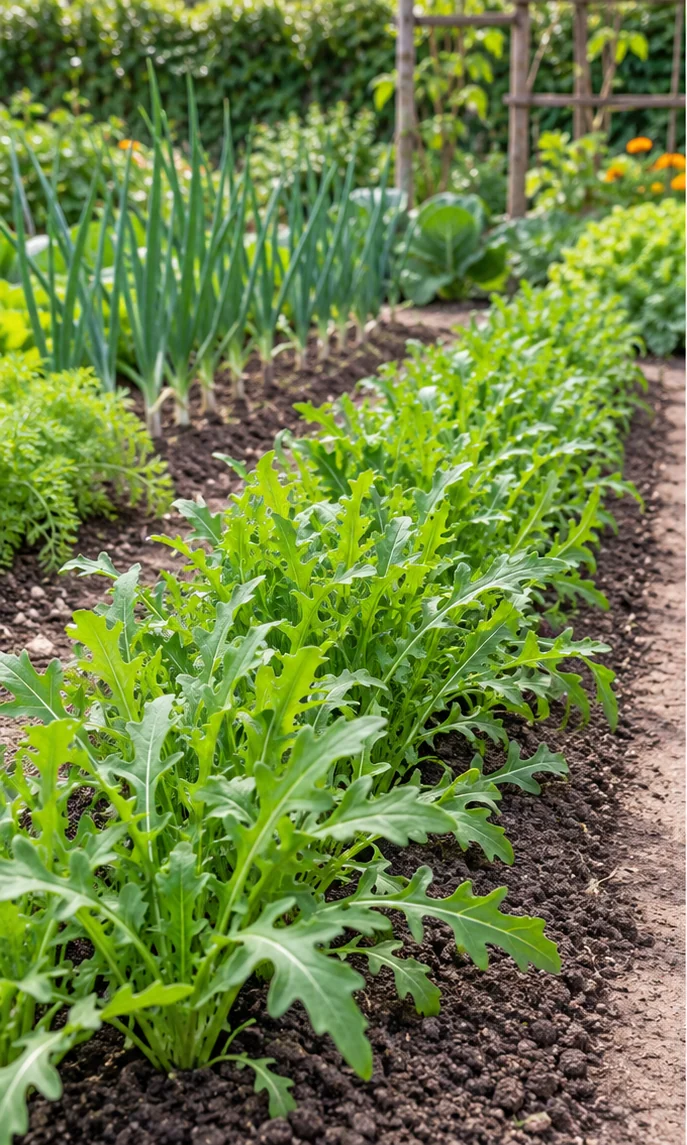
This image was created with AI from described plant characteristics and growing advice. It shows a possible situation and is not a photograph of a verified cultivar.
Short rows in a garden bed
A small rocket row makes care manageable. Choose the right season, keep weeds away and follow leaves. Plan another batch once you see how much you actually use.
- Prepare a fine soil surface and remove weeds.
- Sow or plant at the spacing for the chosen type.
- Keep the germination and root zones moist and harvest according to leaf quality.
For anyone with a small bed or a space available after another harvest.
Tick off your supplies →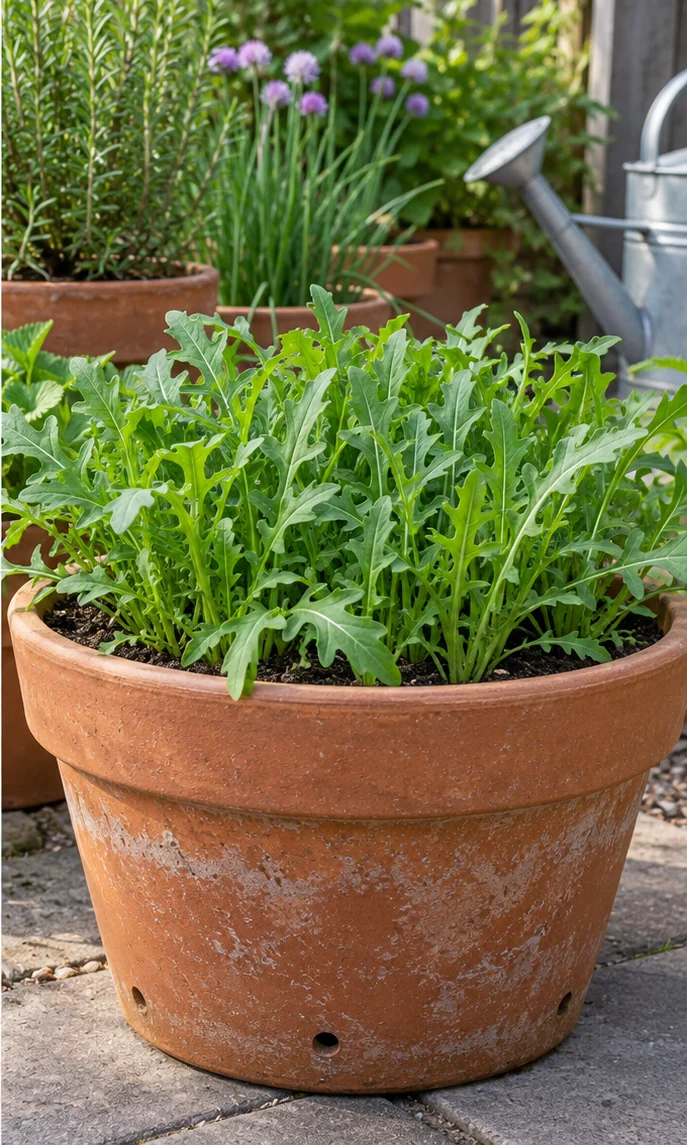
This image was created with AI from described plant characteristics and growing advice. It shows a possible situation and is not a photograph of a verified cultivar.
A picking container on the patio
A broad container puts a small leaf harvest within reach. In warmth, position in light with protection from the strongest afternoon sun. Check compost: leaves are not a reliable moisture meter.
- Use a container with drainage holes and suitable compost.
- Sow thinly and keep emerging plants free of weeds.
- Harvest young leaves and sow another small portion promptly.
For limited space or a smaller, more accessible leaf crop.
Tick off your supplies →Explore the varieties
See the confirmed differences. Characteristics without supporting evidence are left blank.
0 of 0 varieties
No matching variety found. Try another name or clear the filters.
Choose two to four varieties to compare their source data side by side.
Choose by flavour, shape and use
Geteeld: Cultivated rocket has relatively broad leaves and is offered as a quick leaf crop. General rocket products are grouped as the same practical type choice. Pick young leaves for salad or add at the end of cooking. A little can suffice.
The source describes cultivated rocket as milder and aromatic. Its usual pepperiness is not a fixed heat level.
Wasabi: In this Semailles offering, Wasabi is a named wild rocket selection of Diplotaxis tenuifolia, with finely cut leaves. It is not a true wasabi plant. Use little young leaf on bread or in salad, adjusting its sharp accent to the dish.
The source describes a strong flavour reminiscent of wasabi. The comparison is culinary and says nothing about botanical relationship.
Choose the type to suit your harvest
Cultivated and wild rocket are different plants with different germination and lifespans. Check the species on the packet. For quick young leaves, a small sowing is practical; follow specific raising advice for wild rocket.
A small, sound start
Sow a short row in a fine, moist seedbed and keep seeds moist during germination. Choose depth and timing for your type. Another small sowing gives fresh leaves without a whole bed bolting at once.
Light and soil that can drain
Choose a bright spot and prepare a fine enough surface for the small seeds or young rootballs. Water must be able to drain away after rain. In a pot, check that the drainage holes are clear; a layer of wet soil does not help produce a healthy leaf harvest.
Care for the young leaves
Cut young leaves without repeatedly removing the whole growing point if you want further picking. Regrowth depends on type and condition. Do not keep an exhausted or flowering crop just because another harvest was planned.
Harvest for quality
Pick young leaves as needed and use soon after harvest. Older leaves or warm, dry conditions can strengthen flavour. Taste a leaf from a clearly identified edible plant before harvesting a whole platter.
Recognise what the leaves tell you
Flea beetles make small holes in young leaves. Fine mesh and even growth help protect young crops. Species, season and stress influence bolting. For a new sowing, compare position and growing time above all.
Fresh leaves start with a small picking
Harvest at a cool time and keep the leaves cool after picking. Wash them before use and remove damaged parts. A small fresh portion wastes less than harvesting a whole container when you only need a handful.
Make room for the next round
Record sowing and the first harvest so you can compare what works in your space next season. Do not leave an empty row unplanned for long. A new batch within a suitable window gives a better spread than hoping overmature leaves will become young again.
What you need
Tick what you already have. The extras depend on how you grow.
0 of 5 ticked off
Your ticks are saved in this browser.
Discover and grow more
More background, sources and image information
SeedSteps editorial team · updated on 11 October 2026. The AI images illustrate species and practical growing situations; they do not prove an exact cultivar, observations from your own garden or yield.
Britse gewasadviezen worden gecombineerd met Nederlandse en Vlaamse informatie waar beschikbaar. Amerikaanse Extension-bronnen ondersteunen plantprincipes en herkenning; hun kalenderdata, lokale plaagdruk, bestrijdingsmiddelen en mestdoseringen worden niet rechtstreeks op Nederland of Vlaanderen toegepast. Vorst, bodemwarmte, standplaats en expliciete rasinformatie blijven de lokale controle. Commerciële bronnen onderbouwen uitsluitend benoemde ras- en plantkenmerken; zij zijn geen affiliate-aanbeveling.
- Organic Rucola zadenFeggies · accessed 2026-10-11
- Rucola – biologische groentezaden (pittig)Feggies · accessed 2026-10-11
- Rucola Geteeld zadenFeggies · accessed 2026-10-11
- Rucola Wasabi zadenFeggies · accessed 2026-10-11
- Catalogue Semailles 2025: roquettesSemailles · accessed 2026-10-11
- De Bolster — Rucola: soorten, groeivormen en teeltDe Bolster · accessed 2026-10-10
- RHS — rucola kwekenRoyal Horticultural Society · accessed 2026-10-10
Supporting evidence by chapter: Choose by flavour, shape and use: Feggies, Feggies, Feggies, Feggies, Semailles. Choose the type to suit your harvest: Royal Horticultural Society, De Bolster. A small, sound start: Royal Horticultural Society, De Bolster. Light and soil that can drain: Royal Horticultural Society, De Bolster. Care for the young leaves: Royal Horticultural Society, De Bolster. Harvest for quality: Royal Horticultural Society, De Bolster. Recognise what the leaves tell you: Royal Horticultural Society, De Bolster. Fresh leaves start with a small picking: Royal Horticultural Society, De Bolster. Make room for the next round: Royal Horticultural Society, De Bolster.