
Growing mizuna: fine leaves for picking little and often
Mizuna's deeply cut leaves bring an ordinary salad to life. Grow young leaves close together or let individual plants develop into large rosettes. A balcony planter or salad table keeps picking within reach, especially in the cooler parts of the season.
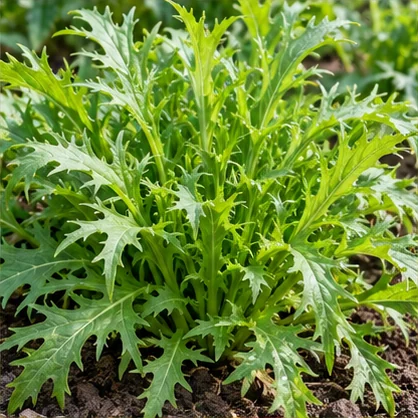
This image was created with AI from described plant characteristics and growing advice. It shows a possible situation and is not a photograph of a verified cultivar.
- Harvest
- Young leaves or a larger rosette
- Location
- Bed, planter or salad table with drainage
- Care
- Evenly moist; watch for bolting
This growing advice helps you choose. Your variety, growth stage, weather and conditions in your space determine the actual timing.
Sowing under cover and raising seedlings
Start under cover in cool conditions or sow directly · Mizuna
July–August for a simple autumn routeStart briefly under cover in modules; provide light and avoid heat.
- Germination and temperature
- Raise in cool to mild conditions; avoid severe cold, heat and drying out.
- After emergence
- Keep emerged lettuce bright and well ventilated; prevent high greenhouse temperatures and drying out.
- Pricking out and potting on
- Sow in modules or prick out manageable seedlings into individual cells. Keep the root ball intact when planting out.
- Hardening off and planting out
- Gradually acclimatise indoor-raised plants to sun, wind and outdoor temperatures; shelter them again on cold nights. Plant out sturdy young plants; keep the growing point clear and protect against slugs and snails.
These leafy crops can bolt under stress or unsuitable day length. Use early sowing only with an appropriate cultivar.
Sources and use
RHS · sla ↗Britse teeltrichtlijn voor een gematigd klimaat; de genoemde perioden zijn richtlijnen voor Nederland en Vlaanderen.
Royal Horticultural Society · Mizuna en mibuna kweken ↗Soort- of productgebonden bron; buitenlandse perioden zijn geen vaste Nederlandse zaaidatum.
University of Maryland Extension · Groenten in potten en saladetafels, inclusief mizuna ↗Soort- of productgebonden bron; buitenlandse perioden zijn geen vaste Nederlandse zaaidatum.
Guideline periods for the Netherlands and Flanders. Check the variety, available light, soil and measured temperatures. Greenhouse heating does not guarantee enough winter light.
Choose your way to grow
From a garden bed to a suitable pot or support: give your plant a place that suits your garden and the care you can provide.
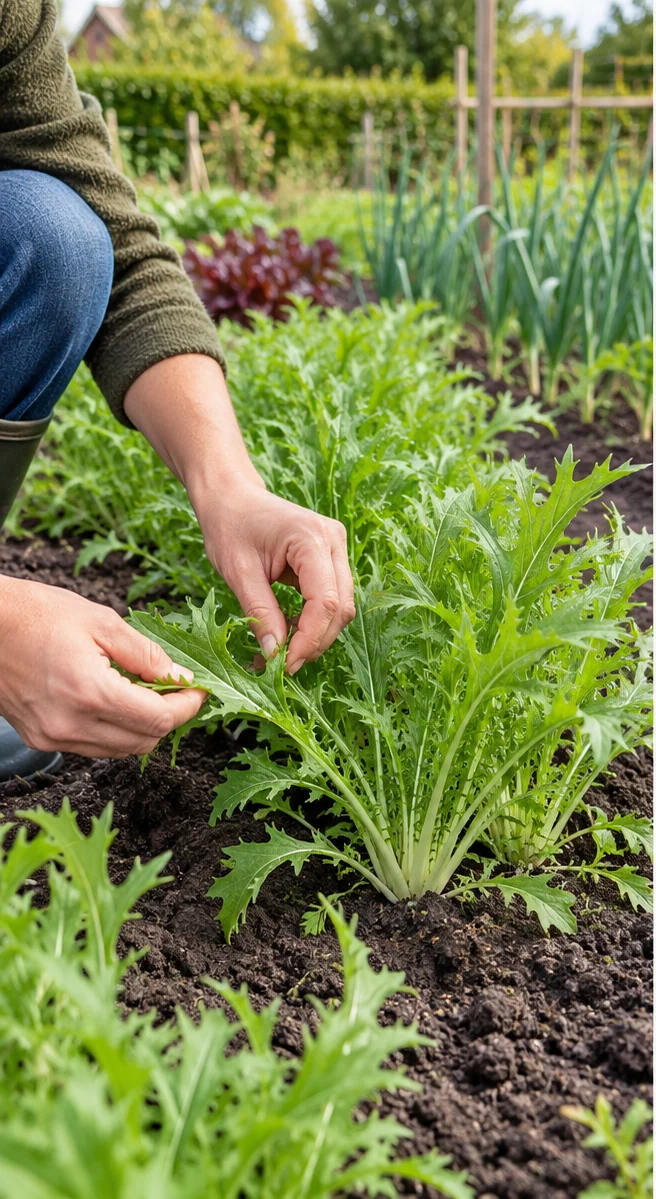
This image was created with AI from described plant characteristics and growing advice. It shows a possible situation and is not a photograph of a verified cultivar.
Loose rosettes in the bed
An open row gives every plant room to make new leaves.
- Sow thinly or plant intact module rootballs in a cool growing period.
- Thin for the intended final size; larger rosettes need more room.
- Pick young outer leaves and leave the heart clear.
For repeated small harvests and observing whole plants.
Tick off your supplies →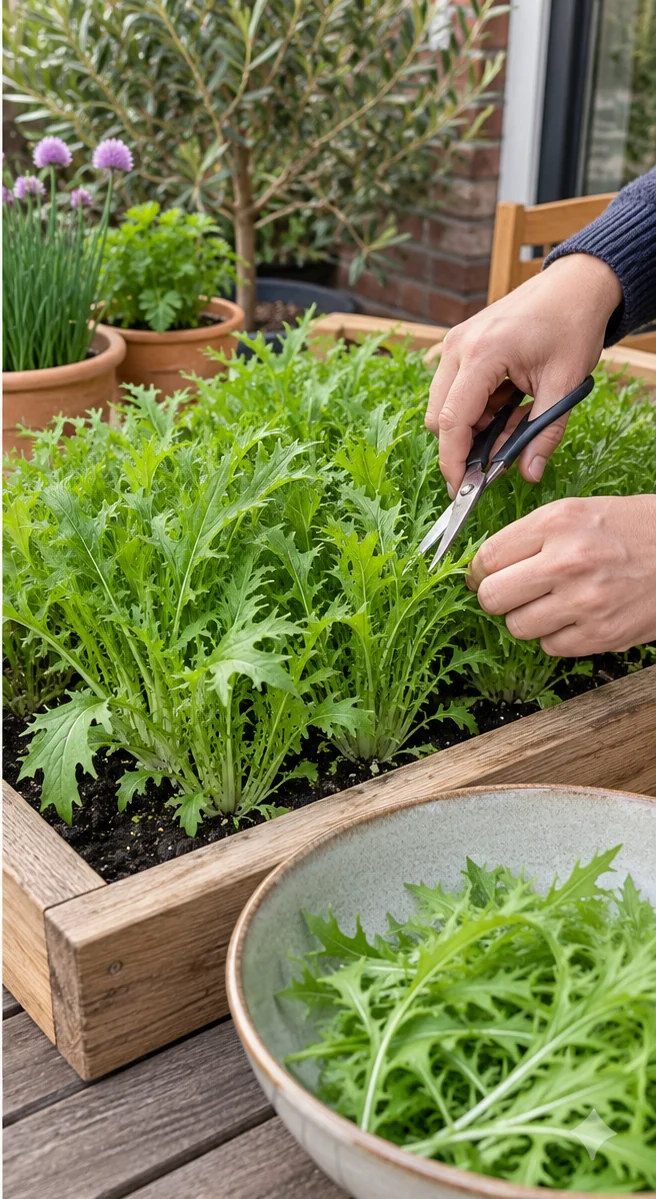
This image was created with AI from described plant characteristics and growing advice. It shows a possible situation and is not a photograph of a verified cultivar.
Baby leaves in a container or salad table
A small container makes a fresh salad portion accessible from the patio.
- Use airy substrate in a container with good drainage.
- Sow a small portion and keep the surface evenly moist.
- Cut young leaves and retain growing points if you want to try another picking.
For densely sown baby leaves; in hot weather, a movable container can temporarily be placed in light shade.
Tick off your supplies →Choose baby leaves or a larger plant
Mizuna forms a rosette of deeply cut leaves. For baby leaves, sow more closely and harvest young; for a longer-lasting plant, allow more room. Try the two methods side by side. The difference lies in the harvest aim and care, as well as the amount of seed used.
Cooler growing rounds are a practical starting point
Spring or late-summer rounds often grow pleasantly. Prolonged young-plant cold, long days and warm drought influence bolting. Follow variety and local conditions. American salad tables mainly describe growing forms; judge Dutch and Flemish timing with British crop advice and local weather.
Start with a small, identifiable row
Sow thinly in fine, moist soil and label. Prevent drying while roots remain shallow. Modules also work; move intact root balls later. Small batches keep things manageable so leaves become available at usable times.
Give a rosette more room than baby leaves
The RHS distinguishes dense young leaves from plants needing more final room. Allow roughly 10–15 cm for small leaves and more for larger rosettes; follow variety size. Thin early. A small container of large rosettes competes for water sooner than an open bed.
Check drainage and moisture in a salad table
Container roots have limited volume. Use airy substrate, drainage and feel beneath the surface before watering. Movable containers can take a cooler position temporarily in severe summer heat, while retaining enough light. Observe sunny-day drying speed.
Investigate holes and emerging flowers
Mizuna belongs to cabbages and may suffer young-leaf damage. Inspect closely and seal mesh edges where needed. When flower stems appear, harvest usable leaves early. Start another round at a better time; extra feed does not restore bolted plants to young rosettes.
Keep the plant's centre alive
Pick outer leaves or cut young leaves without touching central growth. Plants can regrow in continuing good conditions. Take small portions and observe regrowth before cutting again. Weakened plants first need time, light and adequate moisture to recover.
Make the harvest part of your salad
Rinse leaves and preferably use fresh. Taste young and older leaves separately and note salad preferences. Another small tray sown later can spread harvests. Record each tray's sowing date to identify your preferred stage.
What you need
Tick what you already have. The extras depend on how you grow.
0 of 6 ticked off
Your ticks are saved in this browser.
Discover and grow more
More background, sources and image information
SeedSteps editorial team · updated on 11 October 2026. The AI images illustrate species and practical growing situations; they do not prove an exact cultivar, observations from your own garden or yield.
Britse gewasadviezen worden gecombineerd met Nederlandse en Vlaamse informatie waar beschikbaar. Amerikaanse Extension-bronnen ondersteunen plantprincipes en herkenning; hun kalenderdata, lokale plaagdruk, bestrijdingsmiddelen en mestdoseringen worden niet rechtstreeks op Nederland of Vlaanderen toegepast. Vorst, bodemwarmte, standplaats en expliciete rasinformatie blijven de lokale controle. Commerciële bronnen onderbouwen uitsluitend benoemde ras- en plantkenmerken; zij zijn geen affiliate-aanbeveling.
- World Checklist of Vascular Plants — 4 juni 2026Royal Botanic Gardens, Kew · accessed 2026-10-07
- Mizuna en mibuna kwekenRoyal Horticultural Society · accessed 2026-10-10
- Groenten in potten en saladetafels, inclusief mizunaUniversity of Maryland Extension · accessed 2026-10-10
Supporting evidence by chapter: Choose baby leaves or a larger plant: Royal Horticultural Society. Cooler growing rounds are a practical starting point: Royal Horticultural Society, University of Maryland Extension. Start with a small, identifiable row: Royal Horticultural Society. Give a rosette more room than baby leaves: Royal Horticultural Society, University of Maryland Extension. Check drainage and moisture in a salad table: University of Maryland Extension. Investigate holes and emerging flowers: Royal Horticultural Society. Keep the plant's centre alive: Royal Horticultural Society. Make the harvest part of your salad: Royal Horticultural Society.