
Growing Westlandse Winter: give green leaves two possible routes
Westlandse Winter is a green, open-pollinated kale with separate guidance for baby leaves and mature winter plants. Follow your chosen route, why spacing changes and how to read harvest readiness from the actual plant.
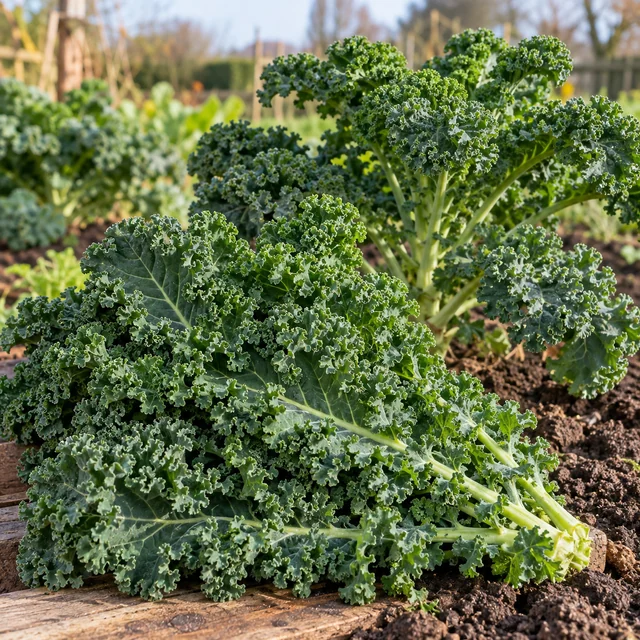
This image was created with AI from described plant characteristics and growing advice. It shows a possible situation and is not a photograph of a verified cultivar.
- Growing
- Young leaves or winter plants
- Location
- Sun to light partial shade
- Harvest
- Outer leaves, leaving the heart to grow
- Protection
- Mesh where feeding damage is a problem
This growing advice helps you choose. Your variety, growth stage, weather and conditions in your space determine the actual timing.
Sowing under cover and raising seedlings
Start under cover in cool conditions in modules or a seedbed · Kale
April–JuneStart under cover in cool, bright conditions to suit the desired harvest time.
- Germination and temperature
- Germinate under cover, then grow on in cool, bright, well-ventilated conditions; avoid a hot growing space.
- After emergence
- Give seedlings light immediately after emergence. A dark loft needs suitable grow lights; warmth alone is insufficient. Ventilate and keep the compost moist without saturating it.
- Pricking out and potting on
- Sow in modules or prick out manageable young plants. Let the root ball firm up without a check in growth.
- Hardening off and planting out
- Gradually acclimatise indoor-raised plants to sun, wind and outdoor temperatures; shelter them again on cold nights. Plant out sturdy young brassicas and protect against cabbage root fly and caterpillars where needed.
Plan for young leaves or mature winter plants. Portuguese cabbage is not automatically as winter-hardy as kale.
Sources and use
RHS · bladkool ↗Britse teeltrichtlijn voor een gematigd klimaat; de genoemde perioden zijn richtlijnen voor Nederland en Vlaanderen.
Feggies · Boerenkool westlandse herfst – biologische groentezaden ↗Nederlandse producent of teeltbron; de rasinstructie blijft leidend.
Feggies · Boerenkool Westlandse herfst zaden organic ↗Nederlandse producent of teeltbron; de rasinstructie blijft leidend.
Guideline periods for the Netherlands and Flanders. Check the variety, available light, soil and measured temperatures. Greenhouse heating does not guarantee enough winter light.
What makes Westlandse Winter different?
- Variety type
- Leaf cabbage; also suitable for young baby leavesNetherlands
- Height
- 40-60 cmNetherlands
- Light
- Full sunNetherlands
- Main colour
- Dark green leavesNetherlands
- Open-pollinated / F1
- Open-pollinatedNetherlands
- Plant spacing
- 65 × 50 cmNetherlands
The source context and any limitations are in the background information at the bottom.
Compare with another varietyHow to grow kale
The options below belong to the plant. From these, choose the method that suits your variety's growth habit.
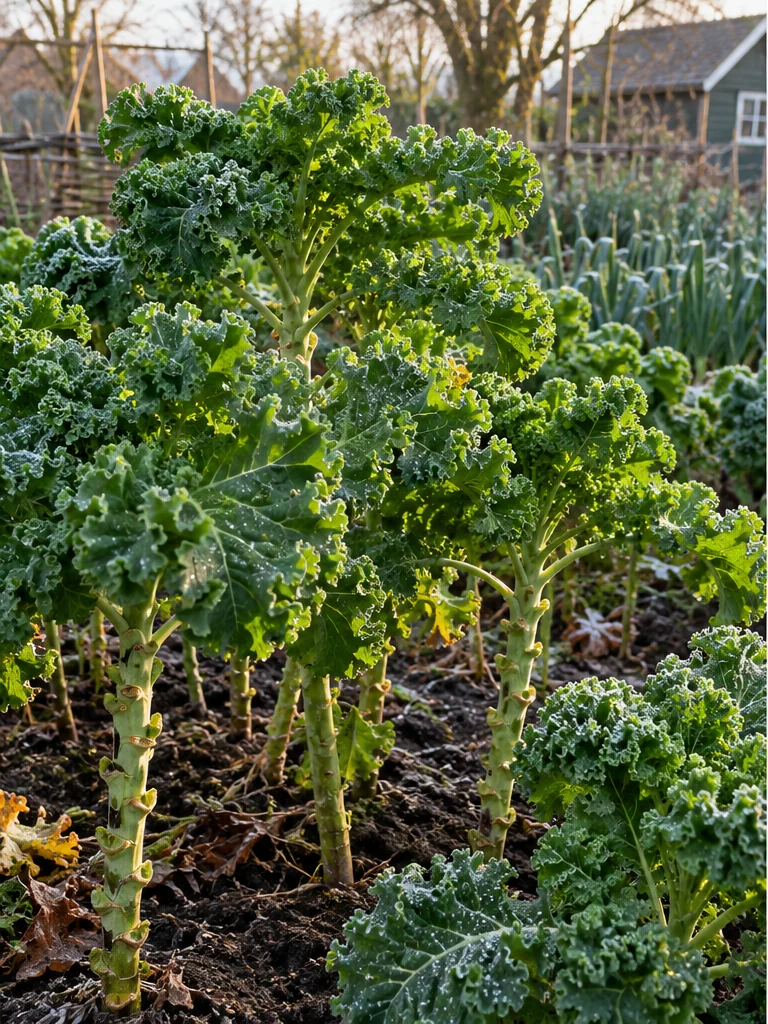
This image was created with AI from described plant characteristics and growing advice. It shows a possible situation and is not a photograph of a verified cultivar.
A row for autumn and winter picking
Established plants make the autumn bed useful.
- Choose a variety with documented winter growing.
- Plant with sufficient width for mature size.
- Pick usable outer leaves and retain the growing head.
For a vegetable garden with room in summer and winter.
Tick off your supplies →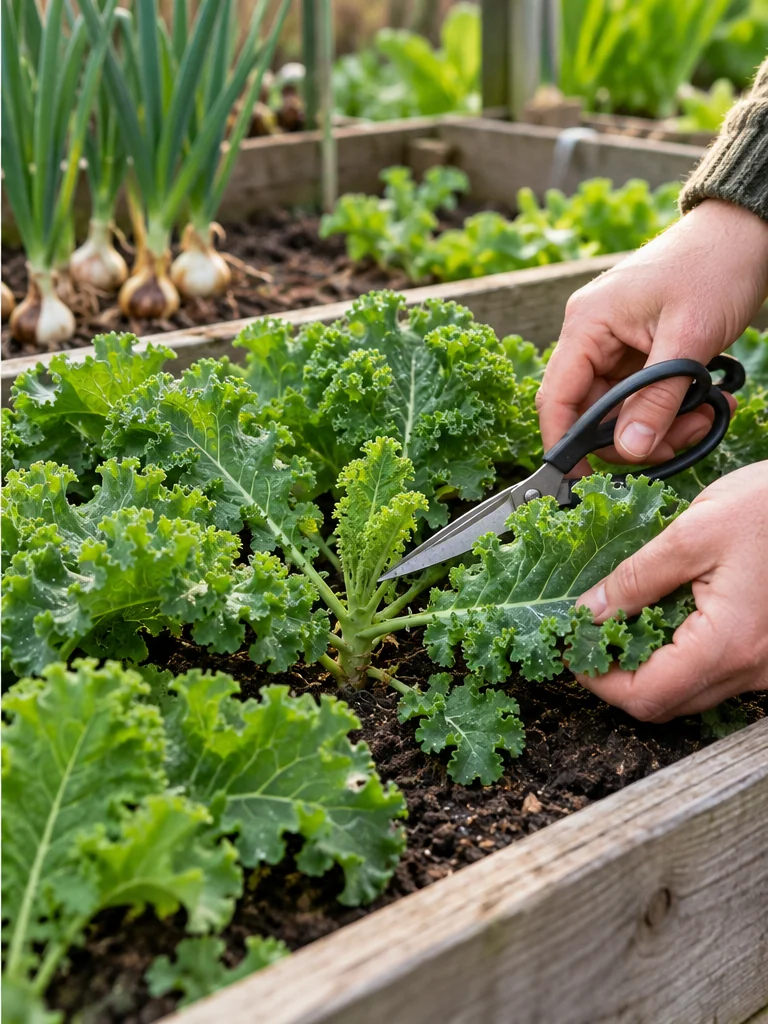
This image was created with AI from described plant characteristics and growing advice. It shows a possible situation and is not a photograph of a verified cultivar.
Baby leaves in a container
A short crop can provide small, fresh leaves.
- Follow the variety's baby leaf instructions.
- Sow small rounds in a large container with drainage.
- Harvest young and resow once quality declines.
For small portions and limited space.
Tick off your supplies →A recognisable green choice in the school garden
The Dutch school gardening handbook includes Westlandse Winter among its kale cultivars. This places the cultivar in a specific vegetable gardening context. It says nothing about an introduction year or sales ranking. Use the cultivar profile for this plant's characteristics, and the school garden example for the practical choice to follow green leafy kale.
Dark green leaves on a plant with its own dimensions
De Bolster describes Westlandse Winter as open-pollinated, dark green and forty to sixty centimetres tall. Source dimensions start layouts; observe actual growth. It has its own identity: Westlandse Herfst is another name and must not disappear into the same description.
The same seed can serve a different harvesting aim
The producer separates baby-leaf and mature-plant instructions. Choose before sowing. Follow young-leaf guidance for that aim; for wintering plants, prepare raising and final sites too. Labels showing harvest aims distinguish intentions.
Winter plants start in a seedbed
For mature Westlandse Winter, De Bolster gives outdoor May–June sowing and transplanting about six weeks later. Also follow current packets, weather and stage. Six weeks concerns raising, not fixed harvests. Include actual young-plant assessment when moving to final beds.
Reserve space before leaves touch one another
The producer gives sixty-five by fifty centimetres for this crop. Mark that space while plants are small and retain path access. Water after transplanting. Today's bare ground becomes later room to inspect, care for and attentively pick leaves.
Young leaf harvesting has its own calendar
The same producer gives April–August for baby leaves. This window concerns young harvests, not mature winter-plant calendars. Keep crops separate in notes. Judge baby-leaf stage and follow packet methods; mature spacing is no general replacement.
Pick what is usable and monitor what keeps growing
Harvest separate usable mature kale leaves while retaining others. Start outside and reassess after picking, connecting harvest and growth. Note dry or warm periods with flavour changes without immediately assigning one fixed cause.
Sweeter after frost is no winter guarantee
De Bolster describes a sweeter flavour after frost and the possibility of leaving plants outdoors. Keep assessing which leaves are actually harvestable in cold periods. Further growth may stop in frost. A winter round becomes a quiet check of leaves and conditions, with your observations adding to the cultivar story without promising a general minimum temperature.
What you need
Tick what you already have. The extras depend on how you grow.
0 of 6 ticked off
Your ticks are saved in this browser.
Discover and grow more
More background, sources and image information
SeedSteps editorial team · updated on 11 October 2026. The AI images illustrate species and practical growing situations; they do not prove an exact cultivar, observations from your own garden or yield.
Britse gewasadviezen worden gecombineerd met Nederlandse en Vlaamse informatie waar beschikbaar. Amerikaanse Extension-bronnen ondersteunen plantprincipes en herkenning; hun kalenderdata, lokale plaagdruk, bestrijdingsmiddelen en mestdoseringen worden niet rechtstreeks op Nederland of Vlaanderen toegepast. Vorst, bodemwarmte, standplaats en expliciete rasinformatie blijven de lokale controle. Commerciële bronnen onderbouwen uitsluitend benoemde ras- en plantkenmerken; zij zijn geen affiliate-aanbeveling.
- World Checklist of Vascular Plants — 4 juni 2026Royal Botanic Gardens, Kew · accessed 2026-10-07
- Common catalogue of varieties of vegetable species — 27 januari 2023Europese Commissie · accessed 2026-10-07
- Westlandse Winter: blad, jonge oogst en winterteeltDe Bolster · accessed 2026-10-08
- Handboek Schooltuinen: raskeuze en plantuiHandboek Schooltuinen, via Velt · accessed 2026-10-08
- Boerenkool rood zaden biologischFeggies · accessed 2026-10-11
- Boerenkool westlandse herfst – biologische groentezadenFeggies · accessed 2026-10-11
- Boerenkool Westlandse herfst zaden organicFeggies · accessed 2026-10-11
- Krulkool Grand vert du Nord (boerenkool) zaden biologischFeggies · accessed 2026-10-11
- Siberische Boerenkool Gulag StarsFeggies · accessed 2026-10-11
- Siberische Boerenkool Siber FrillFeggies · accessed 2026-10-11
- Gulag Stars: Siberian kale gene poolAssociation Kokopelli · accessed 2026-10-11
- Siber Frill KaleRedwood Seeds · accessed 2026-10-11
- Boerenkool: groeivormen, verzorgen en oogstenRoyal Horticultural Society · accessed 2026-10-08
- Bladkolen: wortels, water en afzonderlijke bladeren oogstenUniversity of Minnesota Extension · accessed 2026-10-08
- Boerenkool als oude bladgroenteRoyal Horticultural Society · accessed 2026-10-08
- Bladgroenten: verzorgen, koelte en bladoogstUniversity of Maryland Extension · accessed 2026-10-08
Supporting evidence by chapter: A recognisable green choice in the school garden: Handboek Schooltuinen, via Velt. Dark green leaves on a plant with its own dimensions: De Bolster. The same seed can serve a different harvesting aim: De Bolster. Winter plants start in a seedbed: De Bolster. Reserve space before leaves touch one another: De Bolster, Royal Horticultural Society. Young leaf harvesting has its own calendar: De Bolster. Pick what is usable and monitor what keeps growing: University of Minnesota Extension. Sweeter after frost is no winter guarantee: De Bolster, University of Minnesota Extension.
Variety type: Leaf cabbage; also suitable for young baby leaves Actuele Nederlandse leveranciersbeschrijving; rasmaat en teeltdoel, geen onafhankelijke proef of oogstgarantie. De Bolster
Height: 40-60 cm Actuele Nederlandse leveranciersbeschrijving; rasmaat en teeltdoel, geen onafhankelijke proef of oogstgarantie. De Bolster
Light: Full sun Actuele Nederlandse leveranciersbeschrijving; rasmaat en teeltdoel, geen onafhankelijke proef of oogstgarantie. De Bolster
Main colour: Dark green leaves Actuele Nederlandse leveranciersbeschrijving; rasmaat en teeltdoel, geen onafhankelijke proef of oogstgarantie. De Bolster
Open-pollinated / F1: Open-pollinated Actuele Nederlandse leveranciersbeschrijving; rasmaat en teeltdoel, geen onafhankelijke proef of oogstgarantie. De Bolster
Plant spacing: 65 × 50 cm Actuele Nederlandse leveranciersbeschrijving; rasmaat en teeltdoel, geen onafhankelijke proef of oogstgarantie. De Bolster