
Growing Portuguese cabbage: broad leaves for gradual picking
Portuguese cabbage, often called Couve Tronchuda, grows as a loose leafy cabbage with strong ribs. A generously spaced row gives plenty of room for picking; one plant in a large pot can be a smaller introduction. Let the growing tip develop and see what your variety and position can cope with in autumn.
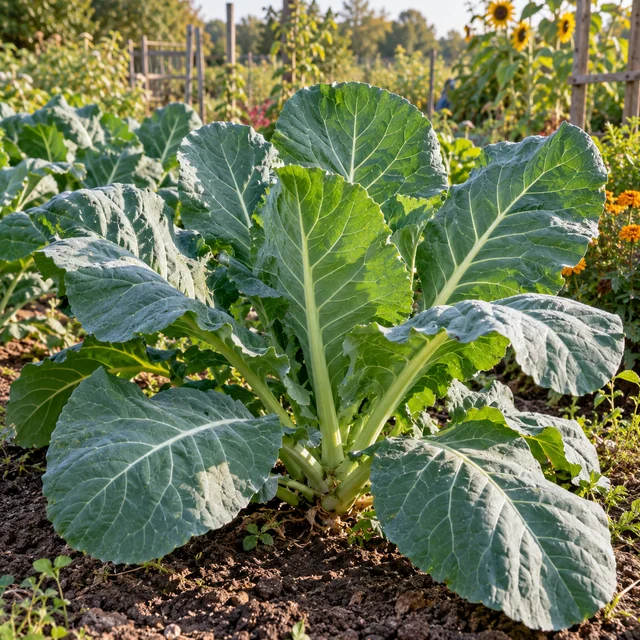
This image was created with AI from described plant characteristics and growing advice. It shows a possible situation and is not a photograph of a verified cultivar.
- Type
- Loose leafy cabbage, often Couve Tronchuda
- Harvest
- Individual usable leaves
- Cold
- Variety and position determine winter behaviour
This growing advice helps you choose. Your variety, growth stage, weather and conditions in your space determine the actual timing.
Sowing under cover and raising seedlings
Start under cover in cool conditions in modules or a seedbed · Portuguese cabbage
April–JuneStart under cover in cool, bright conditions to suit the desired harvest time.
- Germination and temperature
- Germinate under cover, then grow on in cool, bright, well-ventilated conditions; avoid a hot growing space.
- After emergence
- Give seedlings light immediately after emergence. A dark loft needs suitable grow lights; warmth alone is insufficient. Ventilate and keep the compost moist without saturating it.
- Pricking out and potting on
- Sow in modules or prick out manageable young plants. Let the root ball firm up without a check in growth.
- Hardening off and planting out
- Gradually acclimatise indoor-raised plants to sun, wind and outdoor temperatures; shelter them again on cold nights. Plant out sturdy young brassicas and protect against cabbage root fly and caterpillars where needed.
Plan for young leaves or mature winter plants. Portuguese cabbage is not automatically as winter-hardy as kale.
Sources and use
RHS · bladkool ↗Britse teeltrichtlijn voor een gematigd klimaat; de genoemde perioden zijn richtlijnen voor Nederland en Vlaanderen.
Vreeken’s Zaden · Couve Tronchuda: Portugese bladkool ↗Nederlandse producent of teeltbron; de rasinstructie blijft leidend.
University of Maryland Extension · Groenten in potten en saladetafels, inclusief mizuna ↗Soort- of productgebonden bron; buitenlandse perioden zijn geen vaste Nederlandse zaaidatum.
Guideline periods for the Netherlands and Flanders. Check the variety, available light, soil and measured temperatures. Greenhouse heating does not guarantee enough winter light.
Choose your way to grow
From a garden bed to a suitable pot or support: give your plant a place that suits your garden and the care you can provide.
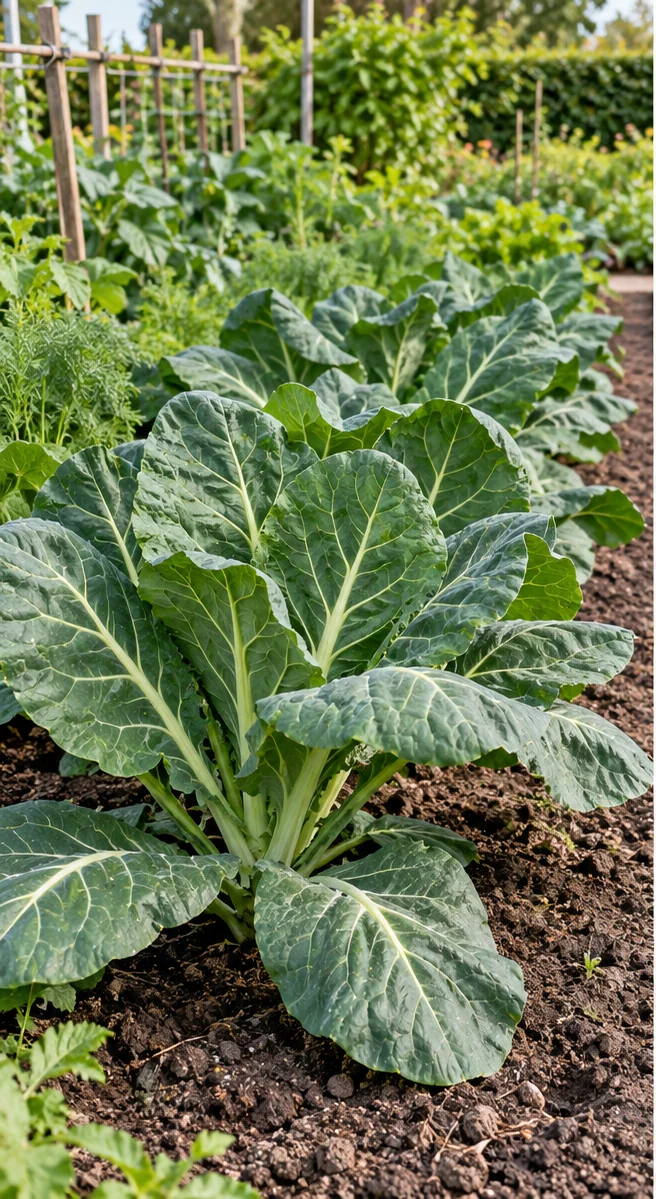
This image was created with AI from described plant characteristics and growing advice. It shows a possible situation and is not a photograph of a verified cultivar.
A spacious row for gradual leaf picking
An open row makes broad leaves accessible without harvesting the whole plant.
- Sow as the variety advises and raise young plants with their own rootballs.
- Plant widely; the consulted Tronchuda description states 50–60 cm.
- Pick outer leaves as needed and retain a healthy, growing top.
For whole plants and repeated small leaf portions in summer or autumn.
Tick off your supplies →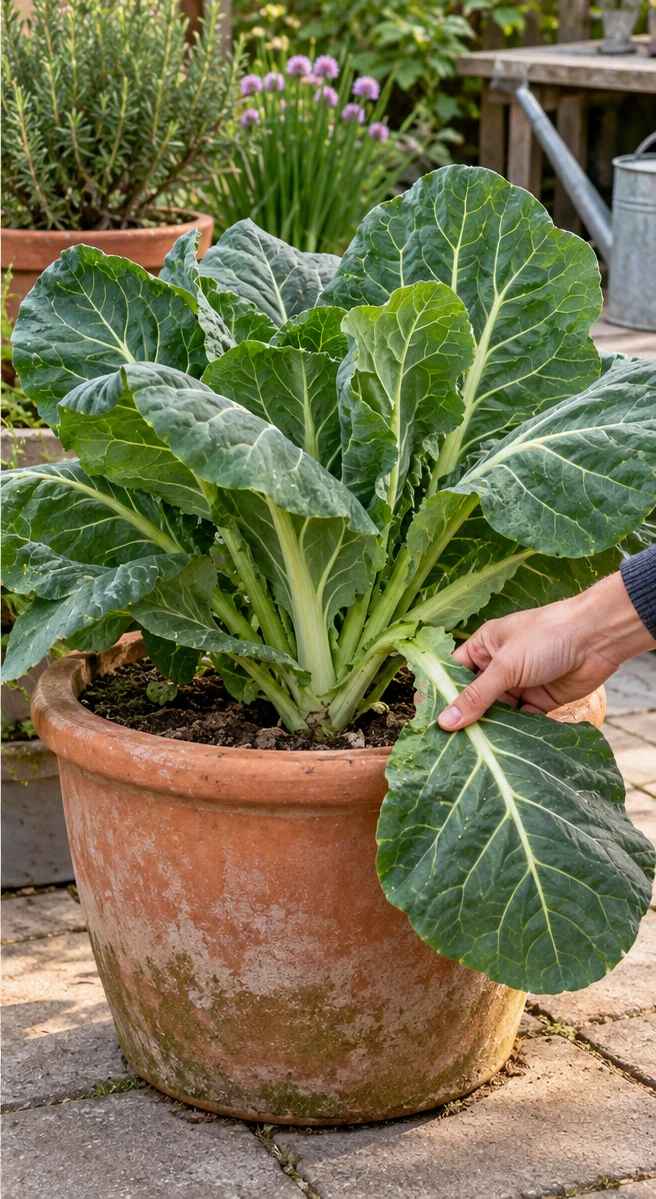
This image was created with AI from described plant characteristics and growing advice. It shows a possible situation and is not a photograph of a verified cultivar.
A trial plant in a generous pot
A large patio pot gives one leaf cabbage its own care space near the kitchen.
- Choose a generous, stable pot with airy substrate and drainage.
- Plant a healthy young rootball and give sufficient light.
- Check moisture and pick modestly, retaining enough leaves for regrowth.
For a small trial; pots need extra watering checks and winter behaviour is not guaranteed.
Tick off your supplies →A loose leaf cabbage, not a fruit tree
Couve Tronchuda is leafy cabbage. Portuguese cabbage names in seed ranges cover broad leaves with firm pale veins. Suppliers may call upright forms tree cabbage, without making them botanical trees. Check full variety names and label beds clearly.
Plan a picking plant rather than a closed head
The aim is loose leaves, not closed white-cabbage heads. Match plant numbers to kitchen needs and mature width. General leafy-cabbage care helps; check sowing and winter suitability against your Portuguese type's description too.
Grow a manageable batch of young plants
Vreeken gives April to July sowing for the consulted Tronchuda. Choose within that window when plants can establish. Sow in modules or prepared seedbeds for later individual root balls. Provide light and avoid unnecessarily long stays in undersized pots.
Give broad leaves space
Plant intact root balls at roughly existing depth and water to establish. Tronchuda's mentioned 50–60 cm is variety-specific, not for every leafy cabbage. Leave picking access. Start large pots with one plant so roots and leaves face no immediate crowding.
Check the soil beneath the leaves
Broad leaves hide soil and evaporate water. Feel roots, particularly in heat and pots. Water directly without constantly wet standing soil and weed shallowly. Suitable mulch limits drying; match nutrients to soil or substrate rather than copying American fertiliser rates.
Leaf cabbage needs the same careful inspection
Check leaf undersides for caterpillars and aphids, and young plants for small feeding holes. Insect mesh works well only with sealed edges. If growth stalls, also investigate roots, space and moisture. Rotate brassicas between seasons. The Minnesota source covers leafy brassicas generally; a particular disease or resistance needs confirmation for your cultivar.
Take outer leaves and retain the growing point
Harvest a few healthy outer leaves when usable and let the tip keep growing. Taste young and larger leaves separately; firm veins may need different preparation. Do not pick so much that only a bare stem remains if you still want regrowth. Chill the fresh portion and use it promptly.
Assess winter performance by variety and position
The consulted Tronchuda description gives reasonable winter hardiness, not a promise for every Dutch winter, especially exposed pots. Follow cold forecasts, harvest usable leaves promptly and observe afterwards. Note survival and regrowth. Protected overwintering is a trial, not mandatory for all crops.
What you need
Tick what you already have. The extras depend on how you grow.
0 of 6 ticked off
Your ticks are saved in this browser.
Discover and grow more
More background, sources and image information
SeedSteps editorial team · updated on 11 October 2026. The AI images illustrate species and practical growing situations; they do not prove an exact cultivar, observations from your own garden or yield.
Britse gewasadviezen worden gecombineerd met Nederlandse en Vlaamse informatie waar beschikbaar. Amerikaanse Extension-bronnen ondersteunen plantprincipes en herkenning; hun kalenderdata, lokale plaagdruk, bestrijdingsmiddelen en mestdoseringen worden niet rechtstreeks op Nederland of Vlaanderen toegepast. Vorst, bodemwarmte, standplaats en expliciete rasinformatie blijven de lokale controle. Commerciële bronnen onderbouwen uitsluitend benoemde ras- en plantkenmerken; zij zijn geen affiliate-aanbeveling.
Tronchuda-beschrijving en leverancierskalender; algemene bladkoolzorg door UMN, containerprincipes door UMD.
- World Checklist of Vascular Plants — 4 juni 2026Royal Botanic Gardens, Kew · accessed 2026-10-07
- Bladkolen: wortels, water en afzonderlijke bladeren oogstenUniversity of Minnesota Extension · accessed 2026-10-08
- Groenten in potten en saladetafels, inclusief mizunaUniversity of Maryland Extension · accessed 2026-10-10
- Couve Tronchuda: Portugese bladkoolVreeken’s Zaden · accessed 2026-10-10
Supporting evidence by chapter: A loose leaf cabbage, not a fruit tree: Vreeken’s Zaden. Plan a picking plant rather than a closed head: Vreeken’s Zaden, University of Minnesota Extension. Grow a manageable batch of young plants: Vreeken’s Zaden, University of Minnesota Extension. Give broad leaves space: Vreeken’s Zaden, University of Maryland Extension. Check the soil beneath the leaves: University of Minnesota Extension, University of Maryland Extension. Leaf cabbage needs the same careful inspection: University of Minnesota Extension. Take outer leaves and retain the growing point: University of Minnesota Extension, Vreeken’s Zaden. Assess winter performance by variety and position: Vreeken’s Zaden.