
Growing cavolo nero: a green leaf tower for garden and kitchen
Cavolo nero bears long, often dark, blistered leaves along an upright stem. It is an attractive edible plant for a bed or generous pot. Pick gradually from the bottom and leave new growth at the top. Do not automatically expect Tuscan types to have the same winter hardiness as Dutch curly kale.
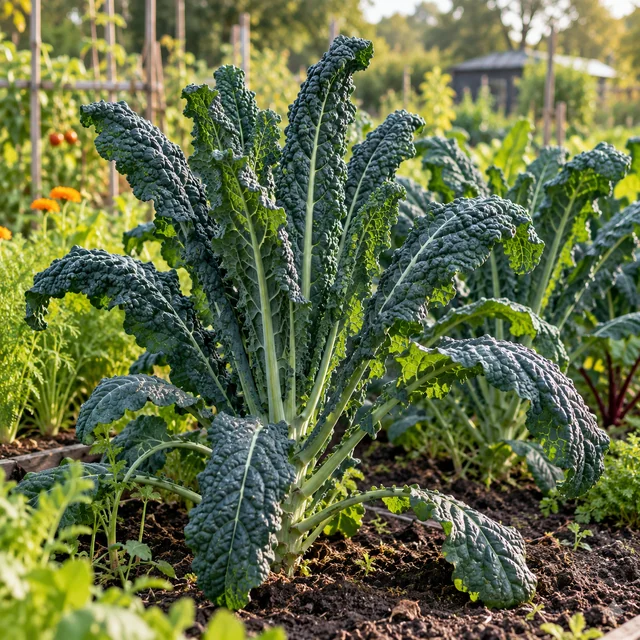
This image was created with AI from described plant characteristics and growing advice. It shows a possible situation and is not a photograph of a verified cultivar.
- Harvest
- Individual young and mature leaves
- Growth
- Upright leafy stem; not a tree
- Winter
- Winter hardiness varies by type and conditions
This growing advice helps you choose. Your variety, growth stage, weather and conditions in your space determine the actual timing.
Sowing under cover and raising seedlings
Start under cover in cool conditions in modules or a seedbed · Cavolo nero
April–JuneStart under cover in cool, bright conditions to suit the desired harvest time.
- Germination and temperature
- Germinate under cover, then grow on in cool, bright, well-ventilated conditions; avoid a hot growing space.
- After emergence
- Give seedlings light immediately after emergence. A dark loft needs suitable grow lights; warmth alone is insufficient. Ventilate and keep the compost moist without saturating it.
- Pricking out and potting on
- Sow in modules or prick out manageable young plants. Let the root ball firm up without a check in growth.
- Hardening off and planting out
- Gradually acclimatise indoor-raised plants to sun, wind and outdoor temperatures; shelter them again on cold nights. Plant out sturdy young brassicas and protect against cabbage root fly and caterpillars where needed.
Plan for young leaves or mature winter plants. Portuguese cabbage is not automatically as winter-hardy as kale.
Sources and use
RHS · bladkool ↗Britse teeltrichtlijn voor een gematigd klimaat; de genoemde perioden zijn richtlijnen voor Nederland en Vlaanderen.
De Bolster · Palmkool Nero di Toscana: opkweek en Nederlandse overwintering ↗Nederlandse producent of teeltbron; de rasinstructie blijft leidend.
Feggies · Toscaanse Palmkool 'Cavolo Nero di Toscana' zaden biologisch ↗Nederlandse producent of teeltbron; de rasinstructie blijft leidend.
Guideline periods for the Netherlands and Flanders. Check the variety, available light, soil and measured temperatures. Greenhouse heating does not guarantee enough winter light.
A different flavour, a different harvest.
Choose by more than the name. Discover how these varieties and crop types taste, what you can use them for and what growing them involves.
1 of 1 choices · 0 named varieties
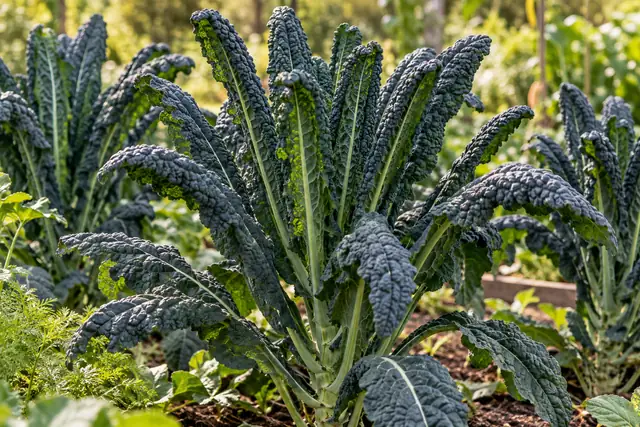
This image was created with AI from described plant characteristics and growing advice. It shows a possible situation and is not a photograph of a verified cultivar.
Nero di Toscana
These Tuscan black kale names describe the same dark long-leaved type. French and Italian names are combined as search terms.
Choose this type for narrow, blistered leaves and a palm-like growth habit. The translations do not establish three proven different cultivars.
Flavour, kitchen and growing
How does it taste?
A product source describes this type as more delicate and sweeter than curly kale, with a slightly bitter, earthy character.
This flavour description applies to the crop; there is no separate tasting result for this variety.In the kitchen
Remove the thick midrib if needed and use leaves in ribollita or other soup. Pick outer leaves for each meal.
A space in the garden
Plant with room for the tall leaf rosette and sufficient moisture during establishment. Retain the growing tip for repeated picking.
Harvesting
Harvest the lower healthy leaves and work gradually upwards. Follow your preferred leaf texture rather than waiting for a cabbage head.
Also listed as: Noir de Toscane, Cavolo Nero di Toscana, Toscaanse boerenkool, Toscaanse palmkool.
Read the source notes →Choose your way to grow
From a garden bed to a suitable pot or support: give your plant a place that suits your garden and the care you can provide.
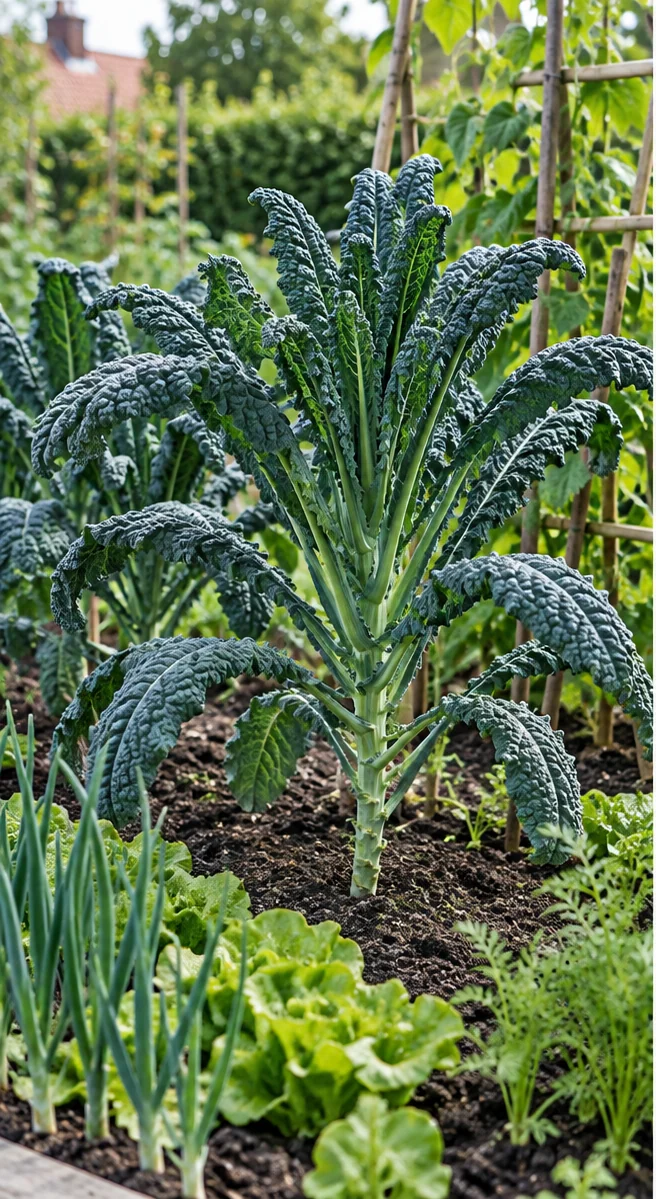
This image was created with AI from described plant characteristics and growing advice. It shows a possible situation and is not a photograph of a verified cultivar.
Cavolo nero as an edible leaf row
A well-spaced row gives each plant a visible shape of its own.
- Raise young plants and move intact rootballs to the final position.
- Allow variety-specific space; Nero di Toscana needs generous planting distances.
- Pick from bottom to top and retain the healthy growing point.
For repeated harvesting and a decorative cabbage row through summer and autumn.
Tick off your supplies →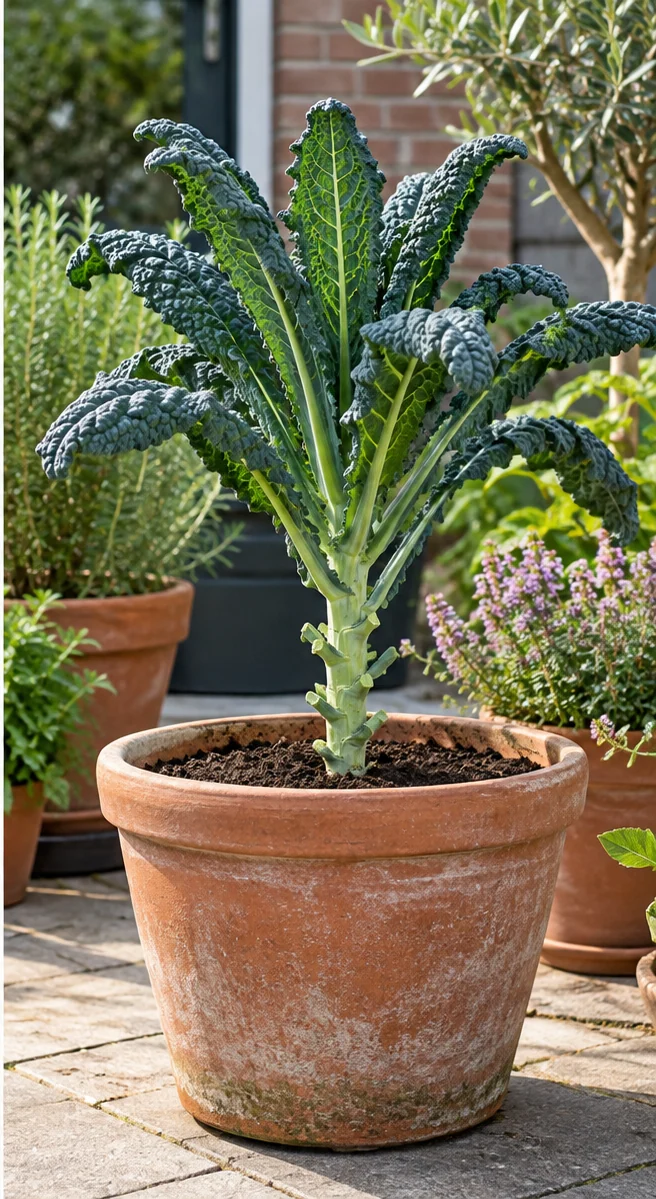
This image was created with AI from described plant characteristics and growing advice. It shows a possible situation and is not a photograph of a verified cultivar.
A single cavolo nero plant in a generous pot
One plant can make an attractive, practical patio picking point.
- Choose a generous, stable pot with drainage and enough root space.
- Plant at the same depth and check moisture during the first weeks.
- Pick modestly and watch larger leaves for wind and drying.
For a small personal harvest; pots still need winter protection and watering checks.
Tick off your supplies →Choose by flavour, shape and use
Nero di Toscana: These Tuscan kale names describe the same dark, long-leaved type. French and Italian names are combined as search terms. Remove thick midribs if needed and use leaves in ribollita or other soup. Pick outer leaves per meal.
A product source describes this type as more delicate and sweeter than curly kale, with a slightly bitter, earthy character.
A leaf cabbage with a recognisable shape
Tuscan kale gets its palm-like name from upright stems retaining leaves higher up. It is no fruit tree or tree species. Nero di Toscana is a familiar dark, blistered-leaf type; properties belong to the chosen variety. Use the full name to plan.
Grow a sturdy young plant
Sow in spring following variety guidance and provide enough light. Space young plants to form individual root balls. De Bolster gives Nero di Toscana a spring start followed by transplanting. Acclimatise gradually outdoors and avoid prolonged restriction in small pots.
Give mature leaves space
Plant root balls at roughly pot depth and water for establishment. Mature leaves need more room than small seedlings suggest. For Nero di Toscana, De Bolster recommends about 65 by 50 cm. Do not use this as fixed spacing for every Tuscan kale variety.
A large pot makes care manageable
A single plant in a generous pot can stand near the kitchen. Use a growing medium that retains water and allows drainage. Large leaves lose plenty of water; check the pot below the surface. A tall plant must stand stably in wind. General leaf cabbage principles apply here, but limited root space makes regular checks more important.
Keep leaf growth steady and even
Water roots in drought and control weeds. Heat and drought toughen leaves. Mulch covers soil without wrapping bases wet. Match feeding to soil and product; American quantities and calendar dates are no direct Dutch-pot instructions.
Check beneath the dark leaves
Caterpillars, flea beetles and aphids also attack Tuscan kale. Inspect undersides and young growth regularly. Remove severe damage carefully and use closed mesh on young plants as needed. Rotate cabbages. Persistent wilting needs root and soil checks, not just insect searches.
Harvest outer leaves and let the top grow
Pick usable leaves from below and retain a healthy tip. Take an amount the plant can spare. Younger and thicker older leaves need different preparation; remove tough veins where needed. Stripping a plant all at once is a different harvest choice from keeping it producing leaves for weeks.
Plan winter harvesting without guarantees
Cabbage family does not equal winter hardiness. De Bolster says Nero di Toscana lacks sufficient hardiness for some Dutch winters. Harvest promptly before hard frost and assess type and site. Record autumn performance for fairer choices than universal Tuscan-kale promises.
What you need
Tick what you already have. The extras depend on how you grow.
0 of 6 ticked off
Your ticks are saved in this browser.
Discover and grow more
More background, sources and image information
SeedSteps editorial team · updated on 11 October 2026. The AI images illustrate species and practical growing situations; they do not prove an exact cultivar, observations from your own garden or yield.
Britse gewasadviezen worden gecombineerd met Nederlandse en Vlaamse informatie waar beschikbaar. Amerikaanse Extension-bronnen ondersteunen plantprincipes en herkenning; hun kalenderdata, lokale plaagdruk, bestrijdingsmiddelen en mestdoseringen worden niet rechtstreeks op Nederland of Vlaanderen toegepast. Vorst, bodemwarmte, standplaats en expliciete rasinformatie blijven de lokale controle. Commerciële bronnen onderbouwen uitsluitend benoemde ras- en plantkenmerken; zij zijn geen affiliate-aanbeveling.
Nero di Toscana-specifieke afstand, planning en winterhardheid; algemene bladkoolzorg door RHS en UMN.
- World Checklist of Vascular Plants — 4 juni 2026Royal Botanic Gardens, Kew · accessed 2026-10-07
- Organic Palmkool Nero di ToscanaFeggies · accessed 2026-10-11
- Palmkool Noir de Toscane zaden biologischFeggies · accessed 2026-10-11
- Toscaanse Boerenkool / Palmkool BiologischFeggies · accessed 2026-10-11
- Toscaanse Palmkool 'Cavolo Nero di Toscana' zaden biologischFeggies · accessed 2026-10-11
- Boerenkool: groeivormen, verzorgen en oogstenRoyal Horticultural Society · accessed 2026-10-08
- Bladkolen: wortels, water en afzonderlijke bladeren oogstenUniversity of Minnesota Extension · accessed 2026-10-08
- Palmkool Nero di Toscana: opkweek en Nederlandse overwinteringDe Bolster · accessed 2026-10-10
Supporting evidence by chapter: Choose by flavour, shape and use: Feggies, Feggies, Feggies, Feggies. A leaf cabbage with a recognisable shape: De Bolster. Grow a sturdy young plant: De Bolster, Royal Horticultural Society. Give mature leaves space: De Bolster. A large pot makes care manageable: Royal Horticultural Society, University of Minnesota Extension. Keep leaf growth steady and even: University of Minnesota Extension. Check beneath the dark leaves: University of Minnesota Extension, Royal Horticultural Society. Harvest outer leaves and let the top grow: University of Minnesota Extension. Plan winter harvesting without guarantees: De Bolster.