
Gherkins: small cucumbers for regular picking
Gherkins grow quickly enough to change your garden rounds. Hidden behind a leaf, a small fruit can soon become too big for your intended use. A sturdy frame makes finding them easier; growing on the ground works too if you provide space and a dry surface.
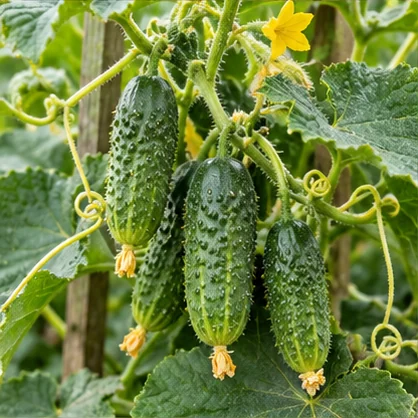
This image was created with AI from described plant characteristics and growing advice. It shows a possible situation and is not a photograph of a verified cultivar.
- Crop
- Cucumber for picking small fruits
- Location
- Warm, sunny and sheltered
- Outdoors
- After frost risk and with enough warmth
- Harvest rhythm
- Check often and pick young
This growing advice helps you choose. Your variety, growth stage, weather and conditions in your space determine the actual timing.
Sowing under cover and raising seedlings
Start under cover in warmth · Gherkin
April for an unheated greenhouse; late April for outdoor cultivarsStart indoors in warmth and reserve enough bright space for raising plants.
- Germination and temperature
- Germinate in warmth, around 20 °C; young plants remain sensitive to cold.
- After emergence
- Give seedlings light immediately after emergence. A dark loft needs suitable grow lights; warmth alone is insufficient. Ventilate and keep the compost moist without saturating it.
- Pricking out and potting on
- Sow in individual pots or deep modules. Do not prick out bare-rooted; move the whole root ball before the roots become restricted.
- Hardening off and planting out
- Gradually acclimatise indoor-raised plants to sun, wind and outdoor temperatures; shelter them again on cold nights. Move an intact root ball to its final position only when soil and nights are warm enough. Outdoors after the last frost, usually late May–June.
A February start requires an actually heated greenhouse for growing on. Choose a greenhouse or outdoor cultivar suited to your final position.
Sources and use
RHS · komkommer ↗Britse teeltrichtlijn voor een gematigd klimaat; de genoemde perioden zijn richtlijnen voor Nederland en Vlaanderen.
Feggies · Augurk Hokus — ras- en teeltbeschrijving ↗Nederlandse producent of teeltbron; de rasinstructie blijft leidend.
Feggies · Augurk Petit vert de Paris — ras- en teeltbeschrijving ↗Nederlandse producent of teeltbron; de rasinstructie blijft leidend.
Guideline periods for the Netherlands and Flanders. Check the variety, available light, soil and measured temperatures. Greenhouse heating does not guarantee enough winter light.
A different flavour, a different harvest.
Choose by more than the name. Discover how these varieties and crop types taste, what you can use them for and what growing them involves.
3 of 3 choices · 3 named varieties
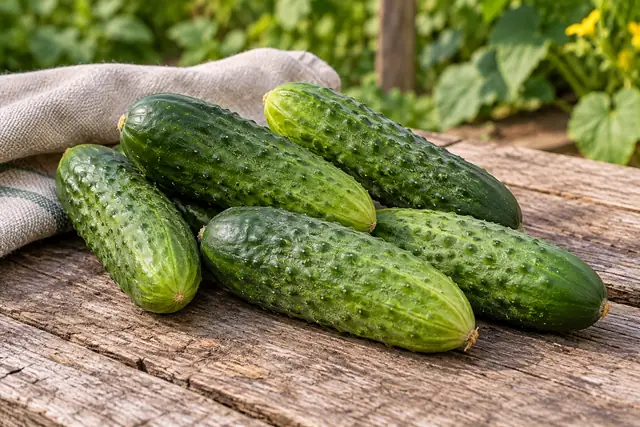
This image was created with AI from described plant characteristics and growing advice. It shows a possible situation and is not a photograph of a verified cultivar.
Hokus
A green gherkin for a sheltered outdoor bed: a practical variety if you want to pickle small batches regularly.
Choose Hokus for open-ground growing in a warm, sheltered position. Long vines still need space or training.
Flavour, kitchen and growing
How does it taste?
A distinct aroma is not described. The final flavour of pickled gherkins mainly comes from harvesting young and the vinegar and herbs used.
This flavour description applies to the crop; there is no separate tasting result for this variety.In the kitchen
Preserve small, fresh fruit using a tested pickling recipe. Keep different sizes separate so that texture after preparation remains comparable.
A space in the garden
Start indoors in warmth in late April and plant out after frost. Guide the vines back into the bed or along a frame without stepping on them.
Harvesting
Check regularly for young fruit; gherkins grow on quickly. Cut them off carefully and process the fresh harvest without a long wait.
Read the source notes →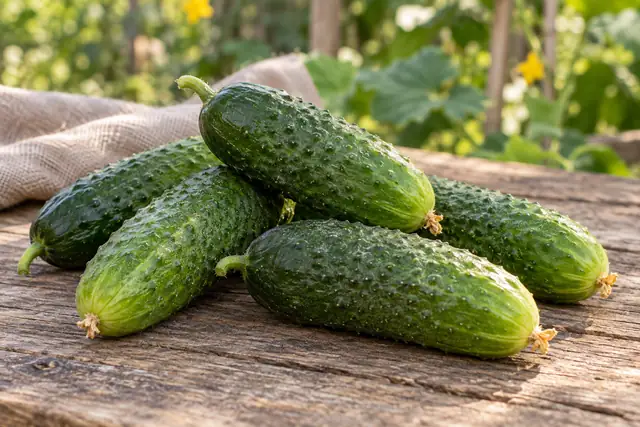
This image was created with AI from described plant characteristics and growing advice. It shows a possible situation and is not a photograph of a verified cultivar.
Petit vert de Paris
Small, elongated gherkins for a fine cornichon harvest: the intended picking size is approximately 4–5 cm.
Choose this variety for small, even portions rather than large slicing cucumbers. It needs frequent plant checks.
Flavour, kitchen and growing
How does it taste?
A cultivar aroma is not described. For this offering, the flavour result depends on young, crisp fruit and the chosen pickling preparation.
This flavour description applies to the crop; there is no separate tasting result for this variety.In the kitchen
Use the small gherkins as a sour garnish with a meal. For storage outside the fridge, follow a tested preserving recipe.
A space in the garden
Provide a warm bed or greenhouse position, rich soil and regular water. Keep vines and fruit accessible for picking.
Harvesting
Pick around 4–5 cm. Missing a few days can make a big difference; keep larger specimens separate from the small selection.
Read the source notes →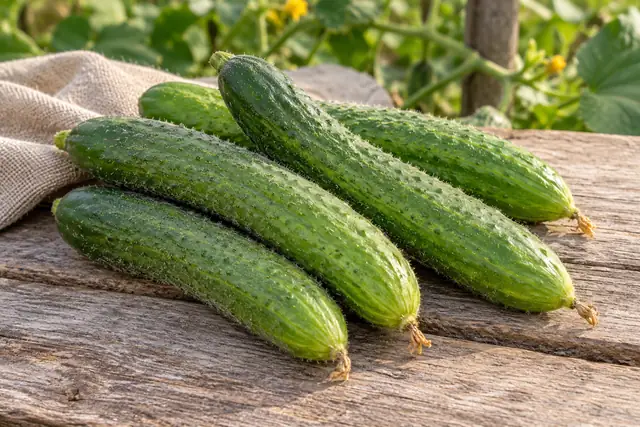
This image was created with AI from described plant characteristics and growing advice. It shows a possible situation and is not a photograph of a verified cultivar.
Bourbonne
An old French variety with long, thin, lightly hairy green fruits and two usable harvest sizes.
Choose Bourbonne if you enjoy experimenting with both gherkin size and table cucumber without planting two crops.
Flavour, kitchen and growing
How does it taste?
The source gives no separate aroma. Harvested young, the texture suits gherkins; grown larger, the same plant produces fruit for fresh cucumber use.
This flavour description applies to the crop; there is no separate tasting result for this variety.In the kitchen
Use small fruit for pickled gherkins and larger, still tender fruit in salad. Do not automatically mix sizes in one preserving jar.
A space in the garden
Start in warmth and plant intact rootballs after the last frost. A frame keeps long fruits accessible and clean.
Harvesting
For gherkin use, pick very young. Let only a few fruits grow larger for fresh eating, and taste them before the seeds become coarse.
Read the source notes →Choose your way to grow
From a garden bed to a suitable pot or support: give your plant a place that suits your garden and the care you can provide.
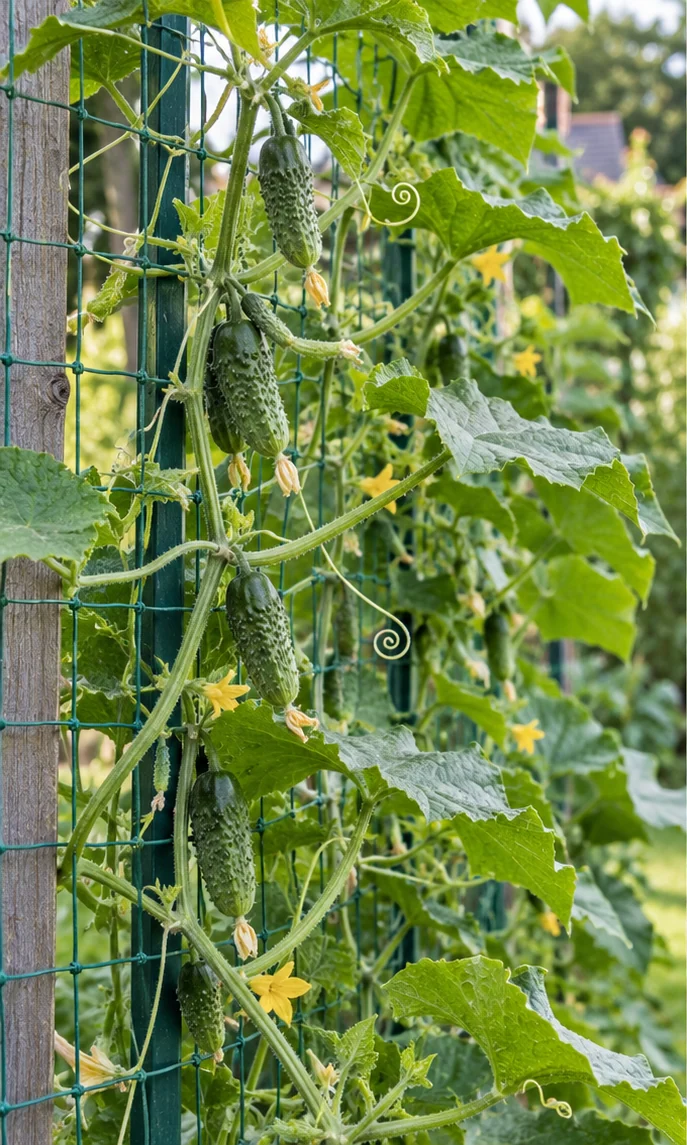
This image was created with AI from described plant characteristics and growing advice. It shows a possible situation and is not a photograph of a verified cultivar.
Gherkins along a climbing frame
Tendrils find a grip and the small fruits stay visible.
- Install a sturdy frame before planting out.
- Guide young shoots gently towards the frame.
- Check both sides during every picking round.
For a small bed with vertical space.
Tick off your supplies →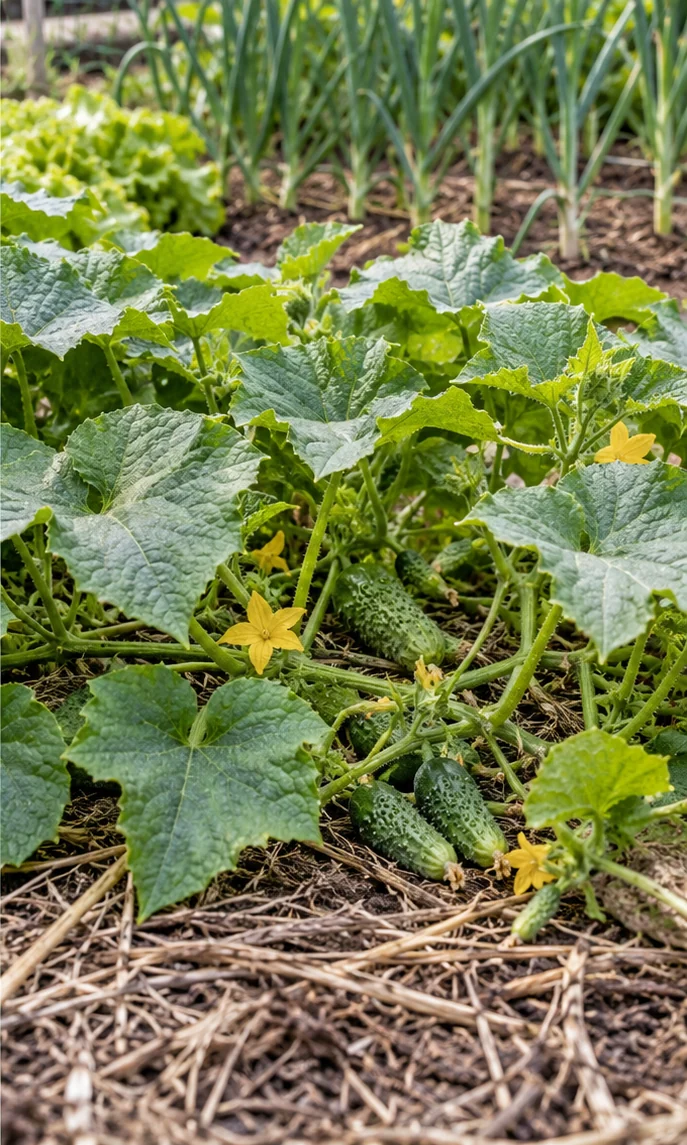
This image was created with AI from described plant characteristics and growing advice. It shows a possible situation and is not a photograph of a verified cultivar.
Grow freely in a warm bed
An accessible bed gives vines room on the ground.
- Allow the variety's spacing plus picking room.
- Place a dry surface beneath growing fruits.
- Lift leaves gently and keep stems intact.
For sufficient soil space and regular harvesting.
Tick off your supplies →Explore the varieties
See the confirmed differences. Characteristics without supporting evidence are left blank.
0 of 0 varieties
No matching variety found. Try another name or clear the filters.
Choose two to four varieties to compare their source data side by side.
Choose by flavour, shape and use
Hokus: A green gherkin for a sheltered outdoor bed, practical for regular small pickling batches. Preserve small, fresh fruit using a tested pickling recipe. Keep different sizes separate so that texture after preparation remains comparable.
A distinct aroma is not described. The final flavour of pickled gherkins mainly comes from harvesting young and the vinegar and herbs used.
Petit vert de Paris: Small elongated gherkins for a fine cornichon harvest: the desired picking size is around 4–5 cm. Use the small gherkins as a sour garnish with a meal. For storage outside the fridge, follow a tested preserving recipe.
A cultivar aroma is not described. For this offering, the flavour result depends on young, crisp fruit and the chosen pickling preparation.
Bourbonne: An old French cultivar with long, thin, green, lightly hairy fruit and two useful harvest sizes. Use small fruit for pickled gherkins and larger, still tender fruit in salad. Do not automatically mix sizes in one preserving jar.
The source gives no separate aroma. Harvested young, the texture suits gherkins; grown larger, the same plant produces fruit for fresh cucumber use.
Choose gherkin seed for the intended use
Gherkin belongs to cucumber, but cultivar choice and young harvesting give a different kitchen product. Check the packet for outdoor suitability and pollination. Picking an ordinary long cucumber early does not automatically give the same firm small fruit as a described gherkin cultivar.
Sow shortly before the warm planting period
Start indoors in separate pots if you can keep young plants light and warm. The root ball must later move outdoors intact. Sowing too early gives large plants waiting indoors for a long time. Direct sowing works in sufficiently warm soil, with protection from cold and feeding damage.
Wait for warm nights and warm soil
Plant only after frost danger and when the position stays warm enough. Gradually acclimatise indoor plants to sun and wind. Keep roots intact. Use nutritious, well-drained soil and water gently to settle the root ball into its new surroundings.
A frame or a bed determines the harvest round
Fruit hangs visibly on sturdy supports, using less ground area. Ground growing needs more width and checking behind leaves. Choose according to variety growth. Add support before plants become large, avoiding later work among fragile vines.
Read about the cultivar before removing flowers
Some cucumber types need pollination; others can form fruit without it. Do not remove male flowers as a general rule. A female-flowering cultivar is not automatically parthenocarpic. Let pollinators reach flowers on cultivars needing them, even if you previously protected young plants under a cover.
Keep growth steady
Gherkins need even moisture during fruiting. Check roots and water soil as it dries. Strong drought-to-soaking swings do not help. Weed gently and use mulch where soil remains airy and accessible. Pots need extra warm-day checks.
Inspect misshapen or dropping fruit
Fruit failing to grow can reflect poor pollination or stress. Check flowers, weather and moisture before assigning causes. Spotted or deformed leaves need separate assessment. Avoid one treatment for every leaf problem; track damaged and clearly diseased plants separately from healthy harvests.
Pick small and use a tested pickling recipe
Check beneath the leaves regularly and harvest the size suited to your kitchen plan. Cut the stalk or support the vine when picking. Chill fresh fruit if not using it straight away. For pickling, use a proven food-safe recipe with correct proportions; an arbitrary amount of vinegar gives no reliable storage guarantee.
What you need
Tick what you already have. The extras depend on how you grow.
0 of 6 ticked off
Your ticks are saved in this browser.
Discover and grow more
More background, sources and image information
SeedSteps editorial team · updated on 11 October 2026. The AI images illustrate species and practical growing situations; they do not prove an exact cultivar, observations from your own garden or yield.
Britse gewasadviezen worden gecombineerd met Nederlandse en Vlaamse informatie waar beschikbaar. Amerikaanse Extension-bronnen ondersteunen plantprincipes en herkenning; hun kalenderdata, lokale plaagdruk, bestrijdingsmiddelen en mestdoseringen worden niet rechtstreeks op Nederland of Vlaanderen toegepast. Vorst, bodemwarmte, standplaats en expliciete rasinformatie blijven de lokale controle. Commerciële bronnen onderbouwen uitsluitend benoemde ras- en plantkenmerken; zij zijn geen affiliate-aanbeveling.
- World Checklist of Vascular Plants — 4 juni 2026Royal Botanic Gardens, Kew · accessed 2026-10-07
- Augurk Bourbonne — ras- en teeltbeschrijvingFeggies · accessed 2026-10-11
- Augurk Hokus — ras- en teeltbeschrijvingFeggies · accessed 2026-10-11
- Augurk Petit vert de Paris — ras- en teeltbeschrijvingFeggies · accessed 2026-10-11
- Cucumbers kweken — RHSRoyal Horticultural Society · accessed 2026-10-08
- Growing cucumbers in home gardensUniversity of Minnesota Extension · accessed 2026-10-07
- Cucumber in the gardenUtah State University Extension · accessed 2026-10-07
Supporting evidence by chapter: Choose by flavour, shape and use: Feggies, Feggies, Feggies. Choose gherkin seed for the intended use: Royal Horticultural Society, Utah State University Extension, University of Minnesota Extension. Sow shortly before the warm planting period: Royal Horticultural Society, Utah State University Extension, University of Minnesota Extension. Wait for warm nights and warm soil: Royal Horticultural Society, Utah State University Extension, University of Minnesota Extension. A frame or a bed determines the harvest round: Royal Horticultural Society, Utah State University Extension, University of Minnesota Extension. Read about the cultivar before removing flowers: Royal Horticultural Society, Utah State University Extension, University of Minnesota Extension. Keep growth steady: Royal Horticultural Society, Utah State University Extension, University of Minnesota Extension. Inspect misshapen or dropping fruit: Royal Horticultural Society, Utah State University Extension, University of Minnesota Extension. Pick small and use a tested pickling recipe: Royal Horticultural Society, Utah State University Extension, University of Minnesota Extension.