Why grow Rood van Abbeville?
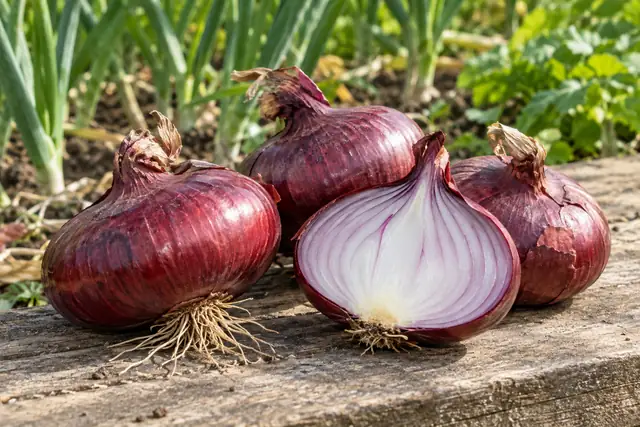
Medium-sized, flattened red onion that can also be stored.
Choose this red onion for colour and storage potential. Flattened bulbs contrast with round, yellow storage onions.
How this choice tastes
The full onion aroma is sharper raw and mellows with gentle frying. A specific extra-sweet cultivar note has not been established here.
From harvest to kitchen
Slice into thin half-rings for salad or braise slices slowly. The medium size is practical for a dish needing a modest amount of onion.
What needs attention when growing
Sow in spring and thin gradually. Keep the bed weed-free and water in drought while foliage actively grows.
For storage, wait until the foliage dries as it matures and the outer skin is firm. Dry the bulbs under cover and use damaged onions separately.
Choose by flavour, shape and use
Doux de Florence ras van Simiane: Elongated crimson onion for raw use. Slice the long bulbs crossways into rings for tomato salad. Harvested young and green, this onion also goes into potato salad or an omelette.
The supplier describes Simiane as sweet. Taste thin slices raw; actual pungency still depends on growing season, freshness and preparation.
Rood van Abbeville: Medium-sized, flattened red onion that can also be stored. Slice into thin half-rings for salad or braise slices slowly. The medium size is practical for a dish needing a modest amount of onion.
The full onion aroma is sharper raw and mellows with gentle frying. A specific extra-sweet cultivar note has not been established here.
Stuttgart: Flattened onion with a copper-coloured exterior. Chop for a soup base or fry rings slowly until golden. Simple pan cooking shows the transition from fresh pungency to a mellower aroma.
Stuttgart gives the familiar onion aroma for everyday cooking. Shape and storage are more clearly documented than a separate cultivar-specific flavour note.
Wit uit Lisboa: Small white bulb with upright dark green foliage. Slice young white parts and healthy greens for soup or stir-frying. Sprinkle some finely chopped foliage over an omelette just before serving.
The fresh onion scent suits a young kitchen onion. A distinct level of pungency is not substantiated; taste a small piece before using it raw.
The planting bulb grows near the surface
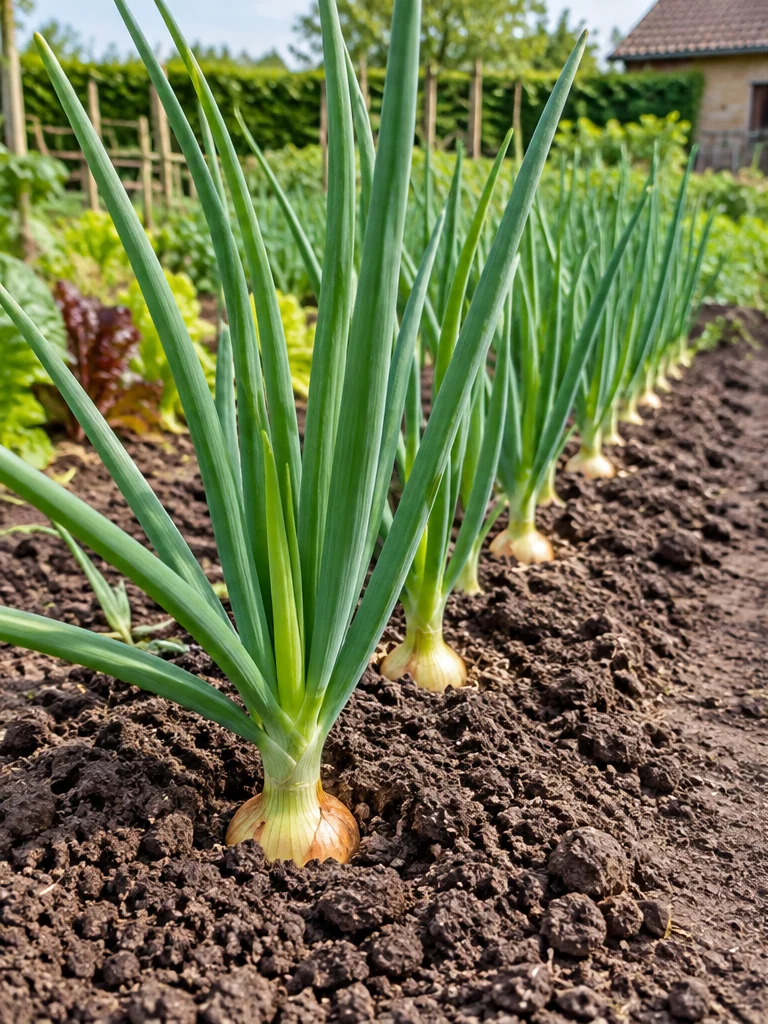
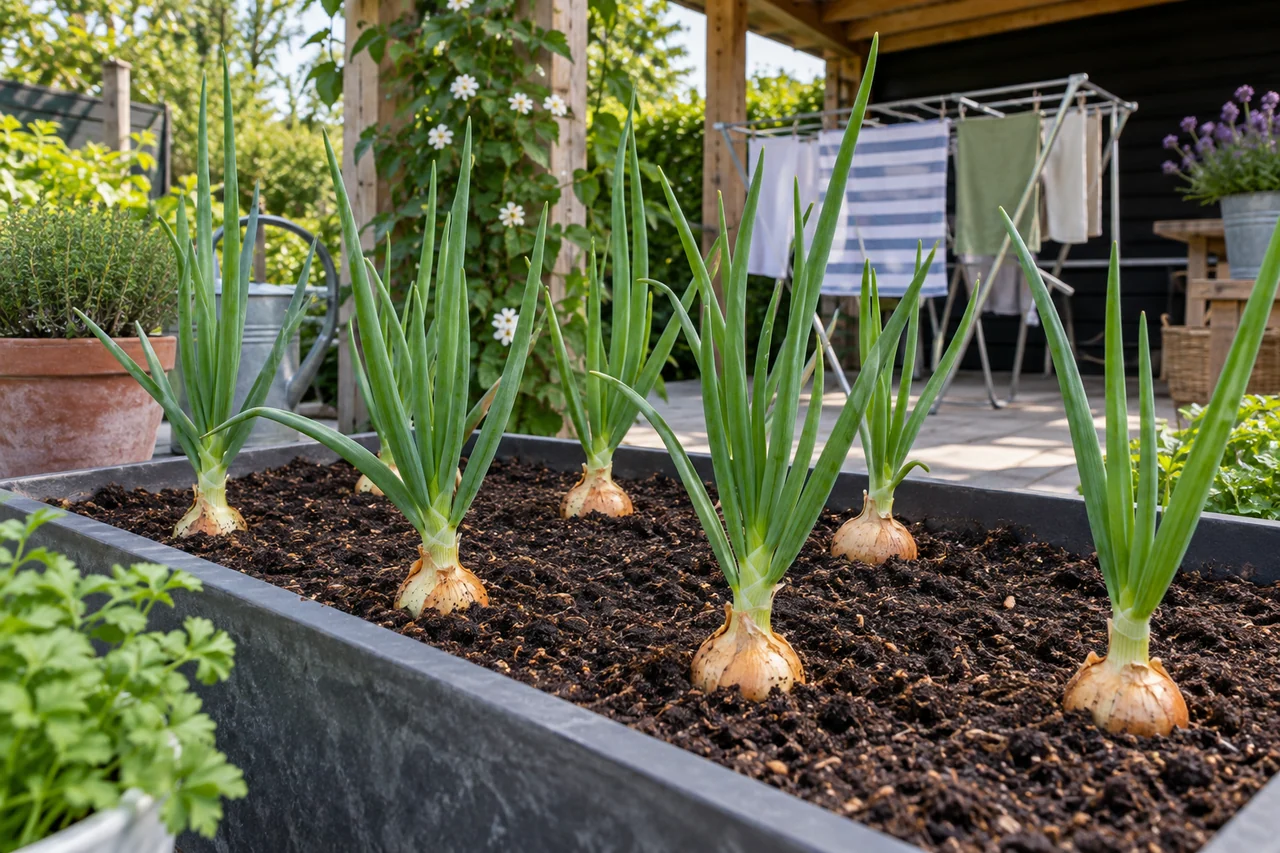
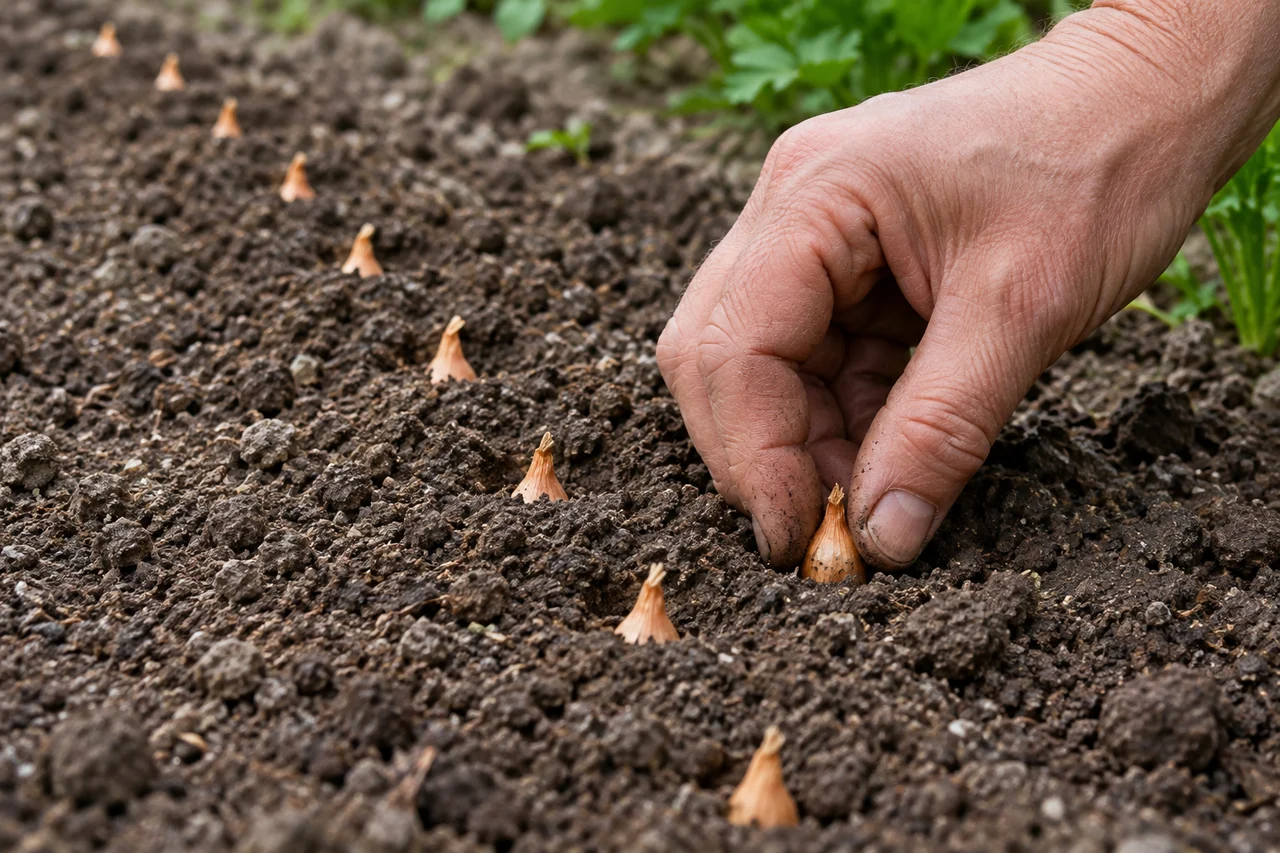
Place an onion set with its root base down and the tip just visible. Make a hole first if the soil is hard; the bulb is not a dibber. For young seed-grown onions, use their existing planting level as the starting point. A deep mulch layer must not keep the bulb neck constantly wet.
Leave room for the mature bulb
Onion sets look small when planted, but their final size needs space. Follow the cultivar guidance, generally around 10–15 cm between plants for ordinary bulbs, with a workable distance between rows. Closer planting can give a different harvest size and makes weeding and drying in the bed harder to manage.
Light after germination is essential
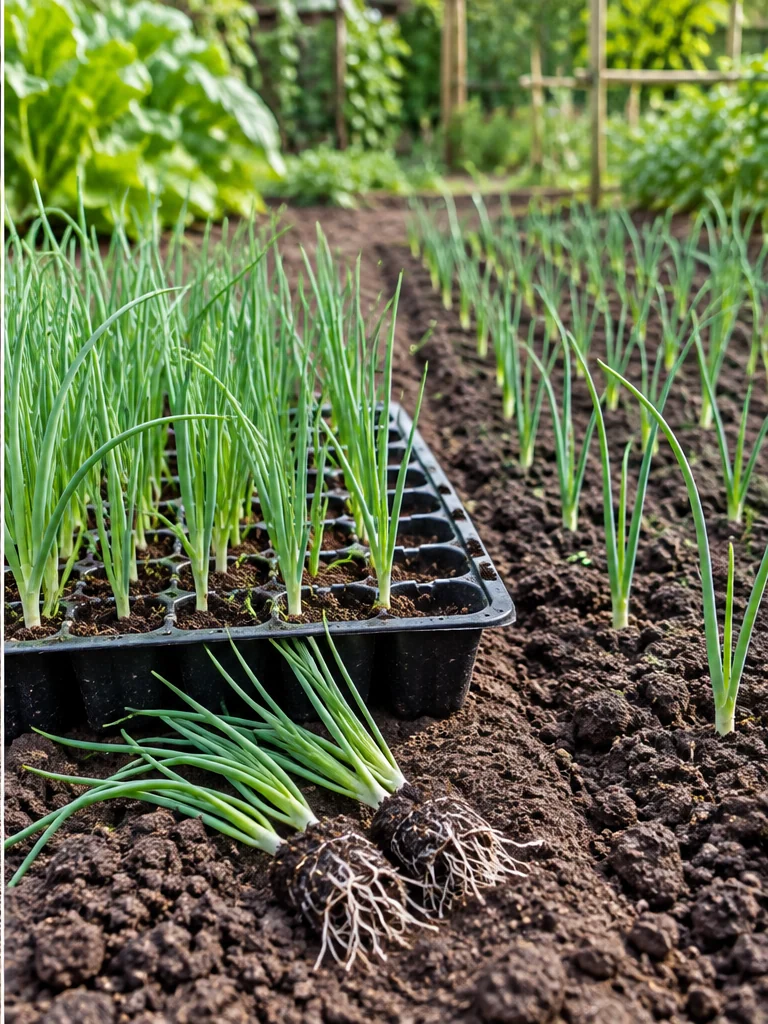
Young onions grow as thin shoots and quickly lose out to weeds. Give plants started under cover a bright position and even moisture without waterlogging. Harden them off before planting out. Choose a seed-grown cultivar suited to the regional day length and follow the supplied growing guidance.
Assessing bolting and a soft bulb
A flower stalk makes a bulb less suitable for long storage; use these onions sooner. If there is rot at the root base or noticeably yellowing foliage, check the soil and plant. Rotate the onion family to another location and keep affected bulbs separate. Wet storage does not restore a diseased bulb.
The drying space belongs in the growing plan
Before harvest, consider where onions can lie dry with good airflow. A covered place is needed in rainy weather; a closed plastic crate traps moisture instead. Give sound and damaged bulbs separate places and only pack them when the neck and outer skin are truly dry.
Choose how your onion story begins first
Seed and onion sets offer two different starting points. An onion set is a small bulb; a seed first grows into a seedling. When buying, look beyond the cultivar name alone. Record the starting material on the label and in your garden records. You can then compare a later harvest with a genuinely comparable crop.
Onion sets and onions from seed follow their own routes
The Dutch school garden handbook focuses on planting onion sets in April and harvesting in July. Velt also considers nature’s rhythm: high summer is a checking window for onion sets, but seasons and microclimates vary. Record the starting material alongside your date too. A row of onions grown from seed is not a repeat of a row of small planting bulbs.
Use the calendar below to plan your next garden round. Read each entry to see whether it concerns onion sets or seed. A July harvest from onion sets does not automatically apply to the Dutch seed guidance for Red Baron. Your own observation of foliage and bulb still determines the moment.
A bed with room for the roots too
A sunny spot and soil that drains excess water suit onion growing. Before planting, identify where water collects. A row that stays wet for a long time after a shower needs different preparation from a bed that dries out quickly. Visit the chosen spot after rain first; that observation tells you more than an empty plan.
The topsoil deserves attention during growth
Onions have shallow roots. During drought, assess the moisture in the soil the plant can reach. A damp spot elsewhere in the garden says little about your onion row. Check regularly below the surface and record how the plants respond. General quantities from other countries are not fixed watering amounts for your Dutch or Flemish bed.
Weeding without repeatedly disturbing the row
Weeds take light, space and nutrients from young onions. Work carefully around the shallow roots and bulbs. Make a short round as small seedlings appear rather than one major intervention once the row is overgrown. Use the same walk to inspect the foliage. Care then becomes part of following growth.
The foliage signals the next chapter
When foliage naturally yellows and falls over, storage onions are nearing harvest. Do not bend the leaves yourself to speed this up. Look at both the row as a whole and the individual bulbs. A calendar can remind you to check but cannot make this judgement for you. Let the plant show you the season.
Lift the harvest intact
Handle bulbs carefully when lifting them. Damage makes long-term storage harder. While collecting them, make two groups: sound bulbs for storage and damaged onions for earlier use. This simple distinction prevents you from discovering only in the storage crate which ones needed attention. Harvesting therefore also includes an initial selection.
Drying turns a fresh onion into a storage onion
Thorough drying is part of storage. A papery outer skin, dry roots and a dry neck are useful checks. Provide air circulation and a place that protects the harvest from wet weather. Assess the bulbs before packing them; a date alone cannot show whether drying was sufficient in your conditions.
There is still something to follow after lifting
Check stored onions regularly and use soft or sprouting ones first. Record which batch you stored where. You can then compare a future crop for both growth and storage quality. Recording harvest weight alone misses part of the story. The onion on your kitchen board continues the story of the same plant that began in the bed.