Why grow Black Mexican?
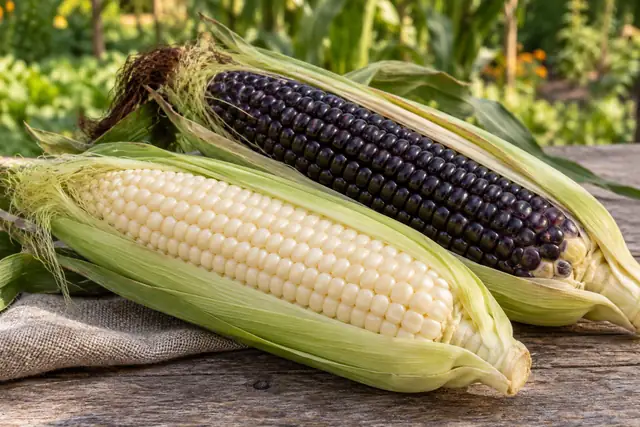
Een oude vroege suikermaïs waarvan de korrels jong wit zijn en bij volledige rijping zwart worden.
Kies Black Mexican voor een vroeg erfstuk en de verandering van wit naar zwart, met duidelijk gescheiden eet- en zaadrijpheid.
How this choice tastes
De zoete suikermaïskwaliteit hoort bij de witte melkrijpe fase. De zwarte eindkleur is een ander stadium, geen aanwijzing om langer te wachten voor verse kolven.
From harvest to kitchen
Kook jonge witte kolven direct na het plukken. Laat een aparte kolf verder rijpen om de bijzondere kleurwisseling te volgen.
What needs attention when growing
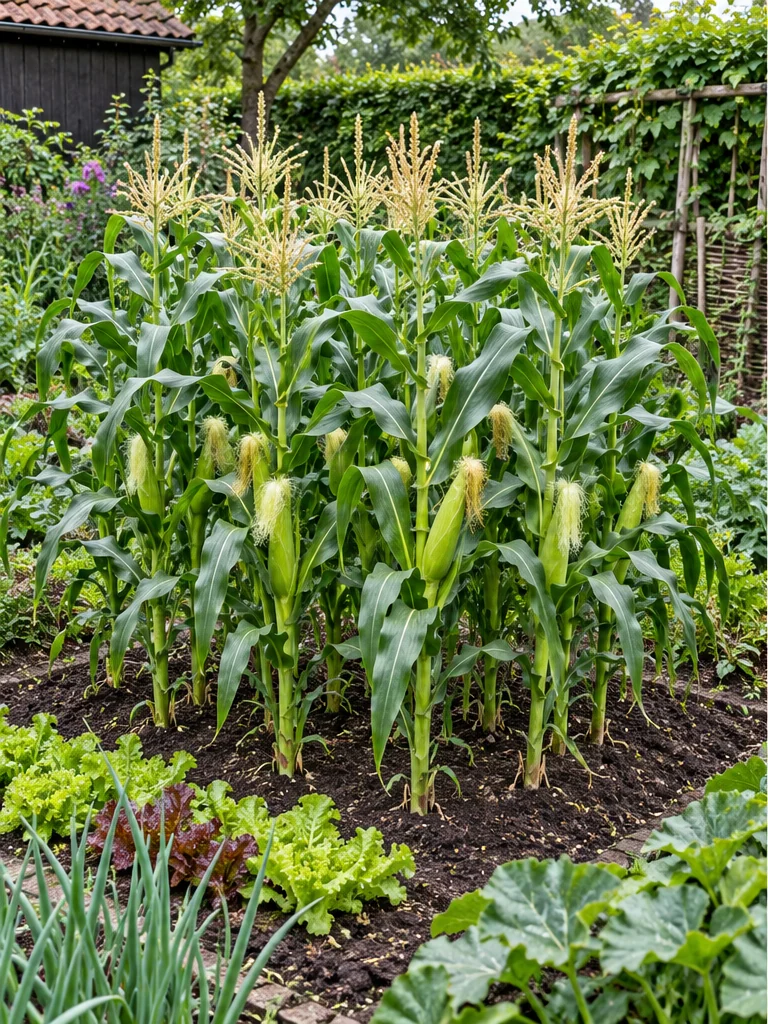
Sow after frost and plant in a block. If necessary, separate different maize types by flowering time or distance to limit unwanted crossing.
Controleer korrels terwijl ze nog wit en melkrijp zijn. Wacht voor verse suikermaïs niet op volledig zwarte harde korrels.
Choose by flavour, shape and use
Golden Bantam: A classic open-pollinated yellow sweetcorn with medium-sized cobs: particularly appealing if you prepare the harvest fresh straight away. Boil or grill a freshly picked cob and eat it the same day. Waiting a long time reduces the sweetness of traditional sweetcorn.
Young kernels at the milky stage are described as meltingly tender and sweet. The best eating stage is shorter than the period during which the cob still looks attractive.
Mezdi: A mid-early Sativa cultivar focused on sweetcorn cob quality, with better retention of sweetness after harvest. Boil or grill the young cobs; process surplus soon after harvest for storage to preserve fresh quality.
The source describes very sweet kernels that retain their sweetness after picking better than other open-pollinated selections.
Martian Purple: Sweetcorn with purplish-red plants and reddish-purple kernels, selected from Double Red; colour is part of the crop's appearance here too. Boil or grill young cobs and taste them fresh. The striking colour makes the harvest special even before cooking.
No specific sweetness comparison is given. The general sweetcorn flavour belongs to harvesting at the milky stage, not to fully dried purple kernels.
Inca Rainbow: A vigorous sweetcorn selection with white, yellow, red and dark kernels on plants about 1.5–2 metres tall. Boil a young cob or cut off milky-stage kernels for a cooked vegetable dish. If desired, keep a few dry cobs as a reminder of the garden.
The source describes sweetcorn but gives no separate ranking of sweetness. Colour variation does not prove that every kernel tastes different.
Not all maize is sweetcorn
Fodder maize, popcorn and sweetcorn are grown for different harvests. Choose a cultivar offered as sweetcorn for fresh use. Earliness matters in a Dutch garden: an impressively tall, late plant may still fail to produce ripe cobs before cool autumn weather.
Provide warmth without starting too early
Start indoors in spring when you can move the plants outside in good time later. Individual deep pots limit root disturbance. A sowing depth of about 2–3 cm is usual; follow the packet. Provide plenty of light after emergence and avoid plants growing on for weeks until pot-bound.
Frost-free also means warm soil
Maize does not tolerate frost. Alongside calendar advice, wait for warmed soil and a favourable forecast. Harden plants off and set the rootball at about the same depth. Water straight away; temporary cold protection needs daytime checks for overheating.
The tassel and silks work together
The tassel at the top produces pollen. Each silk by the cob leads to a developing kernel. Wind carries the pollen. This makes several short rows useful, and missing kernels may fit incomplete pollination or unfavourable weather during flowering.
Take care when growing different maize types
With some sweet maize types, cross-pollination with other maize can affect the quality of the current kernels. Check the seed guidance for recommendations on isolation. In a small garden, preferably sow one suitable type rather than several alongside one another without growing information.
Do not let cob formation dry out
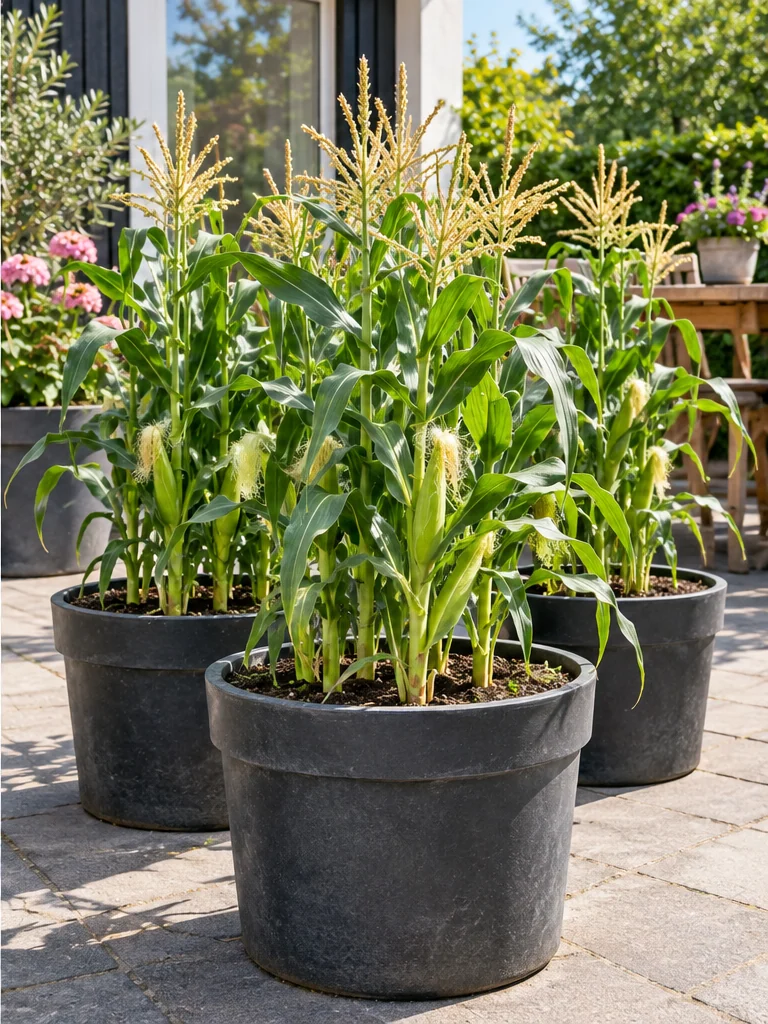
Provide enough water, particularly during flowering and cob filling. Check below the surface before watering and avoid prolonged waterlogging. Root space dries out faster in containers. Mature compost or suitable feed supports growth; extra fertiliser does not replace good pollination.
Investigating leaning plants and empty cobs
Wind can tip plants over; a sheltered spot and light support around the outside may help. If cobs fill poorly, assess layout, simultaneous flowering and drought. Do not remove tassels during flowering. Diseased or rotting cobs do not belong in the edible harvest.
Check the cob, not just the calendar
Browning silks are a clue, not complete proof. Check a cob: the kernels are well filled and release milky sap when lightly damaged. Clear liquid indicates an earlier stage; a doughy content indicates a later one. Hold the plant while twisting the cob off.
Plan the meal around the harvest
Harvest just before preparing when possible; sweetness changes after picking. Store cobs briefly in cool conditions if you cannot eat them straight away. Record which plants were ripe: next year you can see whether the cultivar and sowing time suit your space.