
Suikermaïs: plant een blok voor volle kolven
A group of sweetcorn gives the vegetable garden striking summer height. Good cobs depend mainly on the layout: grow plants in a block so pollen can reach the silks. Choose an early variety for our growing season and harvest close to cooking time.
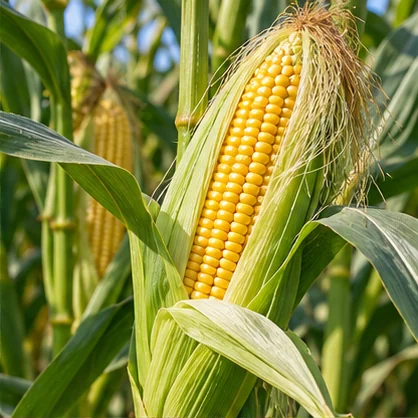
This image was created with AI from described plant characteristics and growing advice. It shows a possible situation and is not a photograph of a verified cultivar.
- Location
- Veel zon, warmte en beschutting zonder stilstaande lucht
- Opstelling
- Een blok met meerdere rijen, voor windbestuiving
- Buiten planten
- Na de lokale laatste nachtvorst, in opgewarmde grond
- Harvest
- Bruine bloeidraden en korrels met melksap; controleer meerdere signalen
This growing advice helps you choose. Your variety, growth stage, weather and conditions in your space determine the actual timing.
Sowing under cover and raising seedlings
Warm voorzaaien · Sweetcorn
April–meiZaai warm binnen voor en reserveer voldoende lichte opkweekruimte.
- Germination and temperature
- Warmte helpt de kieming; gebruik de rasinstructie voor de temperatuur.
- After emergence
- Zet zaailingen direct na opkomst licht. Een donkere zolder vraagt geschikte groeiverlichting; warmte alleen is onvoldoende. Ventileer en houd de grond vochtig, zonder haar te verzadigen.
- Pricking out and potting on
- Zaai in afzonderlijke potjes of diepe modules. Verspeen niet met kale wortels; zet de hele kluit over voordat de wortels vastlopen.
- Hardening off and planting out
- Laat binnen opgekweekte planten geleidelijk aan zon, wind en buitentemperatuur wennen; zet ze bij koude nachten weer beschut. Na afharden en de laatste vorst, meestal eind mei–juni. Plant de kluiten in een blok voor bestuiving.
Laat jonge maïs niet te lang in kleine potjes staan. Popcorn vraagt voldoende seizoen om de kolven te laten rijpen en drogen.
Sources and use
Royal Horticultural Society · RHS — suikermais kweken ↗Soort- of productgebonden bron; buitenlandse perioden zijn geen vaste Nederlandse zaaidatum.
University of Minnesota Extension · UMN Extension — suikermais in de moestuin ↗Soort- of productgebonden bron; buitenlandse perioden zijn geen vaste Nederlandse zaaidatum.
Guideline periods for the Netherlands and Flanders. Check the variety, available light, soil and measured temperatures. Greenhouse heating does not guarantee enough winter light.
A different flavour, a different harvest.
Choose by more than the name. Discover how these varieties and crop types taste, what you can use them for and what growing them involves.
13 of 13 choices · 11 named varieties
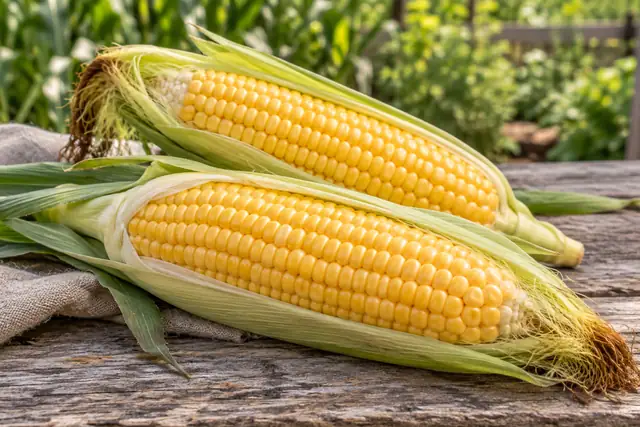
This image was created with AI from described plant characteristics and growing advice. It shows a possible situation and is not a photograph of a verified cultivar.
Golden Bantam
Een klassieke zaadvaste gele suikermaïs met middelgrote kolven: vooral aantrekkelijk voor wie de oogst direct vers bereidt.
Kies Golden Bantam voor een oude gele suikermaïs en een verse zomerse maaltijd, eerder dan voor droge popcornkorrels.
Flavour, kitchen and growing
How does it taste?
Jong melkrijpe korrels worden als smeltend en zoet beschreven. De beste eetfase is korter dan de periode waarin de kolf mooi blijft ogen.
In the kitchen
Kook of grill een vers geoogste kolf en eet hem dezelfde dag. Lang wachten doet bij traditionele suikermaïs afbreuk aan de zoetheid.
A space in the garden
Zaai na vorst in opgewarmde grond en plant in een blok voor windbestuiving. Geef zon, voeding en water tijdens de kolfvorming.
Harvesting
Oogst wanneer een korrel melkachtig sap geeft. Wacht niet tot korrels hard en droog worden; dan ben je voorbij de suikermaïsfase.
Read the source notes →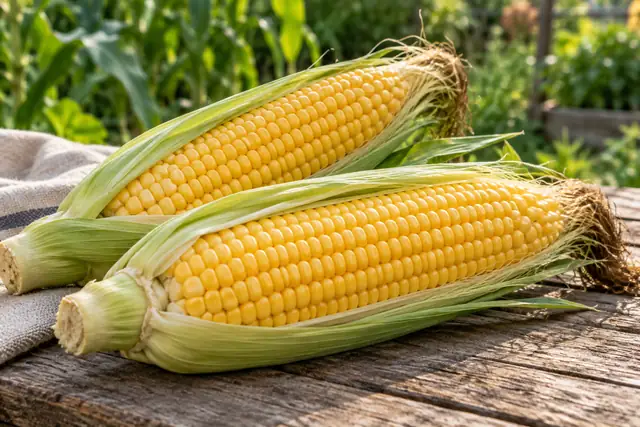
This image was created with AI from described plant characteristics and growing advice. It shows a possible situation and is not a photograph of a verified cultivar.
Mezdi
Een halfvroeg Sativa-ras waarbij de kwaliteit van de suikermaïskolf vooropstaat, met meer zoetheidsbehoud na oogst.
Kies Mezdi wanneer je vooral zoete eetkolven wilt en niet elke kolf onmiddellijk van plant naar pan kunt brengen.
Flavour, kitchen and growing
How does it taste?
De bron beschrijft zeer zoete korrels die hun zoetheid na de pluk beter behouden dan andere zaadvaste selecties.
In the kitchen
Kook of grill de jonge kolven; verwerk een overschot kort na de oogst voor bewaring, zodat de verse kwaliteit behouden blijft.
A space in the garden
Geef een warm zonnig blok met voldoende water. Laat bloeiende maïs niet in één enkele lange rij staan als je het kunt vermijden.
Harvesting
Pluk in de melkrijpe fase, vóór korrels hard worden. De genoemde rijpingsduur is een indicatie en hangt van seizoen en opkomst af.
Read the source notes →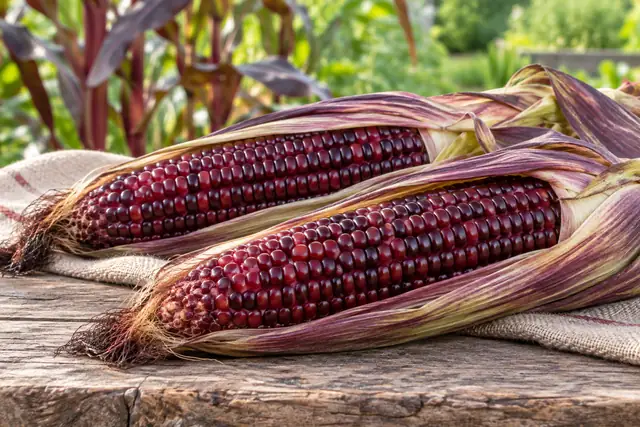
This image was created with AI from described plant characteristics and growing advice. It shows a possible situation and is not a photograph of a verified cultivar.
Martian Purple
Suikermaïs met purperrode planten en paarsrode korrels, geselecteerd uit Double Red; kleur is hier ook deel van het gewasbeeld.
Kies Martian Purple voor kleur aan plant én kolf. Het is een selectie uit Double Red, zonder dat de twee daardoor bewezen synoniemen zijn.
Flavour, kitchen and growing
How does it taste?
Een specifieke zoetheidsvergelijking is niet vermeld. De algemene suikermaïssmaak hoort bij melkrijp oogsten, niet bij volledig droge paarse korrels.
This flavour description applies to the crop; there is no separate tasting result for this variety.In the kitchen
Gebruik jonge kolven gekookt of gegrild en proef ze vers. De opvallende kleur maakt de oogst al vóór het koken bijzonder.
A space in the garden
Plant in een zonnig blok en houd voldoende water beschikbaar tijdens bloei en kolfvorming. Een sierlijke kleur vervangt geen goede bestuiving.
Harvesting
Controleer melkrijpheid met een proefkorrel. Laat niet alle kolven droog worden alleen om de paarse eindkleur te bewonderen.
Read the source notes →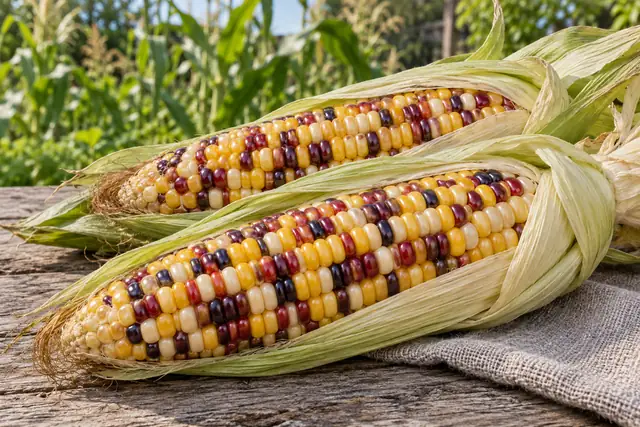
This image was created with AI from described plant characteristics and growing advice. It shows a possible situation and is not a photograph of a verified cultivar.
Inca Rainbow
Een krachtige suikermaïsselectie met witte, gele, rode en donkere korrels aan planten van ongeveer 1,5–2 meter.
Kies Inca Rainbow voor een veelkleurige oogst en een hoog gewas. Het aanbod is een benoemde selectie, geen willekeurig zaadmengsel.
Flavour, kitchen and growing
How does it taste?
De bron beschrijft suikermaïs, maar geen afzonderlijke zoetheidsrangorde. De kleurvariatie bewijst niet dat elke korrel anders smaakt.
This flavour description applies to the crop; there is no separate tasting result for this variety.In the kitchen
Kook een jonge kolf of snijd melkrijpe korrels voor een warme groenteschotel. Bewaar enkele droge kolven desgewenst als tuinherinnering.
A space in the garden
Geef een ruim zonnig blok en houd rekening met de schaduw van de hoge planten. Water is vooral rond bloei en kolfgroei belangrijk.
Harvesting
Oogst voor eten melkrijp. De door de bron genoemde lange ontwikkeling vraagt in Nederland een voldoende warme en tijdige start.
Read the source notes →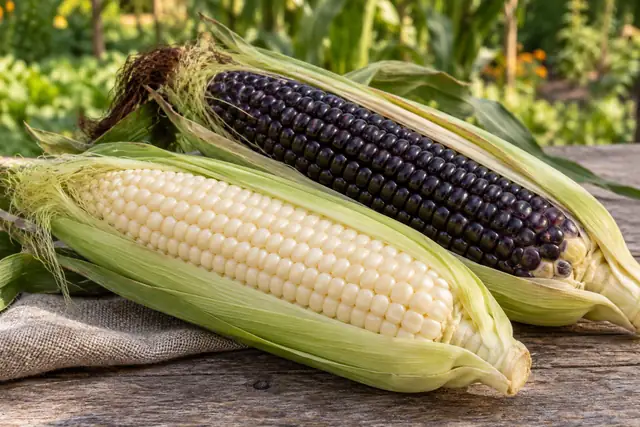
This image was created with AI from described plant characteristics and growing advice. It shows a possible situation and is not a photograph of a verified cultivar.
Black Mexican
Een oude vroege suikermaïs waarvan de korrels jong wit zijn en bij volledige rijping zwart worden.
Kies Black Mexican voor een vroeg erfstuk en de verandering van wit naar zwart, met duidelijk gescheiden eet- en zaadrijpheid.
Flavour, kitchen and growing
How does it taste?
De zoete suikermaïskwaliteit hoort bij de witte melkrijpe fase. De zwarte eindkleur is een ander stadium, geen aanwijzing om langer te wachten voor verse kolven.
This flavour description applies to the crop; there is no separate tasting result for this variety.In the kitchen
Kook jonge witte kolven direct na het plukken. Laat een aparte kolf verder rijpen om de bijzondere kleurwisseling te volgen.
A space in the garden
Zaai na vorst en plant in een blok. Houd verschillende maïstypen zo nodig gescheiden in bloeitijd of afstand om ongewenste kruising te beperken.
Harvesting
Controleer korrels terwijl ze nog wit en melkrijp zijn. Wacht voor verse suikermaïs niet op volledig zwarte harde korrels.
Also listed as: Black Aztec, Mexican Sweet, Black Iroquois.
Read the source notes →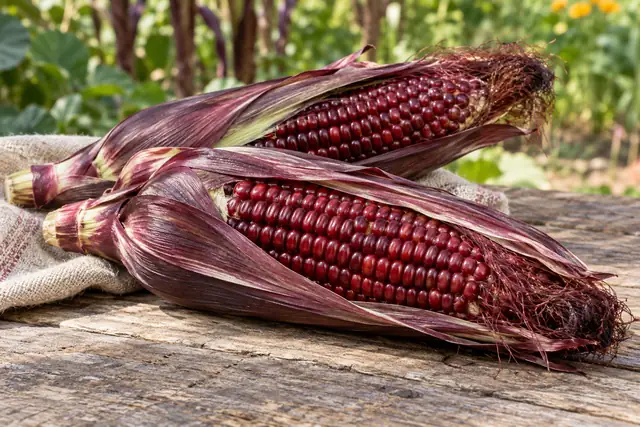
This image was created with AI from described plant characteristics and growing advice. It shows a possible situation and is not a photograph of a verified cultivar.
Double Red
Roodpaarse stengels, bladeren en kolven maken Double Red tot een suikermaïsras dat ook de tuin kleur geeft.
Kies Double Red wanneer je het hele maïsgewas als blikvanger wilt, in plaats van kleur uitsluitend in de korrels.
Flavour, kitchen and growing
How does it taste?
Een eigen zoetheidsprofiel is niet beschreven. Eet de kolven als suikermaïs in de jonge melkrijpe fase, wanneer de algemene gewassmaak het prettigst is.
This flavour description applies to the crop; there is no separate tasting result for this variety.In the kitchen
Kook of grill jonge kolven, of snijd verse korrels los voor een maaltijd. Droge rode korrels zijn een ander product dan verse suikermaïs.
A space in the garden
Geef een zonnig blok en voldoende voeding. Plaats lagere groenten zo dat ze niet volledig onder de maïs verdwijnen.
Harvesting
Beoordeel melkrijpheid los van de rode tint. Oogst voor eten vóór de korrels droog en hard worden.
Read the source notes →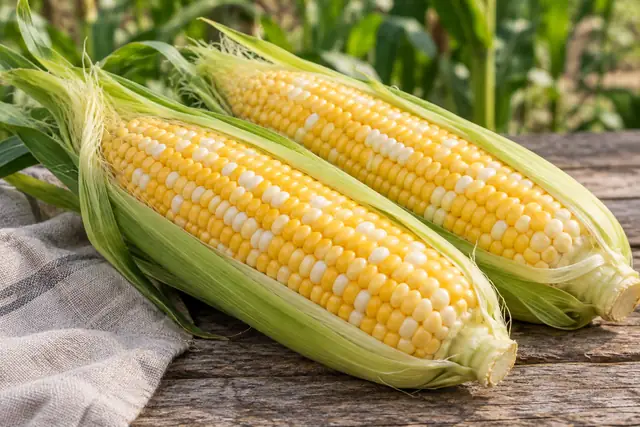
This image was created with AI from described plant characteristics and growing advice. It shows a possible situation and is not a photograph of a verified cultivar.
Double Standard
Een zeer vroege tweekleurige suikermaïs met witte en gele korrels op kolven van ongeveer 15 cm.
Kies Double Standard voor vroege ontwikkeling en tweekleurige kolven. De aanbeveling voor koelere gebieden is relevant, maar geen garantie in koude grond.
Flavour, kitchen and growing
How does it taste?
Een apart aromaprofiel ontbreekt. De algemene zoete maïssmaak hoort bij melkrijp plukken; wit en geel vormen vooral een zichtbaar patroon.
This flavour description applies to the crop; there is no separate tasting result for this variety.In the kitchen
Serveer kleine gekookte of gegrilde kolven als afzonderlijke porties. Het beschreven formaat is handzaam op een bord.
A space in the garden
Zaai na vorst in warme bodem en maak een blok van meerdere rijen. De vroege ontwikkeling heeft baat bij een gelijkmatige start.
Harvesting
Controleer de kolven tijdig op melkrijpe korrels. Een vroeg ras kan zijn beste eetfase passeren terwijl een later ras nog niet klaar is.
Read the source notes →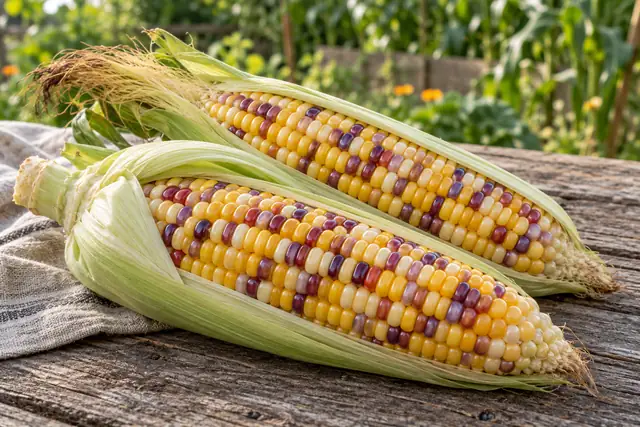
This image was created with AI from described plant characteristics and growing advice. It shows a possible situation and is not a photograph of a verified cultivar.
Painted Hills
Veelkeurige suikermaïs op planten die ongeveer twee meter hoog kunnen worden, ontstaan uit een gerichte Amerikaanse kruising.
Kies Painted Hills voor veelkleurige kolven en een lichtzoet profiel. Het is een benoemde selectie waarvan de kleuren per kolf kunnen variëren.
Flavour, kitchen and growing
How does it taste?
De bron noemt een lichtzoete smaak. Dat is een ander beschreven profiel dan de uitgesproken zeer zoete Mezdi.
In the kitchen
Gebruik jonge kolven voor een eenvoudige gekookte maaltijd of snijd korrels in een groentepan. Laat de milde zoetheid onderdeel van het gerecht zijn.
A space in the garden
Geef zon en een ruim blok. Goed kiemvermogen in koelere bodem neemt de behoefte aan een vorstvrije start niet weg.
Harvesting
Oogst melkrijp voor verse consumptie. Droge gekleurde kolven zijn mooi om te bekijken, maar hebben een andere textuur dan eetrijpe suikermaïs.
Read the source notes →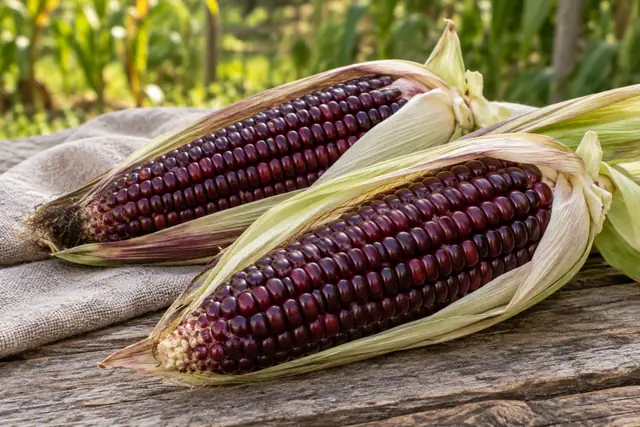
This image was created with AI from described plant characteristics and growing advice. It shows a possible situation and is not a photograph of a verified cultivar.
Martian Purple Red
Een aanbod met diep roodpaarse tot paarse kolven, onder de naam Martian Purple Red apart vermeld naast Martian Purple.
Kies dit aanbod voor het roodpaarse kolfbeeld. De naamovereenkomst met Martian Purple bewijst zonder aanvullende documentatie geen identieke selectie.
Flavour, kitchen and growing
How does it taste?
Een aparte smaakvergelijking is niet beschreven. De algemene suikermaïssmaak vraagt jonge melkrijpe korrels; kleur alleen vertelt niet hoe zoet de kolf is.
This flavour description applies to the crop; there is no separate tasting result for this variety.In the kitchen
Bereid de jonge kolven vers gekookt of gegrild. Laat een aparte rijpe kolf staan wanneer je ook de paarse eindkleur wilt bekijken.
A space in the garden
Plant op een warme zonnige plek in een blok en houd de bodem tijdens de bloei voldoende vochtig.
Harvesting
Controleer korrels op melkachtig sap en pluk voor verse consumptie vóór volledige droging. Noteer in je tuin wanneer deze selectie rijpt.
Read the source notes →Discover all 13 choices
This image was created with AI from described plant characteristics and growing advice. It shows a possible situation and is not a photograph of a verified cultivar.
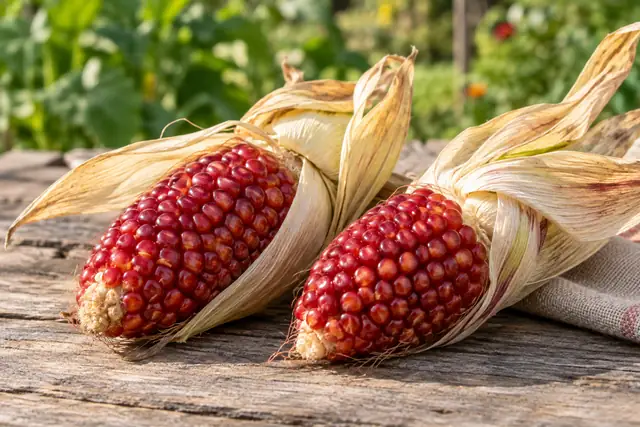
Aardbei-popcornmaïs
Kleine rode kolven ter grootte van een grote aardbei: een popcornaanbodtype dat weinig lijkt op een lange suikermaïskolf.
Kies dit type voor kleine decoratieve kolven en het plezier van eigen popcorn. Het is een andere oogstbestemming dan zoete verse maïs.
Flavour, kitchen and growing
How does it taste?
Een afzonderlijk aroma is niet beschreven. Het eetresultaat is gepofte maïs; de korrels moeten daarvoor drogen in plaats van melkrijp gegeten worden.
This flavour description applies to the crop; there is no separate tasting result for this variety.In the kitchen
Droog de kolven goed en proef een klein aantal korrels in een pan met olie. Pofresultaat hangt mede van het vochtgehalte af.
A space in the garden
Teel warm in een blok en geef voldoende water bij kolfvorming. Houd popcorn en suikermaïs zo nodig apart in bloeitijd of afstand.
Harvesting
Laat korrels aan de plant rijpen en droog verder onder beschutting. Test pas na droging; melkrijpe korrels leveren geen popcorn op.
Read the source notes →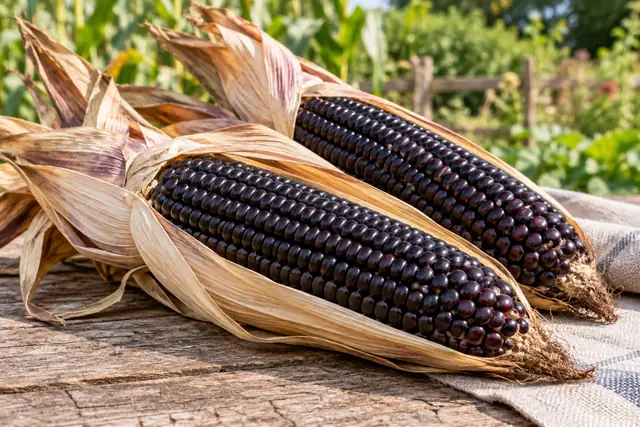
This image was created with AI from described plant characteristics and growing advice. It shows a possible situation and is not a photograph of a verified cultivar.
Zwart uit Ticino
Traditionele korrelmaïs uit de Zwitserse regio Ticino met zeer donkere, bijna zwarte korrels en stevige planten.
Kies dit type wanneer je een droog graangewas wilt proberen. Voor direct gekookte zoete kolven is een benoemde suikermaïs logischer.
Flavour, kitchen and growing
How does it taste?
Een eigen smaakprofiel is niet vastgesteld. Dit is korrelmaïs voor rijpe droge korrels, geen gegarandeerd zoete verse tafelmais.
This flavour description applies to the crop; there is no separate tasting result for this variety.In the kitchen
Laat droge korrels geschikt malen voor een maïstoepassing. De kleur maakt het resultaat bijzonder, maar vervangt geen passend meel- of kookrecept.
A space in the garden
Geef een zonnig ruim blok en een lang genoeg seizoen voor korrelrijping. De Zwitserse herkomst is geen bewijs voor oogstzekerheid in iedere Nederlandse tuin.
Harvesting
Oogst wanneer de korrels rijp en hard worden en droog de kolven luchtig verder. Bewaar alleen volledig droge, onbeschadigde oogst.
Also listed as: korrelmaïs “Zwart uit Ticino”.
Read the source notes →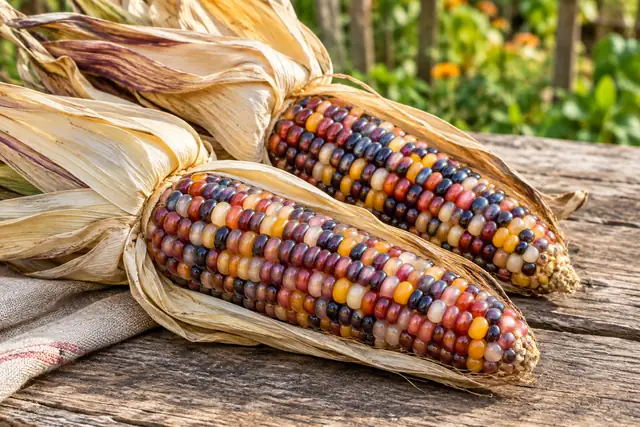
This image was created with AI from described plant characteristics and growing advice. It shows a possible situation and is not a photograph of a verified cultivar.
Glass Gem
Elke kolf een eigen mozaïek van glanzende gekleurde korrels: deze maïs is vooral een droog graan- en popcornselectie.
Kies Glass Gem voor verrassende kolfkleuren en een oogst die blijft nadat de zomer voorbij is. Het is geen suikermaïsvervanger.
Flavour, kitchen and growing
How does it taste?
De beheerder noemt maïssmaak, geen zoet suikermaïsprofiel. Glass Gem wordt doorgaans gepoft of tot maïsmeel verwerkt.
In the kitchen
Pof goed gedroogde korrels in een kleine proefportie of laat ze geschikt malen voor maïsmeel. Serveer hem niet automatisch als zoete verse kolf.
A space in the garden
Geef een warm zonnig blok en veel ruimte: de planten kunnen hoog worden. Amerikaanse rijpingsdagen zijn geen vaste Nederlandse oogstdatum.
Harvesting
Wacht op droge bruine kolfbladeren voor de volle kleur en droog de kolven daarna luchtig verder. Popcornkwaliteit hangt ook van droging af.
Read the source notes →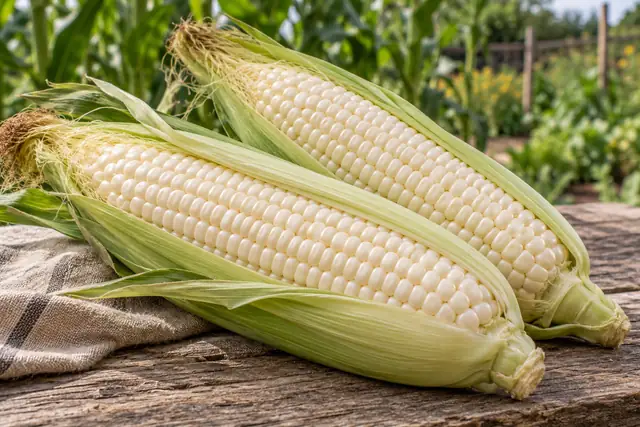
This image was created with AI from described plant characteristics and growing advice. It shows a possible situation and is not a photograph of a verified cultivar.
Stowells Evergreen
Een zeer oude witte suikermaïs met kolven rond 20 cm aan hoge planten: een lichte tegenhanger van Golden Bantam.
Kies Stowells Evergreen voor witte suikermaïs en grote planten. Het vraagt meer verticale ruimte dan lage groenten ernaast.
Flavour, kitchen and growing
How does it taste?
De kweker beschrijft sappige witte korrels met een fijne smaak. Een vaste zoetheidsrangorde tegenover andere rassen is niet aangegeven.
In the kitchen
Kook of grill jonge kolven en proef het witte vruchtvlees vers. Snijd korrels los voor een eenvoudige warme groenteschotel.
A space in the garden
Geef een zonnig ruim blok; de producent noemt circa 2,5–3 meter planthoogte. Plaats het gewas waar die schaduw geen kleine gewassen wegneemt.
Harvesting
Pluk melkrijpe kolven voor verse consumptie. Houd de eetfase apart van volledig droge korrels en laat de hoge planten niet omvallen.
Read the source notes →Choose your way to grow
From a garden bed to a suitable pot or support: give your plant a place that suits your garden and the care you can provide.
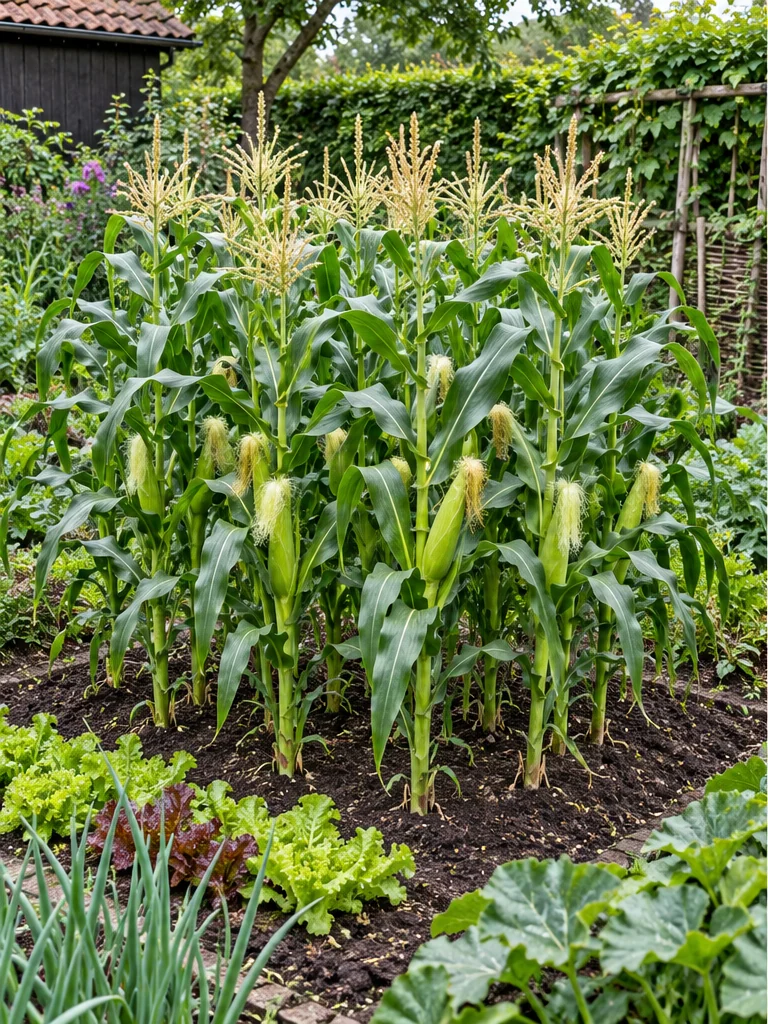
This image was created with AI from described plant characteristics and growing advice. It shows a possible situation and is not a photograph of a verified cultivar.
Een maïsblok in volle grond
Een vierkant of rechthoekig groepje bestuift doorgaans beter dan één smalle lange rij. Reserveer voldoende zon voor alle planten.
- Kies een vroeg suikermaïsras en zaai eventueel individueel voor in diepe potjes.
- Laat planten wennen aan buiten en plant pas na vorstgevaar in warme grond.
- Plant in meerdere korte rijen, meestal ongeveer 35–45 cm uit elkaar volgens het ras.
- Geef tijdens bloei en kolfvorming water en laat de mannelijke pluimen intact.
Voor de grootste kans op goed gevulde kolven in een zonnige moestuin.
Tick off your supplies →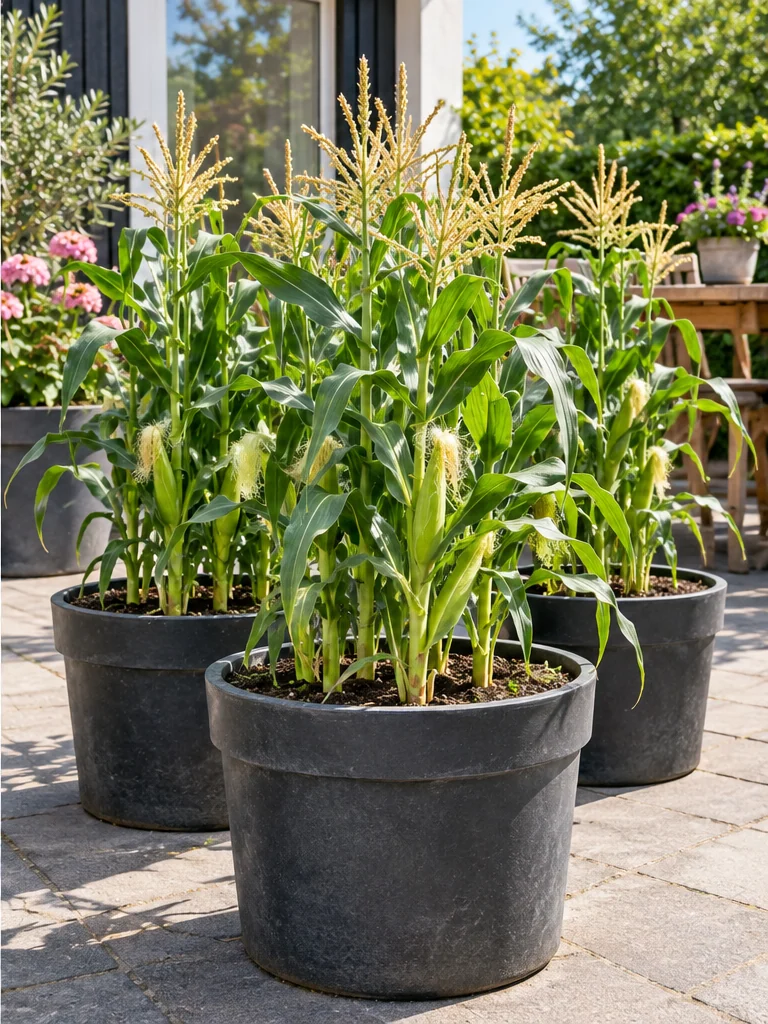
This image was created with AI from described plant characteristics and growing advice. It shows a possible situation and is not a photograph of a verified cultivar.
Compacte maïs als groep grote potten
Een compact ras kan in zeer grote containers groeien, maar één losse plant bestuift slecht. Zet meerdere ruim geplante potten samen als klein blok.
- Neem grote diepe containers met drainage en voedzame potgrond.
- Kies een compact vroeg ras en geef iedere plant voldoende wortelruimte.
- Groepeer de containers dicht genoeg voor bestuiving, zonder blad dicht tegen elkaar te proppen.
- Controleer vocht en voeding regelmatig; verwacht een bescheidener opbrengst.
Voor een ruim zonnig terras; niet voor één klein balkonpotje.
Tick off your supplies →Explore the varieties
See the confirmed differences. Characteristics without supporting evidence are left blank.
3 of 3 varieties
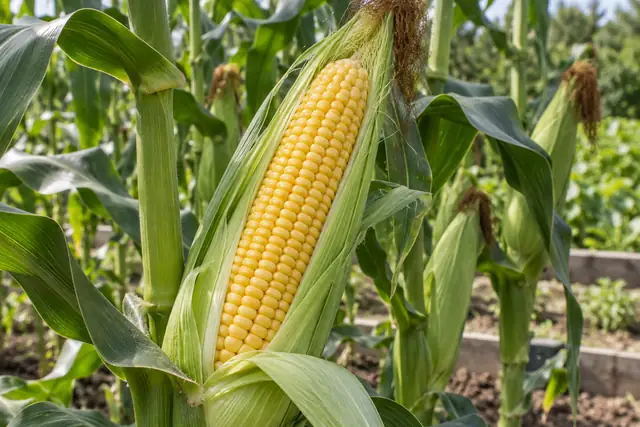
This image was created with AI from described plant characteristics and growing advice. It shows a possible situation and is not a photograph of a verified cultivar.
Conqueror
Explore this variety and use the growing guide to choose a place for your plant.
View variety →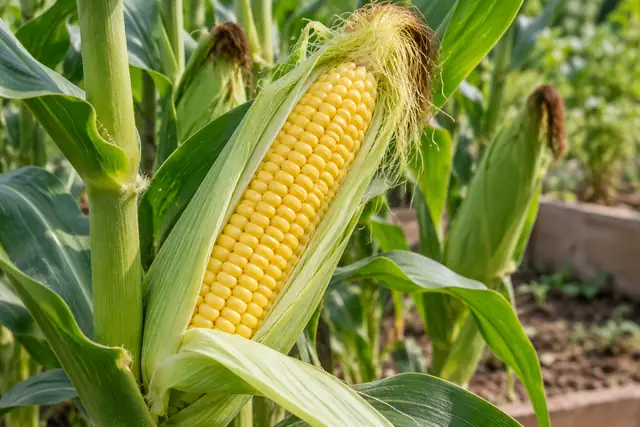
This image was created with AI from described plant characteristics and growing advice. It shows a possible situation and is not a photograph of a verified cultivar.
Earlibird
Explore this variety and use the growing guide to choose a place for your plant.
View variety →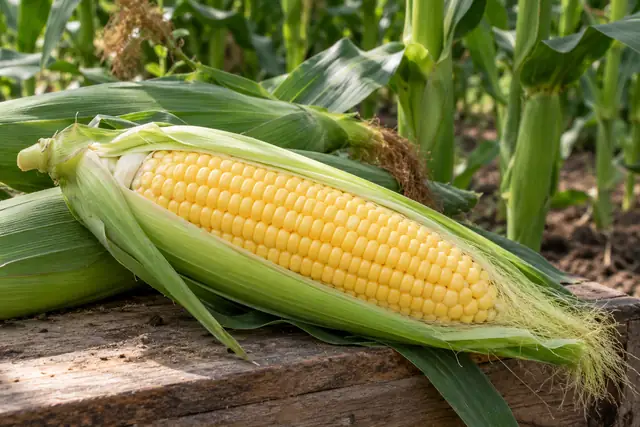
This image was created with AI from described plant characteristics and growing advice. It shows a possible situation and is not a photograph of a verified cultivar.
Goldcrest
Explore this variety and use the growing guide to choose a place for your plant.
View variety →Choose two to four varieties to compare their source data side by side.
Choose by flavour, shape and use
Golden Bantam: A classic open-pollinated yellow sweetcorn with medium-sized cobs: particularly appealing if you prepare the harvest fresh straight away. Boil or grill a freshly picked cob and eat it the same day. Waiting a long time reduces the sweetness of traditional sweetcorn.
Young kernels at the milky stage are described as meltingly tender and sweet. The best eating stage is shorter than the period during which the cob still looks attractive.
Mezdi: A mid-early Sativa cultivar focused on sweetcorn cob quality, with better retention of sweetness after harvest. Boil or grill the young cobs; process surplus soon after harvest for storage to preserve fresh quality.
The source describes very sweet kernels that retain their sweetness after picking better than other open-pollinated selections.
Martian Purple: Sweetcorn with purplish-red plants and reddish-purple kernels, selected from Double Red; colour is part of the crop's appearance here too. Boil or grill young cobs and taste them fresh. The striking colour makes the harvest special even before cooking.
No specific sweetness comparison is given. The general sweetcorn flavour belongs to harvesting at the milky stage, not to fully dried purple kernels.
Inca Rainbow: A vigorous sweetcorn selection with white, yellow, red and dark kernels on plants about 1.5–2 metres tall. Boil a young cob or cut off milky-stage kernels for a cooked vegetable dish. If desired, keep a few dry cobs as a reminder of the garden.
The source describes sweetcorn but gives no separate ranking of sweetness. Colour variation does not prove that every kernel tastes different.
Not all maize is sweetcorn
Fodder maize, popcorn and sweetcorn are grown for different harvests. Choose a cultivar offered as sweetcorn for fresh use. Earliness matters in a Dutch garden: an impressively tall, late plant may still fail to produce ripe cobs before cool autumn weather.
Provide warmth without starting too early
Start indoors in spring when you can move the plants outside in good time later. Individual deep pots limit root disturbance. A sowing depth of about 2–3 cm is usual; follow the packet. Provide plenty of light after emergence and avoid plants growing on for weeks until pot-bound.
Frost-free also means warm soil
Maize does not tolerate frost. Alongside calendar advice, wait for warmed soil and a favourable forecast. Harden plants off and set the rootball at about the same depth. Water straight away; temporary cold protection needs daytime checks for overheating.
The tassel and silks work together
The tassel at the top produces pollen. Each silk by the cob leads to a developing kernel. Wind carries the pollen. This makes several short rows useful, and missing kernels may fit incomplete pollination or unfavourable weather during flowering.
Take care when growing different maize types
With some sweet maize types, cross-pollination with other maize can affect the quality of the current kernels. Check the seed guidance for recommendations on isolation. In a small garden, preferably sow one suitable type rather than several alongside one another without growing information.
Do not let cob formation dry out
Provide enough water, particularly during flowering and cob filling. Check below the surface before watering and avoid prolonged waterlogging. Root space dries out faster in containers. Mature compost or suitable feed supports growth; extra fertiliser does not replace good pollination.
Investigating leaning plants and empty cobs
Wind can tip plants over; a sheltered spot and light support around the outside may help. If cobs fill poorly, assess layout, simultaneous flowering and drought. Do not remove tassels during flowering. Diseased or rotting cobs do not belong in the edible harvest.
Check the cob, not just the calendar
Browning silks are a clue, not complete proof. Check a cob: the kernels are well filled and release milky sap when lightly damaged. Clear liquid indicates an earlier stage; a doughy content indicates a later one. Hold the plant while twisting the cob off.
Plan the meal around the harvest
Harvest just before preparing when possible; sweetness changes after picking. Store cobs briefly in cool conditions if you cannot eat them straight away. Record which plants were ripe: next year you can see whether the cultivar and sowing time suit your space.
What you need
Tick what you already have. The extras depend on how you grow.
0 of 6 ticked off
Your ticks are saved in this browser.
Discover and grow more
More background, sources and image information
SeedSteps editorial team · updated on 11 October 2026. The AI images illustrate species and practical growing situations; they do not prove an exact cultivar, observations from your own garden or yield.
Britse gewasadviezen worden gecombineerd met Nederlandse en Vlaamse informatie waar beschikbaar. Amerikaanse Extension-bronnen ondersteunen plantprincipes en herkenning; hun kalenderdata, lokale plaagdruk, bestrijdingsmiddelen en mestdoseringen worden niet rechtstreeks op Nederland of Vlaanderen toegepast. Vorst, bodemwarmte, standplaats en expliciete rasinformatie blijven de lokale controle. Commerciële bronnen onderbouwen uitsluitend benoemde ras- en plantkenmerken; zij zijn geen affiliate-aanbeveling.
- World Checklist of Vascular Plants — 4 juni 2026Royal Botanic Gardens, Kew · accessed 2026-10-07
- Maïs Aardbei-popcornmaïs — ras- en teeltbeschrijvingFeggies · accessed 2026-10-11
- Maïs Black Mexican — ras- en teeltbeschrijvingFeggies · accessed 2026-10-11
- Maïs Double Red — ras- en teeltbeschrijvingFeggies · accessed 2026-10-11
- Maïs Double Standard — ras- en teeltbeschrijvingFeggies · accessed 2026-10-11
- Maïs Golden Bantam — ras- en teeltbeschrijvingFeggies · accessed 2026-10-11
- Maïs Inca Rainbow — ras- en teeltbeschrijvingFeggies · accessed 2026-10-11
- Maïs Martian Purple — ras- en teeltbeschrijvingFeggies · accessed 2026-10-11
- Maïs Martian Purple Red — ras- en teeltbeschrijvingFeggies · accessed 2026-10-11
- Maïs Mezdi — ras- en teeltbeschrijvingFeggies · accessed 2026-10-11
- Maïs Painted Hills — ras- en teeltbeschrijvingFeggies · accessed 2026-10-11
- Maïs Zwart uit Ticino — ras- en teeltbeschrijvingFeggies · accessed 2026-10-11
- Double Standard — botanische soort en blokteeltJohnny’s Selected Seeds · accessed 2026-10-11
- Black Mexican — botanische soort en synoniemenKokopelli · accessed 2026-10-11
- Double Red — botanische soortKokopelli · accessed 2026-10-11
- Sweet Painted Hills — botanische soortKokopelli · accessed 2026-10-11
- Stowells Evergreen — witte suikermaïsAssociation Kokopelli · accessed 2026-10-11
- Glass Gem — beheerder en kolfgebruikNative Seeds/SEARCH · accessed 2026-10-11
- RHS — suikermais kwekenRoyal Horticultural Society · accessed 2026-10-10
- UMN Extension — suikermais in de moestuinUniversity of Minnesota Extension · accessed 2026-10-10
Supporting evidence by chapter: Choose by flavour, shape and use: Feggies, Feggies, Feggies, Feggies. Not all maize is sweetcorn: Royal Horticultural Society, University of Minnesota Extension. Provide warmth without starting too early: Royal Horticultural Society, University of Minnesota Extension. Frost-free also means warm soil: Royal Horticultural Society, University of Minnesota Extension. The tassel and silks work together: Royal Horticultural Society, University of Minnesota Extension. Take care when growing different maize types: Royal Horticultural Society, University of Minnesota Extension. Do not let cob formation dry out: Royal Horticultural Society, University of Minnesota Extension. Investigating leaning plants and empty cobs: Royal Horticultural Society, University of Minnesota Extension. Check the cob, not just the calendar: Royal Horticultural Society, University of Minnesota Extension. Plan the meal around the harvest: Royal Horticultural Society, University of Minnesota Extension.