Why grow Matador?
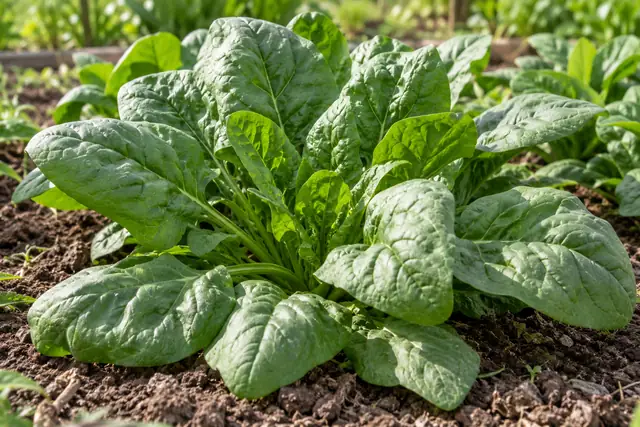
Matador is offered as productive spinach with large leaves. The variety suits a bed where you want to build up a usable portion of leaves.
Choose this variety for leaf size and production. Its broad sales calendar is not adopted as an unlimited year-round guarantee.
How this choice tastes
A distinct aroma profile for Matador is lacking. Familiar spinach preparation is therefore information about the crop.
From harvest to kitchen
Use young leaves raw or briefly wilt a larger harvest. Large leaves sometimes need tougher stalks removed.
What needs attention when growing
Maintain an evenly moist root zone and avoid hot, dry conditions. That combination increases the risk of premature flowering.
Harvest before a flower stem displaces leaf production. Pick at the desired leaf size and assess new-leaf tenderness.
Choose by flavour, shape and use
Matador: Matador is offered as productive spinach with large leaves. The cultivar suits a bed where you want to build up a useful portion of foliage. Use young leaves raw or briefly wilt a larger harvest. Large leaves sometimes need tougher stalks removed.
A distinct aroma profile for Matador is lacking. Familiar spinach preparation is therefore information about the crop.
Vroeg Reuzenblad: Vroeg Reuzenblad is fast-growing spinach for an early crop. The source describes large, tender leaves and prickly seed. Use young leaves as salad greens or cook a whole portion. The large leaves make it easy to gather enough for a meal.
The source gives no unique variety flavour. Tender leaves and fast development are specific characteristics without an added sweetness claim.
Géant d’Hiver: Géant d’Hiver is spinach with a clear cool-season emphasis. The product source describes productive growth outside hot, dry conditions. Use the leaves in a warming winter dish or add young leaves to a salad. The harvest remains ordinary spinach.
A distinct winter spinach aroma has not been confirmed. The cultivar name does not describe a proven sweeter flavour than spring selections.
Thorin: Thorin is described as a vigorous, relatively slow-growing Matador type. That reference does not prove Thorin is the same cultivar as Matador. Use the leaves raw when young or cook a larger harvest. Keep stalks and leaves separate when their textures differ.
The source gives no distinct Thorin aroma. A relationship between types does not prove identical flavour or the same genetic identity.
Choose the type to suit your harvest
True spinach has a different season from warmth-loving crops sometimes also called spinach. Check the species and the recommended sowing window. A suitable spring or autumn cultivar matters more than a promise of year-round harvesting.
A small, sound start
Sow directly into a fine seedbed in small batches. Keep the germination zone moist and thin overcrowded seedlings. For an autumn crop, do not wait until low light has almost stopped growth; use the cultivar’s growing window as your starting point.
Light and soil that can drain
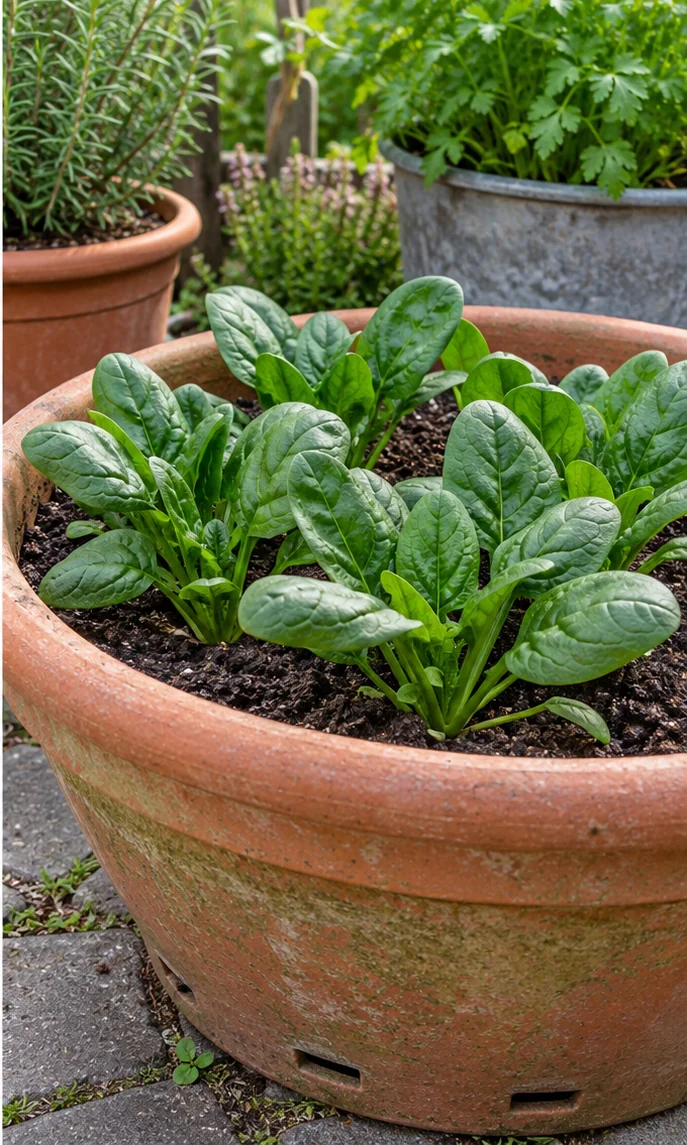
Choose a bright spot and prepare a fine enough surface for the small seeds or young rootballs. Water must be able to drain away after rain. In a pot, check that the drainage holes are clear; a layer of wet soil does not help produce a healthy leaf harvest.
Care for the young leaves
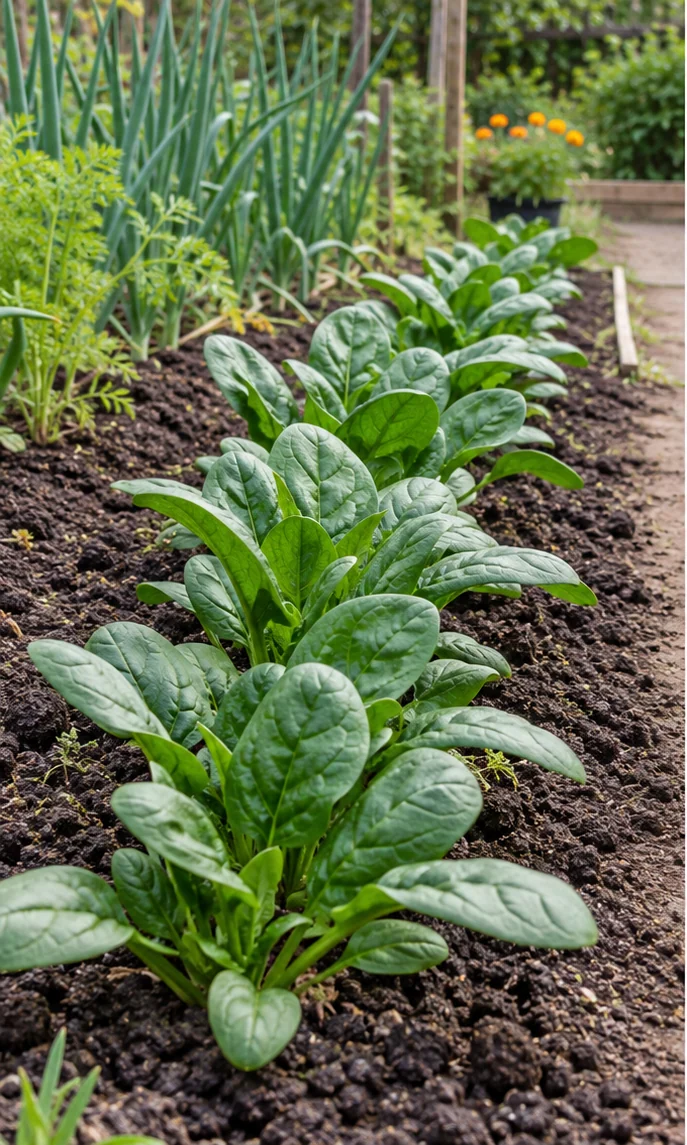
Spinach needs moisture to keep producing tender leaves. Water at the base in dry periods and prevent the root zone from repeatedly drying out. Do not let young plants disappear among weeds, and keep a dense row sufficiently open to airflow.
Harvest for quality
Harvest young leaves or cut a portion of plants when the foliage is usable. Leave the heart intact only if you want to keep picking. Do not wait for a large mass of leaves when the first flower stalks appear; the plant’s stage then changes quickly.
Recognise what the leaves tell you
Warmth, longer days and drought can encourage bolting. Removing a flower stalk does not restore unlimited leaf production. For the next round, choose a suitable cultivar and time. Check yellow plants for waterlogging, poor growth and root problems.
Fresh leaves start with a small picking
Harvest at a cool time and keep the leaves cool after picking. Wash them before use and remove damaged parts. A small fresh portion wastes less than harvesting a whole container when you only need a handful.
Make room for the next round
Record sowing and the first harvest so you can compare what works in your space next season. Do not leave an empty row unplanned for long. A new batch within a suitable window gives a better spread than hoping overmature leaves will become young again.
Let a sheltered autumn row grow steadily
A low tunnel or cold frame can shelter a suitable autumn or winter crop. Sow an appropriate cultivar early enough for leaf growth before light levels fall sharply. A cover does not turn dark weeks into a quick summer crop. Ventilate on mild, sunny days and keep foliage clear of constantly wet covering. Water only when the root zone needs it. Harvest small portions of thawed, healthy leaves and leave enough vigour; actual regrowth depends on the season and condition.