Why grow Oranje Sunset?
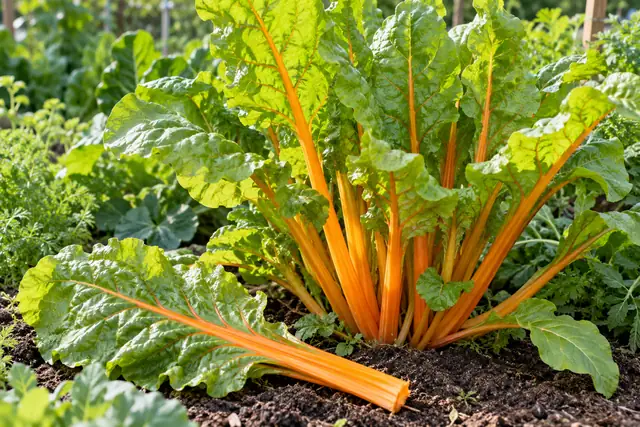
Oranje Sunset combines light green leaves with orange leaf stalks. This gives even a simple leafy vegetable harvest a clear colour accent.
Choose this variety if you want orange stalks instead of a variable colour mix. The confirmed colour is its strongest distinction.
How this choice tastes
The source gives no separate aroma for the orange selection. Spinach-like kitchen use is a crop comparison, not a unique cultivar flavour.
From harvest to kitchen
Cook leaves like spinach and use thicker stalks separately in a gratin or sauce. The two parts have different cooking times.
What needs attention when growing
Give plants room if you want thick stalks. For young leaves, make a separate, more closely sown picking crop.
Harvest healthy outer leaves with their stalks and retain the heart. Young stalks need less preparation than very thick, older ribs.
Choose by flavour, shape and use
Oranje Sunset: Oranje Sunset combines light green leaves with orange leaf stalks. This gives even a simple leafy vegetable harvest a clear colour accent. Cook leaves like spinach and use thicker stalks separately in gratin or sauce; cooking times differ.
The source gives no separate aroma for the orange selection. Spinach-like kitchen use is a crop comparison, not a unique cultivar flavour.
Rhubarb Chard: Rhubarb Chard has striking red stalks and large, tender leaves. The name refers to the stalks' appearance, not to rhubarb. Briefly cook leaves, adding stalks earlier. Both parts belong to the harvest.
The source gives no rhubarb-like flavour. Familiar chard preparation is distinguished from the similarity in stalk colour.
Rode bladstelen: This chard offering is named for red stalks and bronze foliage. No further variety name is confirmed. Cook coloured stalks separately from leaves to retain bite. Young leaves also suit mixed harvests.
A separate flavour profile for this colour form is lacking. Red stalks provide a visible difference, not a proven more acidic or sweeter result.
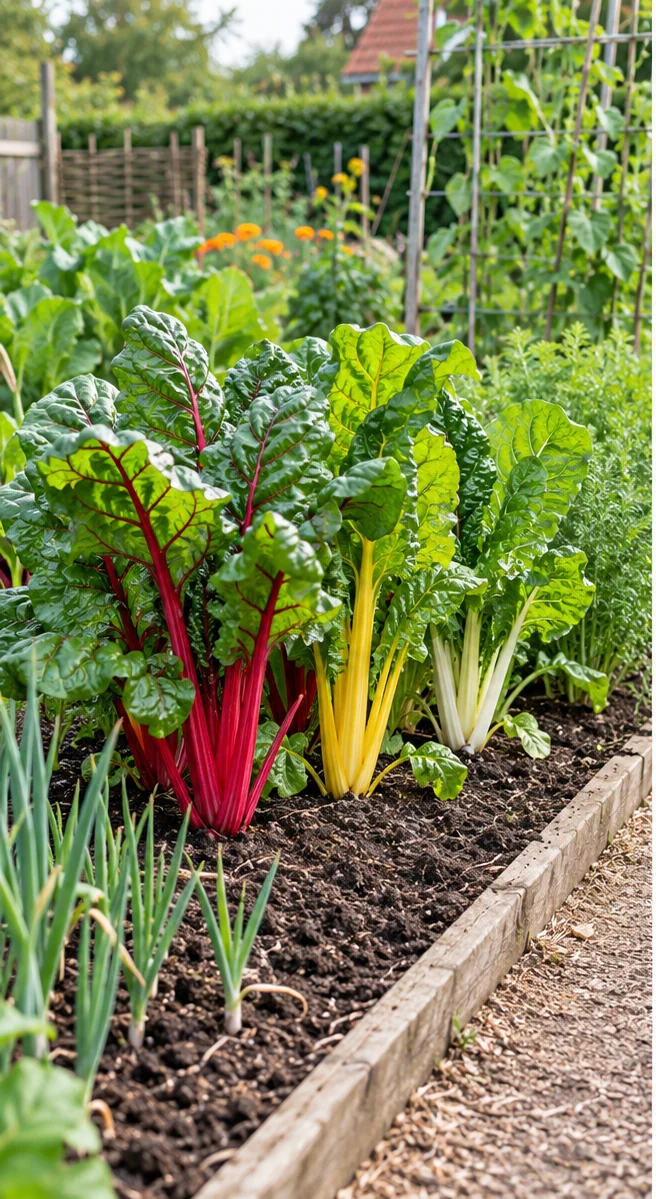
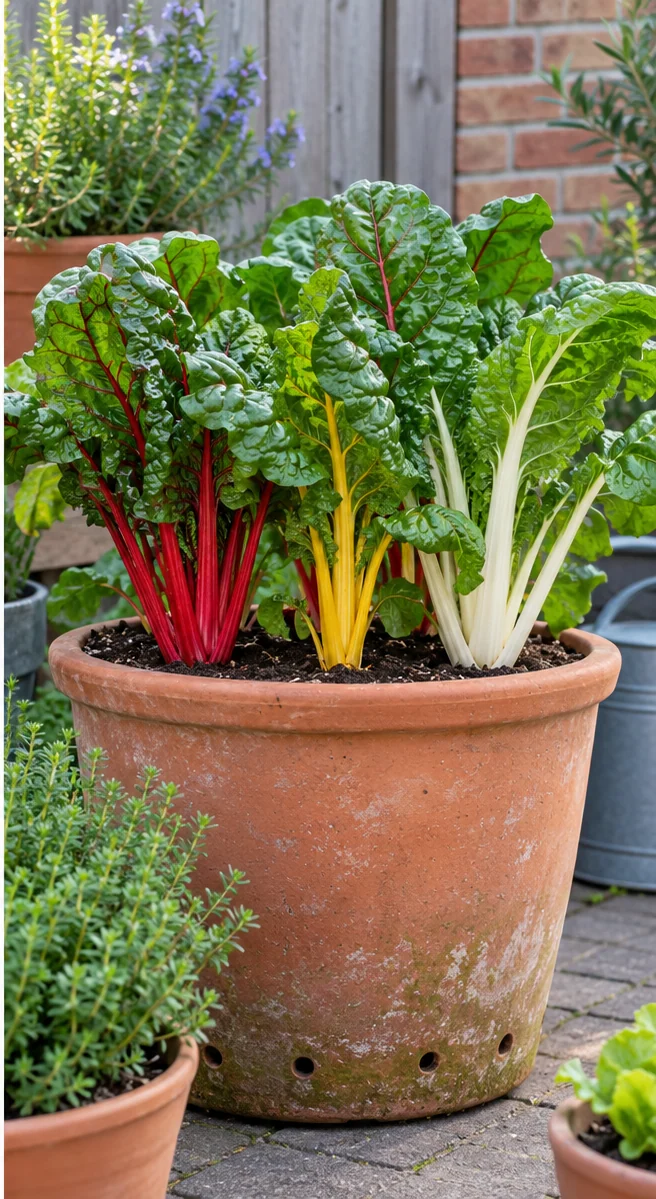
Veelkleurige bladstelen: This offering has varied stalk colours with green or red leaves. Colour variation is confirmed; component identities are not. Use different stalks together in a colourful dish or keep colours separate for comparison. You can also cook the leaves.
The source gives no separate flavour for each colour. A varied plant group does not prove that every colour has its own cultivar aroma.
Choose the type to suit your harvest
With chard, leaves are the harvest, not a beetroot. Varieties can have different stalk colours. Choose beyond the picture: for thick stalks, grow plants farther apart than for cutting young leaves only.
A small, sound start
Sow directly in a moist, prepared bed or raise individual plants. One seed cluster can produce several seedlings. Thin after emergence and give desired plants enough space for broad foliage.
Light and soil that can drain
Choose a bright spot and prepare a fine enough surface for the small seeds or young rootballs. Water must be able to drain away after rain. In a pot, check that the drainage holes are clear; a layer of wet soil does not help produce a healthy leaf harvest.
Care for the young leaves
Keep the root zone moist in dry periods and remove weeds while plants are small. Do not repeatedly strip all leaves. Plants need healthy foliage for new growth and recovery after harvesting.
Harvest for quality
Pick outer leaves and their stalks gently, leaving the young heart intact. Small leaves suit mixed harvests; thick stalks need a different kitchen treatment. Prepare both appropriately, as stalks often take longer to cook.
Recognise what the leaves tell you
Prolonged drought reduces tenderness and can stop growth. A flower stem calls for checking season and plant age. Damaged or discoloured old leaves do not automatically call for fertiliser: check moisture and leaf health first.
Fresh leaves start with a small picking
Harvest at a cool time and keep the leaves cool after picking. Wash them before use and remove damaged parts. A small fresh portion wastes less than harvesting a whole container when you only need a handful.
Make room for the next round
Record sowing and the first harvest so you can compare what works in your space next season. Do not leave an empty row unplanned for long. A new batch within a suitable window gives a better spread than hoping overmature leaves will become young again.