Why grow Longor?
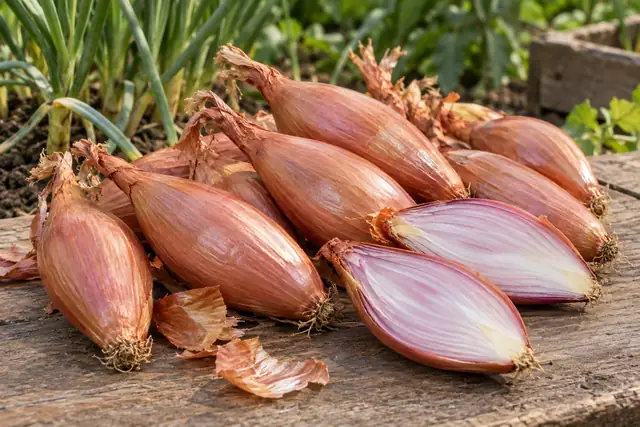
Long shallot with copper-red skin and a pink-purple core.
Longor suits a storage supply and elongated shape. The coloured core distinguishes it from round, red shallots.
How this choice tastes
Shallot flavour is aromatic and onion-like, clearly sharper raw than after cooking. For Longor, the long shape is the main substantiated difference.
From harvest to kitchen
Slice long shallots into rings for dressing or halve them lengthways for the oven. Equal pieces cook together without drying out quickly.
What needs attention when growing
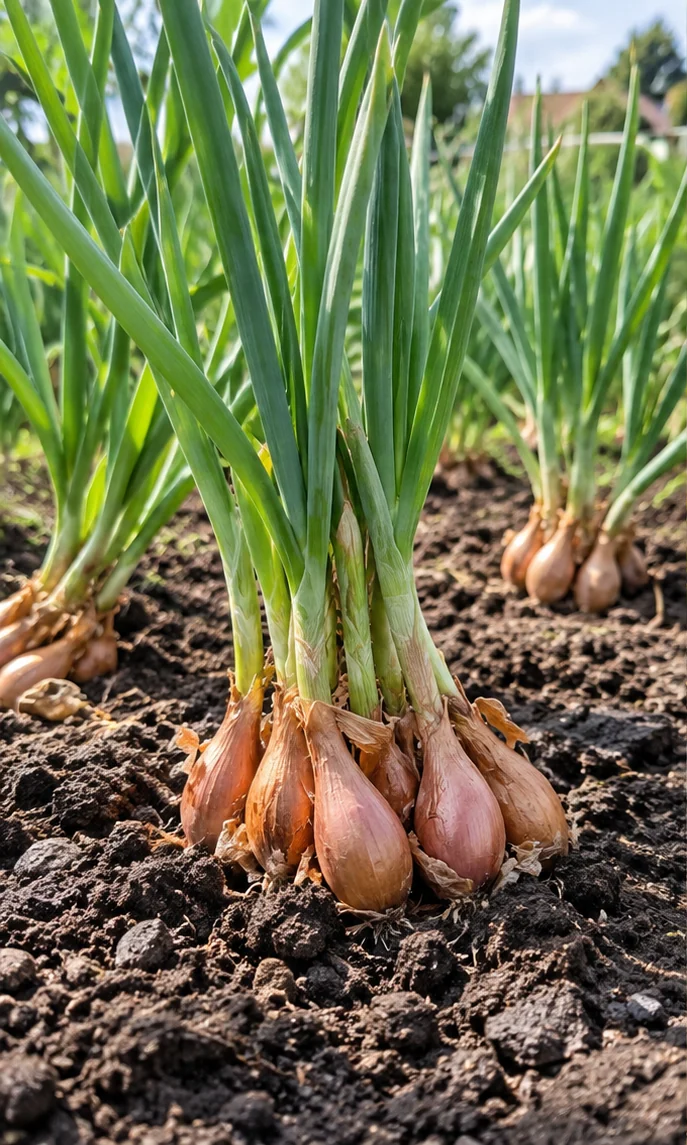
Plant shallot sets in spring with room for a cluster of new bulbs. Choose sun, drainage and a position that is easy to keep weed-free.
Let the foliage ripen naturally, lift the clusters and dry the bulbs in airy conditions. Store intact specimens and use split shallots first.
Choose by flavour, shape and use
Longor: Long shallot with copper-red skin and a pink-purple core. Slice long shallots into rings for dressing or halve them lengthways for the oven. Equal pieces cook together without drying out quickly.
Shallot flavour is aromatic and onion-like, clearly sharper raw than after cooking. For Longor, the long shape is the main substantiated difference.
Red Sun: Round red shallot for fresh dishes and storage. Use finely chopped shallot in vinaigrette or slowly caramelise halved bulbs. Small, round specimens can also be braised whole.
Red Sun has the familiar aromatic character of shallot. A proven sweetness difference from Longor is lacking; colour and round shape help with the choice here.
Distinguish bulb growing from seed production
Shallot sets are the accessible start: plant a bulb and harvest a cluster. Growing from seed needs a longer process and a variety offered for your conditions. Keep its name: shape, colour and keeping quality differ between selections.
Find sun and airflow for the bulbs
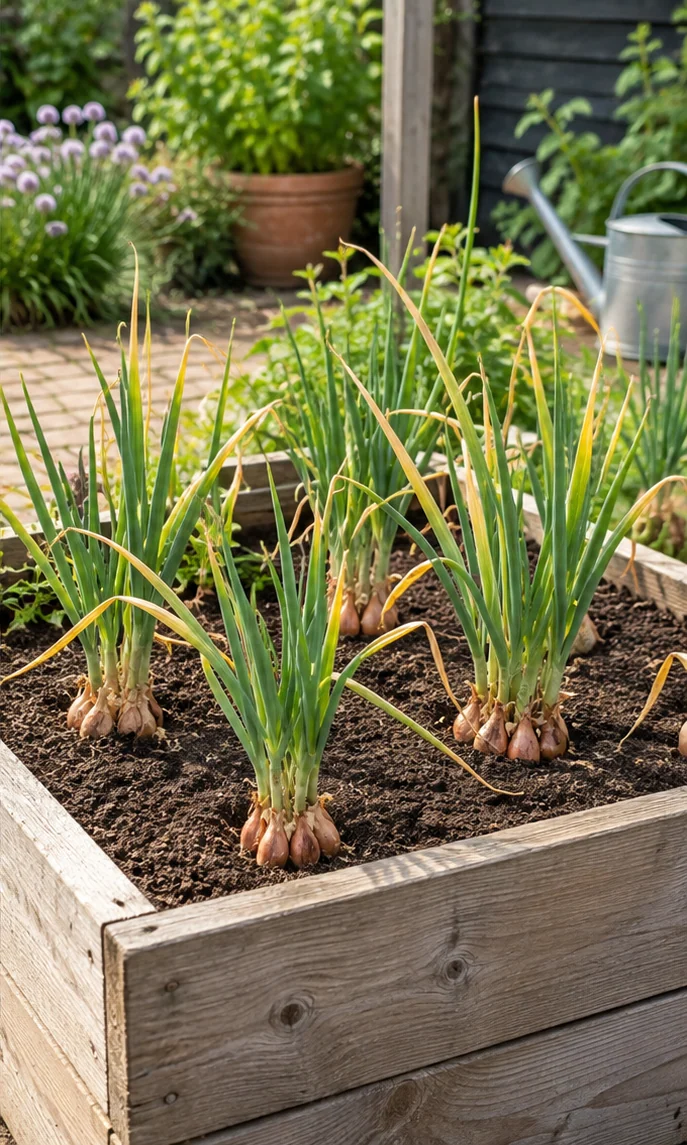
Shallots dislike standing water. Loosen sealed soil or choose a raised bed. Do not add fresh manure just before planting. A clear patch particularly helps young plants because narrow foliage barely covers the soil.
Leave the tip showing above the soil
Spring planting is a useful starting point for many shallot sets; autumn planting needs suitable stock and well-drained soil. Put root base down with the tip just visible. Make a planting hole rather than forcing bulbs into hard earth.
More choice needs more preparation
Sow a suitable shallot variety during its stated period, starting indoors or directly as advised. Keep compost evenly moist. Plant sturdy seedlings with room around each, without automatically expecting the same cluster as from sets.
A cluster needs its own room
The original single bulb divides during growth. Leave forming bulbs undisturbed and weed carefully. Close planting limits room and airflow. Do not routinely remove damaged foliage if the plant otherwise grows healthily.
Water during growth, rest during ripening
Water the root zone during dry periods. Pots need checking more often. When foliage naturally yellows and flops, harvest approaches; do not try turning maturity into new leaf growth with heavy feeding and watering.
Watch for rot and premature flowering
Soft bulbs, rotten roots or basal mould need investigation. Separate affected plants and move the onion family next year. Flower stems can reduce keeping quality: use those bulbs sooner and store only healthy, firm ones.
Lifting, loosening, drying
Loosen soil with a fork and lift the whole cluster. Let bulbs dry somewhere airy, protected from prolonged rain. Separate carefully once dry enough; do not enclose a damp harvest in a container.
Select for storage
Store only intact, dry shallots somewhere cool, dry and ventilated. Check regularly and promptly use soft or damaged bulbs if still suitable. Separate eating supplies and next season's healthy sets so diseased bulbs are not replanted unnoticed.