Why grow Milanese Witte Roodkop?
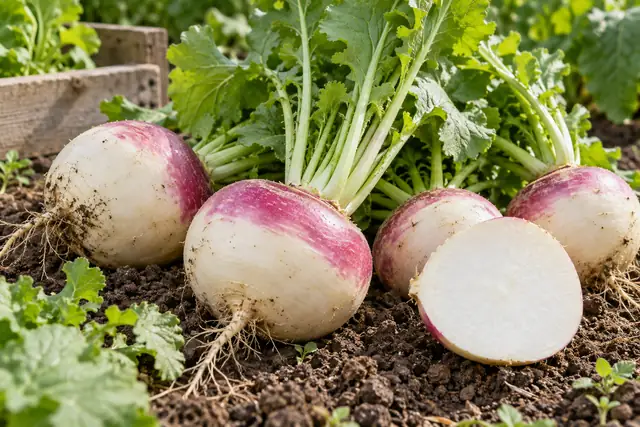
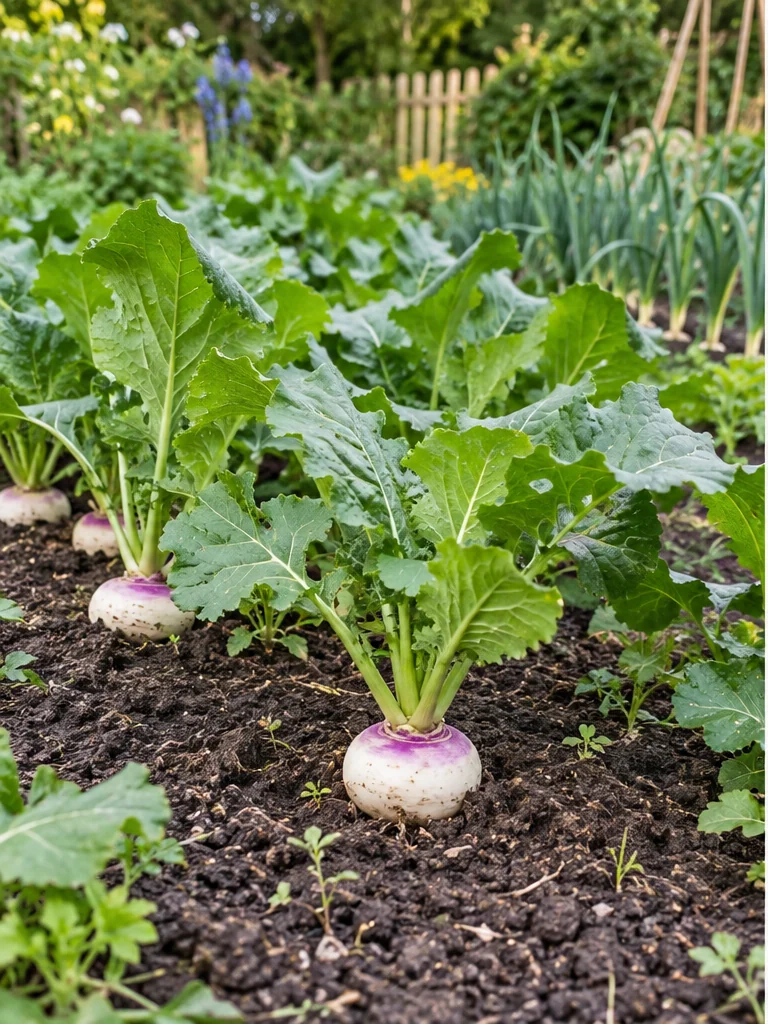
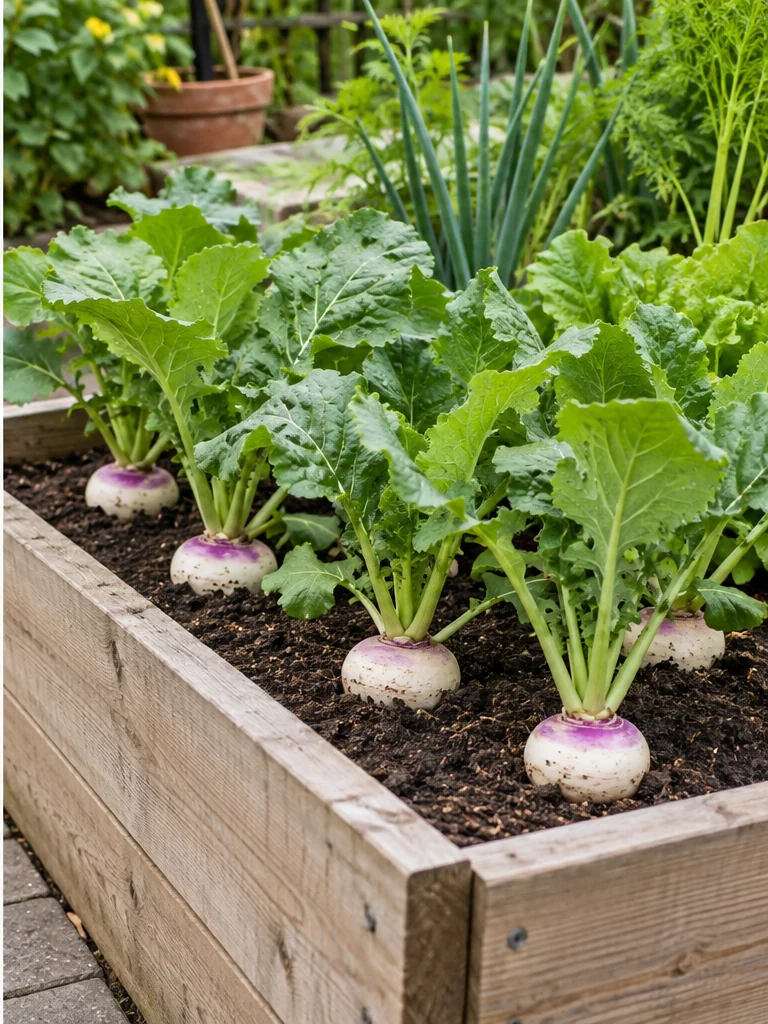
White turnip with a reddish-coloured shoulder.
Choose this variety for two colours and both spring and autumn growing. Relatively quick development makes it useful in a bed that will be replanted later.
How this choice tastes
Young Milanese turnips have a fresh turnip flavour and a tender bite. The two-coloured root mainly differs in appearance, without any established extra pungency.
From harvest to kitchen
Thinly slice small roots for raw salads or briefly steam equal-sized pieces. Leave the coloured shoulder visible in a simple dish with several turnip colours.
What needs attention when growing
Sow thinly and thin until each plant has space. In the warm part of summer, the crop needs more attention to moisture and preventing tough roots.
Harvest when young swollen stems have a usable diameter, often around six to eight centimetres. Waiting too long for more weight can give a coarser texture.
Choose by flavour, shape and use
Goldana: Round yellow early turnip with edible young leaves too. Cook small yellow wedges briefly or make a mixed turnip mash. Young, healthy leaves can be cooked separately as turnip greens in a stir-fry.
Goldana has the mild character of turnip when harvested young. The yellow interior is a visible difference alongside white-fleshed turnips, without a proven flavour ranking.
Milanese Witte Roodkop: White early turnip with a coloured reddish shoulder. Thinly slice small roots for raw salads or briefly steam equal-sized pieces. Leave the coloured shoulder visible in a simple dish with several turnip colours.
Young Milanese turnips have a fresh turnip flavour and a tender bite. The two-coloured root mainly differs in appearance, without any established extra pungency.
Platte Witte Mei: Flat-round, white-fleshed turnip harvested young and tender. Steam small wedges or grate young roots for a raw salad. Cut evenly so the delicate flesh does not need unnecessarily long cooking.
Harvested young, Platte Witte Mei is tender with the mild character of turnip. The flat bulb shape gives a different cutting result from a round or long root.
Boule d’Or: Round, smooth turnip with yellow-orange flesh. Slice young roots for raw salads or cook equal cubes in a vegetable stew. The yellow to orange interior gives recognisable colour alongside potato or white turnip.
The source describes firm, sweet and fragrant flesh. This makes Boule d’Or interesting to taste alongside white-fleshed turnips, without guaranteeing the same flavour in every soil.
Choosing a suitable root crop
Turnip and swede are different crops. With ordinary turnips, you can harvest young roots or choose a later cultivar for autumn. Follow that distinction on the packet. Turnips harvested small do not need the same space as large storage roots.
Make room underground
Feel whether the soil is loose enough below the top layer. A fine surface can hide a hard layer. Carefully relieve obstructive compaction when the soil is workable. Avoid fresh, coarse manure directly in a row where straight roots need to develop.
Sow in the final position
Sow directly into a fine seedbed and divide the crop into small batches. Cooler weather is favourable. Summer sowing only succeeds if the germination zone does not dry out; in extreme heat, wait for a better moment within the cultivar’s window.
The surface layer deserves attention
After sowing, keep the germination zone evenly moist. A hard crust and drying can hold back small plants. Water with a fine rose and do not walk over the row. A label helps you find the sowing position before recognisable leaves appear.
Give every young plant its own space
Thin seedlings in time so the roots can thicken. Exact spacing depends on cultivar and harvest size. You can use young thinnings as leafy vegetables when they are edible turnip plants; do not remove all leaves from the remaining root plants.
Growing without large fluctuations
During dry periods, check moisture below the surface. Young plants and containers need more frequent watering checks than a well-rooted crop in a bed. Water according to need and let it soak down; a wet surface every day tells you little about the root zone.
Take time over the first one
Harvest turnips young and taste a root of useful size. Do not let them grow solely for a greater harvest weight: tenderness declines in many types. Loosen the soil if needed and pull without tearing the foliage from the root.
An unusual root tells you something
A small, hard root can sometimes be associated with drought, too little space or an unsuitable growing season. As turnip is a brassica, flea beetles, cabbage root fly and clubroot may also play a part. Identify the damage and include the crop in your brassica rotation.
Start with a sound harvest
Use damaged roots first and store only sound ones, following guidance for the type and cultivar. Cool conditions and suitable humidity help limit drying, but check for deterioration. Storage advice for one winter cultivar is not a shelf-life promise for the whole species.