Why grow Boule d’Or?
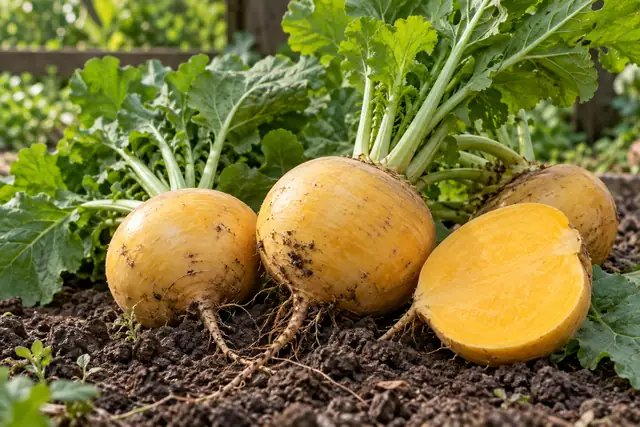
Ronde gladde raap met geel-oranje vruchtvlees.
Choose this variety for a smooth, round shape and a described sweet aroma. It suits an early fresh harvest and several small sowings.
How this choice tastes
The source describes firm, sweet and fragrant flesh. This makes Boule d’Or interesting to taste alongside white-fleshed turnips, without guaranteeing the same flavour in every soil.
From harvest to kitchen
Snijd jonge wortels voor rauwkost of gaar gelijke blokjes in een groentestoof. De gele tot oranje binnenkant geeft herkenbare kleur naast aardappel of witte raap.
What needs attention when growing
Zaai rechtstreeks volgens de verpakking en geef tijdig ruimte door uitdunnen. Houd de wortelzone vochtig, omdat een onderbroken groei een grovere knol kan opleveren.
Oogst op bruikbare maat en proef een eerste wortel voordat je de rest groot laat worden. Voor rauw gebruik is jong, fijn gesneden vruchtvlees het prettigst.
Choose by flavour, shape and use
Goldana: Round yellow early turnip with edible young leaves too. Cook small yellow wedges briefly or make a mixed turnip mash. Young, healthy leaves can be cooked separately as turnip greens in a stir-fry.
Goldana has the mild character of turnip when harvested young. The yellow interior is a visible difference alongside white-fleshed turnips, without a proven flavour ranking.
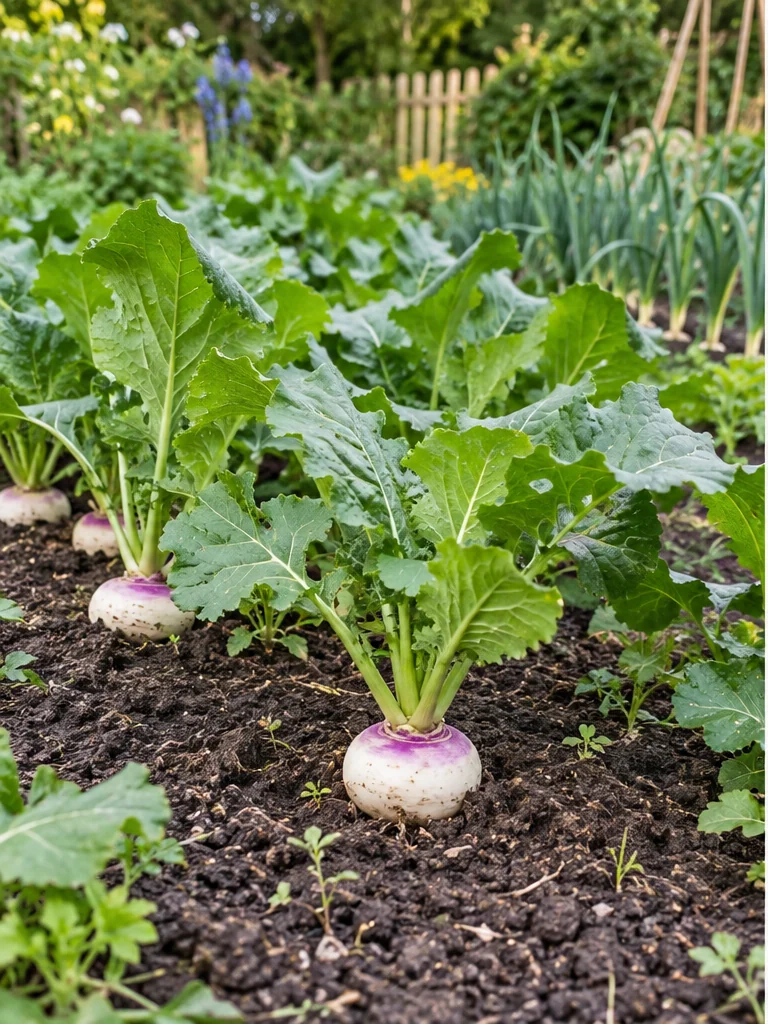
Milanese Witte Roodkop: Witte meiraap met een gekleurde roodachtige schouder. Snijd kleine knollen dun voor rauwkost of stoom gelijke stukjes kort. Laat de gekleurde schouder zichtbaar bij een eenvoudige schotel met meerdere raapkleuren.
Young Milanese turnips have a fresh turnip flavour and a tender bite. The two-coloured root mainly differs in appearance, without any established extra pungency.
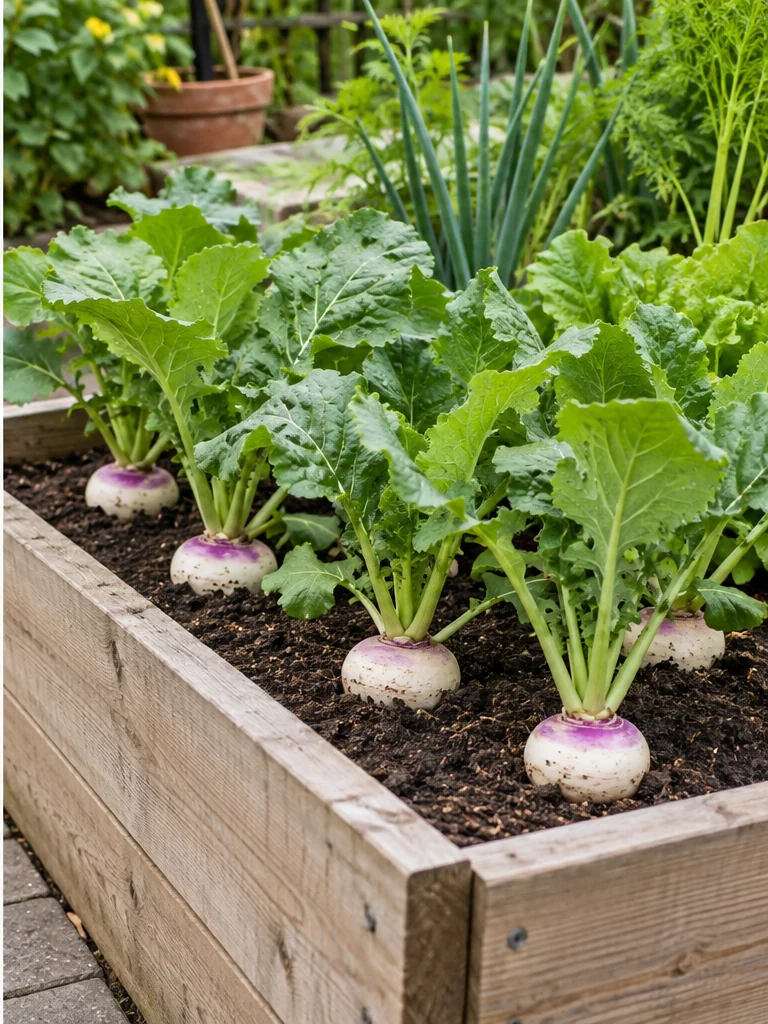
Platte Witte Mei: Flat-round, white-fleshed turnip harvested young and tender. Steam small wedges or grate young roots for a raw salad. Cut evenly so the delicate flesh does not need unnecessarily long cooking.
Harvested young, Platte Witte Mei is tender with the mild character of turnip. The flat bulb shape gives a different cutting result from a round or long root.
Boule d’Or: Ronde gladde raap met geel-oranje vruchtvlees. Snijd jonge wortels voor rauwkost of gaar gelijke blokjes in een groentestoof. De gele tot oranje binnenkant geeft herkenbare kleur naast aardappel of witte raap.
The source describes firm, sweet and fragrant flesh. This makes Boule d’Or interesting to taste alongside white-fleshed turnips, without guaranteeing the same flavour in every soil.
Choosing a suitable root crop
Raap en koolraap zijn verschillende teelten. Bij gewone rapen kun je jonge wortels oogsten of een later ras voor de herfst kiezen. Volg dat onderscheid op het zakje. Voor klein geoogste rapen hoef je niet dezelfde ruimte aan te houden als voor grote bewaarknollen.
Make room underground
Feel whether the soil is loose enough below the top layer. A fine surface can hide a hard layer. Carefully relieve obstructive compaction when the soil is workable. Avoid fresh, coarse manure directly in a row where straight roots need to develop.
Sow in the final position
Zaai rechtstreeks in een fijn zaaibed en verdeel de teelt over kleine porties. Koeler weer is gunstig. Een zomerse zaai lukt alleen als de kiemzone niet uitdroogt; wacht bij grote hitte liever op een beter moment binnen het rasvenster.
The surface layer deserves attention
After sowing, keep the germination zone evenly moist. A hard crust and drying can hold back small plants. Water with a fine rose and do not walk over the row. A label helps you find the sowing position before recognisable leaves appear.
Give every young plant its own space
Dun de opkomst tijdig uit zodat de wortels kunnen verdikken. De precieze afstand hangt af van ras en oogstmaat. Je kunt jonge uitgedunde plantjes als bladgroente gebruiken wanneer het eetbare raapplanten zijn; neem niet alle bladeren van de overblijvende wortelplanten weg.
Growing without large fluctuations
During dry periods, check moisture below the surface. Young plants and containers need more frequent watering checks than a well-rooted crop in a bed. Water according to need and let it soak down; a wet surface every day tells you little about the root zone.
Take time over the first one
Oogst rapen jong en proef een wortel van bruikbare maat. Laat ze niet groeien alleen om een grotere kilo-oogst te krijgen: bij veel typen neemt de malsheid af. Maak de grond zo nodig los en trek zonder het loof van de wortel te scheuren.
An unusual root tells you something
A small, hard root can sometimes be associated with drought, too little space or an unsuitable growing season. As turnip is a brassica, flea beetles, cabbage root fly and clubroot may also play a part. Identify the damage and include the crop in your brassica rotation.
Start with a sound harvest
Use damaged roots first and store only sound ones, following guidance for the type and cultivar. Cool conditions and suitable humidity help limit drying, but check for deterioration. Storage advice for one winter cultivar is not a shelf-life promise for the whole species.