Rasportret · Ui
Loading the garden guide…
Loading the garden guide…
 SeedStepsYour vegetable garden, one step at a time.My garden
Hercules is described as having large, strongly flavoured bulbs. Follow the difference between bulb growth and bolting, read source differences about shape and discover what storage needs after lifting.
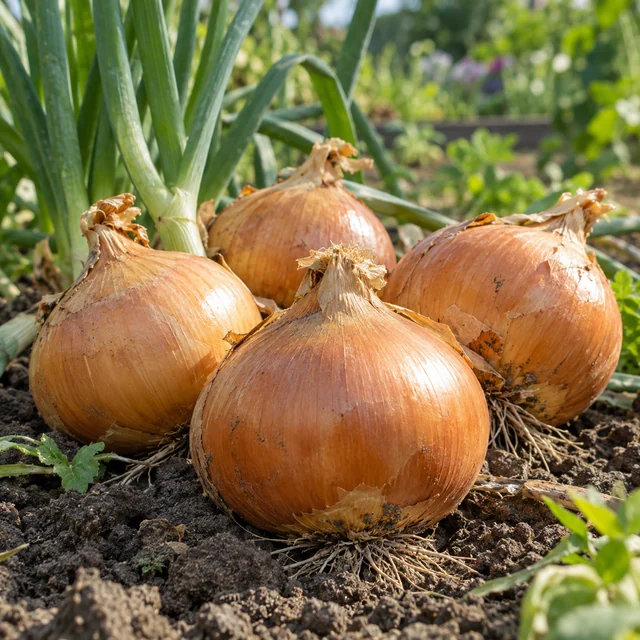
This image was created with AI from described plant characteristics and growing advice. It shows a possible situation and is not a photograph of a verified cultivar.
This growing advice helps you choose. Your variety, growth stage, weather and conditions in your space determine the actual timing.
Start under cover in a cool, bright position · Onion
February–March for seed-grown onionsSow lightly in modules or a seed tray and grow on steadily.
Onion sets and seed-grown onions are different starting routes. Bunching and spring onions are generally harvested young.
Royal Horticultural Society · RHS — ui kweken ↗Soort- of productgebonden bron; buitenlandse perioden zijn geen vaste Nederlandse zaaidatum.
University of Minnesota Extension · UMN Extension — ui in de moestuin ↗Soort- of productgebonden bron; buitenlandse perioden zijn geen vaste Nederlandse zaaidatum.
Guideline periods for the Netherlands and Flanders. Check the variety, available light, soil and measured temperatures. Greenhouse heating does not guarantee enough winter light.
The source context and any limitations are in the background information at the bottom.
Compare with another varietyThe options below belong to the plant. From these, choose the method that suits your variety's growth habit.
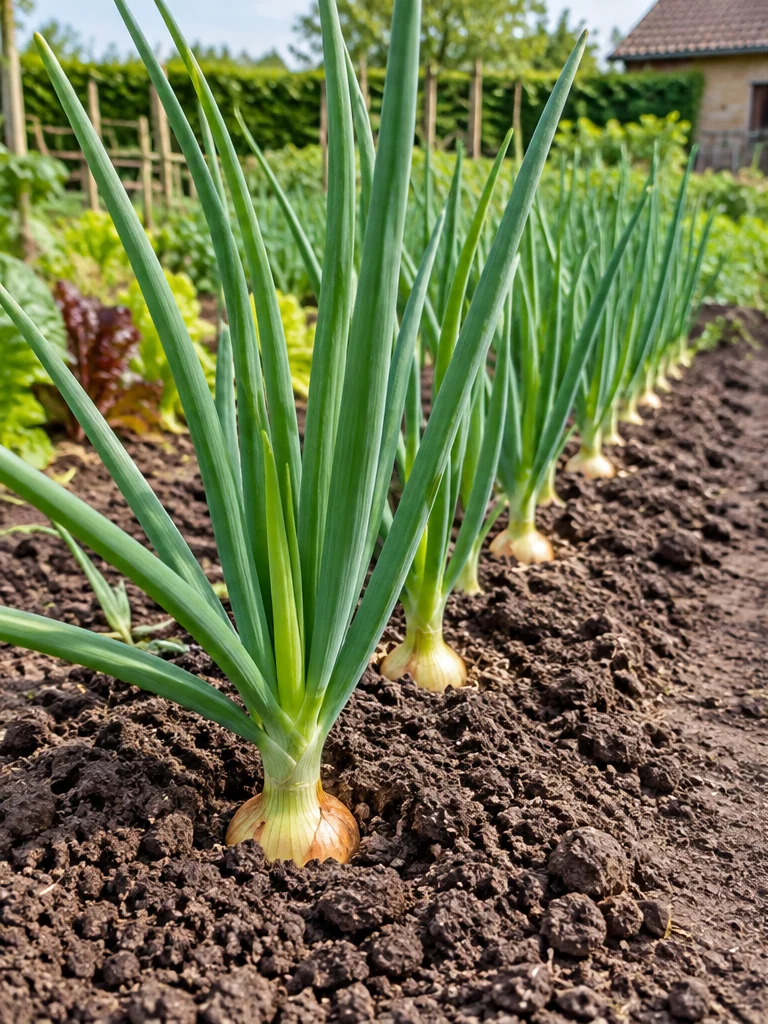
This image was created with AI from described plant characteristics and growing advice. It shows a possible situation and is not a photograph of a verified cultivar.
Small planting bulbs make an accessible start. The tip stays visible and the root base gets loose soil.
For a simple start and a batch of storage onions.
Tick off your supplies →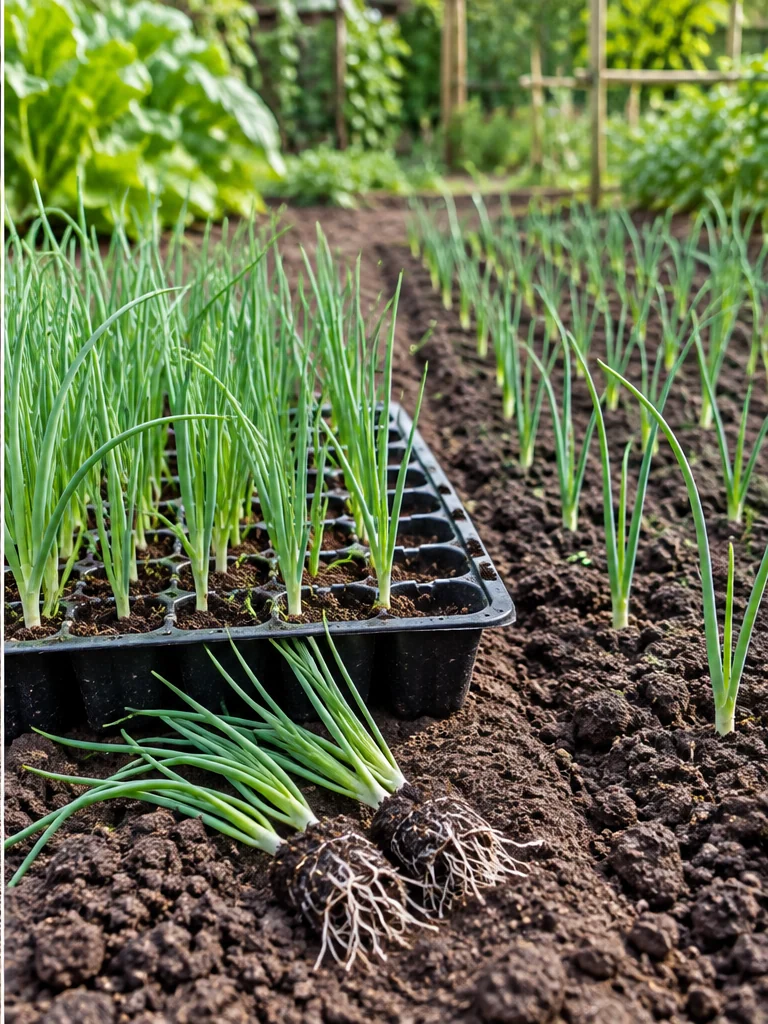
This image was created with AI from described plant characteristics and growing advice. It shows a possible situation and is not a photograph of a verified cultivar.
Sowing opens more choice but needs time for young shoots. Start timing must suit variety and intended planting position.
For anyone following the whole process with a suitable seed-grown variety.
Tick off your supplies →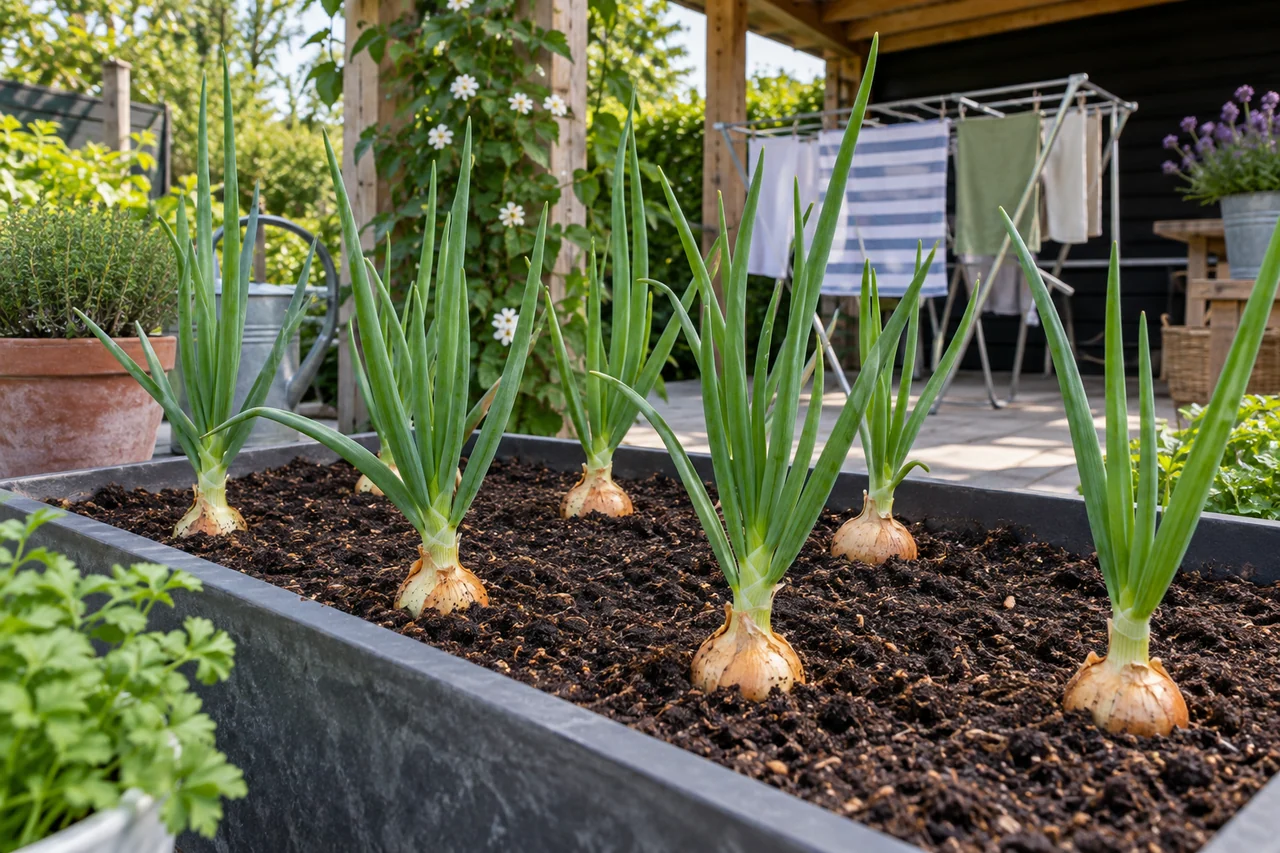
This image was created with AI from described plant characteristics and growing advice. It shows a possible situation and is not a photograph of a verified cultivar.
Onions can grow in a broad container if every bulb has enough room. A container makes weeding easy but needs more frequent moisture checks.
For a sunny balcony or patio and a limited stored crop.
Tick off your supplies →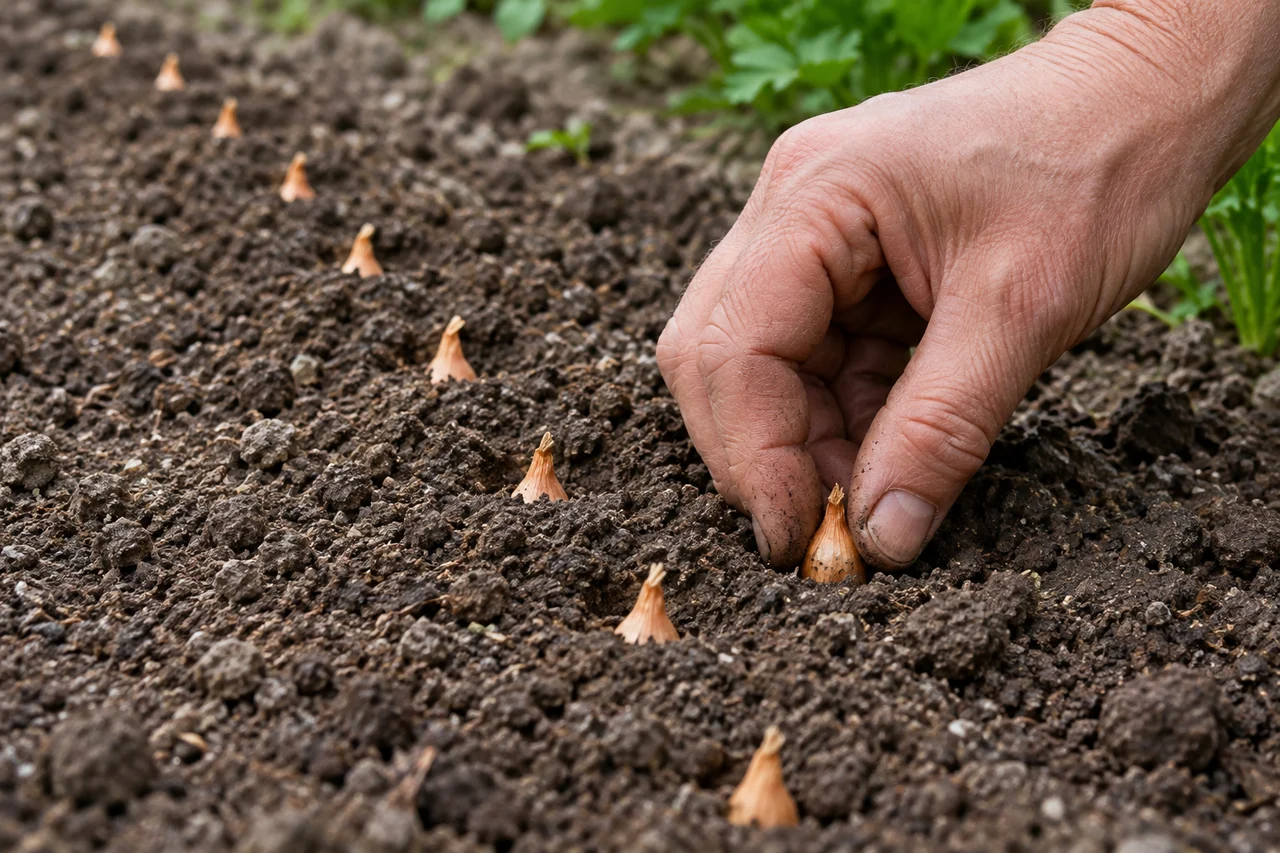
This image was created with AI from described plant characteristics and growing advice. It shows a possible situation and is not a photograph of a verified cultivar.
Put onion sets into the soil root-end down. The bulb belongs in the soil; only the dry tip stays above the surface.
View your supplies →The RHS describes Hercules with large, almost round, dark golden-brown bulbs; guidance gives strong flavour. This is a recognisable choice, not fixed onion weights. Keep labels from planting to compare flavour, shape and bed conditions later.
The 2011 historical RHS list gives Hercules slightly elongated bulbs, while the profile says almost round. Retain this difference without inventing an intermediate shape. Record actual plants. Photos supplement profiles without re-proving old trials.
The RHS growing guide lists good bolting resistance for Hercules. Its cultivar profile also mentions bolting as a possible problem. That is no reason to stop checking. Resistance describes a limited property; it does not rule out flowering. Watch for a developing flower stalk and keep unusual plants identifiable in your records.
Onions are biennial, but cold may trigger early flowers before stems show. Heat-treated sets may reduce risk. Record purchased stock. Flowering does not prove wrong variety names; conditions belong to the story too.
General onion care needs attention to shallow-root moisture. Check reachable soil and weed gently. Automatically increasing feed does not guarantee leaves or bulbs; excess late nitrogen can harm maturity and storage. Assess crops and soil before repeating care.
For storage onions, await natural yellowing and flopping; do not bend foliage yourself. Lift gently and separate damaged bulbs for earlier use. Size is one trait; soundness and maturity help determine uses. Storage selection starts while gathering.
Dry bulbs thoroughly. Papery skins, dry roots and necks indicate readiness. Protect from rain and do not rely solely on dates. Handle a few bulbs individually to inspect. Good-storage descriptions do not replace this step, even for large varieties.
Inspect soft and sprouting onions and use first. For Hercules, record bolting and stock treatment too, helping change one choice next time. Historical sources call it F1; saved seed therefore does not guarantee identical stock for comparing crops.
Tick what you already have. The extras depend on how you grow.
0 of 7 ticked off
Your ticks are saved in this browser.
SeedSteps editorial team · updated on 11 October 2026. The AI images illustrate species and practical growing situations; they do not prove an exact cultivar, observations from your own garden or yield.
Britse gewasadviezen worden gecombineerd met Nederlandse en Vlaamse informatie waar beschikbaar. Amerikaanse Extension-bronnen ondersteunen plantprincipes en herkenning; hun kalenderdata, lokale plaagdruk, bestrijdingsmiddelen en mestdoseringen worden niet rechtstreeks op Nederland of Vlaanderen toegepast. Vorst, bodemwarmte, standplaats en expliciete rasinformatie blijven de lokale controle. Commerciële bronnen onderbouwen uitsluitend benoemde ras- en plantkenmerken; zij zijn geen affiliate-aanbeveling.
Supporting evidence by chapter: A large bulb starts with a precise variety profile: Royal Horticultural Society, Royal Horticultural Society. Two descriptions do not say exactly the same thing: Royal Horticultural Society, Royal Horticultural Society. Less prone to bolting is not a free pass: Royal Horticultural Society, Royal Horticultural Society. A flower stem serves a different purpose for the plant: Royal Horticultural Society. Monitor growth where the roots are: University of Minnesota Extension. A large onion also needs steady ripening: Royal Horticultural Society. Let the harvest air before packing: Utah State University Extension, Royal Horticultural Society. Keep the experience alongside the last onions: Utah State University Extension, Royal Horticultural Society, University of Minnesota Extension.
Vruchtvorm: Almost round Britse RHS-beschrijving; broncontext geldt voor het rasportret, zonder lokale maat-, oogst- of bewaargarantie. Royal Horticultural Society
Vruchtgrootte: Large Britse RHS-beschrijving; broncontext geldt voor het rasportret, zonder lokale maat-, oogst- of bewaargarantie. Royal Horticultural Society
Height: 50-100 cm Britse RHS-beschrijving; broncontext geldt voor het rasportret, zonder lokale maat-, oogst- of bewaargarantie. Royal Horticultural Society
Licht: Full sun Britse RHS-beschrijving; broncontext geldt voor het rasportret, zonder lokale maat-, oogst- of bewaargarantie. Royal Horticultural Society
Hoofdkleur: Dark golden brown Britse RHS-beschrijving; broncontext geldt voor het rasportret, zonder lokale maat-, oogst- of bewaargarantie. Royal Horticultural Society
Resistenties: Good resistance to bolting; flowering remains possible De Britse RHS-teeltgids noemt weerstand tegen doorschieten. Het Hercules-profiel noemt doorschieten als mogelijk probleem; geen immuniteit of ziekteweerstand bedoeld. Royal Horticultural Society
Zaadvast / F1: F1-hybride Historische Britse RHS-beschrijving, versie maart 2011. Geen introductiejaar, actuele populariteitsranglijst of Nederlandse teeltkalender. Royal Horticultural Society
Save: Stores well with suitable harvesting, drying and storage Britse RHS-beschrijving; broncontext geldt voor het rasportret, zonder lokale maat-, oogst- of bewaargarantie. Royal Horticultural Society
Flavour: Strong flavour Britse RHS-beschrijving; broncontext geldt voor het rasportret, zonder lokale maat-, oogst- of bewaargarantie. Royal Horticultural Society
Width: 10-50 cm Britse RHS-beschrijving; broncontext geldt voor het rasportret, zonder lokale maat-, oogst- of bewaargarantie. Royal Horticultural Society