
Winter purslane
Winter purslane
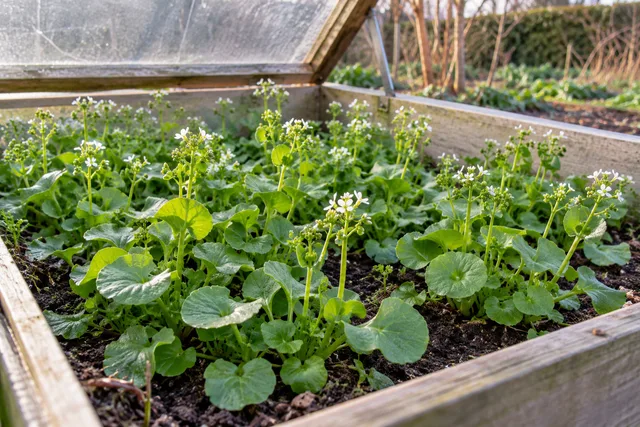
This image was created with AI from described plant characteristics and growing advice. It shows a possible situation and is not a photograph of a verified cultivar.
- Botanical name
- Claytonia perfoliata
- Botanical species
- Claytonia perfoliata
- Season
- Cool-season crop; usually an autumn start
- Germination
- Overly warm soil can reduce emergence
This growing advice helps you choose. Your variety, growth stage, weather and conditions in your space determine the actual timing.
Sowing under cover and raising seedlings
Sow directly in a cool season · Winter purslane
September–October; winter purslane according to product guidanceSow very shallowly in cool greenhouse soil or a sheltered container.
- Germination and temperature
- Cool germination conditions; wait if soil is hot.
- After emergence
- Keep emerged lettuce bright and well ventilated; prevent high greenhouse temperatures and drying out.
- Pricking out and potting on
- Sow directly or raise small root balls according to product guidance. Keep young roots intact.
- Hardening off and planting out
- Direct-sown spinach stays in place.
Winter purslane and summer purslane have opposite warmth requirements. Do not confuse them.
Sources and use
RHS · veldsla ↗Britse teeltrichtlijn voor een gematigd klimaat; de genoemde perioden zijn richtlijnen voor Nederland en Vlaanderen.
De Bolster · Winterpostelein (Claytonia perfoliata) ↗Nederlandse producent of teeltbron; de rasinstructie blijft leidend.
Feggies · Winterpostelein of Claytone Cuda zaden biologisch ↗Nederlandse producent of teeltbron; de rasinstructie blijft leidend.
Guideline periods for the Netherlands and Flanders. Check the variety, available light, soil and measured temperatures. Greenhouse heating does not guarantee enough winter light.
A different flavour, a different harvest.
Choose by more than the name. Discover how these varieties and crop types taste, what you can use them for and what growing them involves.
1 of 1 choices · 0 named varieties
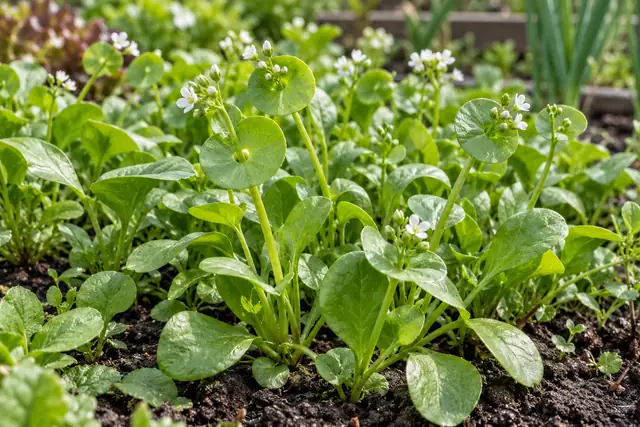
This image was created with AI from described plant characteristics and growing advice. It shows a possible situation and is not a photograph of a verified cultivar.
Claytone de Cuba
The producer calls this winter purslane Claytone de Cuba. Feggies also uses Cuda; this is not evidence for a separate Cuda cultivar.
Choose this type for cool-season leaf growing and retain the retail names as search terms. It is Claytonia perfoliata, not Portulaca summer purslane.
Flavour, kitchen and growing
How does it taste?
The producer describes a fine, pleasant flavour. This general assessment is not expanded into an unproven Cuda variety aroma.
This flavour description applies to the crop; there is no separate tasting result for this variety.In the kitchen
Use young leaves in salad or a cooked meal. Their soft texture needs no prolonged cooking.
A space in the garden
Sow when the soil is cool enough and keep the fine seeds moist. Shelter can help with winter harvesting, with sufficient ventilation.
Harvesting
Cut or pick young, usable leaves and retain the growing base. Prevent unwanted seeding if the bed must be cleared afterwards.
Also listed as: Cuda, Claytone, Winterpostelein of Claytone, Winterpostelein of Claytone Cuda.
Read the source notes →Choose your way to grow
From a garden bed to a suitable pot or support: give your plant a place that suits your garden and the care you can provide.
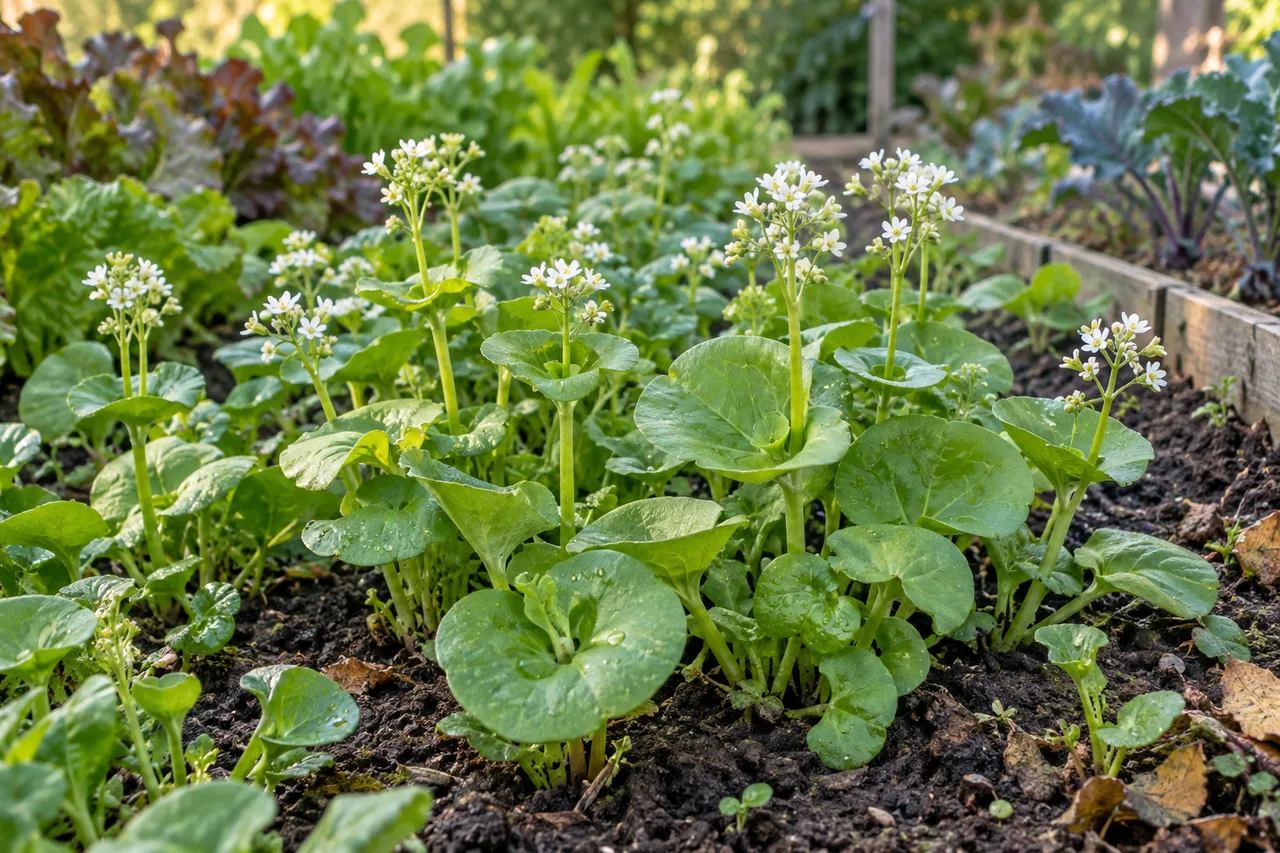
This image was created with AI from described plant characteristics and growing advice. It shows a possible situation and is not a photograph of a verified cultivar.
Cool leaf growing in an autumn bed
Sow as soil cools; keep fine seeds moist; pick young leaves and prevent unwanted seed spread.
- Sow when the soil becomes cooler.
- Keep the fine seeds moist.
- Pick young leaves and prevent unwanted seed spread.
For a visible cool-season crop after the summer harvest.
Tick off your supplies →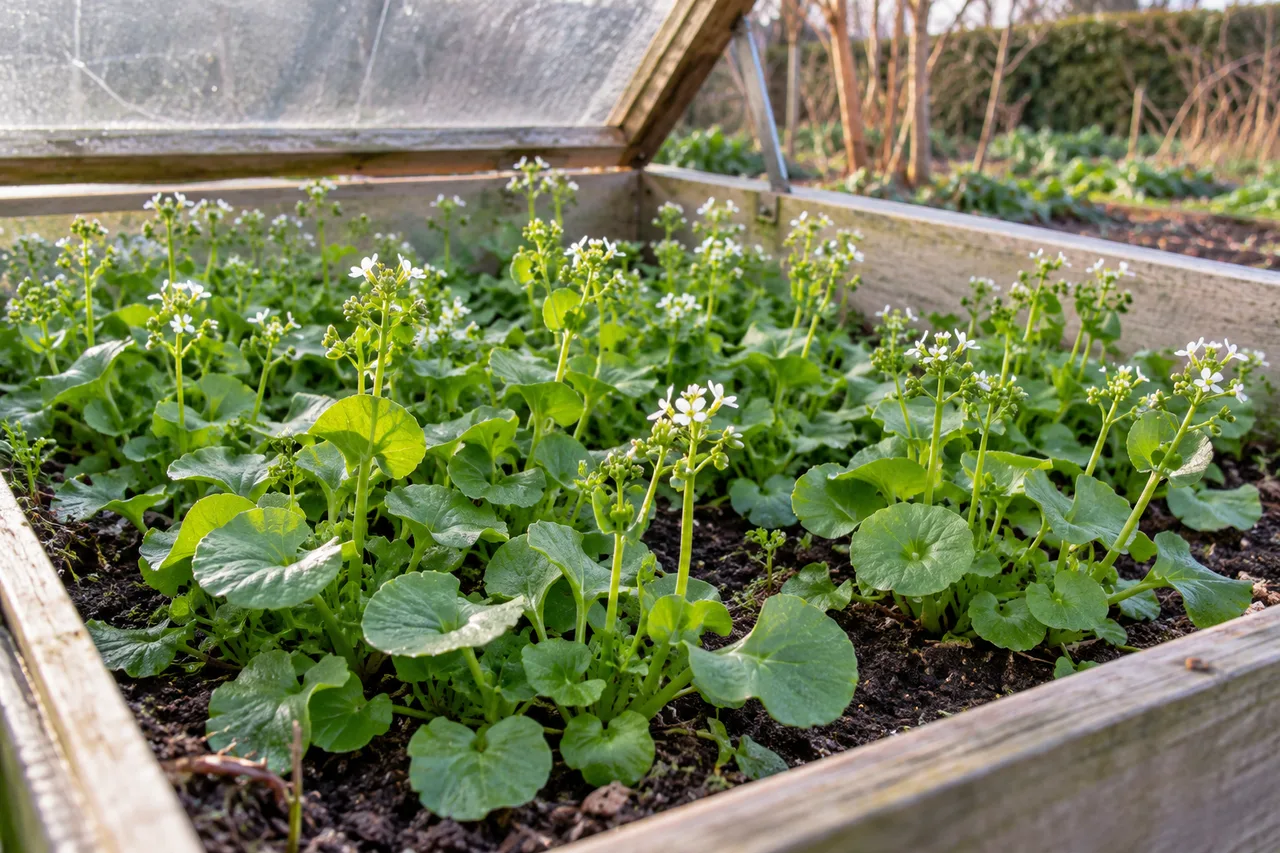
This image was created with AI from described plant characteristics and growing advice. It shows a possible situation and is not a photograph of a verified cultivar.
Winter leaves in an unheated container
Sow in a free-draining container; shelter or use a cold greenhouse; ventilate and harvest without removing the growing point.
- Sow in a free-draining container.
- Position under shelter or in a cold greenhouse.
- Ventilate and harvest without removing the growing point.
For a limited, sheltered winter harvest in an unheated growing position.
Tick off your supplies →Choose by flavour, shape and use
Claytone de Cuba: The producer calls this winter purslane Claytone de Cuba. Feggies also uses Cuda, which does not prove a separate Cuda variety. Use young leaves in salad or cooked meals. Soft texture needs no lengthy cooking.
The producer describes a fine, pleasant flavour. This general assessment is not expanded into an unproven Cuda variety aroma.
Greens for the cool season
Winter purslane is Claytonia perfoliata, a low leafy crop grown as a cool-season vegetable. It produces fleshy leaves and later distinctive round upper leaves around flowering stems. It is not a winter variant of Portulaca oleracea. Keep summer purslane, ice plant and winter purslane recognisable as three different botanical plants in your garden and seed list.
Keep an autumn position visible
Autumn beds or cold frames suit this crop. Use moisture-retentive soil without flooding. Plan before summer crops occupy everything. Low plants hide among taller leaves; their own strip makes emergence and winter harvests easier to follow.
Cool soil helps the start
De Bolster gives usual August–September sowing and warns warm soil germinates poorly. Sow small seeds very shallowly; sand can help even distribution. Record dates and consider temperature with poor emergence before ordering another species immediately.
Small seeds, level surface layer
Prepare fine, level seedbeds so seed does not gather in hollows. Keep starts moist. Cold frames need drainage and access. Neatly prepared small strips teach more than large uneven patches alternating empty and overcrowded areas.
Use protection selectively
The plant suits the cold season; covering can protect the harvest in severe frost. Use a cold frame as an accessible sheltered place and keep inspecting the plants. Growth and leaf availability follow the actual weather. A calendar showing winter months does not mean you can cut the same amount every week.
Autumn bed or cold frame
Autumn beds suit visible open-ground strips; cold frames suit smaller protected accessible trials. Both show the same low rosettes and round leaves around flowers. Thick smooth summer purslane in hot greenhouses is no substitute despite shared purslane names.
Cut with room for regrowth
The producer specifies cutting above the base to allow a following cut. Afterwards, check for enough new leaves before harvesting again. Keep the first portion small and compare regrowth in the same spot. In spring, the plant may flower and form seed; decide then whether to follow this or end the crop.
Taste tender winter greens
Use young, clean leaves as a tender green addition to salad or another suitable dish. Taste a simple first portion and note leaf age. Cool-season cultivation and the distinctive growth habit are confirmed; a separate cultivar aroma is not invented here without a source. The practical advantage is fresh leafy produce of your own after summer vegetables have had their season.
What you need
Tick what you already have. The extras depend on how you grow.
0 of 5 ticked off
Your ticks are saved in this browser.
Discover and grow more
More background, sources and image information
SeedSteps editorial team · updated on 11 October 2026. The AI images illustrate species and practical growing situations; they do not prove an exact cultivar, observations from your own garden or yield.
Britse gewasadviezen worden gecombineerd met Nederlandse en Vlaamse informatie waar beschikbaar. Amerikaanse Extension-bronnen ondersteunen plantprincipes en herkenning; hun kalenderdata, lokale plaagdruk, bestrijdingsmiddelen en mestdoseringen worden niet rechtstreeks op Nederland of Vlaanderen toegepast. Vorst, bodemwarmte, standplaats en expliciete rasinformatie blijven de lokale controle. Commerciële bronnen onderbouwen uitsluitend benoemde ras- en plantkenmerken; zij zijn geen affiliate-aanbeveling.
- Winterpostelein of Claytone Cuda zaden biologischFeggies · accessed 2026-10-11
- Claytone de Cuba ou Pourpier d'hiverSemailles · accessed 2026-10-11
- Winterpostelein (Claytonia perfoliata)De Bolster · accessed 2026-10-11
- Claytonia perfoliata: plant detailsRoyal Horticultural Society · accessed 2026-10-11
Supporting evidence by chapter: Choose by flavour, shape and use: Feggies, Semailles. Greens for the cool season: Feggies, De Bolster, Royal Horticultural Society. Keep an autumn position visible: Feggies, De Bolster, Royal Horticultural Society. Cool soil helps the start: Feggies, De Bolster, Royal Horticultural Society. Small seeds, level surface layer: Feggies, De Bolster, Royal Horticultural Society. Use protection selectively: Feggies, De Bolster, Royal Horticultural Society. Autumn bed or cold frame: Feggies, De Bolster, Royal Horticultural Society. Cut with room for regrowth: Feggies, De Bolster, Royal Horticultural Society. Taste tender winter greens: Feggies, De Bolster, Royal Horticultural Society.