
Spring Blush: discover the flavour and growing
Tall sugar snap climber with green pods with pink shades. Choose Spring Blush for strongly developed tendrils, two-coloured flowers and a striking climbing patch. Kokopelli describes plants of two to three metres, so reserve genuinely tall support.
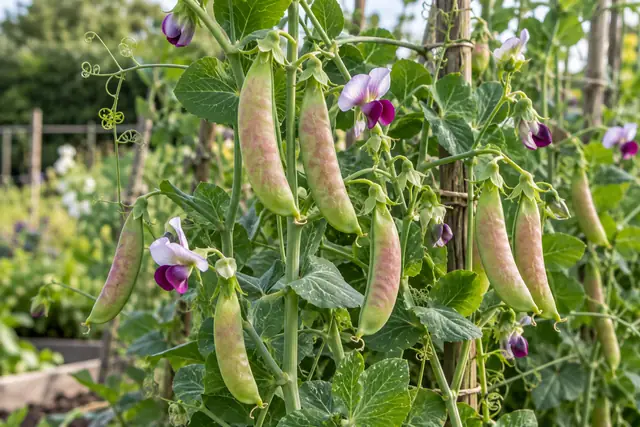
This image was created with AI from described plant characteristics and growing advice. It shows a possible situation and is not a photograph of a verified cultivar.
- Crop
- A pea with edible, fleshy pods
- Location
- Sun, aerated soil; a cooler growing season usually works better than heat
- Support
- Adapt frame height to the cultivar
- Harvest
- Young, filled pods, before the walls become tough
This growing advice helps you choose. Your variety, growth stage, weather and conditions in your space determine the actual timing.
Sowing under cover and raising seedlings
Start under cover in cool conditions or sow directly · Sugar snap pea
February–MarchStart under cover in cool, bright conditions; move to a suitable sheltered position after emergence.
- Germination and temperature
- A cool, bright growing space suits better than a hot loft. Do not sow in waterlogged, cold soil.
- After emergence
- Give seedlings light immediately after emergence. A dark loft needs suitable grow lights; warmth alone is insufficient. Ventilate and keep the compost moist without saturating it.
- Pricking out and potting on
- Use deep modules, pots or a seed gutter. Plant out with the whole root ball; do not pull the roots apart.
- Hardening off and planting out
- Gradually acclimatise indoor-raised plants to sun, wind and outdoor temperatures; shelter them again on cold nights. Plant out sturdy young plants once the soil is workable. Install pea sticks or a frame in good time.
Choose a suitable early or later cultivar. Avoid prolonged warm indoor propagation.
Sources and use
Royal Horticultural Society · RHS — erwt kweken ↗Soort- of productgebonden bron; buitenlandse perioden zijn geen vaste Nederlandse zaaidatum.
University of Minnesota Extension · UMN Extension — erwt in de moestuin ↗Soort- of productgebonden bron; buitenlandse perioden zijn geen vaste Nederlandse zaaidatum.
Guideline periods for the Netherlands and Flanders. Check the variety, available light, soil and measured temperatures. Greenhouse heating does not guarantee enough winter light.
What makes Spring Blush different?
- Growth habit
- climbing
- Main colour
- green pods with pink shades
The source context and any limitations are in the background information at the bottom.
Compare with another varietyFlavour and kitchen
Spring Blush has the slightly sweet pea character of young edible pods. The pink blush and delicate texture mainly make the harvest distinctive; colour is not a sweetness score.
This flavour description applies to the crop; a separate taste test for this variety is not supported by evidence.Cook young, lightly filled pods briefly as a whole vegetable, including immature peas. Remove any strings along seams. Show colours on a harvest platter beforehand; prolonged cooking makes the tender wall less appealing.
Why choose it? Choose Spring Blush for strongly developed tendrils, two-coloured flowers and a striking climbing patch. Kokopelli describes plants of two to three metres, so reserve genuinely tall support.
How to grow sugar snap pea
The options below belong to the plant. From these, choose the method that suits your variety's growth habit.
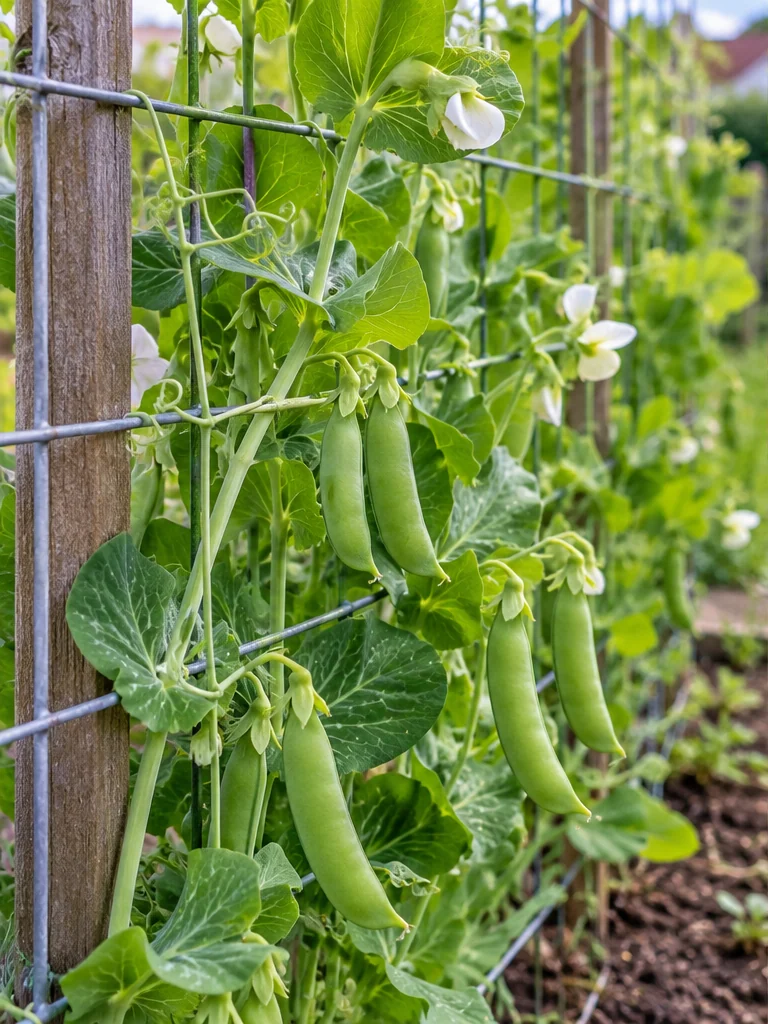
This image was created with AI from described plant characteristics and growing advice. It shows a possible situation and is not a photograph of a verified cultivar.
A double row along a sturdy frame
Two rows along mesh make picking manageable. Tendrils hold the plant in place; heavy stems do not need to be tied tightly.
- Install posts and sufficiently fine mesh firmly before roots grow large.
- Sow or plant on both sides at the variety packet's spacing.
- Guide the first vines gently to the mesh and keep the base moist.
- Pick from both sides while supporting the stem with one hand.
For medium and tall varieties, with room to walk around the frame.
Tick off your supplies →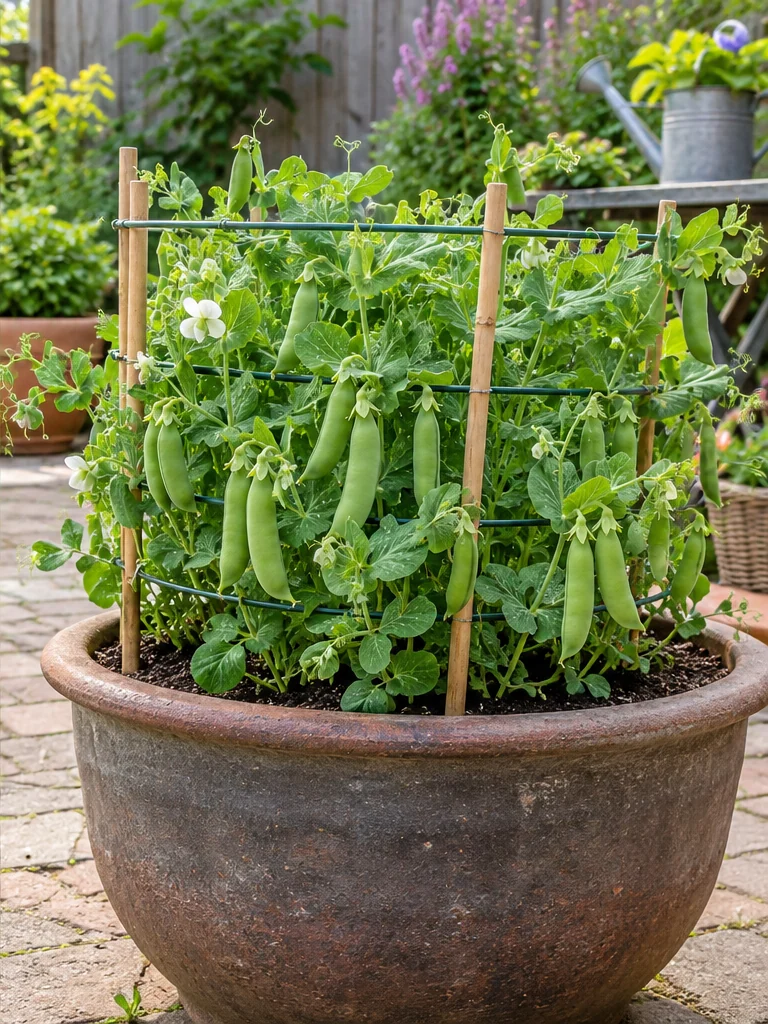
This image was created with AI from described plant characteristics and growing advice. It shows a possible situation and is not a photograph of a verified cultivar.
A low-growing variety in a large pot
Compact sugar snaps can give a modest harvest in a large pot. Even a short variety benefits from twigs or a low frame.
- Choose a pot approximately 45 cm wide with drainage and good compost.
- Choose an explicitly compact variety and sow at the recommended spacing.
- Secure a low frame in the pot and guide the first vines.
- Check daily in dry weather and harvest small portions regularly.
For a sunny patio; the harvest remains smaller than from a long bed.
Tick off your supplies →Why grow Spring Blush?
Tall sugar snap climber with green pods with pink shades.
Choose Spring Blush for strongly developed tendrils, two-coloured flowers and a striking climbing patch. Kokopelli describes plants of two to three metres, so reserve genuinely tall support.
How this choice tastes
Spring Blush has the slightly sweet pea character of young edible pods. The pink blush and delicate texture mainly make the harvest distinctive; colour is not a sweetness score.
From harvest to kitchen
Cook young, lightly filled pods briefly as a whole vegetable, including immature peas. Remove any strings along seams. Show colours on a harvest platter beforehand; prolonged cooking makes the tender wall less appealing.
What needs attention when growing
Sow in a cool spring and put a tall, stable support in place beforehand. Spring Blush is a sugar snap: follow development towards round, juicy pods. Autumn sowing from a French calendar only suits mild conditions; assess frost and drainage locally.
Pick sugar snaps as pods begin swelling, with young peas inside and tender walls. Do not wait for hard, large seeds; flat picking belongs to ordinary mangetout's different harvest aim. Check every few days and remove any strings when cleaning.
Choose by flavour, shape and use
Spring Blush: Tall sugar snap climber with green pods tinged pink. Cook young, lightly filled pods briefly as a whole vegetable, including immature peas. Remove any strings along seams. Show colours on a harvest platter beforehand; prolonged cooking makes the tender wall less appealing.
Spring Blush has the slightly sweet pea character of young edible pods. The pink blush and delicate texture mainly make the harvest distinctive; colour is not a sweetness score.
Nairobi: Early, plump edible pods on a plant sixty to eighty centimetres tall. Cook the whole pod briefly for a vegetable dish. The combination of tender seeds and an edible wall provides bite without shelling all the peas first.
Nairobi has the slightly sweet pea character with a thicker, juicy pod wall. This gives a different mouthfeel from a flat young pod and calls for a slightly fuller harvest stage.
Sugar snaps and mangetout differ
Sugar snaps have round, fleshy pods; mangetout is usually harvested flat. Both are edible-podded peas but differ in harvest timing. Choose a named sugar snap variety; height or stringlessness data do not apply to all peas.
Start in a suitable cool spring
Peas generally grow well in moderate temperatures. Sow in sufficiently warmed, workable soil following variety advice. Seed may rot in cold, wet soil. Light shelter gives more control without keeping plants warm and dark for weeks.
Deep enough, without waterlogging
Usually sow a few centimetres deep; about 4–5 cm is a useful starting point if supported by the packet. Keep soil slightly moist. Start in deep modules and transplant intact root balls before roots form a dense tangle.
The tendril seeks a hold
Peas climb with tendrils, not a thick twining main stem. Mesh or twigs therefore work better than one smooth pole. Add support early and guide young tendrils towards it. Tie loosely only where needed; tight string can damage growth.
Flowering and filling need moisture
Check roots during flowering and pod swelling. Water soil thoroughly in drought rather than repeatedly giving shallow splashes. Pots need more frequent checks. Soil need not remain soaking wet to form juicy pods.
Do not encourage excessive leaf growth
Well-maintained garden soil with mature compost is often enough. Do not automatically add lots of nitrogen for a bigger harvest. In pots, suitable feeding may be needed during flowering because supplies are limited; follow the dosage and account for how your potting compost works.
Protect emergence and airflow around leaves
Mice can take seeds, birds nibble plants and slugs damage emergence. Check especially early weeks. White powder on older leaves may be mildew; airy spacing and less drought stress support growth but do not automatically restore affected leaves.
Pick before the pod becomes hard
Check plants every few days. Pick once pods are round and peas just developing, while walls remain tender. Hold the plant to avoid pulling off a vine. Leaving old pods reduces room for a tasty follow-on harvest.
Eating fresh and clearing the bed
Sugar snaps taste best soon after harvest. Keep cool and process surplus promptly. Clear foliage after the last harvest; healthy roots may remain in soil. Note harvest duration and heat problems to improve the next sowing.
What you need
Tick what you already have. The extras depend on how you grow.
0 of 6 ticked off
Your ticks are saved in this browser.
Discover and grow more
More background, sources and image information
SeedSteps editorial team · updated on 11 October 2026. The AI images illustrate species and practical growing situations; they do not prove an exact cultivar, observations from your own garden or yield.
Britse gewasadviezen worden gecombineerd met Nederlandse en Vlaamse informatie waar beschikbaar. Amerikaanse Extension-bronnen ondersteunen plantprincipes en herkenning; hun kalenderdata, lokale plaagdruk, bestrijdingsmiddelen en mestdoseringen worden niet rechtstreeks op Nederland of Vlaanderen toegepast. Vorst, bodemwarmte, standplaats en expliciete rasinformatie blijven de lokale controle. Commerciële bronnen onderbouwen uitsluitend benoemde ras- en plantkenmerken; zij zijn geen affiliate-aanbeveling.
- World Checklist of Vascular Plants — 4 juni 2026Royal Botanic Gardens, Kew · accessed 2026-10-07
- Pea, Petits Pois & Sugar Snap, Spring BlushChiltern Seeds · accessed 2026-10-11
- Spring Blush Peulen BiologischFeggies · accessed 2026-10-11
- Peas — Sugar Snap Peas: oogsten wanneer de peul net dikker wordtUniversity of Illinois Extension · accessed 2026-10-11
- Pois Gourmand À Rames Spring BlushAssociation Kokopelli · accessed 2026-10-11
- Sugarsnaps Nairobi BiologischFeggies · accessed 2026-10-11
- RHS — erwt kwekenRoyal Horticultural Society · accessed 2026-10-10
- UMN Extension — erwt in de moestuinUniversity of Minnesota Extension · accessed 2026-10-10
Supporting evidence by chapter: Why grow Spring Blush?: Feggies, Association Kokopelli, Chiltern Seeds, University of Illinois Extension. How this choice tastes: Feggies, Association Kokopelli, Chiltern Seeds, University of Illinois Extension. From harvest to kitchen: Feggies, Association Kokopelli, Chiltern Seeds, University of Illinois Extension. What needs attention when growing: Feggies, Association Kokopelli, Chiltern Seeds, University of Illinois Extension. Choose by flavour, shape and use: Feggies, Association Kokopelli, Chiltern Seeds, University of Illinois Extension, Feggies. Sugar snaps and mangetout differ: Royal Horticultural Society, University of Minnesota Extension. Start in a suitable cool spring: Royal Horticultural Society, University of Minnesota Extension. Deep enough, without waterlogging: Royal Horticultural Society, University of Minnesota Extension. The tendril seeks a hold: Royal Horticultural Society, University of Minnesota Extension. Flowering and filling need moisture: Royal Horticultural Society, University of Minnesota Extension. Do not encourage excessive leaf growth: Royal Horticultural Society, University of Minnesota Extension. Protect emergence and airflow around leaves: Royal Horticultural Society, University of Minnesota Extension. Pick before the pod becomes hard: Royal Horticultural Society, University of Minnesota Extension. Eating fresh and clearing the bed: Royal Horticultural Society, University of Minnesota Extension.
Growth habit: climbing Beschrijving van de genoemde rasbron; geen eigen tuinwaarneming. Feggies, Association Kokopelli, Chiltern Seeds, University of Illinois Extension
Main colour: green pods with pink shades Beschrijving van de genoemde rasbron; geen eigen tuinwaarneming. Feggies, Association Kokopelli, Chiltern Seeds, University of Illinois Extension