
Growing mangetout: along a frame or among low pea sticks
A tall mangetout frame creates a green wall you can pick from both sides. Dwarf varieties fit a smaller bed with pea sticks. In both cases, harvest the young, flat pod; do not accidentally let it develop as though you wanted to collect garden peas.
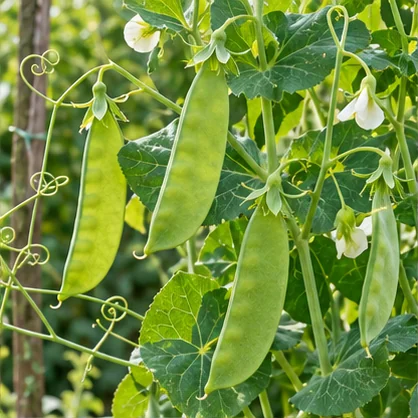
This image was created with AI from described plant characteristics and growing advice. It shows a possible situation and is not a photograph of a verified cultivar.
- Season
- Cool growing season; avoid saturated seedbeds
- Support
- Variety height determines trellis or twig supports
- Harvest
- Flat young pods with small seeds
This growing advice helps you choose. Your variety, growth stage, weather and conditions in your space determine the actual timing.
Sowing under cover and raising seedlings
Start under cover in cool conditions or sow directly · Mangetout
February–MarchStart under cover in cool, bright conditions; move to a suitable sheltered position after emergence.
- Germination and temperature
- A cool, bright growing space suits better than a hot loft. Do not sow in waterlogged, cold soil.
- After emergence
- Give seedlings light immediately after emergence. A dark loft needs suitable grow lights; warmth alone is insufficient. Ventilate and keep the compost moist without saturating it.
- Pricking out and potting on
- Use deep modules, pots or a seed gutter. Plant out with the whole root ball; do not pull the roots apart.
- Hardening off and planting out
- Gradually acclimatise indoor-raised plants to sun, wind and outdoor temperatures; shelter them again on cold nights. Plant out sturdy young plants once the soil is workable. Install pea sticks or a frame in good time.
Choose a suitable early or later cultivar. Avoid prolonged warm indoor propagation.
Sources and use
RHS · erwten en peulen ↗Britse teeltrichtlijn voor een gematigd klimaat; de genoemde perioden zijn richtlijnen voor Nederland en Vlaanderen.
Feggies · Rijspeul (-erwt) Heraut zaden ↗Nederlandse producent of teeltbron; de rasinstructie blijft leidend.
Feggies · Spring Blush Peulen Biologisch ↗Nederlandse producent of teeltbron; de rasinstructie blijft leidend.
Guideline periods for the Netherlands and Flanders. Check the variety, available light, soil and measured temperatures. Greenhouse heating does not guarantee enough winter light.
A different flavour, a different harvest.
Choose by more than the name. Discover how these varieties and crop types taste, what you can use them for and what growing them involves.
2 of 2 choices · 2 named varieties
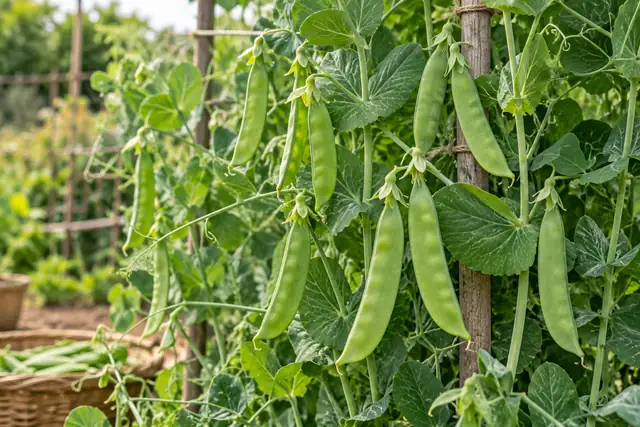
This image was created with AI from described plant characteristics and growing advice. It shows a possible situation and is not a photograph of a verified cultivar.
Heraut
Climbing mangetout with tender young pods.
Choose Heraut for an early mangetout crop along a frame about one and a half metres tall. Vertical growth produces a harvest above the bed without only shelling individual peas.
Flavour, kitchen and growing
How does it taste?
Young Heraut pods have a fresh, slightly sweet pea character with a tender wall. Their early use and climbing habit are more concrete than a separate cultivar aroma.
This flavour description applies to the crop; there is no separate tasting result for this variety.In the kitchen
Pick flat, young pods and cook them briefly whole for a vegetable dish. Add them late so that the tender pod wall and fresh flavour remain recognisable.
A space in the garden
Sow in spring and secure mesh firmly beforehand. Guide young vines to the support and keep the soil sufficiently moist during flowering and pod formation.
Harvesting
Harvest just before the seeds begin to expand clearly. Check several times a week; for mangetout, the young wall matters more than a maximally filled seed.
Read the source notes →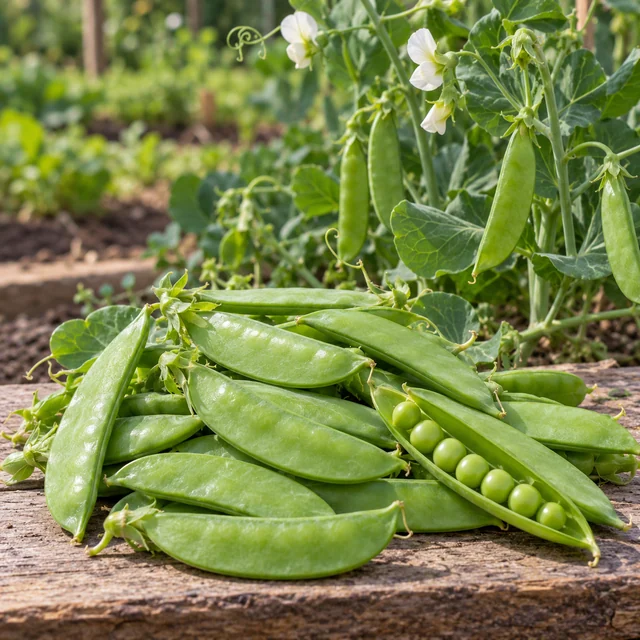
This image was created with AI from described plant characteristics and growing advice. It shows a possible situation and is not a photograph of a verified cultivar.
Norli
Low-growing mangetout with broad, flat pods.
Choose Norli for a pea-pod garden without a tall climbing support. The low form is manageable in a small space, with different support needs from Heraut.
Flavour, kitchen and growing
How does it taste?
Norli is described as sweet and stringless. Young flat pods provide the delicate texture; even a stringless cultivar can become less tender with age.
In the kitchen
Cook the broad, flat pods briefly whole or slice diagonally for a quick vegetable dish. Their shape provides more wall surface than a plump sugar snap.
A space in the garden
Sow in spring and provide low pea sticks if plants start to flop. An airy row remains easier to reach and dries better after rain.
Harvesting
Pick young while pods are still flat. For this purpose, do not let them fill completely with seeds; several small harvests maintain kitchen quality better.
Read the source notes →Choose your way to grow
From a garden bed to a suitable pot or support: give your plant a place that suits your garden and the care you can provide.
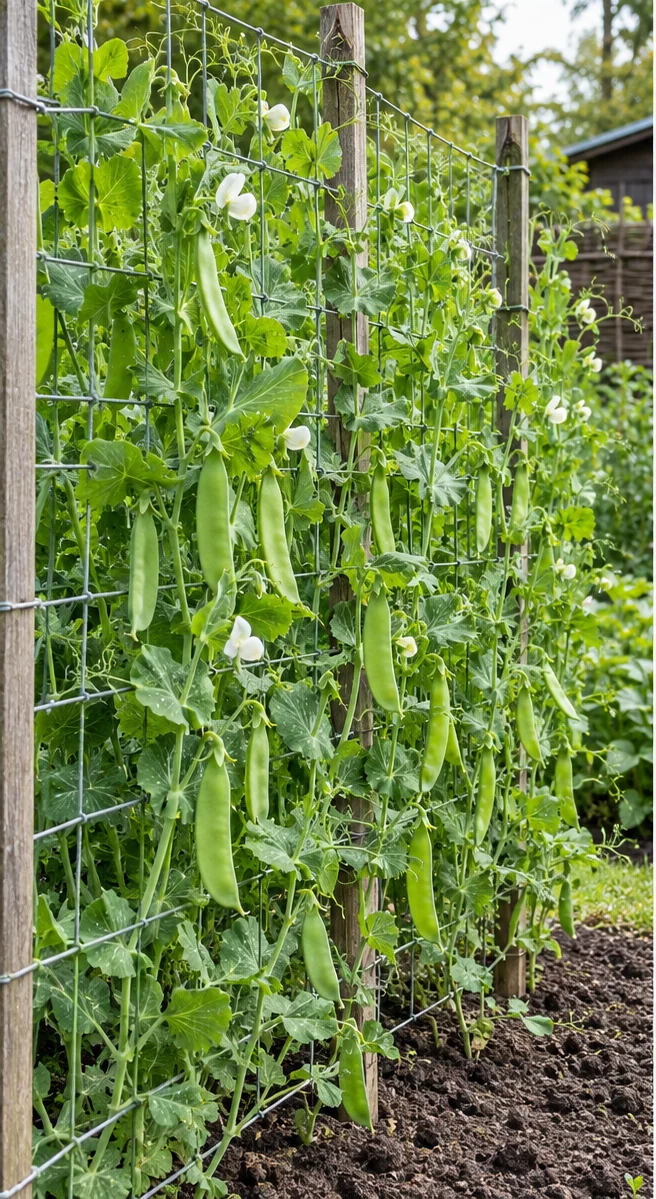
This image was created with AI from described plant characteristics and growing advice. It shows a possible situation and is not a photograph of a verified cultivar.
A tall row along sturdy mesh
Tall pod crops make an accessible green wall when the frame is installed on time.
- Install and anchor the frame before vines start searching.
- Sow or plant along the support and keep both sides accessible.
- Gently guide young tendrils towards the mesh and pick flat, young pods regularly.
For tall varieties and a bed where support can withstand wind.
Tick off your supplies →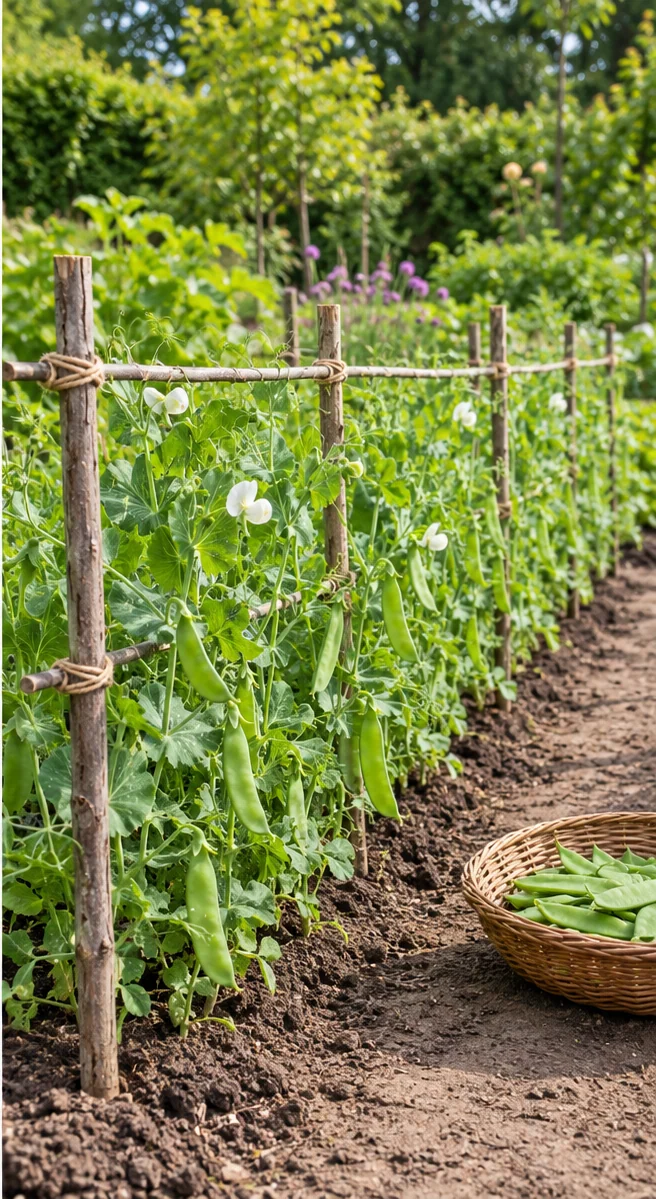
This image was created with AI from described plant characteristics and growing advice. It shows a possible situation and is not a photograph of a verified cultivar.
A low-growing variety with light support
Pea sticks hold a low row together without a tall structure.
- Choose a demonstrably low-growing mangetout variety.
- Place fine, branching pea sticks or low netting among young plants.
- Keep the path clear and check beneath outer leaves during harvesting.
For a small bed; low varieties may still need support against wind or fruit weight.
Tick off your supplies →Explore the varieties
See the confirmed differences. Characteristics without supporting evidence are left blank.
3 of 3 varieties
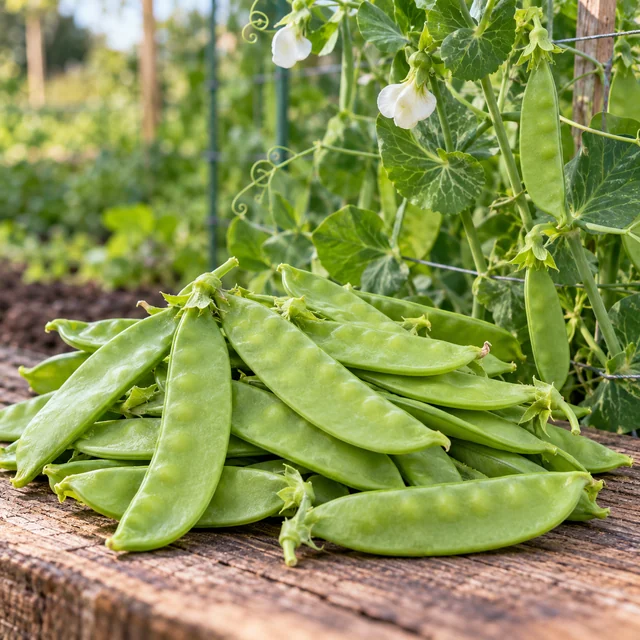
This image was created with AI from described plant characteristics and growing advice. It shows a possible situation and is not a photograph of a verified cultivar.
Ambrosia
- Variety type
- Mangetout with edible young podsNederland
- Growth habit
- Bush mangetout; training along mesh recommendedNederland
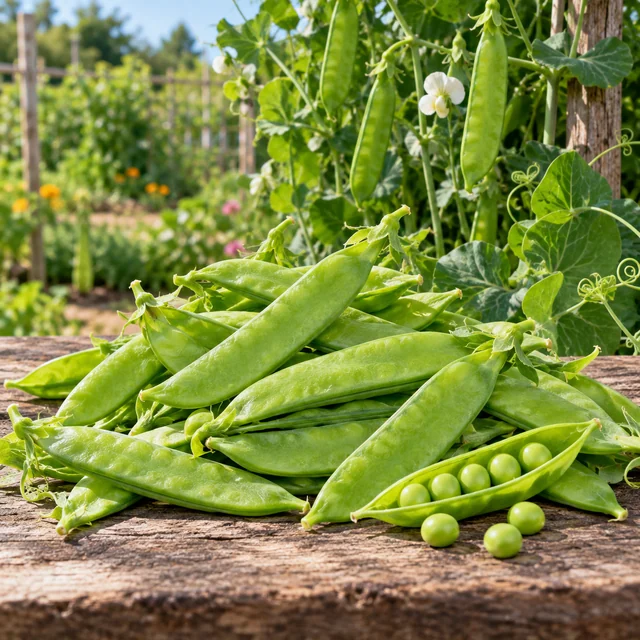
This image was created with AI from described plant characteristics and growing advice. It shows a possible situation and is not a photograph of a verified cultivar.
Delikata
- Texture
- Crisp podsVerenigd Koninkrijk
- Flavour
- Sweet podsVerenigd Koninkrijk
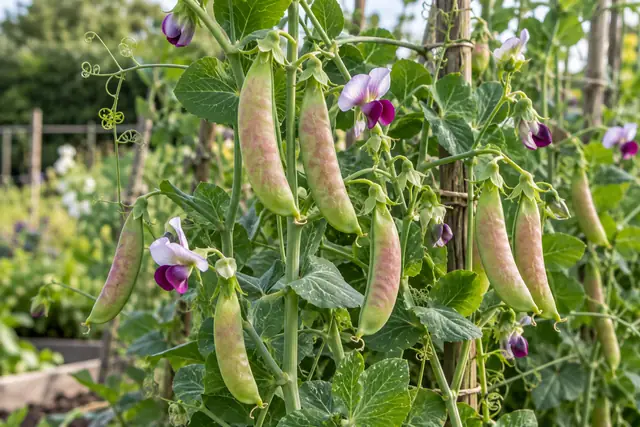
This image was created with AI from described plant characteristics and growing advice. It shows a possible situation and is not a photograph of a verified cultivar.
Spring Blush
- Main colour
- green pods with pink shadesGeneral source context
Choose two to four varieties to compare their source data side by side.
Choose by flavour, shape and use
Heraut: Climbing mangetout with tender young pods. Pick flat, young pods and cook them briefly whole for a vegetable dish. Add them late so that the tender pod wall and fresh flavour remain recognisable.
Young Heraut pods have a fresh, slightly sweet pea character with a tender wall. Their early use and climbing habit are more concrete than a separate cultivar aroma.
Norli: Dwarf mangetout with broad, flat pods. Cook the broad, flat pods briefly whole or slice diagonally for a quick vegetable dish. Their shape provides more wall surface than a plump sugar snap.
Norli is described as sweet and stringless. Young flat pods provide the delicate texture; even a stringless cultivar can become less tender with age.
Choose what you want to eat later first
Shelling peas are grown for peas inside; mangetout for tender flat pods. Sugar snaps have thicker, fleshy walls. Choose at seed stage. Check harvest type on the packet and label the row to follow development matching your choice.
An early start needs workable soil
Peas suit a cool growing season, but very wet, cold soil can make the start difficult. Inspect the spot before sowing: is the soil workable and does it drain excess water? A dry day above a saturated bed says little about conditions around the seed. Let soil condition count.
The first root deserves a gentle start
Whole pea seed germinates more reliably than damaged seed. Space gently and mark rows. Move raised young roots intact with root balls. First greenery starts emergence observation; it does not mean every missing plant is already lost.
Height determines the next part of the garden
Tall mangetout needs frames or mesh; dwarf varieties need limited support. Install before stems fall together. Consider your picking hand: can both sides be reached? Tendrils seeking grip show why variety profiles affect bed layout.
Follow growth around the roots
Root-zone moisture needs attention during dry periods, especially as pods develop. Water the soil when needed. Remove weeds gently without hoeing deeply beside the plants. Use the same round to look at new leaves and flowers; care and following the crop then naturally go together.
A pod is ready before the peas are large
For mangetout, seek developed, flat pods with barely swollen seeds. Check behind leaves. Waiting for plump rows of large peas serves another harvest aim. Handle and compare a few pods; this tells more than looking only at the largest.
The picking round continues into the kitchen
Chill mangetout promptly after harvest to retain quality. When cleaning, look for strings along the edges and remove if needed. Plan what to make with the fresh portion before picking more than you can use. A small, well-handled harvest can be nicer than a large basket left warm.
Regular picking keeps things moving
Walk rows regularly during harvest to avoid missing young pods. Note first and last pickings. Compare height, access and rhythm fitting your week. Future variety choices then start concretely in your garden beside general guidance.
Let the tendrils find their own hold
Mangetout climbs with fine tendrils. Guide young growth gently to netting or sticks; tight ties around each stem are usually unnecessary. Watch attachment to neighbouring plants. Early supports protect young roots better than adding poles to mature rows.
Investigate a poor start or affected row
With missing emergence, inspect seed, birds and compost condition. Peas start poorly in very wet cold soil. Later inspect leaves and pods and retain airflow. Heat can finish crops faster. Plan suitable cool rounds and compare local weather with variety advice.
What you need
Tick what you already have. The extras depend on how you grow.
0 of 6 ticked off
Your ticks are saved in this browser.
Discover and grow more
More background, sources and image information
SeedSteps editorial team · updated on 11 October 2026. The AI images illustrate species and practical growing situations; they do not prove an exact cultivar, observations from your own garden or yield.
Britse gewasadviezen worden gecombineerd met Nederlandse en Vlaamse informatie waar beschikbaar. Amerikaanse Extension-bronnen ondersteunen plantprincipes en herkenning; hun kalenderdata, lokale plaagdruk, bestrijdingsmiddelen en mestdoseringen worden niet rechtstreeks op Nederland of Vlaanderen toegepast. Vorst, bodemwarmte, standplaats en expliciete rasinformatie blijven de lokale controle. Commerciële bronnen onderbouwen uitsluitend benoemde ras- en plantkenmerken; zij zijn geen affiliate-aanbeveling.
- World Checklist of Vascular Plants — 4 juni 2026Royal Botanic Gardens, Kew · accessed 2026-10-07
- Rijspeul (-erwt) Heraut zadenFeggies · accessed 2026-10-11
- Stampeul (-erwt) Norli zadenFeggies · accessed 2026-10-11
- Spring Blush Peulen BiologischFeggies · accessed 2026-10-11
- Pois Gourmand À Rames Spring BlushAssociation Kokopelli · accessed 2026-10-11
- Erwten kweken — RHSRoyal Horticultural Society · accessed 2026-10-08
- Erwten en eetbare peulen: verzorgen en oogstenUniversity of Maryland Extension · accessed 2026-10-08
- Growing peas in home gardensUniversity of Minnesota Extension · accessed 2026-10-08
Supporting evidence by chapter: Choose by flavour, shape and use: Feggies, Feggies. Choose what you want to eat later first: University of Minnesota Extension. An early start needs workable soil: Royal Horticultural Society. The first root deserves a gentle start: University of Minnesota Extension, Royal Horticultural Society. Height determines the next part of the garden: Royal Horticultural Society. Follow growth around the roots: University of Maryland Extension. A pod is ready before the peas are large: University of Maryland Extension. The picking round continues into the kitchen: University of Minnesota Extension. Regular picking keeps things moving: Royal Horticultural Society. Let the tendrils find their own hold: Royal Horticultural Society, University of Minnesota Extension, University of Maryland Extension. Investigate a poor start or affected row: Royal Horticultural Society, University of Minnesota Extension, University of Maryland Extension.