
White Lady: een plek in jouw tuin
Ontdek White Lady en kies hoe je pronkboon wilt kweken. Hieronder staan de bevestigde rasgegevens en de praktische teeltgids voor deze groente.
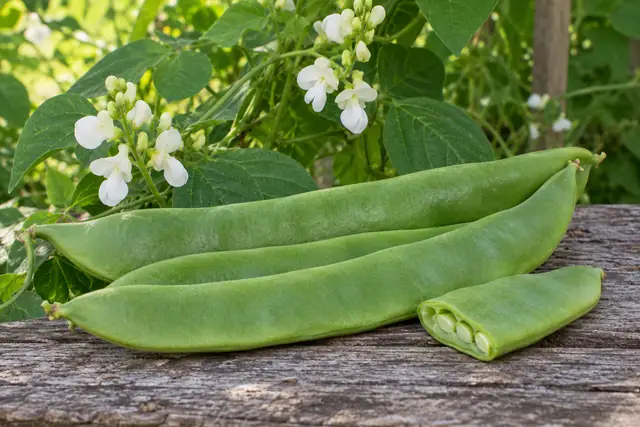
This image was created with AI from described plant characteristics and growing advice. It shows a possible situation and is not a photograph of a verified cultivar.
- Sowing
- April–May under cover; outdoors after frost in warm soil
- Harvesting
- Summer to early autumn, depending on sowing and variety
- Location
- Sun, shelter and consistent moisture
- Growth
- Usually climbing; check the variety’s growth habit
This growing advice helps you choose. Your variety, growth stage, weather and conditions in your space determine the actual timing.
Sowing under cover and raising seedlings
Start briefly under cover or sow directly · Runner bean
Late April–MayStart briefly under cover in individual pots. Ensure you can plant out into warmth after a few weeks.
- Germination and temperature
- Sow in warmth; cold, persistently wet soil increases the risk of failure.
- After emergence
- Give seedlings light immediately after emergence. A dark loft needs suitable grow lights; warmth alone is insufficient. Ventilate and keep the compost moist without saturating it.
- Pricking out and potting on
- Sow in individual pots or deep modules. Do not prick out bare-rooted; move the whole root ball before the roots become restricted.
- Hardening off and planting out
- Gradually acclimatise indoor-raised plants to sun, wind and outdoor temperatures; shelter them again on cold nights. Plant out after the last frost with the whole root ball; install supports beforehand for climbing types.
Prepare climbing support before planting out. Runner beans are also frost-sensitive as young plants.
Sources and use
Royal Horticultural Society · RHS — pronkboon kweken ↗Soort- of productgebonden bron; buitenlandse perioden zijn geen vaste Nederlandse zaaidatum.
University of Maryland Extension · UMD Extension — bonen kweken ↗Soort- of productgebonden bron; buitenlandse perioden zijn geen vaste Nederlandse zaaidatum.
Guideline periods for the Netherlands and Flanders. Check the variety, available light, soil and measured temperatures. Greenhouse heating does not guarantee enough winter light.
How to grow runner bean
The options below belong to the plant. From these, choose the method that suits your variety's growth habit.
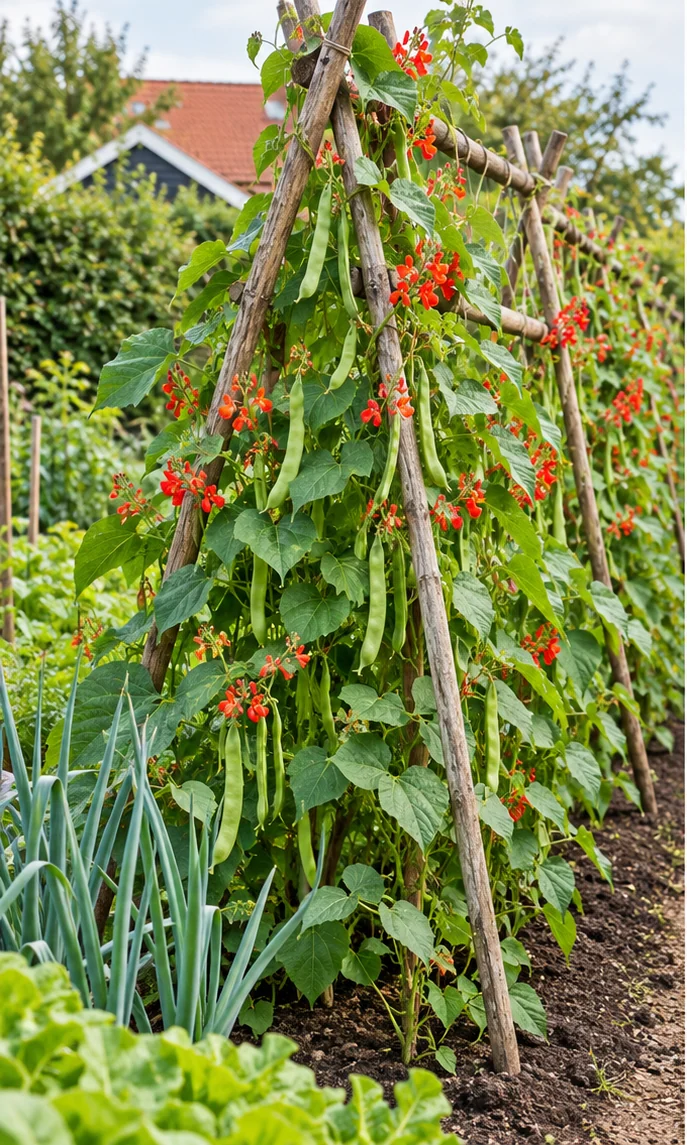
This image was created with AI from described plant characteristics and growing advice. It shows a possible situation and is not a photograph of a verified cultivar.
A green wall along a frame
Let climbing runner beans grow up a sturdy frame. This keeps pods off the ground and allows access from both sides. Position the frame so it does not shade low vegetables.
- Anchor the frame before sowing or planting out.
- Place plants by their own pole and gently help a loose young shoot get started.
- Check joints after wind and keep picking from both sides.
For anyone with a permanent, sunny position with vertical room.
Tick off your supplies →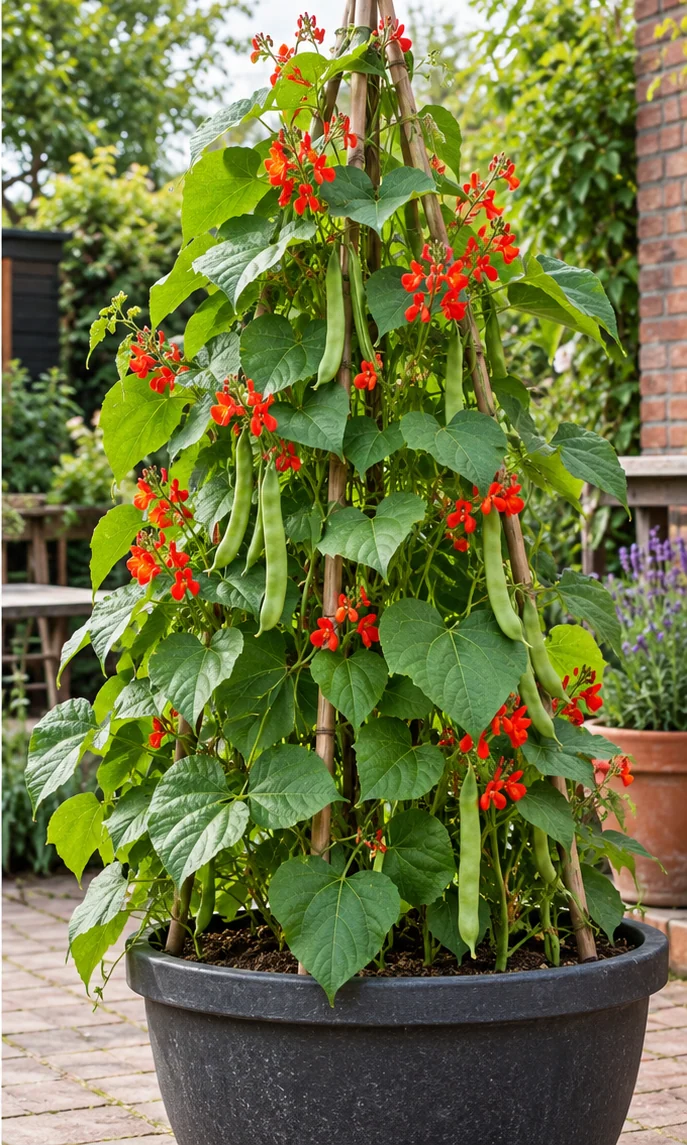
This image was created with AI from described plant characteristics and growing advice. It shows a possible situation and is not a photograph of a verified cultivar.
A teepee in a large container
A climbing type can also grow in a large, heavy tub. Watering is more demanding than in a bed, and the tub must support the mature frame in wind. Choose a confirmed dwarf variety for less space.
- Use a container with drainage holes and a stable teepee.
- Space plants around the base according to variety advice.
- Check root moisture daily in warm weather.
For a sheltered patio with water nearby.
Tick off your supplies →Runner bean is a distinct bean
Runner bean is not simply another name for French bean. It is usually grown for young, broad pods and flowers. Check whether the variety climbs when buying; a dwarf variety needs a different layout.
Make the root position comfortable
Runner beans appreciate moisture-retentive soil without waterlogging. Add mature compost to poor soil or use it as mulch. Seek shelter; a tall, heavily leafed support catches much wind.
Wait for warm soil
Start in separate pots in late spring, or sow directly outdoors when soil is warm and no frost is expected. A cold, wet start is no head start. Gradually accustom raised plants to outdoor air.
The frame first, then the plant
Build and anchor support before roots are in the bed. Put each plant beside a pole and water after planting. Guide a young shoot loosely towards support; do not clamp the stem.
Water becomes important at flowering
During flowering and pod formation, check soil beneath foliage. Water at the base in drought and optionally place mature compost around plants. A tub loses moisture sooner than open ground.
Many flowers, few pods?
Drought, heat and few pollinator visits can limit pod set. First maintain root moisture and allow pollinators to reach flowers. Extra feed is no automatic solution; observe whether newly formed pods stay on the plant.
Pick young and keep returning
Harvest before seeds show strongly and pods become tough. Check every few days, including behind leaves. Hold the plant with one hand when picking so you do not pull the whole support.
Look beneath the leaves too
Slugs eat young plants; black aphids can gather on growing points. Check small infestations early and remove badly damaged material. Encourage healthy growth and room. Avoid unchecked home remedies that may harm flowers or beneficial insects.
From frame to kitchen
Use young pods as fresh as possible and prepare by heating. Store temporarily cool; do not put a large supply in a sealed bag unrefrigerated. Let only selected healthy pods ripen fully if saving seed.
What you need
Tick what you already have. The extras depend on how you grow.
0 of 5 ticked off
Your ticks are saved in this browser.
Discover and grow more
More background, sources and image information
SeedSteps editorial team · updated on 11 October 2026. The AI images illustrate species and practical growing situations; they do not prove an exact cultivar, observations from your own garden or yield.
Britse gewasadviezen worden gecombineerd met Nederlandse en Vlaamse informatie waar beschikbaar. Amerikaanse Extension-bronnen ondersteunen plantprincipes en herkenning; hun kalenderdata, lokale plaagdruk, bestrijdingsmiddelen en mestdoseringen worden niet rechtstreeks op Nederland of Vlaanderen toegepast. Vorst, bodemwarmte, standplaats en expliciete rasinformatie blijven de lokale controle. Commerciële bronnen onderbouwen uitsluitend benoemde ras- en plantkenmerken; zij zijn geen affiliate-aanbeveling.
- World Checklist of Vascular Plants — 4 juni 2026Royal Botanic Gardens, Kew · accessed 2026-10-07
- Common catalogue of varieties of vegetable species — 27 januari 2023Europese Commissie · accessed 2026-10-07
- RHS — pronkboon kwekenRoyal Horticultural Society · accessed 2026-10-10
- UMD Extension — bonen kwekenUniversity of Maryland Extension · accessed 2026-10-10
Supporting evidence by chapter: Runner bean is a distinct bean: Royal Horticultural Society, University of Maryland Extension. Make the root position comfortable: Royal Horticultural Society, University of Maryland Extension. Wait for warm soil: Royal Horticultural Society, University of Maryland Extension. The frame first, then the plant: Royal Horticultural Society, University of Maryland Extension. Water becomes important at flowering: Royal Horticultural Society, University of Maryland Extension. Many flowers, few pods?: Royal Horticultural Society, University of Maryland Extension. Pick young and keep returning: Royal Horticultural Society, University of Maryland Extension. Look beneath the leaves too: Royal Horticultural Society, University of Maryland Extension. From frame to kitchen: Royal Horticultural Society, University of Maryland Extension.