
Flat-podded beans: broad pods on a frame or low bush
Broad, flat pods make flat-podded beans recognisable among other beans. A climbing variety forms a green screen; a dwarf variety fits more easily in an open bed. Choose that growth habit before buying seeds.
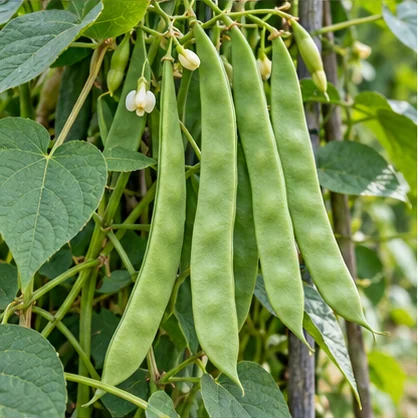
This image was created with AI from described plant characteristics and growing advice. It shows a possible situation and is not a photograph of a verified cultivar.
- Sowing
- Late spring to early summer, after frost, in warm soil
- Harvesting
- Summer; pick pods young
- Location
- Sun and shelter
- Support
- Required for climbing cultivars
This growing advice helps you choose. Your variety, growth stage, weather and conditions in your space determine the actual timing.
Sowing under cover and raising seedlings
Start briefly under cover or sow directly · Flat-podded bean
Late April–MayStart briefly under cover in individual pots. Ensure you can plant out into warmth after a few weeks.
- Germination and temperature
- Sow in warmth; cold, persistently wet soil increases the risk of failure.
- After emergence
- Give seedlings light immediately after emergence. A dark loft needs suitable grow lights; warmth alone is insufficient. Ventilate and keep the compost moist without saturating it.
- Pricking out and potting on
- Sow in individual pots or deep modules. Do not prick out bare-rooted; move the whole root ball before the roots become restricted.
- Hardening off and planting out
- Gradually acclimatise indoor-raised plants to sun, wind and outdoor temperatures; shelter them again on cold nights. Plant out after the last frost with the whole root ball; install supports beforehand for climbing types.
Do not start outdoor plants months too early. Beans grow quickly and do not tolerate frost.
Sources and use
Royal Horticultural Society · RHS — boon kweken ↗Soort- of productgebonden bron; buitenlandse perioden zijn geen vaste Nederlandse zaaidatum.
University of Minnesota Extension · UMN Extension — boon in de moestuin ↗Soort- of productgebonden bron; buitenlandse perioden zijn geen vaste Nederlandse zaaidatum.
Guideline periods for the Netherlands and Flanders. Check the variety, available light, soil and measured temperatures. Greenhouse heating does not guarantee enough winter light.
A different flavour, a different harvest.
Choose by more than the name. Discover how these varieties and crop types taste, what you can use them for and what growing them involves.
8 of 8 choices · 7 named varieties
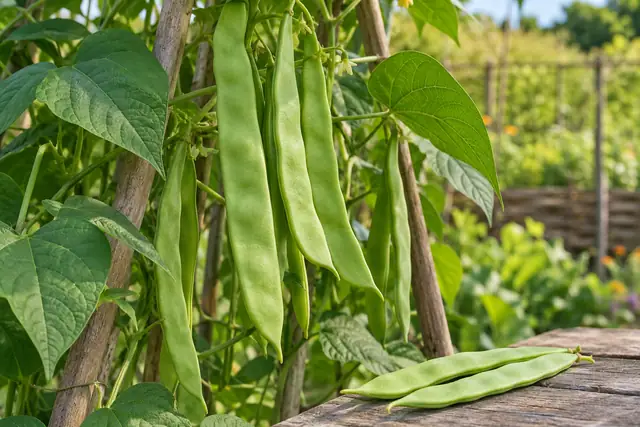
This image was created with AI from described plant characteristics and growing advice. It shows a possible situation and is not a photograph of a verified cultivar.
Helda
Green, climbing flat-podded bean for a teepee or bean frame.
Choose Helda for vertical garden space and a classic flat-podded French bean harvest. A sturdy wigwam also creates a recognisable green form in the vegetable garden.
Flavour, kitchen and growing
How does it taste?
Helda has the mild bean character of cooked flat beans. The broad pod calls for a different approach to cutting than a slender French bean; picking young determines the tender bite.
This flavour description applies to the crop; there is no separate tasting result for this variety.In the kitchen
Slice young pods into diagonal strips and cook thoroughly. Use fresh portions or blanch some using a suitable method for freezer storage.
A space in the garden
Put canes in place before sowing and sow in warm soil after frost. Guide young vines towards the support and protect seedlings from slug damage.
Harvesting
Harvest young before the seeds make the wall bulge strongly. Pick regularly at different heights so that hidden, older pods do not remain behind.
Read the source notes →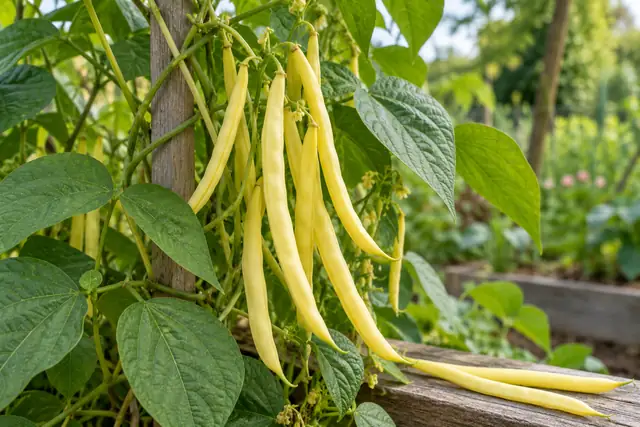
This image was created with AI from described plant characteristics and growing advice. It shows a possible situation and is not a photograph of a verified cultivar.
Sunshine
Long, thin yellow pods on a climber.
Choose Sunshine for yellow colour on a tall bean support. The source mentions thin pods up to about eighteen centimetres; your own trial picking determines the best kitchen size.
Flavour, kitchen and growing
How does it taste?
Sunshine has a mild cooked-bean character. The slender yellow pod is the documented difference; butter bean does not imply a buttery fat content or fixed flavour score.
This flavour description applies to the crop; there is no separate tasting result for this variety.In the kitchen
Cook young yellow pods whole and serve with fresh herbs. You can cut longer ones in half without slicing them into strips like broad flat beans.
A space in the garden
Put sturdy climbing supports in place beforehand and sow in warm soil after frost. Guide the first vines and water in dry weather around flowering and pod development.
Harvesting
Harvest while the pods are tender and the seeds small. Check above and below the support several times a week for a succession of young portions.
Read the source notes →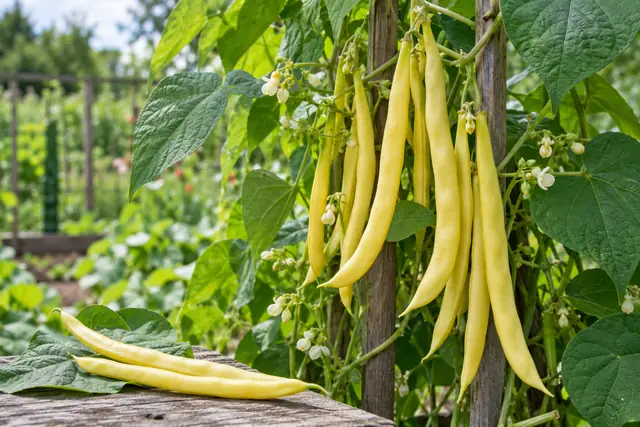
This image was created with AI from described plant characteristics and growing advice. It shows a possible situation and is not a photograph of a verified cultivar.
Neckargold
Long, yellow, fleshy pods on a climbing bean.
Choose Neckargold for yellow climbing beans with a fleshy pod wall. Along a tall support, you can harvest a different colour and texture from thin green French beans.
Flavour, kitchen and growing
How does it taste?
The fleshy yellow pod gives a mild bean character after thorough cooking. The source describes no proven sweetness difference from other yellow climbing beans.
This flavour description applies to the crop; there is no separate tasting result for this variety.In the kitchen
Cook young pods whole or cut into equal pieces for a vegetable dish. Use little strongly flavoured sauce at the first tasting to experience the fleshy texture.
A space in the garden
Sow after frost in warm soil around sturdy climbing supports. Allow good airflow between plants and water the root zone during prolonged dry weather.
Harvesting
Pick before strong seed swelling and keep checking regularly. A stringless description does not mean very old pods stay tender indefinitely.
Read the source notes →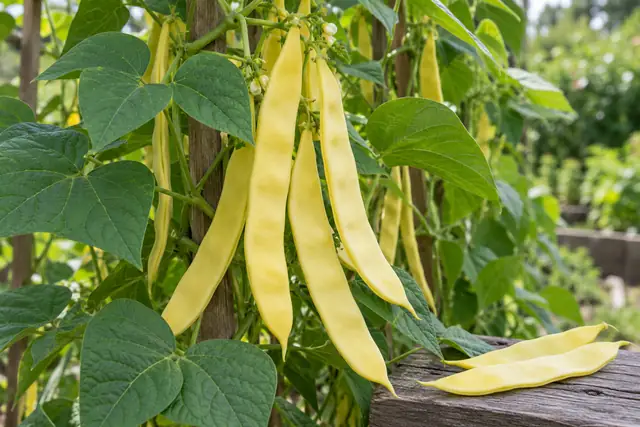
This image was created with AI from described plant characteristics and growing advice. It shows a possible situation and is not a photograph of a verified cultivar.
Golden Gate
Yellow, broad, flat pods on a climber.
Choose Golden Gate for a yellow alternative to broad, green flat-podded beans. The supplier describes it as a Sabre type, but a distinct yellow selection retains its own name.
Flavour, kitchen and growing
How does it taste?
Golden Gate has a mild cooked-bean character with a broad pod wall. The yellow colour and flat shape are more concrete than a separate cultivar-specific flavour note.
This flavour description applies to the crop; there is no separate tasting result for this variety.In the kitchen
Cut young pods into diagonal strips and cook thoroughly. A mix with green flat beans gives two colours; prepare pieces of equal width for an even bite.
A space in the garden
Put poles or mesh in place beforehand and sow in warm soil after frost. During dry weather at flowering and pod formation, provide enough water to keep the wall tender.
Harvesting
Harvest young, flat pods before seeds become distinctly large. Pick across the whole support and use hidden, older pods separately if they are already coarser.
Read the source notes →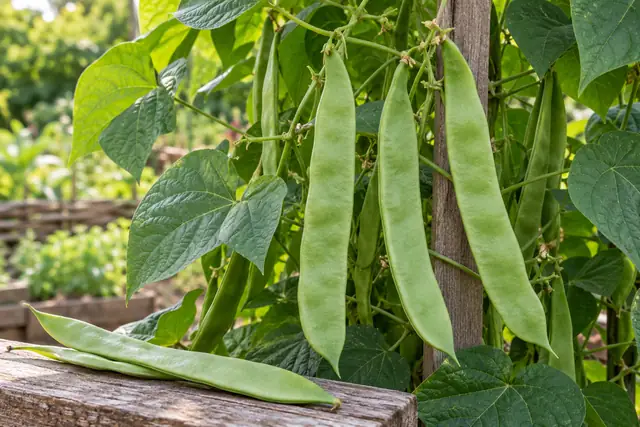
This image was created with AI from described plant characteristics and growing advice. It shows a possible situation and is not a photograph of a verified cultivar.
Sabre
Green, flat-podded bean for strips or pieces.
Choose Sabre for a green, flat climbing bean clearly intended for slicing. The stringless description reduces preparation as long as you harvest young pods in good time.
Flavour, kitchen and growing
How does it taste?
Sabre has the gentle cooked character of slicing beans. The supplier mentions good flavour quality; no substantiated tasting difference from Helda or other green slicing beans is given.
This flavour description applies to the crop; there is no separate tasting result for this variety.In the kitchen
Slice young, flat pods diagonally for a warm dish or into equal pieces for a vegetable pan. Cooking makes the broad pod wall suitable for eating.
A space in the garden
Put sturdy climbing supports in place before sowing in warm soil. Keep vines accessible for picking and water at soil level during dry pod formation.
Harvesting
Harvest once the wall is tender and the pod well formed. Do not let the seeds become large for this kitchen use, and plan several pickings per week.
Read the source notes →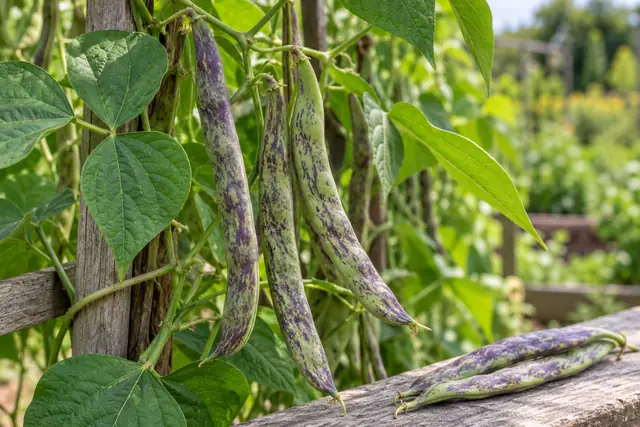
This image was created with AI from described plant characteristics and growing advice. It shows a possible situation and is not a photograph of a verified cultivar.
À Rames La Vigneronne
Climbing bean with green and purple marbled pods.
Choose Vigneronne for a vigorous, decorative bean support and a medium-late harvest. The same Sativa variety also appears as Weinländerin; the Dutch offering name Wijnmaakster refers to that name.
Flavour, kitchen and growing
How does it taste?
The source describes the pods as fleshy beans with a tender cooked bite. Purple marbling gives a visual difference, without a proven separate flavour score.
This flavour description applies to the crop; there is no separate tasting result for this variety.In the kitchen
Cook young pods whole or cut into equal pieces. Use some fresh and freeze some with a suitable blanching method; colour can change during cooking.
A space in the garden
Put strong climbing supports in place beforehand and sow in warm soil after frost. This medium-late type needs a sufficiently long season; abundant leaves make airy space important.
Harvesting
Pick young pods before the wall becomes coarser. The source mentions final lengths around twenty to twenty-five centimetres; do not automatically wait for maximum length if seeking tenderness.
Also listed as: Wijnmaakster, Weinländerin, Vigneronne.
Read the source notes →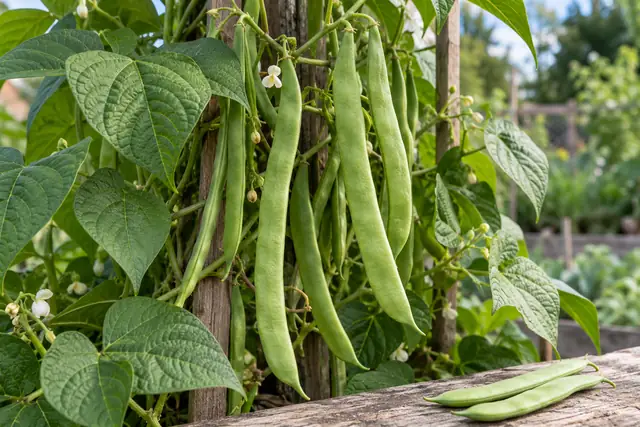
This image was created with AI from described plant characteristics and growing advice. It shows a possible situation and is not a photograph of a verified cultivar.
Neckarkönigin
Early climber with long, green, fleshy pods.
Choose this variety for an early green climbing bean harvest. The long pods offer a different kitchen idea from the broad, flat shape of a classic slicing bean.
Flavour, kitchen and growing
How does it taste?
Neckarkönigin is described as having a soft, melting pod texture. This gives a specific tasting direction; better flavour than all other green climbing beans is not established.
This flavour description applies to the crop; there is no separate tasting result for this variety.In the kitchen
Cook young, long pods whole or halved for a vegetable platter. Simple herb butter keeps the fleshy bite recognisable without a heavy sauce.
A space in the garden
Put climbing supports in place beforehand and sow in warm soil after frost. Leave enough space around the growing base and water during prolonged dry flowering or pod filling.
Harvesting
Harvest young pods regularly before seeds become strongly visible. Check new pods at the top of the support too, so that an early harvest does not grow old.
Read the source notes →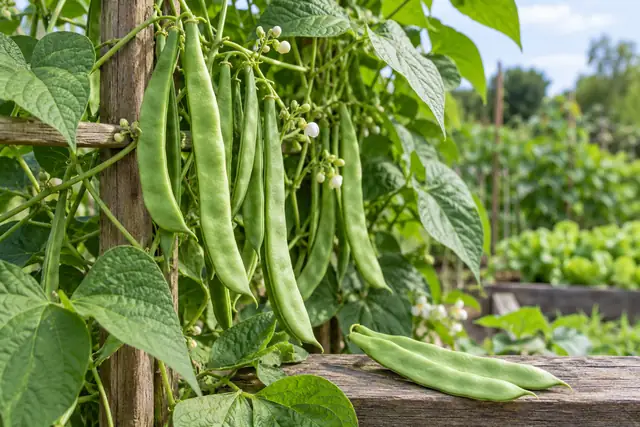
This image was created with AI from described plant characteristics and growing advice. It shows a possible situation and is not a photograph of a verified cultivar.
Uit Mechelen
An early offering with slightly flattened green pods.
Choose this regional offering for an early green climbing harvest with slightly flattened pods. The thinner pod wall gives a different bite from distinctly fleshy climbing-bean types.
Flavour, kitchen and growing
How does it taste?
The source describes a thinner pod wall. Once thoroughly cooked, this gives a different bite from a distinctly fleshy pod; a separate flavour note is not established.
This flavour description applies to the crop; there is no separate tasting result for this variety.In the kitchen
Cut the medium-sized, slightly flat pods into pieces or cook young ones whole. Adapt preparation to the thinner wall without cooking longer than necessary.
A space in the garden
Put a sturdy support in place and sow in warm soil after the last frost. Guide the vines and keep pods accessible for a timely young harvest.
Harvesting
Pick before strong seed swelling and assess the wall using a trial pod. Check regularly, as early development can also quickly produce older pods.
Read the source notes →Choose your way to grow
From a garden bed to a suitable pot or support: give your plant a place that suits your garden and the care you can provide.
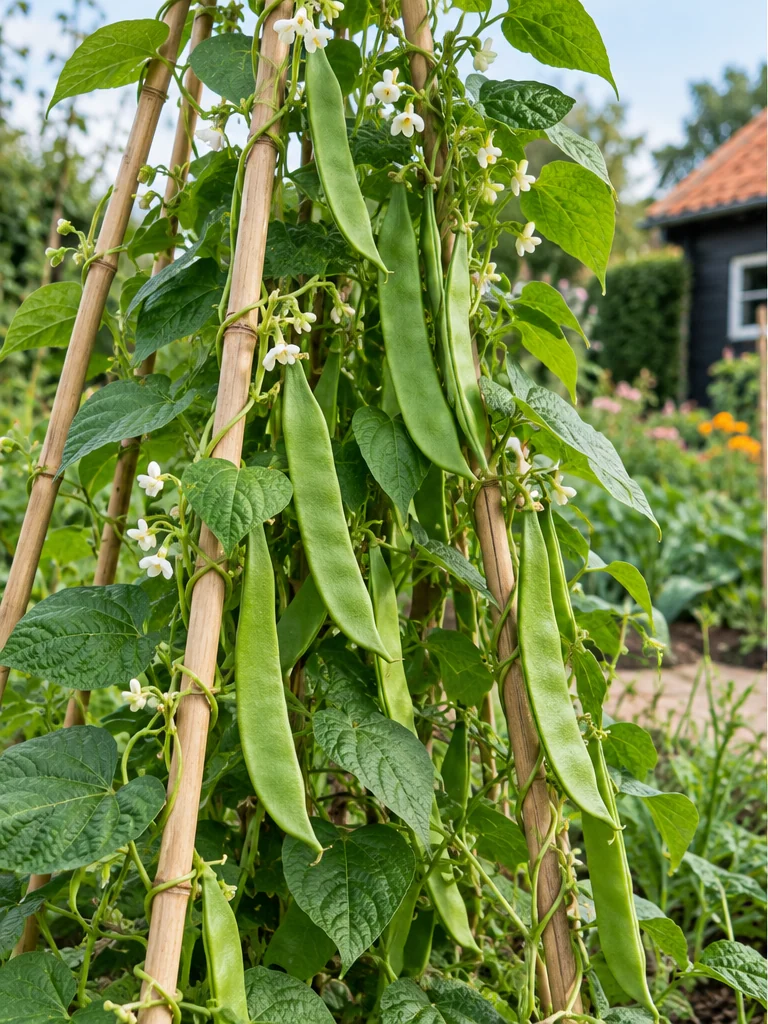
This image was created with AI from described plant characteristics and growing advice. It shows a possible situation and is not a photograph of a verified cultivar.
Broad pods along a bean frame
A climbing slicing bean makes use of height. Space supports widely enough to search among leaves and keep a path accessible for regular picking.
- Build a sturdy row of poles or a teepee.
- Sow or plant at each pole according to variety advice.
- Let young tendrils grow around their support and check the structure.
For a vegetable bed with space above ground.
Tick off your supplies →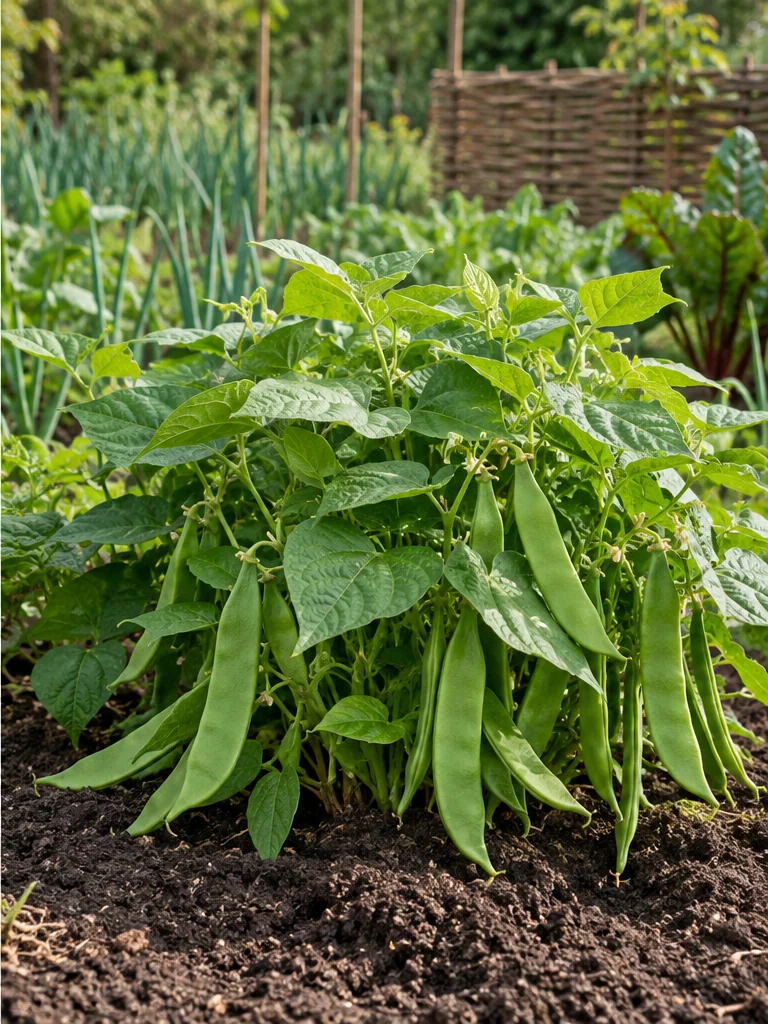
This image was created with AI from described plant characteristics and growing advice. It shows a possible situation and is not a photograph of a verified cultivar.
A low row without a tall frame
A confirmed dwarf slicing-bean variety is useful if you want to use little height. Look closer to the ground for pods and plan another small sowing to spread harvesting.
- Choose an explicitly low-growing variety.
- Sow in warm soil and maintain the specified spacing.
- Pick carefully beneath leaves without pulling plants over.
For anyone wanting a manageable bed without a tall structure.
Tick off your supplies →Consider shape and growth habit
Slicing bean mainly describes the broad pod and kitchen use. It does not automatically mean the plant climbs. Look for climbing or bush type on the packaging and adapt support, spacing and position.
Give the row sun and air
Choose moisture-retentive soil that drains after rain. Keep space around supports clear; shade and dense leaves make picking harder. Improve poor soil with mature compost without heavy nitrogen feeding.
Sow when outdoor conditions allow
Beans are frost-sensitive. Sow outdoors only when soil is warm enough and no frost is expected. Start in separate pots if desired, but prevent roots becoming restricted while outdoor planting conditions remain unsuitable.
Move with an intact rootball
Gradually acclimatise indoor-raised plants to wind and sun. Keep the root ball intact and plant beside support already in place. Water and check for sturdy growth over following days rather than immediately adding extra feed.
Feel beneath the leaves
During flowering and pod formation, do not let plants dry for long. Feel soil and water directly at the base. Wet leaves do not necessarily mean roots have enough moisture; much rain can remain on foliage.
Harvest before seeds swell
Pick broad pods while young and flexible. Do not wait solely for maximum length: size varies by variety. Hold the vine and detach the pod gently. Regular harvesting keeps the plant productive longer.
Rotten seed or damaged young plants
Cold, wet soil can give poor emergence. Sow another small batch once conditions improve. For holes in young leaves, check slugs and other feeding signs. Prevent damaged plants disappearing beneath dense weeds.
Use the pods fresh
Store the harvest briefly and cool, and heat beans before eating. For freezing, use a reliable preservation schedule. Seed saving is a different harvest: let some healthy pods mature completely dry and note the variety.
Build a support you can keep reaching
For climbing slicing beans, angle poles into a sturdy A-frame or a teepee with a secure top and cross-brace where needed. Keep the base accessible for water and the outside for picking. Stems wind around poles themselves; a soft loose tie only helps a detached shoot. A dwarf slicing bean cultivar does not need this tall structure. Give it a clear path for bending without trampling plants.
What you need
Tick what you already have. The extras depend on how you grow.
0 of 5 ticked off
Your ticks are saved in this browser.
Discover and grow more
More background, sources and image information
SeedSteps editorial team · updated on 11 October 2026. The AI images illustrate species and practical growing situations; they do not prove an exact cultivar, observations from your own garden or yield.
Britse gewasadviezen worden gecombineerd met Nederlandse en Vlaamse informatie waar beschikbaar. Amerikaanse Extension-bronnen ondersteunen plantprincipes en herkenning; hun kalenderdata, lokale plaagdruk, bestrijdingsmiddelen en mestdoseringen worden niet rechtstreeks op Nederland of Vlaanderen toegepast. Vorst, bodemwarmte, standplaats en expliciete rasinformatie blijven de lokale controle. Commerciële bronnen onderbouwen uitsluitend benoemde ras- en plantkenmerken; zij zijn geen affiliate-aanbeveling.
- World Checklist of Vascular Plants — 4 juni 2026Royal Botanic Gardens, Kew · accessed 2026-10-07
- Organic Stoksnijboon Helda zadenFeggies · accessed 2026-10-11
- Stokslaboon À Rames La Vigneronne BiologischFeggies · accessed 2026-10-11
- Stokslaboon (prinsessenboon) boter "Sunshine"Feggies · accessed 2026-10-11
- Stokslaboon (prinsessenboon) NeckargoldFeggies · accessed 2026-10-11
- Stokslaboon (snijboon) boter Golden GateFeggies · accessed 2026-10-11
- Stokslaboon (snijboon) SabreFeggies · accessed 2026-10-11
- Stokslaboon uit MechelenFeggies · accessed 2026-10-11
- Stokslaboon vroege NeckarköniginFeggies · accessed 2026-10-11
- Stokslaboon Wijnmaakster zaden biologischFeggies · accessed 2026-10-11
- Vigneronne (Weinländerin): StangenbohneSativa Rheinau · accessed 2026-10-11
- RHS — boon kwekenRoyal Horticultural Society · accessed 2026-10-10
- UMD Extension — bonen kwekenUniversity of Maryland Extension · accessed 2026-10-10
- UMN Extension — boon in de moestuinUniversity of Minnesota Extension · accessed 2026-10-10
Supporting evidence by chapter: Consider shape and growth habit: Royal Horticultural Society, University of Minnesota Extension, University of Maryland Extension. Give the row sun and air: Royal Horticultural Society, University of Minnesota Extension, University of Maryland Extension. Sow when outdoor conditions allow: Royal Horticultural Society, University of Minnesota Extension, University of Maryland Extension. Move with an intact rootball: Royal Horticultural Society, University of Minnesota Extension, University of Maryland Extension. Feel beneath the leaves: Royal Horticultural Society, University of Minnesota Extension, University of Maryland Extension. Harvest before seeds swell: Royal Horticultural Society, University of Minnesota Extension, University of Maryland Extension. Rotten seed or damaged young plants: Royal Horticultural Society, University of Minnesota Extension, University of Maryland Extension. Use the pods fresh: Royal Horticultural Society, University of Minnesota Extension, University of Maryland Extension. Build a support you can keep reaching: Royal Horticultural Society, University of Minnesota Extension.