
Charlotte: discover its flavour and how to grow it
Even, elongated tubers with firm, yellow flesh. Choose Charlotte for fresh potatoes and a stored supply. The evenly sized, medium tubers are easy to portion without cutting into a very large potato for a small dish.
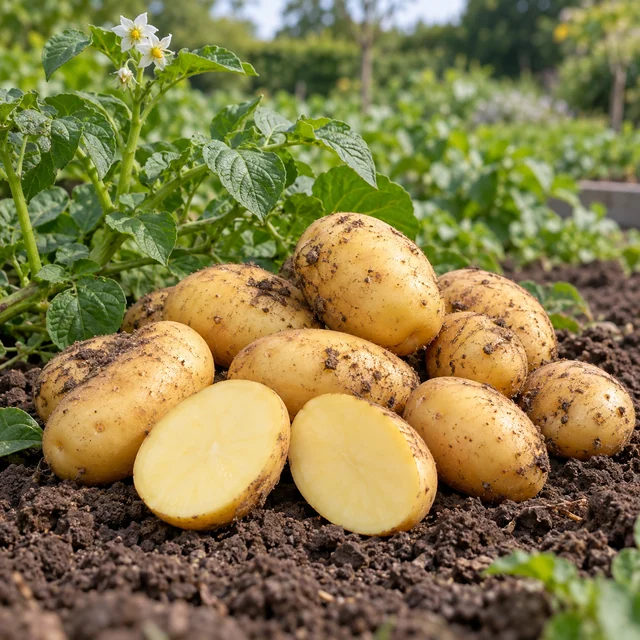
This image was created with AI from described plant characteristics and growing advice. It shows a possible situation and is not a photograph of a verified cultivar.
- Start
- Healthy planting tubers
- Plant tubers or sets
- Spring, when soil is workable
- Location
- Sun and good drainage
- Harvest
- Summer to autumn, depending on cultivar type
This growing advice helps you choose. Your variety, growth stage, weather and conditions in your space determine the actual timing.
Sowing under cover and raising seedlings
Chit and plant seed potatoes · Potato
February–MarchChit healthy seed potatoes in cool, bright conditions; not warm and dark.
- Germination and temperature
- Chit planting stock in bright, cool, frost-free conditions. Outdoors, wait for suitable soil.
- After emergence
- Keep sprouts short and sturdy with enough light. Protect young foliage from frost.
- Pricking out and potting on
- Do not prick out: this is a tuber crop grown from planting stock.
- Hardening off and planting out
- Plant early and later types according to the seed potato schedule. Protect young shoots from night frost.
Planting stock is not seed. A dark, warm loft produces long, vulnerable sprouts.
Sources and use
RHS · aardappels ↗Britse teeltrichtlijn voor een gematigd klimaat; de genoemde perioden zijn richtlijnen voor Nederland en Vlaanderen.
Feggies · Aardappel Charlotte 1KG Biologisch (bewaarvariëteit) ↗Nederlandse producent of teeltbron; de rasinstructie blijft leidend.
Feggies · Aardappel Cherie 1KG Biologisch (vroege variëteit) ↗Nederlandse producent of teeltbron; de rasinstructie blijft leidend.
Guideline periods for the Netherlands and Flanders. Check the variety, available light, soil and measured temperatures. Greenhouse heating does not guarantee enough winter light.
What makes Charlotte different?
- Harvest period
- Second early (British classification)United Kingdom
- Fruit shape
- oblong
- Height
- 0.5–1 mUnited Kingdom
- Suitable for pots
- YesUnited Kingdom
- Shape
- OvalUnited Kingdom
- Texture
- WaxyUnited Kingdom
The source context and any limitations are in the background information at the bottom.
Compare with another varietyFlavour and kitchen
Charlotte's waxy character is the main reason to choose it: it keeps a pleasantly firm bite. The potato flavour comes through well in a simple preparation with a little butter.
This flavour description applies to the crop; a separate taste test for this variety is not supported by evidence.Boil small tubers in their skins, let them steam dry and slice for salad. The even shape helps slices cook uniformly in a gratin.
Why choose it? Choose Charlotte for fresh potatoes and a stored supply. The evenly sized, medium tubers are easy to portion without cutting into a very large potato for a small dish.
How to grow potato
The options below belong to the plant. From these, choose the method that suits your variety's growth habit.
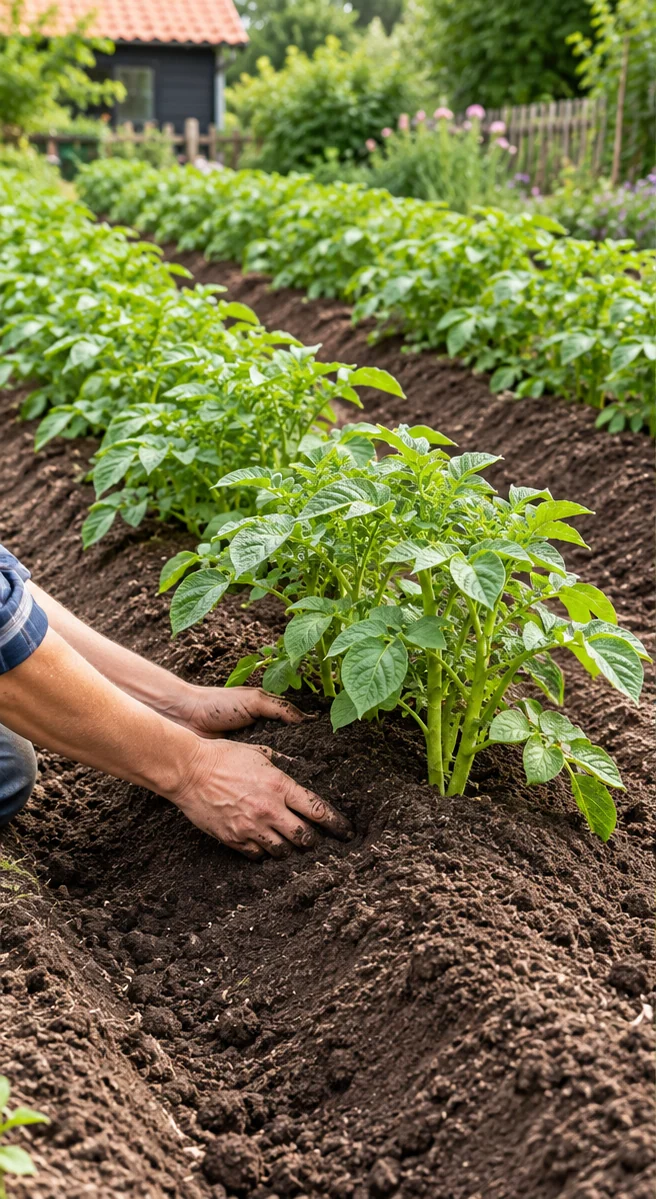
This image was created with AI from described plant characteristics and growing advice. It shows a possible situation and is not a photograph of a verified cultivar.
Rows with potato ridges
Earthing up keeps developing tubers dark and makes the bed manageable.
- Plant with shoots upwards at the variety's spacing.
- Draw loose soil around stems during growth.
- Check for exposed tubers after rain.
For a vegetable garden with room for rows.
Tick off your supplies →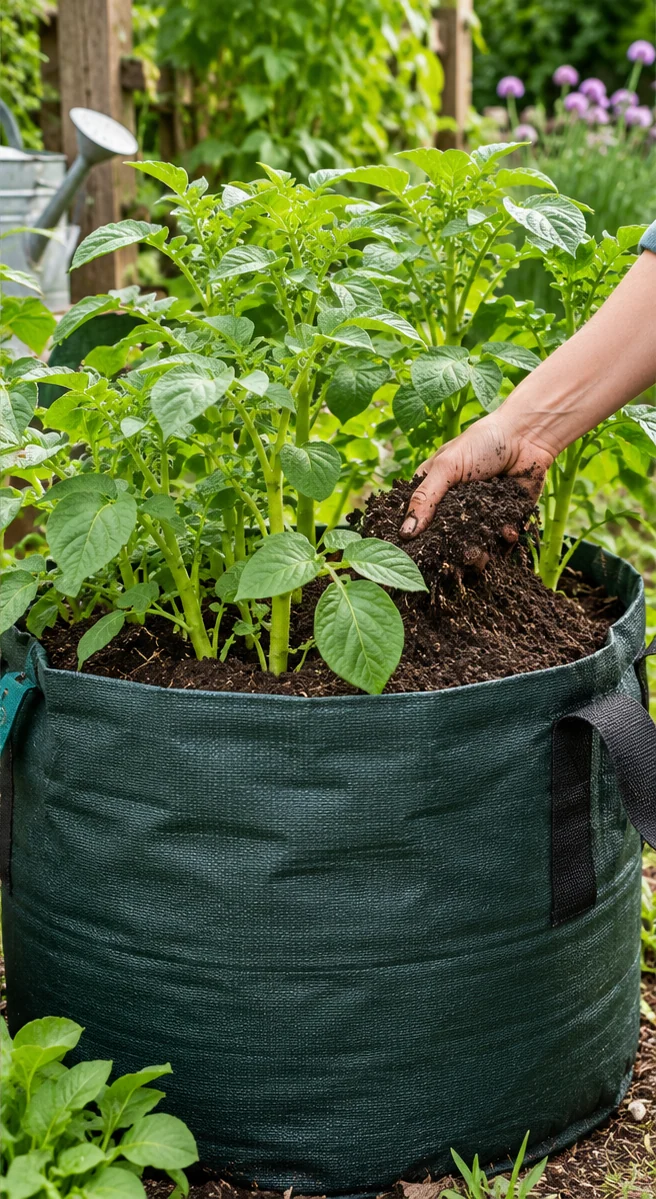
This image was created with AI from described plant characteristics and growing advice. It shows a possible situation and is not a photograph of a verified cultivar.
An early harvest in a growing bag
A large bag makes harvesting accessible on a sunny patio.
- Use a bag or pot with unrestricted drainage.
- Start with a soil layer and healthy seed potatoes.
- Top up soil during growth and check moisture.
For a small garden or patio; check water regularly.
Tick off your supplies →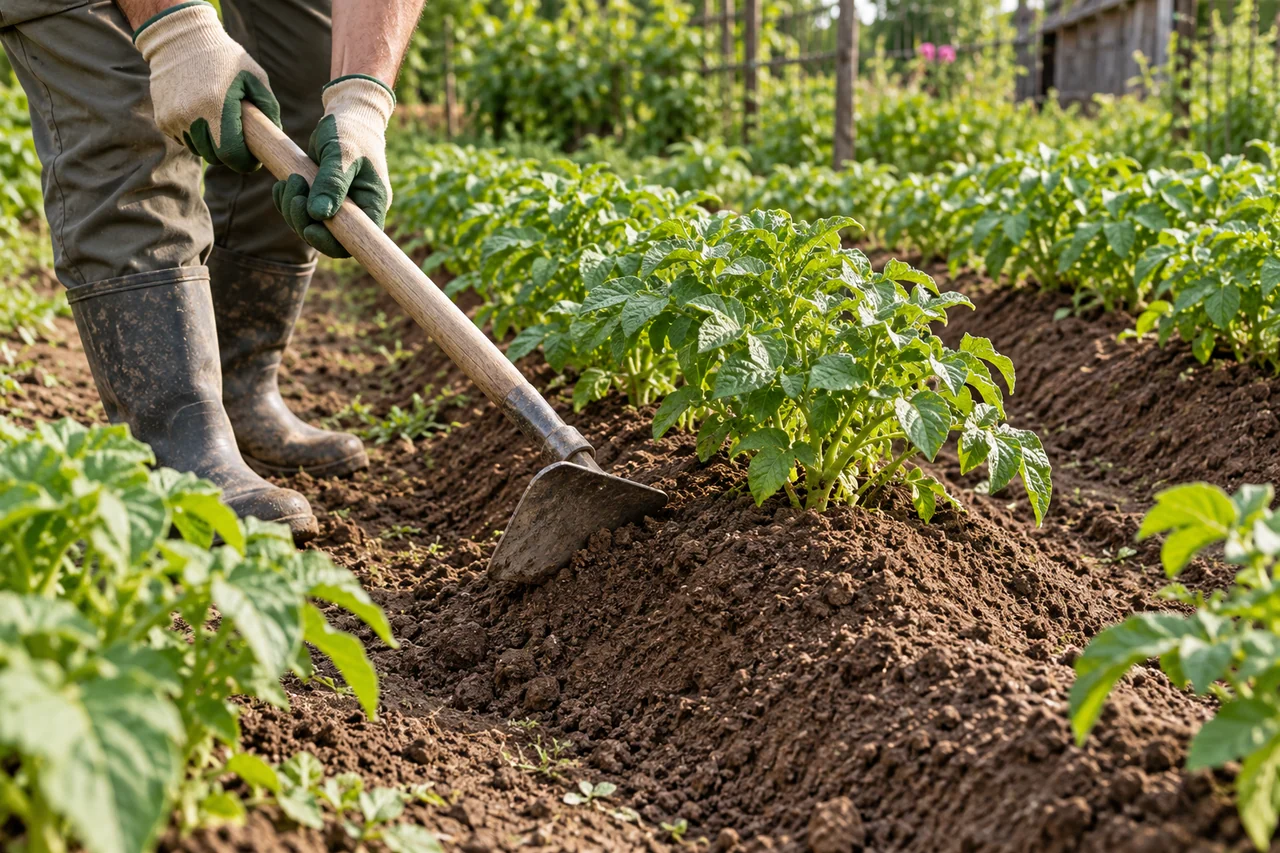
This image was created with AI from described plant characteristics and growing advice. It shows a possible situation and is not a photograph of a verified cultivar.
Draw soil towards the row
Keep growing tubers covered with soil. Add soil around the stems and leave enough foliage above ground to keep growing.
View your supplies →Why grow Charlotte?
Even, elongated tubers with firm, yellow flesh.
Choose Charlotte for fresh potatoes and a stored supply. The evenly sized, medium tubers are easy to portion without cutting into a very large potato for a small dish.
How this choice tastes
Charlotte's waxy character is the main reason to choose it: it keeps a pleasantly firm bite. The potato flavour comes through well in a simple preparation with a little butter.
From harvest to kitchen
Boil small tubers in their skins, let them steam dry and slice for salad. The even shape helps slices cook uniformly in a gratin.
What needs attention when growing
Chit seed potatoes in light, cool conditions. Plant in warmed, loose soil and earth up during growth, keeping shallow-formed tubers covered too.
Lift a trial plant for the first meal. For storage, let skin harden after foliage dies and keep undamaged, dry tubers dark and airy.
Choose by flavour, shape and use
Charlotte: Regular, elongated tubers with firm yellow flesh. Boil small tubers in their skins, let them steam dry and slice for salad. The even shape helps slices cook uniformly in a gratin.
Charlotte's waxy character is the main reason to choose it: it keeps a pleasantly firm bite. The potato flavour comes through well in a simple preparation with a little butter.
Cherie: An early potato with red skin and firm flesh. Wash first-early tubers carefully and boil or steam them in their skins. Leave the red skin visible in a warm potato salad with dill and a light dressing.
Cherie combines potato flavour with a firm texture after cooking. The red exterior is mainly a visible difference and does not prove extra sweetness.
Désirée: Red skin, yellow flesh and a more floury result when cooked. Make mash or roast pieces in the oven with a little oil. Let boiled tubers steam dry thoroughly before mashing so the mash is less watery.
Désirée stands out for its floury texture. Cooked tubers break up more readily than a firm salad potato, making a light mash work well.
Etincelle: A mid-early cultivar with regular tubers and thin skin. Try the harvest as chips or mash. Prepare a small portion first to see how tubers from your garden behave when boiled and fried.
Etincelle has creamy flesh, with a softer mouthfeel than a distinctly waxy potato. No separate nutty or extra-sweet flavour is substantiated.
Choose early potatoes or storage
An early cultivar gives young tubers while summer is still in full swing. A maincrop cultivar occupies the bed longer and may provide a storage harvest after full maturity. Consider cooking properties: waxy, floury or suitable for frying. One clearly identified cultivar per row keeps the later harvest recognisable.
Start with healthy tubers
Use clearly identified, certified seed potatoes. Eating potatoes may be treated to inhibit sprouting and are not a reliable alternative. For early cultivars, you can encourage short, sturdy shoots in a light, cool, frost-free place. Long white shoots from a dark cupboard break easily; handle seed potatoes carefully.
Find a sunny, accessible bed
Potatoes need light and soil that drains excess water. Remove persistent weeds before planting and improve poor soil with mature compost. Leave room between rows for earthing up and harvesting. Grow potatoes in a different position each year to give soil problems less opportunity.
Plant when the soil is suitable
Spring is the usual planting window, but cold, wet soil is a reason to wait. Plant seed tubers with the shoots pointing upwards; follow the spacing for your cultivar. Protect emerging foliage when frost is forecast. A sunny afternoon tells you little about the temperature of the coming night.
Keep tubers out of the light
During growth, draw loose soil around the stems without damaging young foliage. In a container, gradually add potting compost. Check the ridge after heavy rain: exposed potatoes turn green. Do not eat green tubers. The bed does not need perfectly straight lines, but it does need sufficient cover.
Pay particular attention during tuber formation
In dry weather, feel below the top layer and water when the root zone dries out. A pot can stay dry in rain because the leaves cover its opening. Use feed in containers according to the product label. Extra fertiliser is not automatically needed in rich open ground; plentiful foliage does not guarantee plentiful tubers.
Spots on foliage: look straight away
Rapidly spreading brown patches in humid weather may fit potato blight. Check stems and neighbouring plants too and consult a specific disease guide. Diseased foliage requires a different approach from normal yellowing at the end of growing. Do not store affected tubers with healthy ones or use them as seed potatoes.
Lift carefully and sort straight away
For early potatoes, check a plant or a few tubers first; flowers alone do not reliably measure yield. Let storage varieties mature. Insert a fork well beside the plant and continue searching by hand. Store only sound, dry tubers in a cool, dark, frost-free place; use young or damaged potatoes first.
What you need
Tick what you already have. The extras depend on how you grow.
0 of 6 ticked off
Your ticks are saved in this browser.
Discover and grow more
More background, sources and image information
SeedSteps editorial team · updated on 11 October 2026. The AI images illustrate species and practical growing situations; they do not prove an exact cultivar, observations from your own garden or yield.
Britse gewasadviezen worden gecombineerd met Nederlandse en Vlaamse informatie waar beschikbaar. Amerikaanse Extension-bronnen ondersteunen plantprincipes en herkenning; hun kalenderdata, lokale plaagdruk, bestrijdingsmiddelen en mestdoseringen worden niet rechtstreeks op Nederland of Vlaanderen toegepast. Vorst, bodemwarmte, standplaats en expliciete rasinformatie blijven de lokale controle. Commerciële bronnen onderbouwen uitsluitend benoemde ras- en plantkenmerken; zij zijn geen affiliate-aanbeveling.
- World Checklist of Vascular Plants — 4 juni 2026Royal Botanic Gardens, Kew · accessed 2026-10-07
- Aardappel Charlotte 1KG Biologisch (bewaarvariëteit)Feggies · accessed 2026-10-11
- RHS-rasprofiel: CharlotteRoyal Horticultural Society · accessed 2026-10-08
- Aardappel Cherie 1KG Biologisch (vroege variëteit)Feggies · accessed 2026-10-11
- Aardappel Désirée 1KG Biologisch (bewaarvariëteit)Feggies · accessed 2026-10-11
- Aardappel Etincelle 1KG (halfvroege variëteit) BiologischFeggies · accessed 2026-10-11
- Aardappel Jeannette 1KG Biologisch (vroege variëteit)Feggies · accessed 2026-10-11
- Aardappel Nicola 1KG Biologisch (vroege/bewaarvariëteit)Feggies · accessed 2026-10-11
- Aardappel Truffette 1KG Biologisch (bewaarvariëteit)Feggies · accessed 2026-10-11
- Aardappel Valéry 1KG Biologisch (halfvroege variëteit)Feggies · accessed 2026-10-11
- Solanum tuberosum 'Pink Fir Apple'Royal Horticultural Society · accessed 2026-10-11
- How to grow potatoesRoyal Horticultural Society · accessed 2026-10-11
- Pomme de terre RatteSemailles · accessed 2026-10-11
- Pomme de terre VitelotteLa Ferme de Sainte Marthe · accessed 2026-10-11
- Aardappelen kweken — RHSRoyal Horticultural Society · accessed 2026-10-08
- Growing potatoes in home gardensUniversity of Minnesota Extension · accessed 2026-10-08
Supporting evidence by chapter: Why grow Charlotte?: Feggies. How this choice tastes: Feggies. From harvest to kitchen: Feggies. What needs attention when growing: Feggies. Choose by flavour, shape and use: Feggies, Feggies, Feggies, Feggies. Choose early potatoes or storage: Royal Horticultural Society, University of Minnesota Extension. Start with healthy tubers: Royal Horticultural Society, University of Minnesota Extension. Find a sunny, accessible bed: Royal Horticultural Society, University of Minnesota Extension. Plant when the soil is suitable: Royal Horticultural Society, University of Minnesota Extension. Keep tubers out of the light: Royal Horticultural Society, University of Minnesota Extension. Pay particular attention during tuber formation: Royal Horticultural Society, University of Minnesota Extension. Spots on foliage: look straight away: Royal Horticultural Society, University of Minnesota Extension. Lift carefully and sort straight away: Royal Horticultural Society, University of Minnesota Extension.
Harvest period: Second early (British classification) Rasspecifieke RHS-beschrijving in Britse omstandigheden. Geen plaatselijke oogstdatum, opbrengst- of maatgarantie. Royal Horticultural Society
Fruit shape: oblong Beschrijving van de genoemde rasbron; geen eigen tuinwaarneming. Feggies
Height: 0.5–1 m Rasspecifieke RHS-beschrijving in Britse omstandigheden. Geen plaatselijke oogstdatum, opbrengst- of maatgarantie. Royal Horticultural Society
Suitable for pots: Yes Rasspecifieke RHS-beschrijving in Britse omstandigheden. Geen plaatselijke oogstdatum, opbrengst- of maatgarantie. Royal Horticultural Society
Shape: Oval Rasspecifieke RHS-beschrijving in Britse omstandigheden. Geen plaatselijke oogstdatum, opbrengst- of maatgarantie. Royal Horticultural Society
Texture: Waxy Rasspecifieke RHS-beschrijving in Britse omstandigheden. Geen plaatselijke oogstdatum, opbrengst- of maatgarantie. Royal Horticultural Society