
Blauwschokker: discover its flavour and how to grow it
Climbing shelling pea with striking purple pods. Choose Blauwschokker for a decorative climber and shelled-pea harvest. Purple pods are easy to distinguish from green leaves while you try different ripening stages.
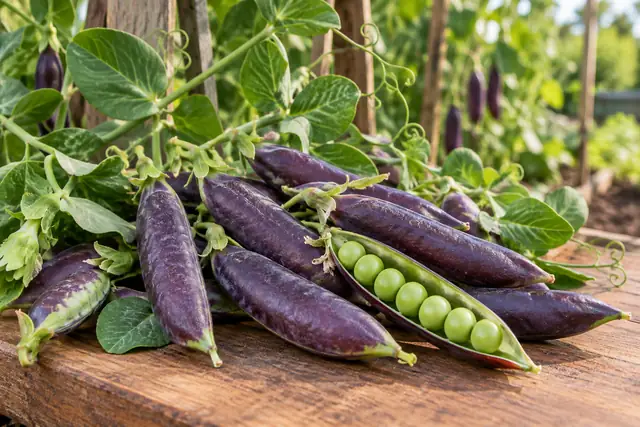
This image was created with AI from described plant characteristics and growing advice. It shows a possible situation and is not a photograph of a verified cultivar.
- Season
- Cool growing season
- Growth
- Low or tall, depending on cultivar
- Support
- Twiggy sticks or fine mesh
- Harvest
- Filled pea pods
This growing advice helps you choose. Your variety, growth stage, weather and conditions in your space determine the actual timing.
Sowing under cover and raising seedlings
Start under cover in cool conditions or sow directly · Pea
February–MarchStart under cover in cool, bright conditions; move to a suitable sheltered position after emergence.
- Germination and temperature
- A cool, bright growing space suits better than a hot loft. Do not sow in waterlogged, cold soil.
- After emergence
- Give seedlings light immediately after emergence. A dark loft needs suitable grow lights; warmth alone is insufficient. Ventilate and keep the compost moist without saturating it.
- Pricking out and potting on
- Use deep modules, pots or a seed gutter. Plant out with the whole root ball; do not pull the roots apart.
- Hardening off and planting out
- Gradually acclimatise indoor-raised plants to sun, wind and outdoor temperatures; shelter them again on cold nights. Plant out sturdy young plants once the soil is workable. Install pea sticks or a frame in good time.
Choose a suitable early or later cultivar. Avoid prolonged warm indoor propagation.
Sources and use
RHS · erwten en peulen ↗Britse teeltrichtlijn voor een gematigd klimaat; de genoemde perioden zijn richtlijnen voor Nederland en Vlaanderen.
Feggies · Doperwten kapucijners 'Blauwschokker' zaden Biologisch ↗Nederlandse producent of teeltbron; de rasinstructie blijft leidend.
Feggies · Rijsdopwert paarse peulen Blauwschokkers zaden (kapucijner) ↗Nederlandse producent of teeltbron; de rasinstructie blijft leidend.
Guideline periods for the Netherlands and Flanders. Check the variety, available light, soil and measured temperatures. Greenhouse heating does not guarantee enough winter light.
What makes Blauwschokker different?
- Growth habit
- climbing
- Main colour
- purple pods
The source context and any limitations are in the background information at the bottom.
Compare with another varietyFlavour and kitchen
Young shelled peas have the gentle character of peas; fully mature seeds need a different, firmer preparation. The purple pod mainly helps with identification at harvest.
This flavour description applies to the crop; a separate taste test for this variety is not supported by evidence.Shell the pods and briefly cook the young peas as a vegetable. The pod wall is not eaten; for a dried supply, let a separate portion mature fully.
Why choose it? Choose Blauwschokker for a decorative climber and shelled-pea harvest. Purple pods are easy to distinguish from green leaves while you try different ripening stages.
How to grow pea
The options below belong to the plant. From these, choose the method that suits your variety's growth habit.
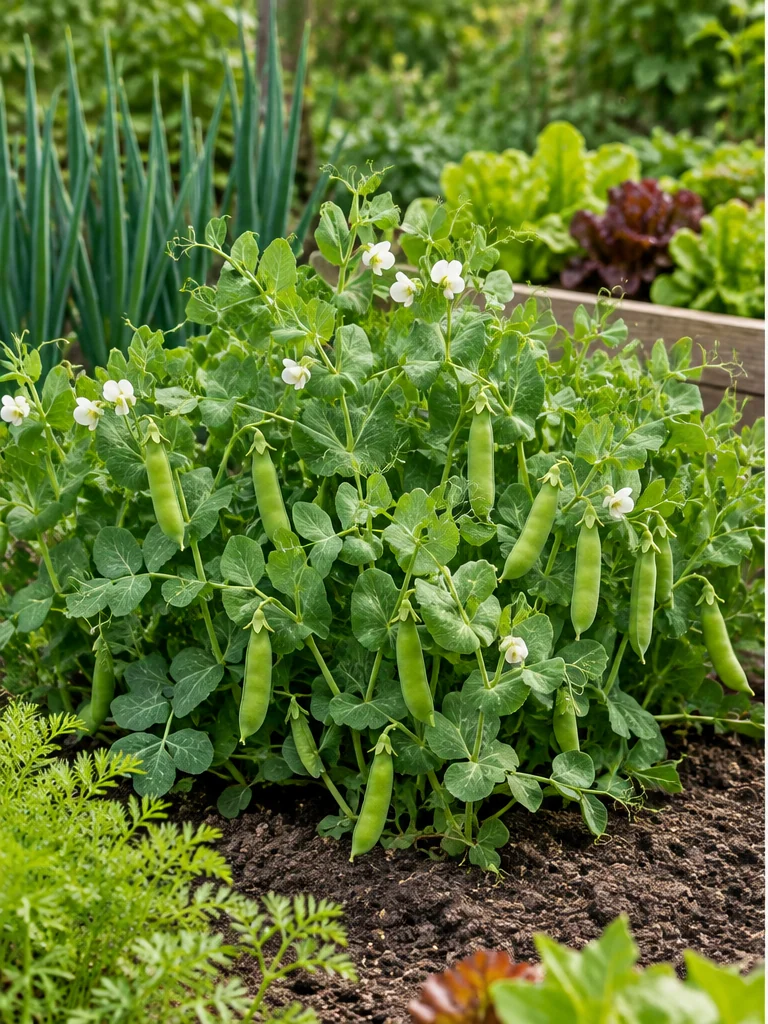
This image was created with AI from described plant characteristics and growing advice. It shows a possible situation and is not a photograph of a verified cultivar.
Low-growing peas with short support
Low plants remain accessible but can benefit from support.
- Sow in workable soil that is not waterlogged.
- Place short twigs along the row promptly.
- Pick filled pods before the seeds become coarse.
For a manageable early row.
Tick off your supplies →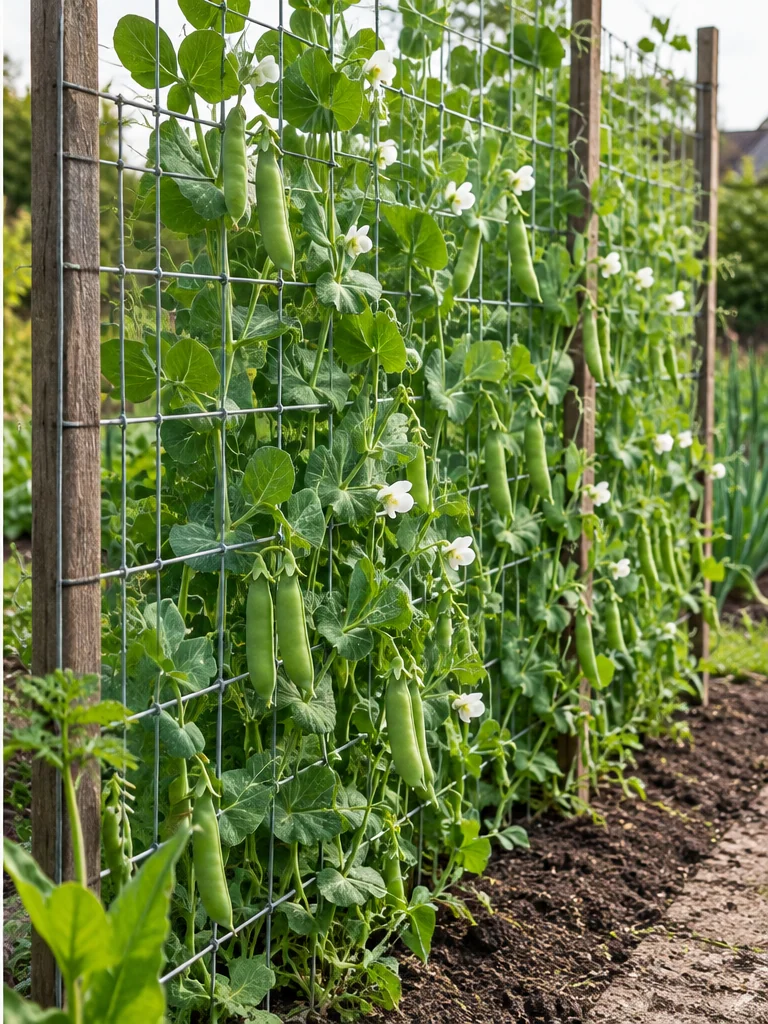
This image was created with AI from described plant characteristics and growing advice. It shows a possible situation and is not a photograph of a verified cultivar.
Tall peas along netting
Tendrils grip a sturdy, fine-meshed frame.
- Install the frame before shoots fall over.
- Guide the first growth carefully.
- Pick and check from both sides.
For vertical space and tall varieties.
Tick off your supplies →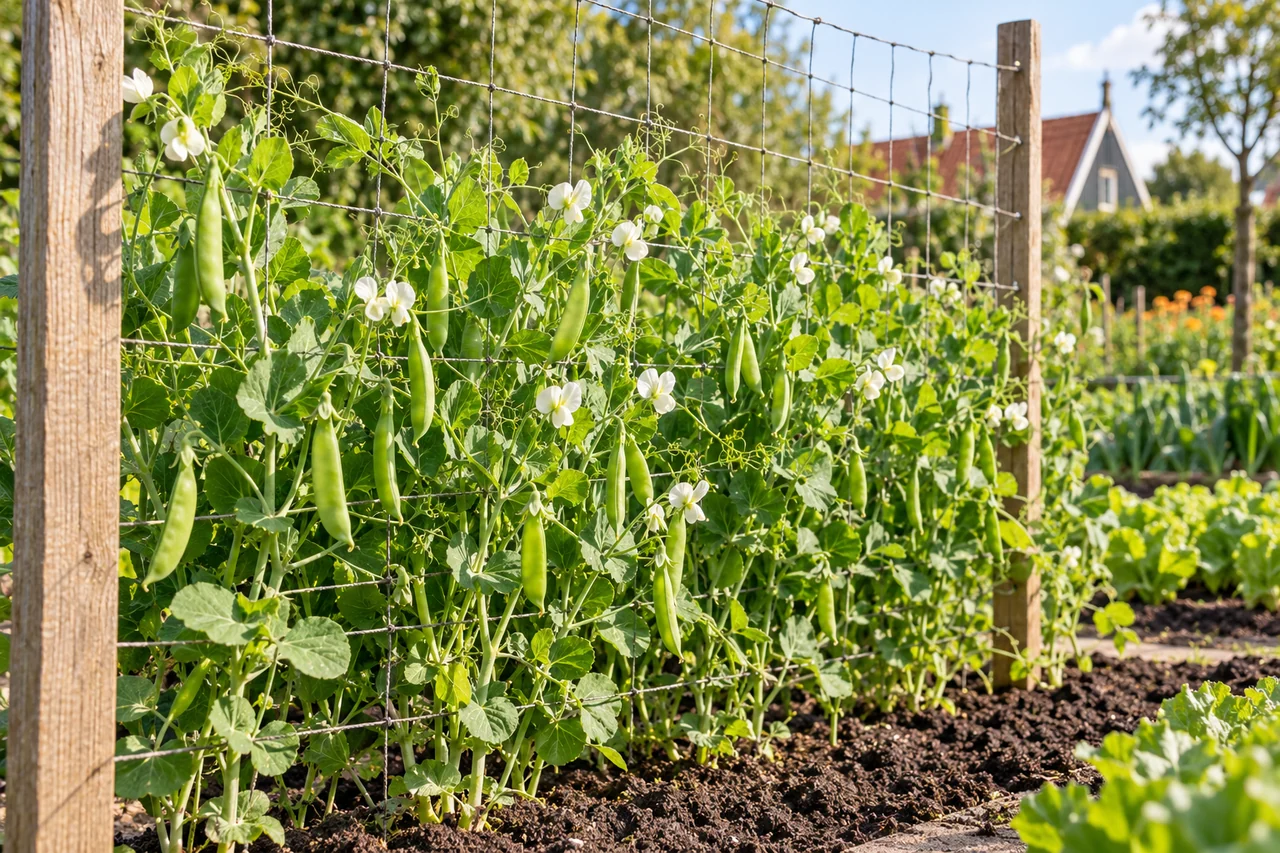
This image was created with AI from described plant characteristics and growing advice. It shows a possible situation and is not a photograph of a verified cultivar.
Fine tendrils find a hold on mesh
Stretch netting between sturdy posts before the plants start to fall over. Guide young shoots towards the support; the tendrils will grip the fine mesh themselves.
View your supplies →Why grow Blauwschokker?
Climbing shelling pea with striking purple pods.
Choose Blauwschokker for a decorative climber and shelled-pea harvest. Purple pods are easy to distinguish from green leaves while you try different ripening stages.
How this choice tastes
Young shelled peas have the gentle character of peas; fully mature seeds need a different, firmer preparation. The purple pod mainly helps with identification at harvest.
From harvest to kitchen
Shell the pods and briefly cook the young peas as a vegetable. The pod wall is not eaten; for a dried supply, let a separate portion mature fully.
What needs attention when growing
Sow in a cool spring in a free-draining bed and put sturdy mesh or pea sticks in place beforehand. Guide young vines and keep soil moist during pod filling.
Harvest for fresh beans when pods are clearly filled but still fresh. For drying, wait longer; the two purposes therefore have different harvest times.
Choose by flavour, shape and use
Blauwschokker: Climbing shelling pea with striking purple pods. Shell the pods and briefly cook the young peas as a vegetable. The pod wall is not eaten; for a dried supply, let a separate portion mature fully.
Young shelled peas have the gentle character of peas; fully mature seeds need a different, firmer preparation. The purple pod mainly helps with identification at harvest.
Karina: Dwarf shelling pea with straight dark green pods. Shell a portion just before cooking and cook briefly for risotto or a vegetable pan dish. Use the peas; their firmness also adds bite to a cooked pea meal.
Karina is described as sweet and firm. Fresh young peas retain that bite more clearly than a long-cooked or fully mature harvest.
Merveille de Kelvedon: Early dwarf shelling pea around fifty centimetres tall. Shell young, filled pods and briefly cook the peas with a little butter. Pair with potato in a simple meal to taste the pea’s own flavour.
The young seeds have the sweetish character of peas. Early, low growth is clearly supported; greater sweetness than other shelling peas has not been established.
Sima: Dwarf winter shelling pea for a possible early spring harvest. Briefly cook the small fresh peas for a spring dish. They suit a small portion alongside potato or mixed through rice, without using the pod wall.
Semailles describes the small peas as sweet. Shelling young gives a tender bite; the early harvest aim matters more here than an assumed flavour ranking.
Choose which pea you want to eat
Shelling peas are grown for seeds inside the pod. Mangetout are harvested flat and young; sugar snaps have a thicker edible wall. Choose the type you want. Short and tall shelling peas need different support, space and a distinct picking route through the bed.
A cool start with workable soil
Peas suit a cooler season, but not a persistently cold, waterlogged seedbed. Choose the cultivar’s growing window and assess the soil. A warm period can shorten the later harvest. A calendar helps planning but does not predict the same growing duration in every garden.
Keep young roots intact
Sow healthy seed at the packet depth and spacing. Direct sowing suits appropriate soil. Starting under cover can help where animals take a lot of seed, but move the young root ball intact. Do not pinch or pull the delicate stems when planting out.
Tendrils seek a fine foothold
Put supports in place before the shoots tumble together. Short cultivars can use twiggy sticks; tall plants need a sturdy frame. Tendrils grasp something thin. A smooth, thick post alone does not give every cultivar a good route upwards.
Let the roots work undisturbed
Choose sun and good drainage and remove persistent weeds before starting. Heavy nitrogen feeding is not standard practice; assess the existing soil. Work shallowly around plants during growth. Keep a path clear for moisture checks and picking.
Follow flowering and pod filling
During drought, check below the soil surface, especially around flowering and young pods. Water the soil when needed. Look for loose shoots at the same time. A full green wall can hide dry soil at its base; check there too.
Yellow leaves can have several causes
Heat can quickly age a late crop. Wet soil, root problems or pests and diseases can also cause yellowing. Examine the pattern, soil and growth stage before treating. White fungal patches or feeding damage call for targeted identification. Keep monitoring the row after an intervention.
Pick filled seeds while they are tender
Feel a pod and open a test one. Harvest before the peas become hard and mealy. Support the stalk and work steadily from both sides. Chill and process the harvest promptly. Freshness matters; leaving a full basket somewhere warm does not help quality.
Pick regularly during the harvest stage, including behind the leaves. An old, full pod can go unnoticed while the visible side looks young. Record the first and last picking dates to fit the next early round to your available time.
What you need
Tick what you already have. The extras depend on how you grow.
0 of 6 ticked off
Your ticks are saved in this browser.
Discover and grow more
More background, sources and image information
SeedSteps editorial team · updated on 11 October 2026. The AI images illustrate species and practical growing situations; they do not prove an exact cultivar, observations from your own garden or yield.
Britse gewasadviezen worden gecombineerd met Nederlandse en Vlaamse informatie waar beschikbaar. Amerikaanse Extension-bronnen ondersteunen plantprincipes en herkenning; hun kalenderdata, lokale plaagdruk, bestrijdingsmiddelen en mestdoseringen worden niet rechtstreeks op Nederland of Vlaanderen toegepast. Vorst, bodemwarmte, standplaats en expliciete rasinformatie blijven de lokale controle. Commerciële bronnen onderbouwen uitsluitend benoemde ras- en plantkenmerken; zij zijn geen affiliate-aanbeveling.
- World Checklist of Vascular Plants — 4 juni 2026Royal Botanic Gardens, Kew · accessed 2026-10-07
- Common catalogue of varieties of vegetable species — 27 januari 2023Europese Commissie · accessed 2026-10-07
- Doperwten kapucijners 'Blauwschokker' zaden BiologischFeggies · accessed 2026-10-11
- Rijsdopwert paarse peulen Blauwschokkers zaden (kapucijner)Feggies · accessed 2026-10-11
- Pois Merveille de Kelvedon — ook Kelvedon WonderGraineterie A. Ducrettet · accessed 2026-10-11
- Organic doperwt Karina zadenFeggies · accessed 2026-10-11
- Stamdoperwt Merveille de Kelvedon zadenFeggies · accessed 2026-10-11
- Stamdoperwten (Winter-) Sima zadenFeggies · accessed 2026-10-11
- Pois à Écosser Nain KarinaAssociation Kokopelli · accessed 2026-10-11
- Merveille de Kelvedon / Kelvedon Wonder Dwarf PeaLa Ferme de Sainte Marthe · accessed 2026-10-11
- Pois nain à écosser d’hiver SimaSemailles · accessed 2026-10-11
- Erwten kweken — RHSRoyal Horticultural Society · accessed 2026-10-08
- Erwten en eetbare peulen: verzorgen en oogstenUniversity of Maryland Extension · accessed 2026-10-08
- Growing peas in home gardensUniversity of Minnesota Extension · accessed 2026-10-08
Supporting evidence by chapter: Why grow Blauwschokker?: Feggies, Feggies. How this choice tastes: Feggies, Feggies. From harvest to kitchen: Feggies, Feggies. What needs attention when growing: Feggies, Feggies. Choose by flavour, shape and use: Feggies, Feggies, Feggies, Association Kokopelli, Feggies, Graineterie A. Ducrettet, La Ferme de Sainte Marthe, Feggies, Semailles. Choose which pea you want to eat: Royal Horticultural Society, University of Minnesota Extension, University of Maryland Extension. A cool start with workable soil: Royal Horticultural Society, University of Minnesota Extension, University of Maryland Extension. Keep young roots intact: Royal Horticultural Society, University of Minnesota Extension, University of Maryland Extension. Tendrils seek a fine foothold: Royal Horticultural Society, University of Minnesota Extension, University of Maryland Extension. Let the roots work undisturbed: Royal Horticultural Society, University of Minnesota Extension, University of Maryland Extension. Follow flowering and pod filling: Royal Horticultural Society, University of Minnesota Extension, University of Maryland Extension. Yellow leaves can have several causes: Royal Horticultural Society, University of Minnesota Extension, University of Maryland Extension. Pick filled seeds while they are tender: Royal Horticultural Society, University of Minnesota Extension, University of Maryland Extension.
Growth habit: climbing Beschrijving van de genoemde rasbron; geen eigen tuinwaarneming. Feggies, Feggies
Main colour: purple pods Beschrijving van de genoemde rasbron; geen eigen tuinwaarneming. Feggies, Feggies