
Growing pattypans: small saucer fruits from a summer bed
Pattypan is a summer squash with a distinctive scalloped shape. A young, small fruit is often the tastiest introduction. A bush variety needs a spacious bed or a generous pot; do not let the harvest grow too large out of sight beneath the broad leaves.
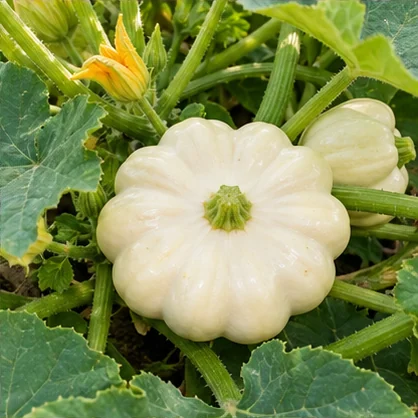
This image was created with AI from described plant characteristics and growing advice. It shows a possible situation and is not a photograph of a verified cultivar.
- Type
- Summer squash; harvest young
- Plant out
- After frost, in warmed soil
- Harvest rhythm
- Check regularly beneath the leaves
This growing advice helps you choose. Your variety, growth stage, weather and conditions in your space determine the actual timing.
Sowing under cover and raising seedlings
Start under cover in warmth · Pattypan
April–early MayStart indoors in warmth and reserve enough bright space for raising plants.
- Germination and temperature
- Germinate in warmth, around 18–21 °C; avoid cold, waterlogged seed compost.
- After emergence
- Give seedlings light immediately after emergence. A dark loft needs suitable grow lights; warmth alone is insufficient. Ventilate and keep the compost moist without saturating it.
- Pricking out and potting on
- Sow in individual pots or deep modules. Do not prick out bare-rooted; move the whole root ball before the roots become restricted.
- Hardening off and planting out
- Gradually acclimatise indoor-raised plants to sun, wind and outdoor temperatures; shelter them again on cold nights. After the last frost and hardening off, usually late May–June, with the root ball intact.
These plants grow quickly. Do not start in February if you cannot plant out until late May.
Sources and use
RHS · courgette ↗Britse teeltrichtlijn voor een gematigd klimaat; de genoemde perioden zijn richtlijnen voor Nederland en Vlaanderen.
Royal Horticultural Society · Zomer- en winterpompoenen kweken ↗Soort- of productgebonden bron; buitenlandse perioden zijn geen vaste Nederlandse zaaidatum.
Feggies · Pâtisson Oranje — ras- en teeltbeschrijving ↗Nederlandse producent of teeltbron; de rasinstructie blijft leidend.
Guideline periods for the Netherlands and Flanders. Check the variety, available light, soil and measured temperatures. Greenhouse heating does not guarantee enough winter light.
A different flavour, a different harvest.
Choose by more than the name. Discover how these varieties and crop types taste, what you can use them for and what growing them involves.
3 of 3 choices · 0 named varieties
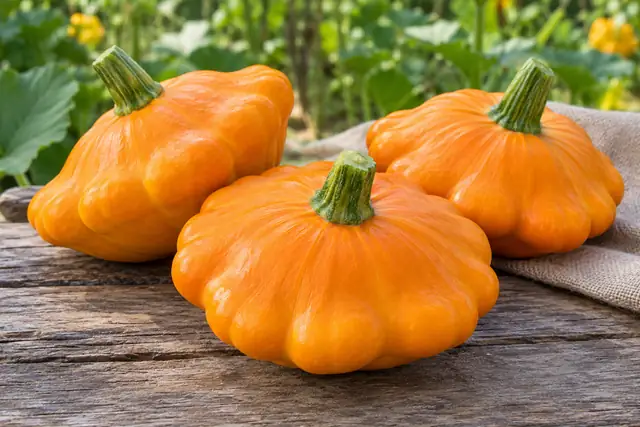
This image was created with AI from described plant characteristics and growing advice. It shows a possible situation and is not a photograph of a verified cultivar.
Orange
Bright orange domed discs with fairly thick dark yellow flesh: a colourful summer squash for young harvests.
Choose this selection type for orange colour and the described artichoke note. It is not a precisely established cultivar name.
Flavour, kitchen and growing
How does it taste?
The described flavour has a slight artichoke-like note. This distinction offers more guidance than the striking skin alone.
In the kitchen
Roast young wedges or fry small slices with vegetables. Use a tender, young fruit to include its skin.
A space in the garden
Grow in a warm, fertile position and allow enough leaf space. Check beneath broad leaves for new fruits too.
Harvesting
Harvest young, before the skin hardens and the seed cavity enlarges. The attractive shape is no reason to leave edible fruit ripening for a long time.
Read the source notes →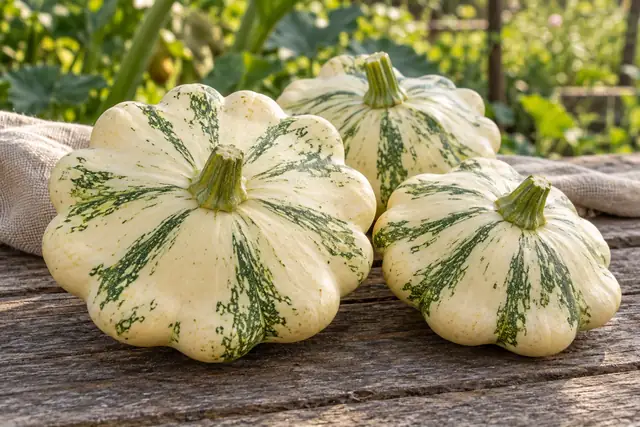
This image was created with AI from described plant characteristics and growing advice. It shows a possible situation and is not a photograph of a verified cultivar.
variegated
Cream-coloured fruits with green stripes give this pattypan type an ornamental pattern beside plain white or orange forms.
Choose panaché when the striped appearance matters. The offering name describes a colour type, without a proven distinct cultivar identity.
Flavour, kitchen and growing
How does it taste?
A separate aroma is not described. When harvested young, it has the usual summer squash texture, which suits frying and roasting well.
This flavour description applies to the crop; there is no separate tasting result for this variety.In the kitchen
Cut young discs into wedges and roast with herbs. Leave skin visible for the colour pattern.
A space in the garden
Provide humus-rich soil, sun and enough water during fruit growth. Move fruit carefully so that it does not become trapped beneath leaf stalks.
Harvesting
Pick young fruits for eating. Let only a separate fruit grow longer if ornamental value matters more than tender kitchen quality.
Read the source notes →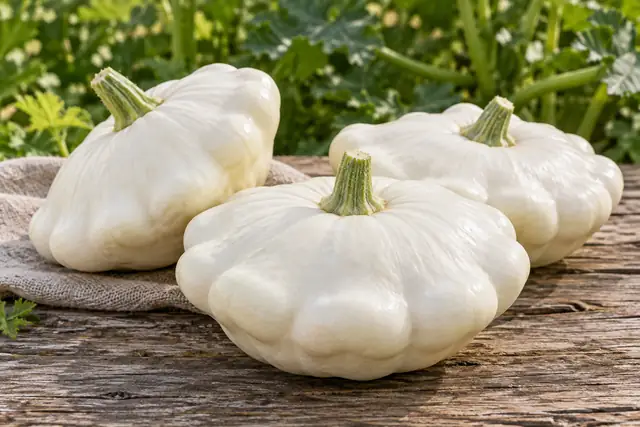
This image was created with AI from described plant characteristics and growing advice. It shows a possible situation and is not a photograph of a verified cultivar.
white
Milky-white thick discs with lobed edges on a non-trailing plant: the classic pattypan shape.
Choose this type for white pattypans and a bush habit. It clearly contrasts with the yellow-orange variant.
Flavour, kitchen and growing
How does it taste?
Thick, firm, white flesh with an artichoke-like flavour is described. The young stage is most interesting for eating.
In the kitchen
Stuff a small, young disc or fry firm wedges. Do not automatically leave older, hard skin in a soft dish.
A space in the garden
Allow a spacious plot for the non-trailing plant and fertile soil. Keep soil evenly moist during fruit set.
Harvesting
Harvest young while skin is tender. Growing larger adds bulk but does not automatically improve texture.
Read the source notes →Choose your way to grow
From a garden bed to a suitable pot or support: give your plant a place that suits your garden and the care you can provide.
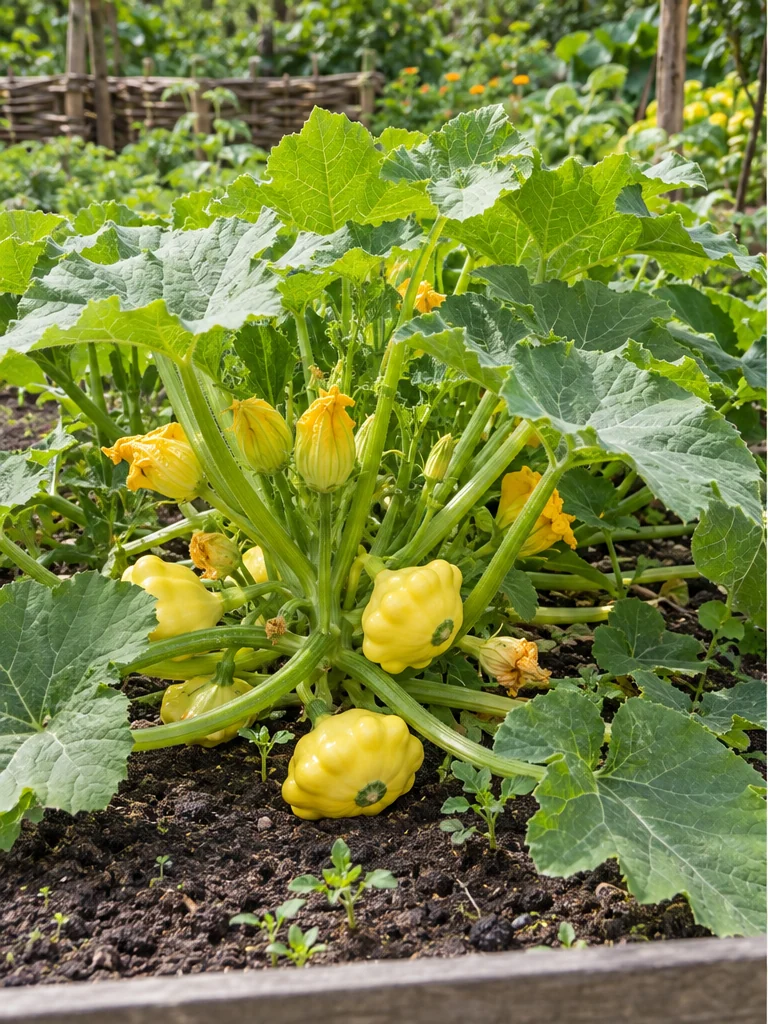
This image was created with AI from described plant characteristics and growing advice. It shows a possible situation and is not a photograph of a verified cultivar.
A bush form in the bed
A freestanding specimen allows room for leaves and accessible fruits.
- Raise a young plant in its own pot or sow directly in warm soil.
- Plant out with the entire rootball after cold nights.
- Look beneath leaves regularly and cut young fruits with a short stalk.
For a bush variety with approximately a square metre or variety-specific space.
Tick off your supplies →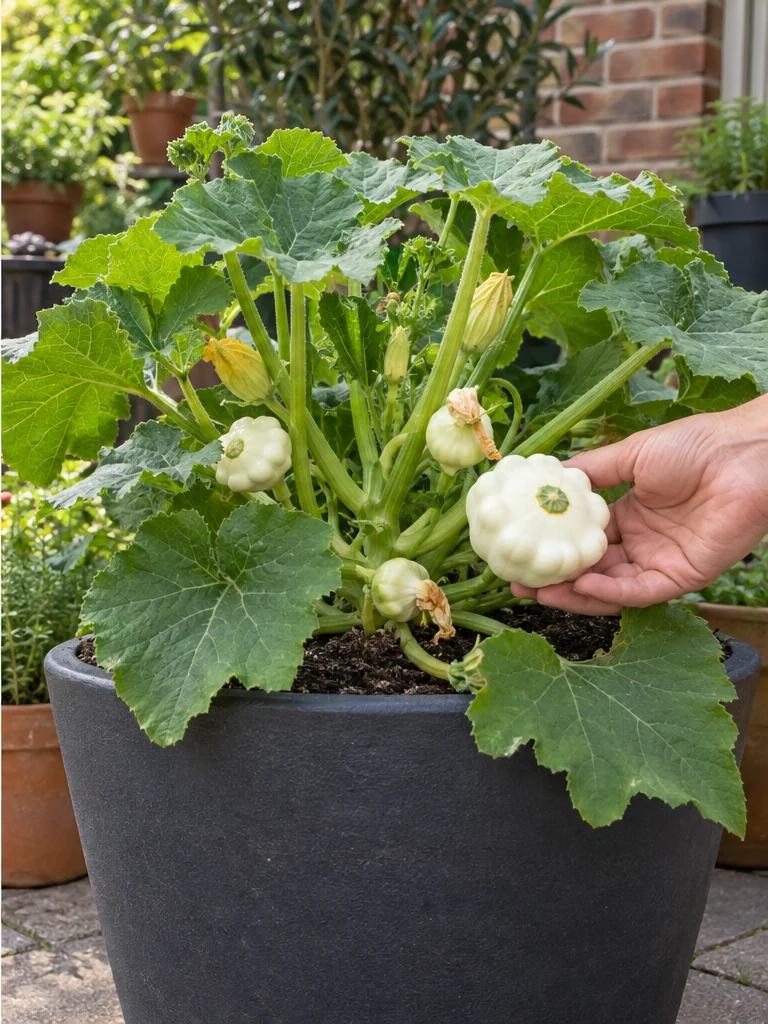
This image was created with AI from described plant characteristics and growing advice. It shows a possible situation and is not a photograph of a verified cultivar.
A compact pattypan in a generous pot
A compact variety can give a small summer harvest near the kitchen.
- Choose a large pot with drainage and a suitable compact-growing variety.
- Use fertile, airy substrate and position the pot in warmth and sun.
- Check moisture and pick young so the plant does not remain full of large fruits.
For compact bush types; a pot needs more watering checks than a bed.
Tick off your supplies →Choose by flavour, shape and use
Oranje: Bright orange, domed discs with fairly thick dark yellow flesh: a colourful summer squash for young harvesting. Roast young wedges or fry small slices. Use tender young fruit to cook with the skin on.
The described flavour has a slight artichoke-like note. This distinction offers more guidance than the striking skin alone.
panaché: Cream-coloured fruit with green stripes gives this pattypan type a decorative pattern alongside plain white or orange forms. Cut young discs into wedges and roast with herbs. Leave the skin visible to show the colour pattern.
A separate aroma is not described. When harvested young, it has the usual summer squash texture, which suits frying and roasting well.
wit: Milky-white, thick discs with a lobed edge on a non-trailing plant: the classic pattypan appearance. Stuff a small young disc or fry firm wedges. Do not automatically leave older, hard skin in a soft dish.
Thick, firm, white flesh with an artichoke-like flavour is described. The young stage is most interesting for eating.
Treat pattypan as a young summer harvest
Pattypan is summer squash with dish-shaped, often scalloped fruit. Colour and size belong to varieties. General summer-squash methods help, but storage aims differ: usually young, tender fruit. Do not choose only the plant's largest disc.
Give the plant room before it grows large
A young plant looks modest, while a bush form later develops broad leaves. Choose a sunny bed and leave enough room for care and harvesting. Read the growth habit on the label. A compact bush type in a pot is a different project from a trailing squash variety on a frame.
Start in warmth with its own rootball
Sow indoors in a separate pot in spring or wait for warm soil outdoors. Provide light after emergence. Do not let raised plants become unnecessarily large before their site is suitable. Move entire root balls; damaged roots cost young summer squash establishment time.
Wait for frost-free conditions
Harden raised plants off gradually and plant outside only once frost and cold nights pose no direct threat. In the Netherlands, often late May or June, but weather decides. Water in and leave growth points free. Unexpected cold needs temporary cover or delay.
Keep growth even
Summer squashes produce plenty of leaves and need enough moisture during growth and fruiting. Water at the base and check below the surface. Water evaporates faster in a pot, where root space is limited. Use suitable feed for the soil or growing medium; extra fertiliser does not solve the problem of a plant that dries out every afternoon.
Examine the small developing fruit
Many summer squash have separate male/female flowers and small ovaries behind females. Pollinators support set. Poor pollination can stop fruitlets, while cold or drought stresses too. Do not remove all males automatically; assess conditions before causes.
Harvest often for tender pattypan fruits
Check hidden fruit beneath large leaves too. Cut pattypans young at sizes suited to variety and dish. Older fruit develops harder skin and larger seeds. Leave stalks and do not pull plants. Regular young picking supports successive small meals.
Investigate damage and taste the harvest
For white leaf coating, assess the whole plant and allow airflow; remove badly affected material carefully. Use fresh young fruit promptly. Do not eat distinctly bitter squash-family fruit. Do not save unknown ornamental-squash crosses for future edible crops.
What you need
Tick what you already have. The extras depend on how you grow.
0 of 6 ticked off
Your ticks are saved in this browser.
Discover and grow more
More background, sources and image information
SeedSteps editorial team · updated on 11 October 2026. The AI images illustrate species and practical growing situations; they do not prove an exact cultivar, observations from your own garden or yield.
Britse gewasadviezen worden gecombineerd met Nederlandse en Vlaamse informatie waar beschikbaar. Amerikaanse Extension-bronnen ondersteunen plantprincipes en herkenning; hun kalenderdata, lokale plaagdruk, bestrijdingsmiddelen en mestdoseringen worden niet rechtstreeks op Nederland of Vlaanderen toegepast. Vorst, bodemwarmte, standplaats en expliciete rasinformatie blijven de lokale controle. Commerciële bronnen onderbouwen uitsluitend benoemde ras- en plantkenmerken; zij zijn geen affiliate-aanbeveling.
- World Checklist of Vascular Plants — 4 juni 2026Royal Botanic Gardens, Kew · accessed 2026-10-07
- Pâtisson Oranje — ras- en teeltbeschrijvingFeggies · accessed 2026-10-11
- Pâtisson panaché — ras- en teeltbeschrijvingFeggies · accessed 2026-10-11
- Pâtisson wit — ras- en teeltbeschrijvingFeggies · accessed 2026-10-11
- Vorsicht beim Verzehr von bitteren ZucchiniBundesinstitut für Risikobewertung · accessed 2026-10-10
- Summer and winter squash in the gardenUtah State University Extension · accessed 2026-10-07
- Zomer- en winterpompoenen kwekenRoyal Horticultural Society · accessed 2026-10-10
Supporting evidence by chapter: Choose by flavour, shape and use: Feggies, Feggies, Feggies. Treat pattypan as a young summer harvest: Royal Horticultural Society, Utah State University Extension. Give the plant room before it grows large: Royal Horticultural Society, Utah State University Extension. Start in warmth with its own rootball: Royal Horticultural Society, Utah State University Extension. Wait for frost-free conditions: Royal Horticultural Society, Utah State University Extension. Keep growth even: Royal Horticultural Society, Utah State University Extension. Examine the small developing fruit: Royal Horticultural Society, Utah State University Extension. Harvest often for tender pattypan fruits: Royal Horticultural Society, Utah State University Extension. Investigate damage and taste the harvest: Royal Horticultural Society, Utah State University Extension, Bundesinstitut für Risikobewertung.