
Mustard (green manure/sprouts)
This selection is intended as fast-growing ground cover. The aim is an occupied bed and green plant material, rather than a collection of cabbage heads.
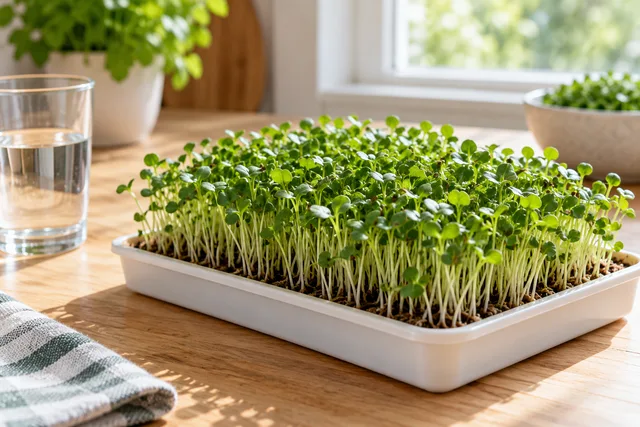
This image was created with AI from described plant characteristics and growing advice. It shows a possible situation and is not a photograph of a verified cultivar.
- Botanical name
- White mustard: Sinapis alba; check every product
- Growing aims
- Green manure outdoors or sprouts indoors
- Seed selection
- Check product suitability for each application
- Family
- Brassicas; include the soil-grown crop in rotation
This growing advice helps you choose. Your variety, growth stage, weather and conditions in your space determine the actual timing.
Sowing under cover and raising seedlings
Sow directly or start under cover according to species · Mustard (green manure/sprouts)
August–September, for green manureSow directly according to species and product instructions; choose density for your growing aim.
- Germination and temperature
- Use the germination requirements for the species and seed offered; there is no shared temperature for this group.
- After emergence
- Keep the seed row identifiable, moist and weed-free. Give any tray-grown seedlings enough light after emergence.
- Pricking out and potting on
- Thin a direct sowing according to the growing aim. For raising in pots, follow the supplier’s instructions and keep the root ball intact.
- Hardening off and planting out
- Direct-sown plants stay in place. If the packet says to start in pots, acclimatise them gradually before planting out.
Green manure and sprouts are separate uses. For edible sprouts, use only seed offered for that purpose. The period shown follows the named producer; check your own cultivar and growing aim.
Sources and use
De Bolster · Gele mosterd als groenbemester ↗Nederlandse producent of teeltbron; de rasinstructie blijft leidend.
De Bolster · Mosterdkers als kiemgroente ↗Nederlandse producent of teeltbron; de rasinstructie blijft leidend.
Guideline periods for the Netherlands and Flanders. Check the variety, available light, soil and measured temperatures. Greenhouse heating does not guarantee enough winter light.
A different flavour, a different harvest.
Choose by more than the name. Discover how these varieties and crop types taste, what you can use them for and what growing them involves.
2 of 2 choices · 0 named varieties
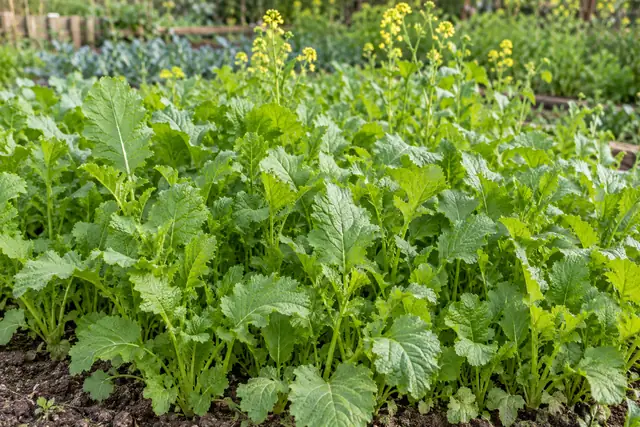
This image was created with AI from described plant characteristics and growing advice. It shows a possible situation and is not a photograph of a verified cultivar.
Gele mosterd als groenbemester
This selection is intended as fast-growing ground cover. The aim is an occupied bed and green plant material, rather than a collection of cabbage heads.
Choose yellow mustard for a vacated bed and include the cabbage family in crop rotation. It is not a universal catch crop.
Flavour, kitchen and growing
How does it taste?
No flavour profile is assigned to this green manure. Mustard as a soil crop and mustard cress on the plate have different purposes.
This flavour description applies to the crop; there is no separate tasting result for this variety.In the kitchen
This product choice is not culinary variety advice. For sprouts, use a product explicitly intended for that purpose.
A space in the garden
Sow in a prepared bed and let an even crop develop. The product source describes fast autumn growth and dying off in frost.
Harvesting
End the crop before unwanted seed spread occurs. When you return the plant material to the soil depends on the following crop.
Also listed as: Gele mosterd.
Read the source notes →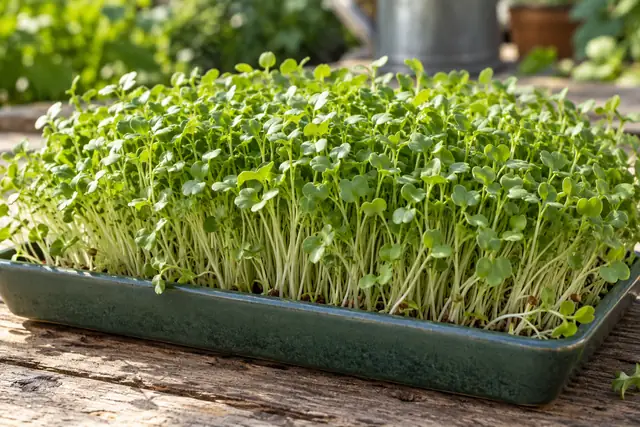
This image was created with AI from described plant characteristics and growing advice. It shows a possible situation and is not a photograph of a verified cultivar.
Mosterdkers als kiemgroente
Mustard cress is sold here as sprouts. You harvest small seedlings, so this offering follows a different course from green manure.
Choose mustard cress for a small indoor harvest and use seed sold for sprouting consumption. A green-manure packet is not an automatic alternative.
Flavour, kitchen and growing
How does it taste?
The product source describes spicy sprouts. This concerns the sprouting type, not comparison among named mustard varieties.
This flavour description applies to the crop; there is no separate tasting result for this variety.In the kitchen
Use a small portion of fresh sprouts as a spicy finish for sandwiches or salad. Add just before serving.
A space in the garden
Follow the packaging for a suitable germination system and keep equipment clean. Let excess water drain away when using a rinsing system.
Harvesting
Harvest young sprouts according to product advice and use fresh. The aim is young greens, not flowers or ripe mustard seed.
Also listed as: Mosterdkers.
Read the source notes →Choose your way to grow
From a garden bed to a suitable pot or support: give your plant a place that suits your garden and the care you can provide.
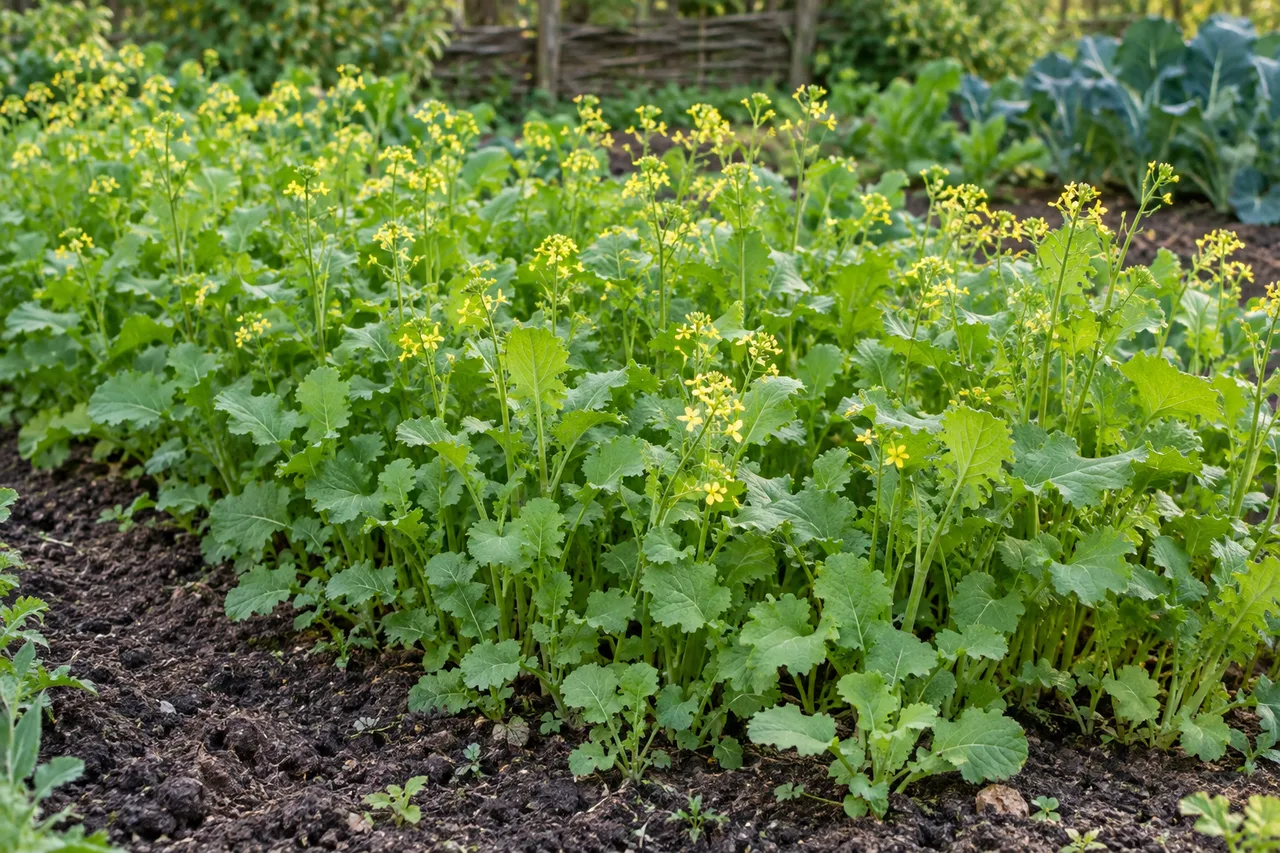
This image was created with AI from described plant characteristics and growing advice. It shows a possible situation and is not a photograph of a verified cultivar.
Temporarily cover an empty bed
Check the brassica family in your crop plan; sow white mustard as green manure; terminate it before unwanted seed set.
- Check the cabbage family in the growing plan.
- Sow yellow mustard as green manure.
- Terminate before unwanted seed set.
For soil cover in a vacated plot whose crop rotation has been checked.
Tick off your supplies →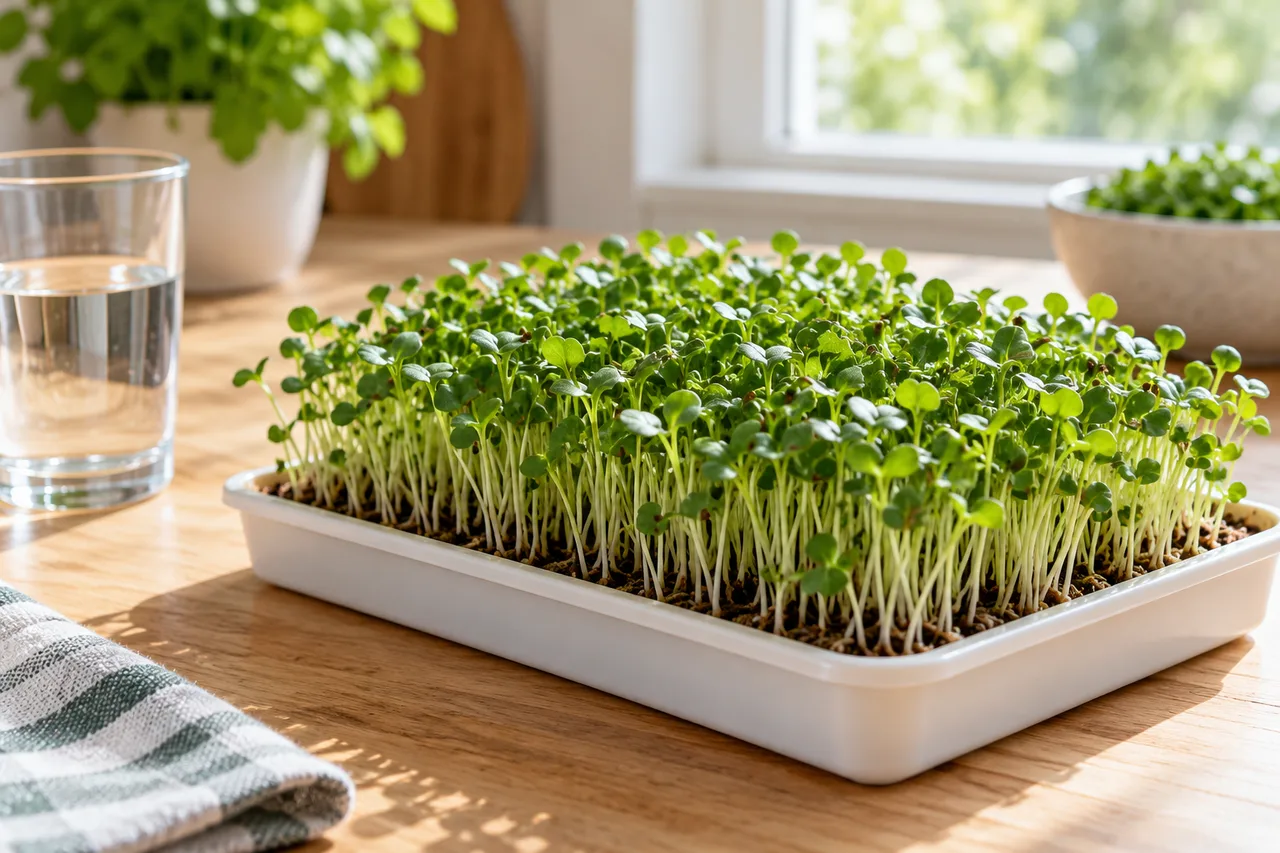
This image was created with AI from described plant characteristics and growing advice. It shows a possible situation and is not a photograph of a verified cultivar.
Mustard cress in a sprouting tray
Choose seeds for edible sprouts; follow the packet for moist germination material; cut young mustard cress with clean equipment.
- Choose seeds for edible sprouts.
- Follow the packet for moist germination material.
- Cut young mustard cress with clean equipment.
For a small kitchen trial with suitable edible seed and a clean sprouting system.
Tick off your supplies →Choose by flavour, shape and use
Yellow mustard as green manure: A quick-growing soil cover, aiming for occupied ground and green biomass rather than cabbage heads. This is no kitchen-variety advice. For sprouts, choose an offering explicitly intended for that use.
No flavour profile is assigned to this green manure. Mustard as a soil crop and mustard cress on the plate have different purposes.
Mustard cress for sprouting: Sold here as sprouts, harvested as small plants and therefore different from green manure. Use a little fresh cress as a peppery finish on bread or salad, adding only at serving.
The product source describes spicy sprouts. This concerns the sprouting type, not comparison among named mustard varieties.
One name, two growing aims
Mustard serves two distinct aims here: green soil cover outdoors and kitchen seedlings. Yellow mustard is Sinapis alba; De Bolster also uses this name for mustard cress. Aims do not automatically mean different species. Track suitability and application separately before buying.
Choose the right seed first
Choose green-manure packets for beds and sprouting-consumption seed for dishes. Do not exchange merely because both say mustard. Show matching products and methods on materials lists so ordering choices stay clear.
Covering a vacated bed
Yellow mustard grows quickly and fills empty beds as autumn green manure. De Bolster gives August–September sowing and frost dieback. Prepare even beds and follow packet rates and depths. Plan following crops immediately to integrate it into garden plans.
Include the cabbage family
Mustard belongs to brassicas and does not automatically suit every cleared cabbage bed. Include green manure in plans as a real crop choice so family relationships remain visible even without main vegetable harvests. End trials before unwanted seed spread complicates following beds.
Prepare a small indoor harvest
Use clean sprouting dishes or packet-recommended systems. Prepare little and follow watering advice. Sprout dishes are not pots for future mature cabbages. The aim is young greens tended in clean, manageable positions and harvested at the right stage.
Beds and trays need different materials
Green-manure beds need rakes, free plots and termination plans. Sprout dishes need suitable eating seed and clean small systems. Make separate checklists to avoid buying abundant outdoor seed when wanting only a modest few-day kitchen trial.
Green biomass or young greens
For green manure, the aim is plant mass and soil cover; no kitchen cultivar or fixed flavour is promised. For mustard cress, harvest young seedlings according to product guidance. Keep that harvest clearly separate from outdoor plants. A photo of yellow-flowering mustard describes a different stage from the small sprouts used on a sandwich.
A spicy finish in small portions
Mustard cress is described as peppery. Use little at serving on bread, soup or salad. Judge amounts yourself; mild greens reveal mustard notes more clearly. This guide assigns no distinct flavour profile or kitchen-consumption advice to green manure.
What you need
Tick what you already have. The extras depend on how you grow.
0 of 5 ticked off
Your ticks are saved in this browser.
Discover and grow more
More background, sources and image information
SeedSteps editorial team · updated on 11 October 2026. The AI images illustrate species and practical growing situations; they do not prove an exact cultivar, observations from your own garden or yield.
Britse gewasadviezen worden gecombineerd met Nederlandse en Vlaamse informatie waar beschikbaar. Amerikaanse Extension-bronnen ondersteunen plantprincipes en herkenning; hun kalenderdata, lokale plaagdruk, bestrijdingsmiddelen en mestdoseringen worden niet rechtstreeks op Nederland of Vlaanderen toegepast. Vorst, bodemwarmte, standplaats en expliciete rasinformatie blijven de lokale controle. Commerciële bronnen onderbouwen uitsluitend benoemde ras- en plantkenmerken; zij zijn geen affiliate-aanbeveling.
- Gele mosterd - Groenbemester BiologischFeggies · accessed 2026-10-11
- Organic sprouting mosterdkers zadenFeggies · accessed 2026-10-11
- Gele mosterd als groenbemesterDe Bolster · accessed 2026-10-11
- Mosterdkers als kiemgroenteDe Bolster · accessed 2026-10-11
Supporting evidence by chapter: Choose by flavour, shape and use: Feggies, Feggies. One name, two growing aims: Feggies, Feggies, De Bolster, De Bolster. Choose the right seed first: Feggies, Feggies, De Bolster, De Bolster. Covering a vacated bed: Feggies, Feggies, De Bolster, De Bolster. Include the cabbage family: Feggies, Feggies, De Bolster, De Bolster. Prepare a small indoor harvest: Feggies, Feggies, De Bolster, De Bolster. Beds and trays need different materials: Feggies, Feggies, De Bolster, De Bolster. Green biomass or young greens: Feggies, Feggies, De Bolster, De Bolster. A spicy finish in small portions: Feggies, Feggies, De Bolster, De Bolster.