
Luffa
Luffa produces long fruits that develop a fibrous interior as they ripen. You can make a plant-based sponge from it.
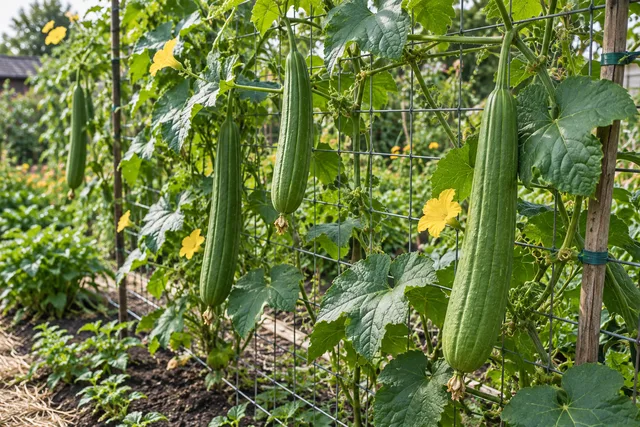
This image was created with AI from described plant characteristics and growing advice. It shows a possible situation and is not a photograph of a verified cultivar.
- Botanical name
- Luffa aegyptiaca
- Growth habit
- Warmth-loving trailing plant
- Main objective
- Ripe fruits for sponge fibres
- Support
- Sturdy mesh or trellis with loose, soft ties
This growing advice helps you choose. Your variety, growth stage, weather and conditions in your space determine the actual timing.
Sowing under cover and raising seedlings
Start under cover in warmth · Luffa
April–May, with sufficiently warm propagationStart indoors in warmth and reserve enough bright space for raising plants.
- Germination and temperature
- Garden Organic gives around 26–30 °C for germination.
- After emergence
- Give seedlings light immediately after emergence. A dark loft needs suitable grow lights; warmth alone is insufficient. Ventilate and keep the compost moist without saturating it.
- Pricking out and potting on
- Sow in individual pots or deep modules. Do not prick out bare-rooted; move the whole root ball before the roots become restricted.
- Hardening off and planting out
- Gradually acclimatise indoor-raised plants to sun, wind and outdoor temperatures; shelter them again on cold nights. After the cold spring, plant with the root ball intact in a warm greenhouse and prepare sturdy climbing support.
Luffa needs a long warm season; sponge maturation is uncertain in a cool Dutch outdoor bed.
Sources and use
Garden Organic · How to grow luffa ↗Soort- of productgebonden bron; buitenlandse perioden zijn geen vaste Nederlandse zaaidatum.
Feggies · Luffa - Plantaardige spons ↗Nederlandse producent of teeltbron; de rasinstructie blijft leidend.
Guideline periods for the Netherlands and Flanders. Check the variety, available light, soil and measured temperatures. Greenhouse heating does not guarantee enough winter light.
A different flavour, a different harvest.
Choose by more than the name. Discover how these varieties and crop types taste, what you can use them for and what growing them involves.
2 of 2 choices · 0 named varieties
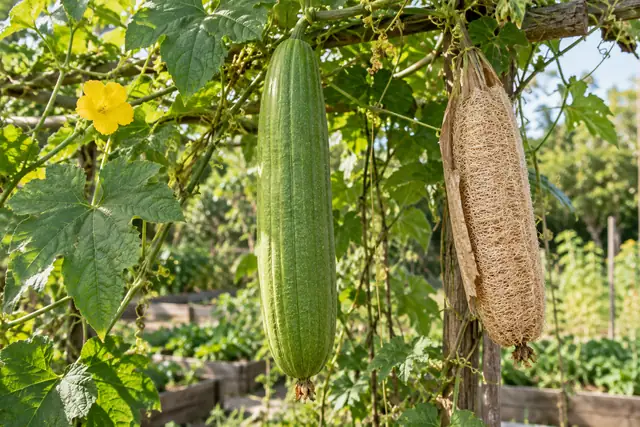
This image was created with AI from described plant characteristics and growing advice. It shows a possible situation and is not a photograph of a verified cultivar.
Plant-based sponge
Luffa produces long fruits that develop a fibrous interior as they ripen. You can make a plant-based sponge from it.
Choose luffa for a long growing project combining raising, training and drying. A warm greenhouse gives more control than a cold outdoor position.
Flavour, kitchen and growing
How does it taste?
A courgette-like way of using it does not prove identical flavour. Do not eat bitter fruit and do not expect a confirmed variety-specific aroma description.
This flavour description applies to the crop; there is no separate tasting result for this variety.In the kitchen
Young fruit is sometimes used as a vegetable, but sponge selections can be bitter. Sponge production is the main purpose of this offering.
A space in the garden
Start in warmth and early enough, provide root space and train vines along sturdy mesh. Check fixings as the plant and fruit become heavier.
Harvesting
Let sponge fruit mature and ventilate during further drying. Harvesting for young consumption has a different purpose from obtaining mature fibres.
Also listed as: Pompoenspons, Luffa.
Read the source notes →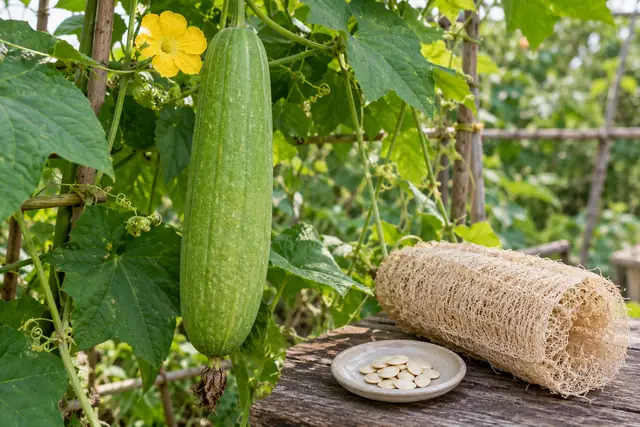
This image was created with AI from described plant characteristics and growing advice. It shows a possible situation and is not a photograph of a verified cultivar.
White seeds
This offering describes white seeds and cylindrical fruits. Seed colour does not establish a separate cultivar with a fixed name.
Choose this designation for a luffa trial with a recognisable seed characteristic. Compare growing purpose and origin before attributing a flavour difference to it.
Flavour, kitchen and growing
How does it taste?
The product source gives no distinct flavour profile for white-seeded types. Bitter fruit is unsuitable for treating as an ordinary vegetable.
This flavour description applies to the crop; there is no separate tasting result for this variety.In the kitchen
The described young use is similar to preparing courgettes. Let other fruit ripen if you want to obtain the fibrous sponge material.
A space in the garden
Start in warmth and position in sun and shelter with sturdy training support. A greenhouse helps with the long growing season.
Harvesting
Harvest according to purpose: small and young for the described vegetable use, or fully developed for sponge fibres. These stages are not interchangeable.
Read the source notes →Choose your way to grow
From a garden bed to a suitable pot or support: give your plant a place that suits your garden and the care you can provide.
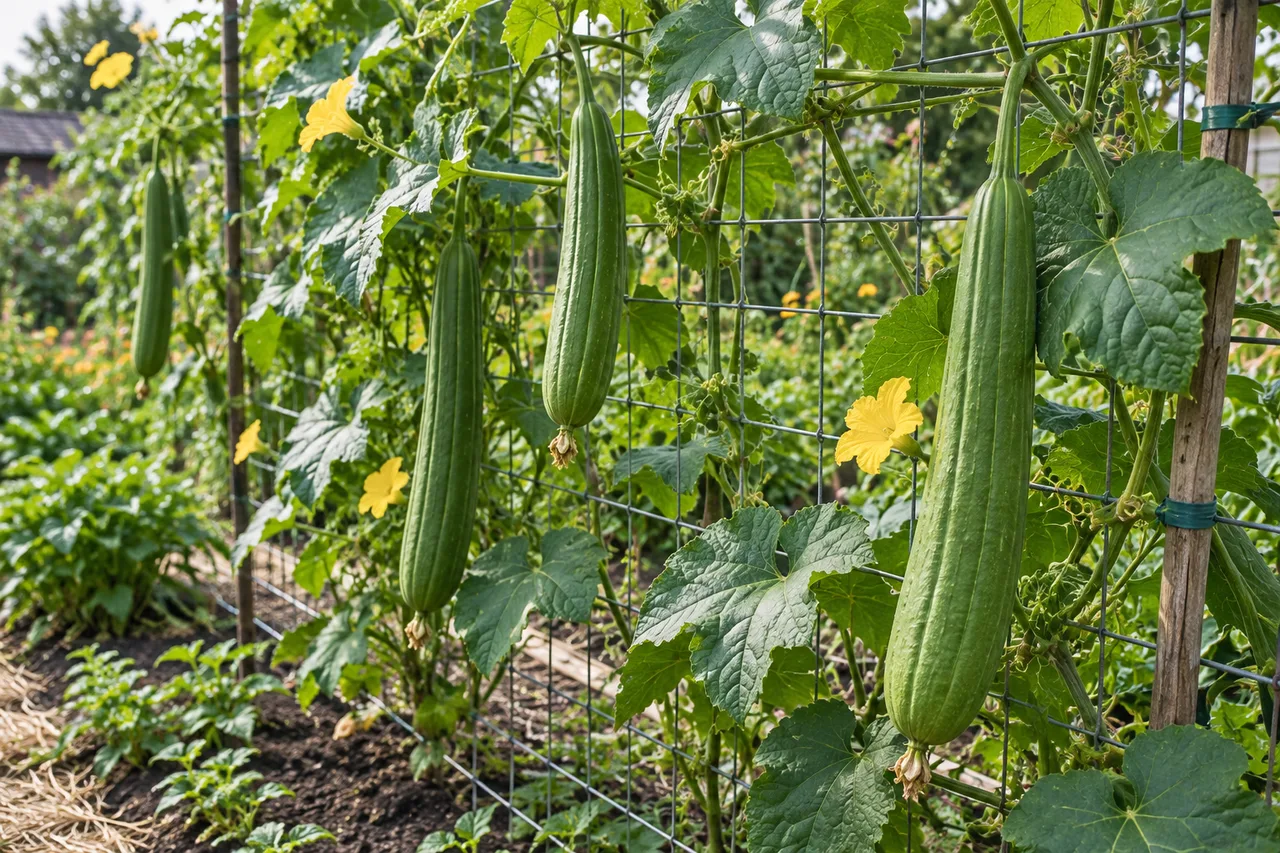
This image was created with AI from described plant characteristics and growing advice. It shows a possible situation and is not a photograph of a verified cultivar.
Vines trained along sturdy greenhouse mesh
Sow in warmth in separate pots; plant in a warm greenhouse beside sturdy mesh; guide vines with loose, soft loops.
- Sow in warmth in separate pots.
- Plant in a warm greenhouse beside sturdy mesh.
- Guide vines with loose, soft loops.
For a long, warm growing project with a permanent, sturdy, accessible greenhouse frame.
Tick off your supplies →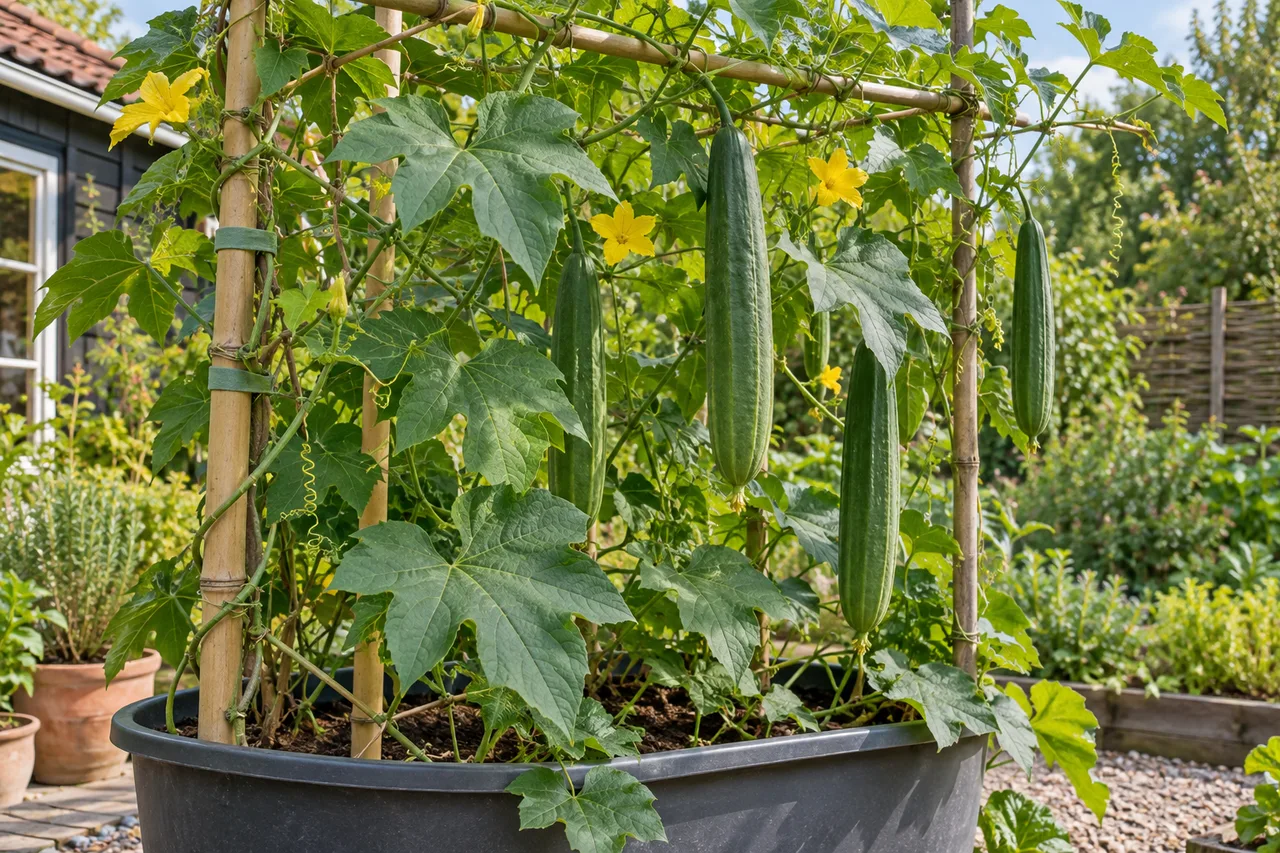
This image was created with AI from described plant characteristics and growing advice. It shows a possible situation and is not a photograph of a verified cultivar.
A large container with a sturdy frame
Choose a large container in a greenhouse or warm shelter; anchor a mesh frame; check water and tie vines regularly.
- Choose a large container in a greenhouse or warm shelter.
- Anchor a mesh frame.
- Check water and tie in vines regularly.
For a smaller trial with container and mesh frame stably anchored together.
Tick off your supplies →Choose by flavour, shape and use
Plant sponge: Luffa makes long fruit with a fibrous interior at maturity, usable as a plant sponge. Young fruit is sometimes used as a vegetable, but sponge selections can be bitter. Sponge production is the main purpose of this offering.
A courgette-like way of using it does not prove identical flavour. Do not eat bitter fruit and do not expect a confirmed variety-specific aroma description.
Witte zaden: This offering names white seeds and cylindrical fruit. Seed colour proves no separate variety with an established name. The described young use is similar to preparing courgettes. Let other fruit ripen if you want to obtain the fibrous sponge material.
The product source gives no distinct flavour profile for white-seeded types. Bitter fruit is unsuitable for treating as an ordinary vegetable.
A trailing plant for sponge fibres
Luffa forms long fruit becoming fibrous at full development. The described smooth type is Luffa aegyptiaca, also called Luffa cylindrica. A long project with warm starts and late harvests. Decide whether mainly observing plants or seeking usable sponge fibres.
Warmth and a long growing period
Greenhouses give more long-season control than exposed cold sites. British guidance recommends warm raising and outdoor planting after cold spring. Adapt locally. Tall sunny positions alone are insufficient if late starts barely allow fruit development.
Start in warmth and keep identifiable
Garden Organic gives about twenty-six to thirty degrees for germination. Sow pots and select strongest plants. Note seed choice and emergence date for concrete comparisons next time. Move young plants only once root space and training are prepared together.
Mesh supports the growth
A sturdy frame or mesh provides more hold than a loose thin cane. Guide the tendrils and secure stems if needed with a soft, loose tie. Place the tie around a suitable stem section and the support; do not clamp a fruit. During growth, check whether loops are tightening and whether the frame remains stable.
Keep monitoring root zone and space
Greenhouse plants root in fixed sites; tubs hold entire root supplies. Check water and drainage accordingly. Follow flowers and fruit too. Inspect training during each care round so later plants do not become inaccessible masses over supports.
Greenhouse frame or container with frame
Greenhouse beds with fixed supports suit longer, spacious projects. Large tubs with sturdy individual frames allow smaller trials. The whole system needs stability: large plants on light pots are awkward. Choose site and fixings before vines choose their own direction.
Mature fibres need a different harvest
For a sponge, let the fruit develop fully and the fibre framework mature. Provide an accessible, ventilated place for processing and final drying. Harvest aim and developmental stage belong together. A young green fruit looks different and does not automatically provide the material expected from a ripe, finished luffa sponge.
A sponge selection is no culinary promise
Young luffa fruits are sometimes used as vegetables, but sponge selections can be bitter. Do not eat a bitter fruit as an ordinary vegetable. Sponge production is the clearest aim for this offering. Make it a visible project with photographs of growth and processing, without inferring a proven cultivar-specific flavour or suitable kitchen stage from its courgette-like appearance.
What you need
Tick what you already have. The extras depend on how you grow.
0 of 6 ticked off
Your ticks are saved in this browser.
Discover and grow more
More background, sources and image information
SeedSteps editorial team · updated on 11 October 2026. The AI images illustrate species and practical growing situations; they do not prove an exact cultivar, observations from your own garden or yield.
Britse gewasadviezen worden gecombineerd met Nederlandse en Vlaamse informatie waar beschikbaar. Amerikaanse Extension-bronnen ondersteunen plantprincipes en herkenning; hun kalenderdata, lokale plaagdruk, bestrijdingsmiddelen en mestdoseringen worden niet rechtstreeks op Nederland of Vlaanderen toegepast. Vorst, bodemwarmte, standplaats en expliciete rasinformatie blijven de lokale controle. Commerciële bronnen onderbouwen uitsluitend benoemde ras- en plantkenmerken; zij zijn geen affiliate-aanbeveling.
- Luffa - Plantaardige sponsFeggies · accessed 2026-10-11
- Luffa witte zadenFeggies · accessed 2026-10-11
- Pompoenspons Luffa zaden biologischFeggies · accessed 2026-10-11
- How to grow luffaGarden Organic · accessed 2026-10-11
Supporting evidence by chapter: Choose by flavour, shape and use: Feggies, Feggies, Garden Organic, Feggies. A trailing plant for sponge fibres: Feggies, Garden Organic. Warmth and a long growing period: Feggies, Garden Organic. Start in warmth and keep identifiable: Feggies, Garden Organic. Mesh supports the growth: Feggies, Garden Organic. Keep monitoring root zone and space: Feggies, Garden Organic. Greenhouse frame or container with frame: Feggies, Garden Organic. Mature fibres need a different harvest: Feggies, Garden Organic. A sponge selection is no culinary promise: Feggies, Garden Organic.