
Good King Henry
Good King Henry is a perennial vegetable that does not need sowing again each spring. Young leaves and spring shoots are usable.
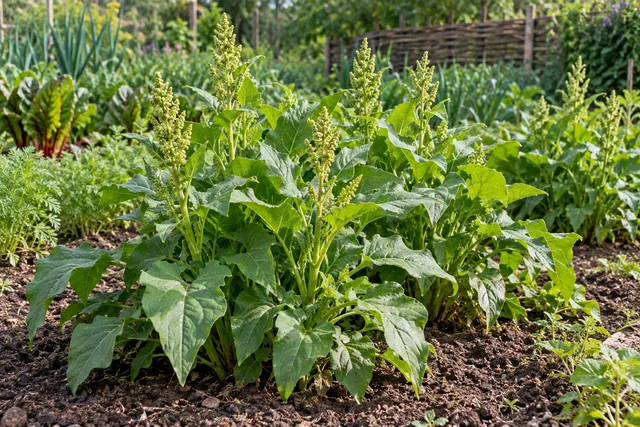
This image was created with AI from described plant characteristics and growing advice. It shows a possible situation and is not a photograph of a verified cultivar.
- Botanical name
- Blitum bonus-henricus
- Lifespan
- Perennial
- Position
- Sun or partial shade; moisture-retentive and well-drained
- First year
- Harvest lightly and allow to establish first
This growing advice helps you choose. Your variety, growth stage, weather and conditions in your space determine the actual timing.
Sowing under cover and raising seedlings
Perennial growing: young plants, divisions or seed · Good King Henry
Spring for suitable planting stock; follow species and supplierPlant suitable stock, crowns or divisions in workable soil. This is not a general sowing route.
- Germination and temperature
- Germination requirements differ by species. Follow the packet; germination of Good King Henry can be slow and irregular.
- After emergence
- Give emerged plants light, prevent drying out and allow a healthy root ball to develop.
- Pricking out and potting on
- Prick out seedlings only when manageable. Plant bought stock or divisions with roots intact.
- Hardening off and planting out
- Gradually acclimatise indoor-raised plants to sun, wind and outdoor temperatures; shelter them again on cold nights. Choose a suitable permanent position. Plant asparagus crowns and rhubarb divisions according to their own planting guidance.
Not all perennial plants yield a harvest in their first year. Choose healthy planting stock for a predictable start; seedlings can vary.
Sources and use
RHS · asperge ↗Britse teeltrichtlijn voor een gematigd klimaat; de genoemde perioden zijn richtlijnen voor Nederland en Vlaanderen.
Magic Garden Seeds · Brave Hendrik ↗Nederlandse producent of teeltbron; de rasinstructie blijft leidend.
Feggies · Brave Hendrik zaden Biologisch ↗Nederlandse producent of teeltbron; de rasinstructie blijft leidend.
Guideline periods for the Netherlands and Flanders. Check the variety, available light, soil and measured temperatures. Greenhouse heating does not guarantee enough winter light.
A different flavour, a different harvest.
Choose by more than the name. Discover how these varieties and crop types taste, what you can use them for and what growing them involves.
1 of 1 choices · 0 named varieties
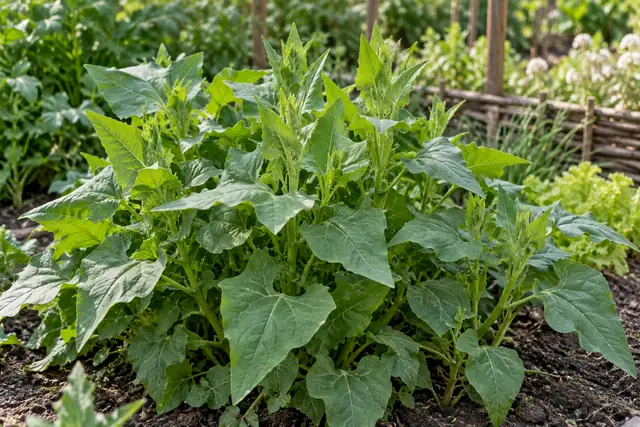
This image was created with AI from described plant characteristics and growing advice. It shows a possible situation and is not a photograph of a verified cultivar.
Good King Henry
Good King Henry is a perennial vegetable that does not need sowing again each spring. Young leaves and spring shoots are usable.
Choose this species for a permanent edible position. Expect plant establishment first, then recurring picking.
Flavour, kitchen and growing
How does it taste?
The spinach comparison concerns general culinary use. The Feggies source gives no separate aroma for a named selection.
This flavour description applies to the crop; there is no separate tasting result for this variety.In the kitchen
Cook leaves like spinach or use young shoots in brief cooking. Both harvests come from the same plant.
A space in the garden
Plant in fertile, sufficiently moist soil in a sheltered position. A permanent spot removes the need for annual soil cultivation around it.
Harvesting
Harvest sparingly in the first year. Later, take young portions and retain enough foliage to maintain the perennial.
Read the source notes →Choose your way to grow
From a garden bed to a suitable pot or support: give your plant a place that suits your garden and the care you can provide.
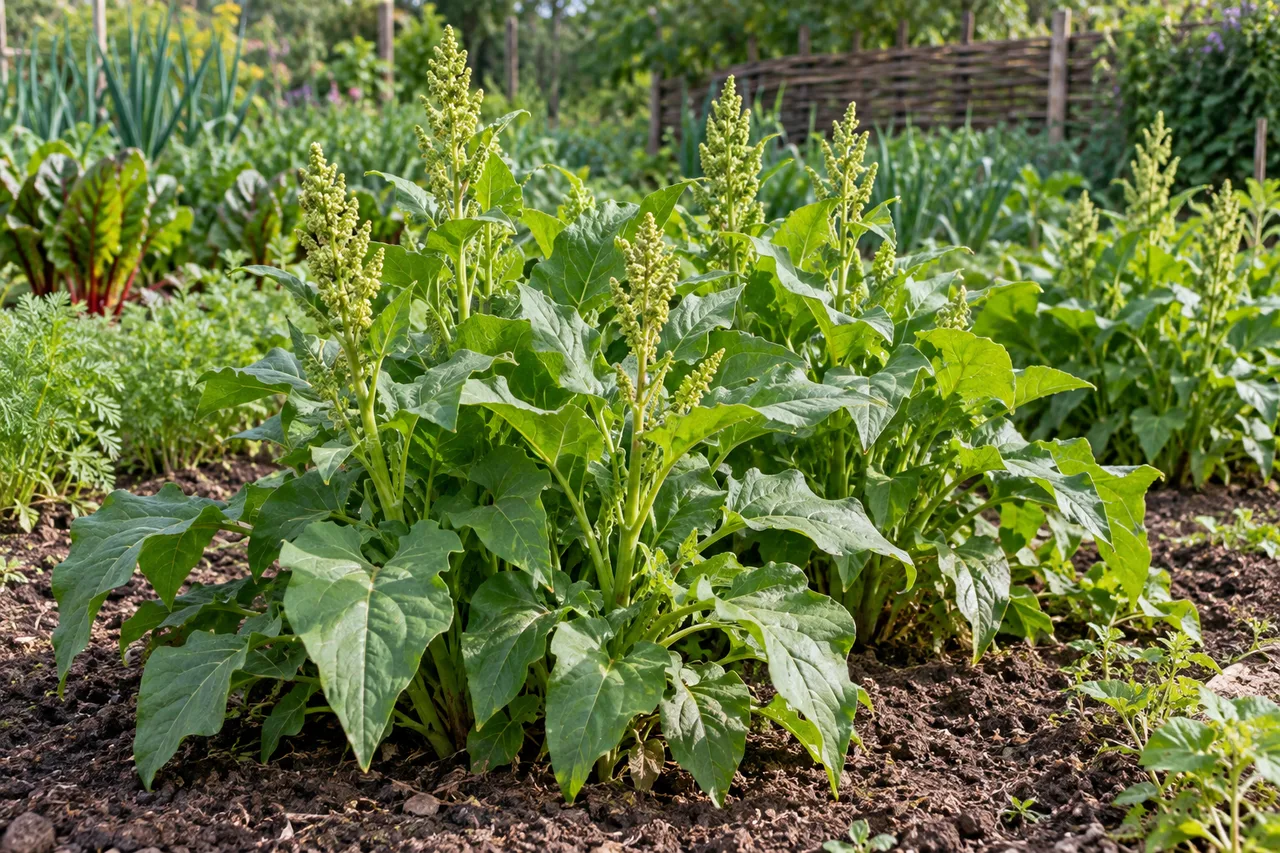
This image was created with AI from described plant characteristics and growing advice. It shows a possible situation and is not a photograph of a verified cultivar.
A permanent vegetable garden position
Grow seedlings steadily; plant in fertile, moist but well-drained soil; harvest little in the first year.
- Grow seedlings on steadily.
- Plant in fertile, moist but well-drained soil.
- Harvest little in the first year.
For a permanent position where the perennial can establish first.
Tick off your supplies →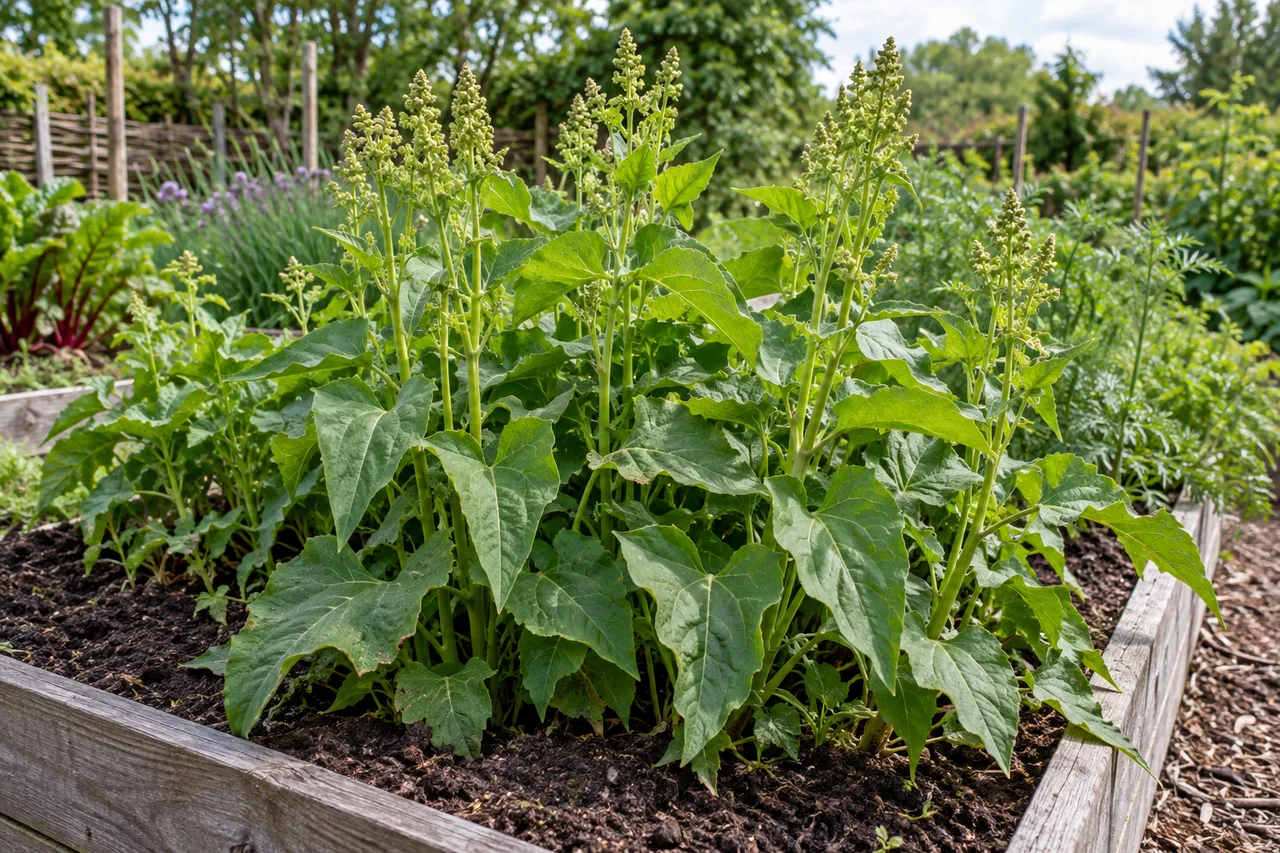
This image was created with AI from described plant characteristics and growing advice. It shows a possible situation and is not a photograph of a verified cultivar.
A perennial plot in a raised bed
Reserve a permanent plot; plant young Good King Henry with space; leave foliage and pick young shoots later.
- Reserve a permanent plot.
- Plant young Good King Henry with space.
- Leave foliage and pick young shoots later.
For an accessible permanent plot with moisture-retentive soil and good drainage.
Tick off your supplies →Choose by flavour, shape and use
Brave Hendrik: A perennial vegetable needing no annual spring sowing. Young leaves and spring shoots are usable. Prepare leaves like spinach or briefly cook young shoots. Both harvests come from the same plant.
The spinach comparison concerns general culinary use. The Feggies source gives no separate aroma for a named selection.
A perennial leafy vegetable
Brave Hendrik is a perennial leaf plant now called Blitum bonus-henricus. Older Chenopodium bonus-henricus remains on many packets. Green arrow-shaped leaves and perennial growth favour a fixed position rather than annual moves among quickly rotating rows.
Permanent ground or raised bed
Choose fertile soil retaining moisture while draining excess. Sun or partial shade suits it. Raised beds can give defined, accessible growing sites. Assess across seasons: perennial plants need access even after surrounding vegetables become large.
Patience with an uneven start
The producer describes slow, sometimes irregular germination. Follow packets and label pots. Write dates before reusing apparently empty ones. A few separate pots make this clearer than unattended strips among faster-germinating greens.
Prepare the permanent position first
Remove persistent weeds before permanent planting. Ensure drainage and cared-for surface soil for young roots. Keep ground visible around plants to remove new weeds without repeatedly working through perennial foliage.
Establishment comes before a full basket
RHS advises harvesting only lightly in the first year. Give young plants time to establish first. In dry periods, check soil moisture, especially in a raised bed. Record which plants establish well before using them for regular leaf harvesting in a following season.
Two ways to create a permanent position
Open ground suits long-term garden plants; raised beds make separate trials accessible. Both require moisture and drainage. Choose maintainable forms: raised edges do not replace root-zone care.
Pick young leaves selectively
Take young leaves from well-established plants and do not harvest everything at once. Leave some untouched so you can watch further growth. A small basket suits this crop’s character: repeated portions rather than one complete stripping. This also leaves room to develop your own leaf-size preference.
A permanent source of leafy greens
Young leaves are used as vegetables, including spinach-like preparation. Try a simple first portion and assess texture. This kitchen comparison does not mean ordinary spinach seed was bought. Keep botanical names and Brave Hendrik distinct in seed and plant lists.
What you need
Tick what you already have. The extras depend on how you grow.
0 of 5 ticked off
Your ticks are saved in this browser.
Discover and grow more
More background, sources and image information
SeedSteps editorial team · updated on 11 October 2026. The AI images illustrate species and practical growing situations; they do not prove an exact cultivar, observations from your own garden or yield.
Britse gewasadviezen worden gecombineerd met Nederlandse en Vlaamse informatie waar beschikbaar. Amerikaanse Extension-bronnen ondersteunen plantprincipes en herkenning; hun kalenderdata, lokale plaagdruk, bestrijdingsmiddelen en mestdoseringen worden niet rechtstreeks op Nederland of Vlaanderen toegepast. Vorst, bodemwarmte, standplaats en expliciete rasinformatie blijven de lokale controle. Commerciële bronnen onderbouwen uitsluitend benoemde ras- en plantkenmerken; zij zijn geen affiliate-aanbeveling.
- Brave Hendrik zaden BiologischFeggies · accessed 2026-10-11
- Good King HenryMagic Garden Seeds · accessed 2026-10-11
- Good King Henry: plant detailsRoyal Horticultural Society · accessed 2026-10-11
Supporting evidence by chapter: Choose by flavour, shape and use: Feggies. A perennial leafy vegetable: Feggies, Magic Garden Seeds, Royal Horticultural Society. Permanent ground or raised bed: Feggies, Magic Garden Seeds, Royal Horticultural Society. Patience with an uneven start: Feggies, Magic Garden Seeds, Royal Horticultural Society. Prepare the permanent position first: Feggies, Magic Garden Seeds, Royal Horticultural Society. Establishment comes before a full basket: Feggies, Magic Garden Seeds, Royal Horticultural Society. Two ways to create a permanent position: Feggies, Magic Garden Seeds, Royal Horticultural Society. Pick young leaves selectively: Feggies, Magic Garden Seeds, Royal Horticultural Society. A permanent source of leafy greens: Feggies, Magic Garden Seeds, Royal Horticultural Society.