
Flavor: discover its flavour and how to grow it
Pink spring garlic for a start after winter. Choose Flavor for its spring planting time and offered pink form. This provides an option if you missed autumn planting or gain garden space only after winter.
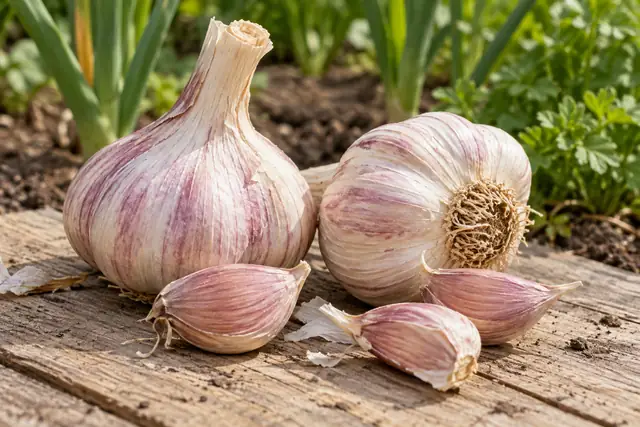
This image was created with AI from described plant characteristics and growing advice. It shows a possible situation and is not a photograph of a verified cultivar.
- Planting time
- Autumn; spring planting only with a suitable type
- Location
- Sunny, with good drainage
- Harvest signal
- Lower leaves brown, upper leaves still partly green
This growing advice helps you choose. Your variety, growth stage, weather and conditions in your space determine the actual timing.
Sowing under cover and raising seedlings
Plant cloves · Garlic
October–November, if outdoor soil is very wetLet suitable cloves root under cover in pots with good drainage.
- Germination and temperature
- No warm germination tray needed; choose suitable planting stock and well-drained soil.
- After emergence
- Let cloves root in well-drained soil. Keep pots outside or under cover; avoid persistently wet soil.
- Pricking out and potting on
- Do not prick out: you plant cloves. Pots are transplanted later with the whole root ball.
- Hardening off and planting out
- Plant cloves directly. In very wet soil, you can first root them in pots according to product guidance.
Autumn and spring garlic are not interchangeable. Elephant garlic is a relative of leek; use its own planting-stock guidance.
Sources and use
Royal Horticultural Society · Knoflook kweken ↗Soort- of productgebonden bron; buitenlandse perioden zijn geen vaste Nederlandse zaaidatum.
University of Minnesota Extension · Growing garlic ↗Soort- of productgebonden bron; buitenlandse perioden zijn geen vaste Nederlandse zaaidatum.
Guideline periods for the Netherlands and Flanders. Check the variety, available light, soil and measured temperatures. Greenhouse heating does not guarantee enough winter light.
Flavour and kitchen
The variety name Flavor does not specify an individual flavour note. Raw garlic smells pungent and becomes milder with gentle cooking; try this variety from your own garden in different ways.
This flavour description applies to the crop; a separate taste test for this variety is not supported by evidence.Try the cloves in garlic butter or simmer them in tomato sauce. Keep a first tasting simple so freshness and cooking method remain recognisable.
Why choose it? Choose Flavor for its spring planting time and offered pink form. This provides an option if you missed autumn planting or gain garden space only after winter.
How to grow garlic
The options below belong to the plant. From these, choose the method that suits your variety's growth habit.
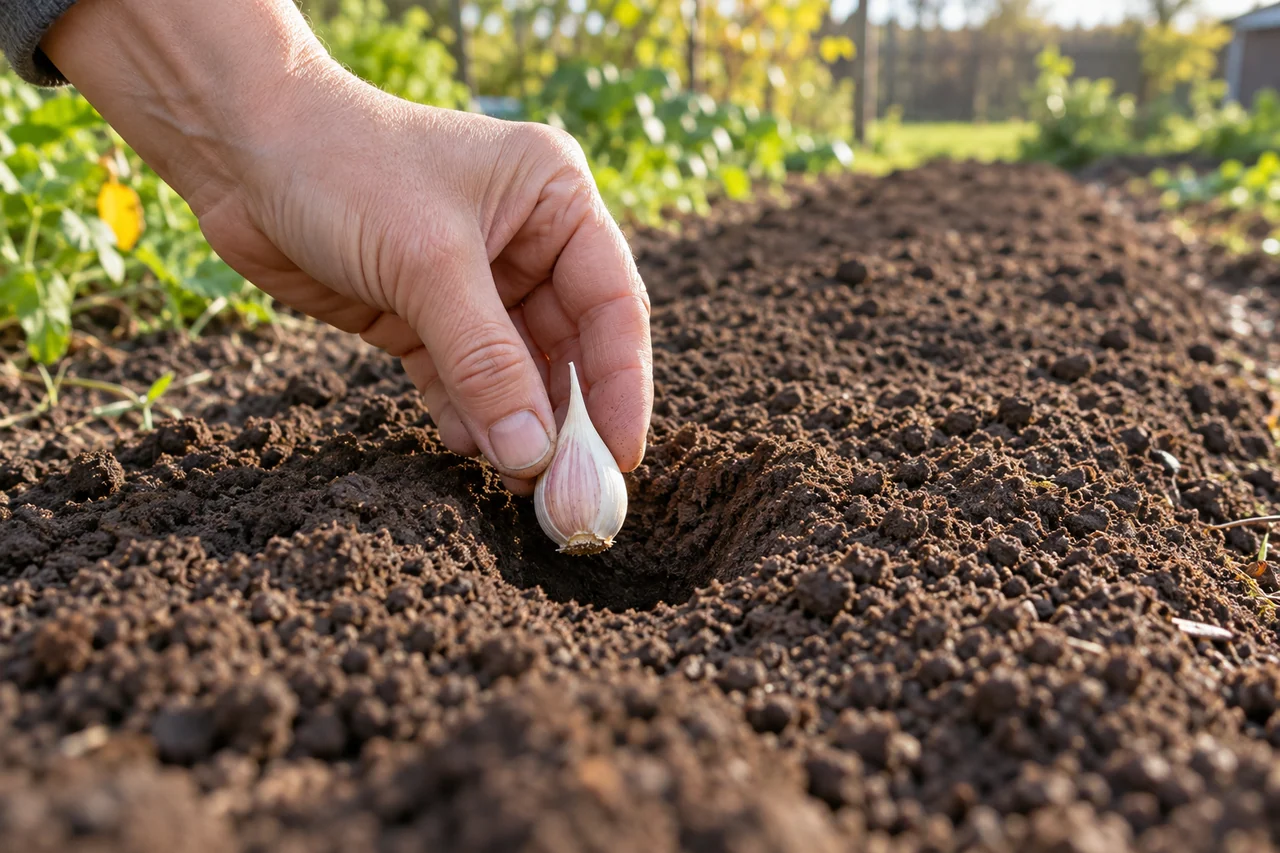
This image was created with AI from described plant characteristics and growing advice. It shows a possible situation and is not a photograph of a verified cultivar.
Autumn cloves in a sunny bed
A permanent row overwinters outside and gets room to form bulbs in spring.
- Choose healthy planting material suited to your planting season.
- Split the bulb just before planting and leave each clove's skin intact.
- Plant pointed end up with approximately 15 cm between cloves.
Suitable for a bed that does not remain waterlogged in winter.
Tick off your supplies →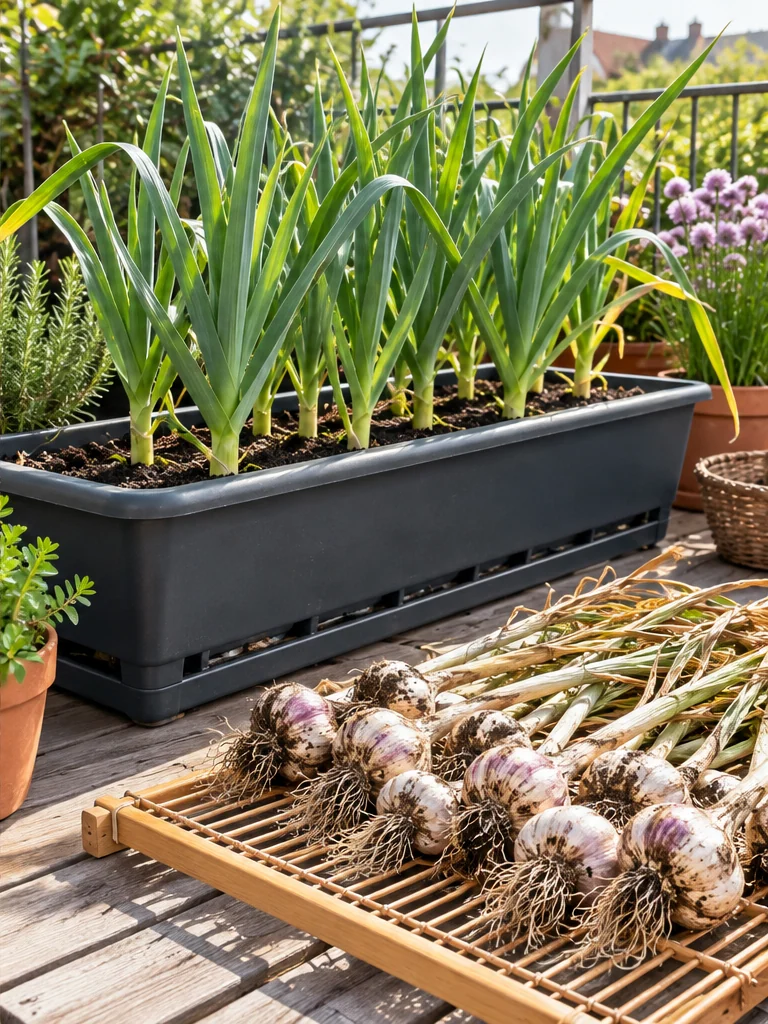
This image was created with AI from described plant characteristics and growing advice. It shows a possible situation and is not a photograph of a verified cultivar.
Garlic in a deep balcony container
A container brings growing closer and makes drainage manageable.
- Choose a container at least approximately 25 cm deep with open drainage holes.
- Fill with airy growing substrate and space the cloves apart.
- Check moisture during growth; keep harvested bulbs dry and airy afterwards.
For a sunny balcony where the container can stay outdoors.
Tick off your supplies →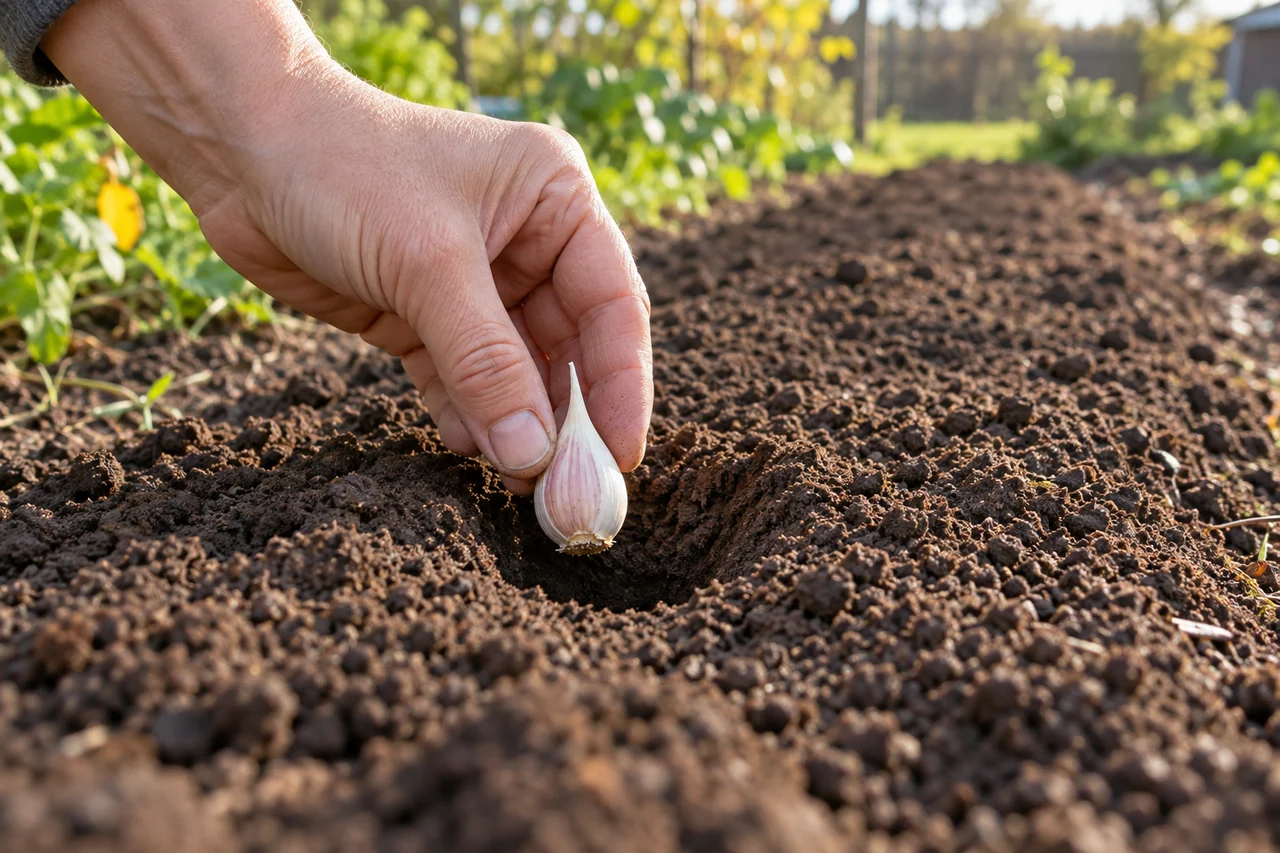
This image was created with AI from described plant characteristics and growing advice. It shows a possible situation and is not a photograph of a verified cultivar.
Point upwards, clove beneath the soil
Choose firm cloves and plant them flat end down. Cover with soil; the cloves already planted stay underground.
View your supplies →Why grow Flavor?
Pink spring garlic for a start after winter.
Choose Flavor for its spring planting time and offered pink form. This provides an option if you missed autumn planting or gain garden space only after winter.
How this choice tastes
The variety name Flavor does not specify an individual flavour note. Raw garlic smells pungent and becomes milder with gentle cooking; try this variety from your own garden in different ways.
From harvest to kitchen
Try the cloves in garlic butter or simmer them in tomato sauce. Keep a first tasting simple so freshness and cooking method remain recognisable.
What needs attention when growing
Plant the intended sets early in spring according to the supplier, in sun and well-drained soil. Water during dry growth and keep maturing bulbs clear of waterlogging.
Check the foliage and lift a trial bulb once lower leaves turn yellow. Dry the harvest well and use small or damaged bulbs first in the kitchen.
Choose by flavour, shape and use
Thermidrôme: White autumn garlic with a slight purple tint. Use cloves in dressing or let them cook with roasted vegetables. A roasted bulb provides a soft paste to mix into mashed potato.
For Thermidrôme, autumn growing is the main distinction. The garlic aroma is sharper raw and mellower after gentle frying; a ranking of pungency has not been established.
Clédor: Spring garlic with a white bulb and pink-beige cloves. Use finely chopped cloves in a soup base or cook briefly with vegetables. For a milder result, avoid frying to dark brown.
Clédor provides the spicy garlic aroma; a separate cultivar aroma has not been established. Taste a small amount of a fresh clove and compare the same preparation with your other garlic.
Flavor: Pink spring garlic for a start after winter. Try the cloves in garlic butter or let them simmer in tomato sauce. Keep a first tasting simple so freshness and preparation remain distinguishable.
The variety name Flavor does not specify an individual flavour note. Raw garlic smells pungent and becomes milder with gentle cooking; try this variety from your own garden in different ways.
Germidour: Early autumn garlic with purple and white tones. Thinly slice a clove for a marinade or roast a whole bulb. The purple tint is in the wrapper; the fragrant cloves are used in the dish.
Feggies describes Germidour as mildly spicy. This gives a direction for tasting; pungency also changes with freshness, drying and preparation and is not a fixed score against other garlic cultivars.
Choose planting stock suited to the season
A supermarket bulb tells you little about health or suitability for your garden. Buy identifiable planting stock and check the recommended planting period. Hardneck types can produce a flower stalk; softneck types grow differently. Elephant garlic looks similar but is botanically related to leek. Keep the label with the row.
A cold period helps bulb formation
Much garlic needs a cold period to form several cloves. Autumn planting provides that naturally; some types also suit early spring. The American calendar is not a Dutch planting calendar. Let cultivar choice and the workability of your soil determine when you start.
Give roots air and drainage
Garlic likes sun and soil that lets water through. In a wet spot, you can choose a raised bed or grow in a deep container. Aim for a settled, crumbly structure and remove competing weeds. A clove in a constantly wet planting hole gets a poor start.
Plant the clove with its tip upwards
Carefully separate the cloves and retain their protective skin. Set the flat base down and the tip up; RHS specifies about 2.5 cm of soil above the tip. Do not plant them touching. In very wet winter soil, modules under unheated cover are an alternative, followed by planting out in spring.
Monitor moisture, growth and any flower stalk
Water during drought while the leaves are actively growing. Remove weeds shallowly without hoeing close to the roots. On hardneck garlic, you can remove the young flower stalk and use it in the kitchen. Record that you have done so, allowing you to compare your harvest and method later.
Investigate a wilted or yellow row
A few yellowing leaves towards harvest are normal. A whole row declining early calls for a check of moisture, roots and bulb bases. Do not replant suspect stock. Rotate onion, leek and garlic between seasons and avoid damage during weeding; this gives the next crop a cleaner start.
Dig up a test bulb before lifting everything
Do not wait until all the foliage has gone. When lower leaves turn brown while the top is still green, inspect a test bulb. Loosen the soil with a fork and pull gently. Keep the skin intact. An undamaged bulb is easier to dry and store than one with puncture damage.
Let the harvest finish drying under cover
Lay or hang the bulbs with good airflow in a dry, sheltered place. Drying generally takes a few weeks; assess the neck and outer skin too. Then remove dry roots and foliage where appropriate. Use damaged bulbs first and check stored bulbs regularly. Flavour and storage behaviour depend on the type and your drying conditions.
What you need
Tick what you already have. The extras depend on how you grow.
0 of 6 ticked off
Your ticks are saved in this browser.
Discover and grow more
More background, sources and image information
SeedSteps editorial team · updated on 11 October 2026. The AI images illustrate species and practical growing situations; they do not prove an exact cultivar, observations from your own garden or yield.
Britse gewasadviezen worden gecombineerd met Nederlandse en Vlaamse informatie waar beschikbaar. Amerikaanse Extension-bronnen ondersteunen plantprincipes en herkenning; hun kalenderdata, lokale plaagdruk, bestrijdingsmiddelen en mestdoseringen worden niet rechtstreeks op Nederland of Vlaanderen toegepast. Vorst, bodemwarmte, standplaats en expliciete rasinformatie blijven de lokale controle. Commerciële bronnen onderbouwen uitsluitend benoemde ras- en plantkenmerken; zij zijn geen affiliate-aanbeveling.
- World Checklist of Vascular Plants — 4 juni 2026Royal Botanic Gardens, Kew · accessed 2026-10-07
- Common catalogue of varieties of vegetable species — 27 januari 2023Europese Commissie · accessed 2026-10-07
- Knoflook roos lente Flavor biologischFeggies · accessed 2026-10-11
- Herfst- en voorjaarsknoflookSemailles · accessed 2026-10-11
- Herfstknoflook Thermidrôme BiologischFeggies · accessed 2026-10-11
- Knoflook roos lente Clédor biologischFeggies · accessed 2026-10-11
- Paarse herfstknoflook Germidour BiologischFeggies · accessed 2026-10-11
- How to grow garlicRoyal Horticultural Society · accessed 2026-10-11
- Knoflook kwekenRoyal Horticultural Society · accessed 2026-10-10
- Growing garlicUniversity of Minnesota Extension · accessed 2026-10-10
Supporting evidence by chapter: Why grow Flavor?: Feggies, Semailles. How this choice tastes: Feggies, Semailles. From harvest to kitchen: Feggies, Semailles. What needs attention when growing: Feggies, Semailles. Choose by flavour, shape and use: Feggies, Royal Horticultural Society, Feggies, Semailles, Feggies, Feggies. Choose planting stock suited to the season: Royal Horticultural Society, University of Minnesota Extension. A cold period helps bulb formation: Royal Horticultural Society, University of Minnesota Extension. Give roots air and drainage: Royal Horticultural Society, University of Minnesota Extension. Plant the clove with its tip upwards: Royal Horticultural Society, University of Minnesota Extension. Monitor moisture, growth and any flower stalk: Royal Horticultural Society, University of Minnesota Extension. Investigate a wilted or yellow row: Royal Horticultural Society, University of Minnesota Extension. Dig up a test bulb before lifting everything: Royal Horticultural Society, University of Minnesota Extension. Let the harvest finish drying under cover: Royal Horticultural Society, University of Minnesota Extension.