
Spring onions: a small row for fresh flavour
Spring onions need little width and provide a familiar harvest: a pale stem with green leaves. Sow small batches to spread the supply. Some varieties barely form a bulb, while others swell a little more; choose the type and pick at the young stage you want to use in the kitchen.
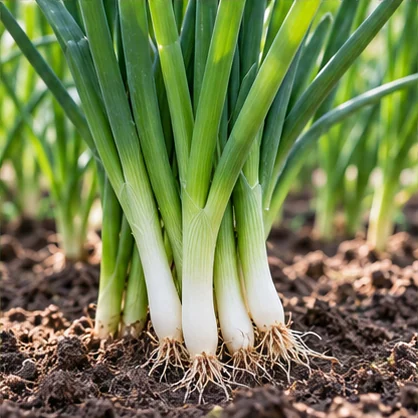
This image was created with AI from described plant characteristics and growing advice. It shows a possible situation and is not a photograph of a verified cultivar.
- Growing
- Direct sowing or modules
- Location
- Sun and good drainage
- Space
- A short row or planter
- Planning
- Small successive sowings
This growing advice helps you choose. Your variety, growth stage, weather and conditions in your space determine the actual timing.
Sowing under cover and raising seedlings
Start under cover in a cool, bright position · Spring onion
February–March for seed-grown onionsSow lightly in modules or a seed tray and grow on steadily.
- Germination and temperature
- Germinate under cover, then grow on in good light without excessive warmth.
- After emergence
- Give seedlings light immediately after emergence. A dark loft needs suitable grow lights; warmth alone is insufficient. Ventilate and keep the compost moist without saturating it.
- Pricking out and potting on
- Sow in modules or a seed tray. Move young plants with their root ball according to cultivar guidance; a small group of spring onions can stay together.
- Hardening off and planting out
- Gradually acclimatise indoor-raised plants to sun, wind and outdoor temperatures; shelter them again on cold nights. Plant out sturdy young onions at suitable final spacing. Seed-grown onions are plants raised from seed; onion sets are planted directly.
Onion sets and seed-grown onions are different starting routes. Bunching and spring onions are generally harvested young.
Sources and use
RHS · uien ↗Britse teeltrichtlijn voor een gematigd klimaat; de genoemde perioden zijn richtlijnen voor Nederland en Vlaanderen.
Royal Horticultural Society · Bosui kweken ↗Soort- of productgebonden bron; buitenlandse perioden zijn geen vaste Nederlandse zaaidatum.
Guideline periods for the Netherlands and Flanders. Check the variety, available light, soil and measured temperatures. Greenhouse heating does not guarantee enough winter light.
A different flavour, a different harvest.
Choose by more than the name. Discover how these varieties and crop types taste, what you can use them for and what growing them involves.
6 of 6 choices · 6 named varieties
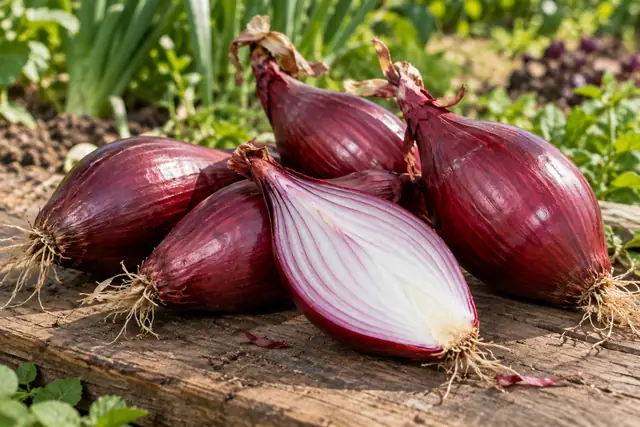
This image was created with AI from described plant characteristics and growing advice. It shows a possible situation and is not a photograph of a verified cultivar.
Doux de Florence ras van Simiane
Elongated crimson onion for raw use.
Choose Simiane for an unusual bulb shape and a dish in which raw onion can be visible. Harvesting young spreads its use.
Flavour, kitchen and growing
How does it taste?
The supplier describes Simiane as sweet. Taste thin slices raw; actual pungency still depends on growing season, freshness and preparation.
In the kitchen
Slice the long bulbs crossways into rings for tomato salad. Harvested young and green, this onion also goes into potato salad or an omelette.
A space in the garden
Sow in fine soil with few weeds and thin out. The slow initial stage needs attention; leave room for the elongated bulbs that develop later.
Harvesting
Pull some plants young for fresh kitchen onions and let the rest mature. Use the harvest according to its fresh purpose; a fixed storage period is not established.
Read the source notes →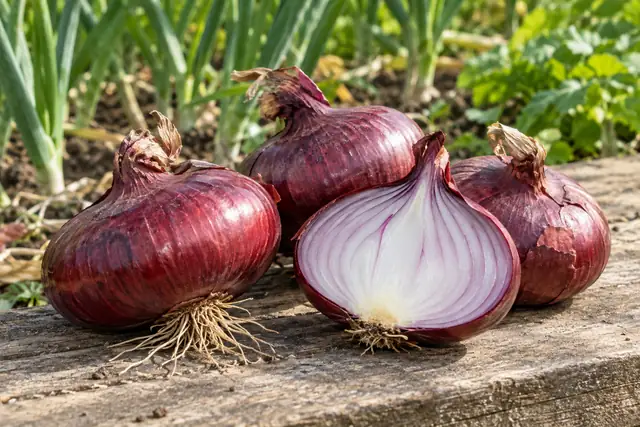
This image was created with AI from described plant characteristics and growing advice. It shows a possible situation and is not a photograph of a verified cultivar.
Rood van Abbeville
Medium-sized, flattened red onion that can also be stored.
Choose this red onion for colour and storage potential. Flattened bulbs contrast with round, yellow storage onions.
Flavour, kitchen and growing
How does it taste?
The full onion aroma is sharper raw and mellows with gentle frying. A specific extra-sweet cultivar note has not been established here.
This flavour description applies to the crop; there is no separate tasting result for this variety.In the kitchen
Slice into thin half-rings for salad or braise slices slowly. The medium size is practical for a dish needing a modest amount of onion.
A space in the garden
Sow in spring and thin gradually. Keep the bed weed-free and water in drought while foliage actively grows.
Harvesting
For storage, wait until the foliage dries as it matures and the outer skin is firm. Dry the bulbs under cover and use damaged onions separately.
Read the source notes →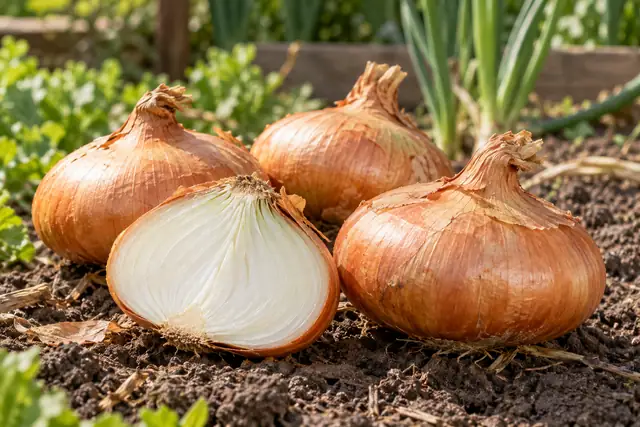
This image was created with AI from described plant characteristics and growing advice. It shows a possible situation and is not a photograph of a verified cultivar.
Stuttgart
Flattened onion with a copper-coloured exterior.
Choose Stuttgart if you want to grow storage onions from seed. The source also mentions raising onion sets; that requires a different desired final size.
Flavour, kitchen and growing
How does it taste?
Stuttgart gives the familiar onion aroma for everyday cooking. Shape and storage are more clearly documented than a separate cultivar-specific flavour note.
This flavour description applies to the crop; there is no separate tasting result for this variety.In the kitchen
Chop for a soup base or fry rings slowly until golden. Simple pan cooking shows the transition from fresh pungency to a mellower aroma.
A space in the garden
Sow thinly in a spring bed with few weeds. Decide beforehand whether you want eating bulbs or small sets, as that determines space per plant.
Harvesting
Let eating bulbs mature and dry carefully. Label any home-grown onion sets separately and remove soft or diseased specimens from both supplies.
Read the source notes →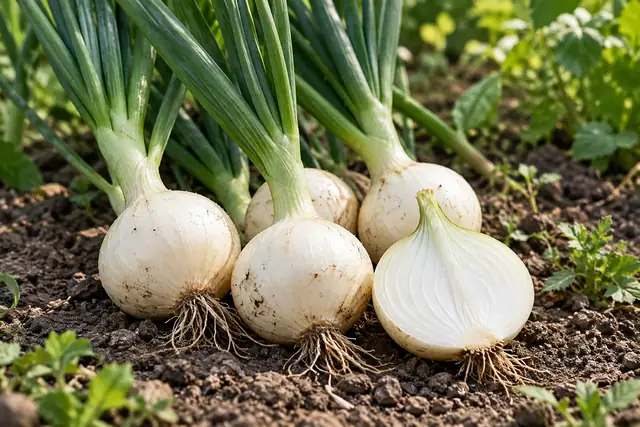
This image was created with AI from described plant characteristics and growing advice. It shows a possible situation and is not a photograph of a verified cultivar.
Wit uit Lisboa
Small, white bulb with upright, dark green foliage.
This onion suits a small, white harvest and young use. Pull a few plants from the row at a time for fresh meals.
Flavour, kitchen and growing
How does it taste?
The fresh onion scent suits a young kitchen onion. A distinct level of pungency is not substantiated; taste a small piece before using it raw.
This flavour description applies to the crop; there is no separate tasting result for this variety.In the kitchen
Slice young white parts and healthy greens for soup or stir-frying. Sprinkle some finely chopped foliage over an omelette just before serving.
A space in the garden
Sow directly in a fine bed and thin according to intended use. Young kitchen onions can stand closer than large bulbs, but keep weeds away.
Harvesting
Harvest young plants as needed and use them fresh. For full bulbs, wait for maturity; the source gives no long-term storage guarantee.
Read the source notes →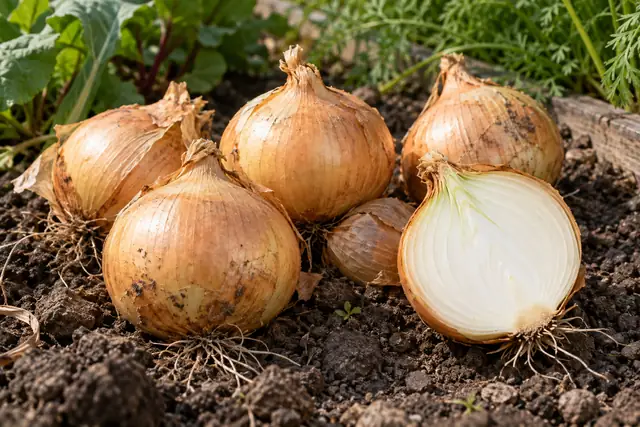
This image was created with AI from described plant characteristics and growing advice. It shows a possible situation and is not a photograph of a verified cultivar.
Shakespeare
Autumn onion sets for an early harvest next season.
Choose Shakespeare for autumn planting and an earlier following harvest. The indicated storage life is average, so reserve some for immediate consumption.
Flavour, kitchen and growing
How does it taste?
Shakespeare has firm flesh and a typical onion character. Gentle frying makes its natural sweetness more noticeable; no exceptional flavour note has been established.
This flavour description applies to the crop; there is no separate tasting result for this variety.In the kitchen
Use early bulbs for fresh onion soup or a vegetable pan. Young onions can go straight into cooking with tender green foliage.
A space in the garden
Plant sets in autumn while the soil is workable. A raised bed helps wet sites drain winter rain adequately.
Harvesting
Late spring can bring the first harvest, depending on winter and spring conditions. Eat young bulbs fresh or dry fully mature onions for limited storage.
Read the source notes →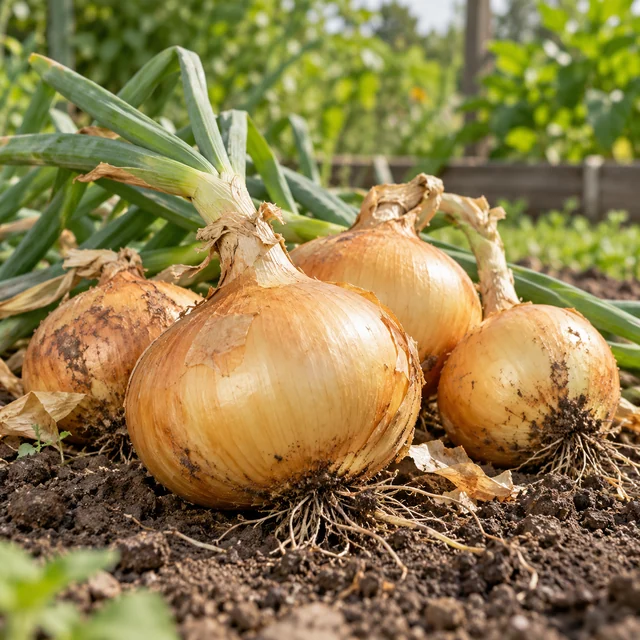
This image was created with AI from described plant characteristics and growing advice. It shows a possible situation and is not a photograph of a verified cultivar.
Sturon
Round, yellow spring onion sets for storage after summer.
Choose Sturon for large, round storage bulbs. According to the source, it is a selection from Stuttgart, with a separate variety name and its own planting stock.
Flavour, kitchen and growing
How does it taste?
Sturon has an onion flavour that is sharper raw and gentler when cooked slowly. The flavour description gives no reliable ranking among yellow storage onions.
This flavour description applies to the crop; there is no separate tasting result for this variety.In the kitchen
Use round bulbs in soups, stews and oven dishes. Cut equal pieces so a large onion cooks through without small pieces burning.
A space in the garden
Plant small sets in a sunny, well-drained spring bed. Water during persistent drought and keep growing foliage free from weed competition.
Harvesting
Lift when foliage naturally falls; do not force it by bending. Dry well and exclude moist, thick necks from storage.
Read the source notes →Choose your way to grow
From a garden bed to a suitable pot or support: give your plant a place that suits your garden and the care you can provide.
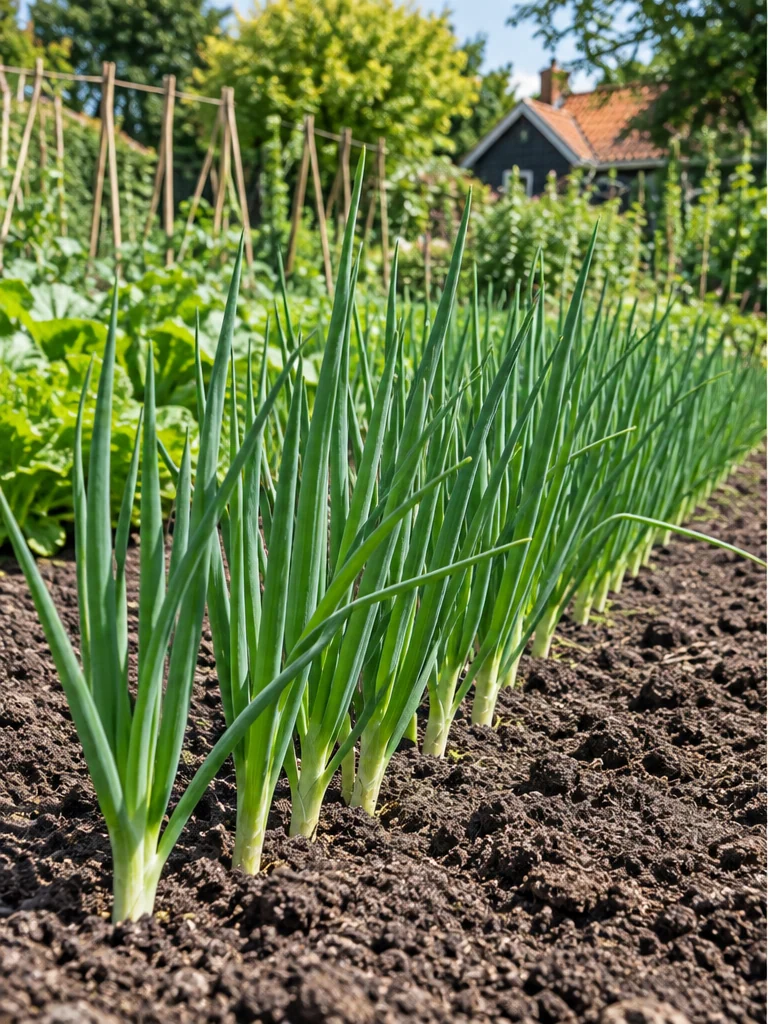
This image was created with AI from described plant characteristics and growing advice. It shows a possible situation and is not a photograph of a verified cultivar.
A short row beside the path
Thin sowing keeps young onions clearly visible.
- Prepare a fine, weed-free seedbed.
- Sow thinly within the variety's sowing window.
- Harvest a few young onions when the stem is usable.
For a small vacated plot.
Tick off your supplies →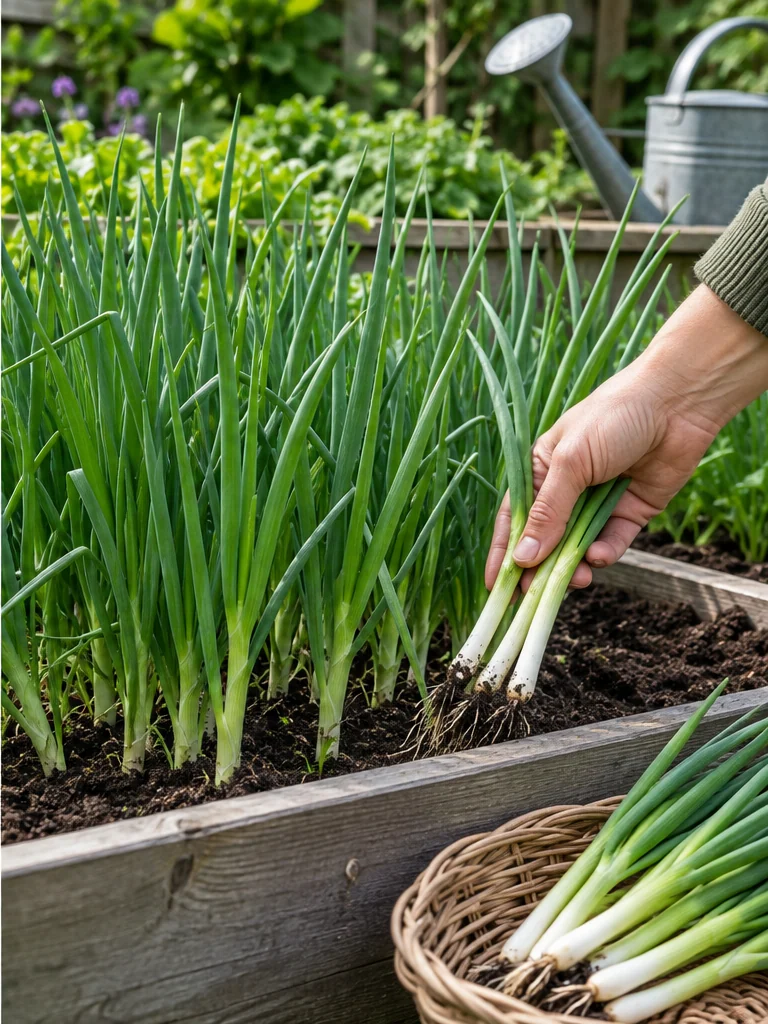
This image was created with AI from described plant characteristics and growing advice. It shows a possible situation and is not a photograph of a verified cultivar.
Spring onions in a wide container
A container near the kitchen makes small harvests easy.
- Use a wide container with drainage.
- Sow thinly or plant small module rootballs.
- Check moisture and give plants space.
For a sunny balcony or patio.
Tick off your supplies →Choose a young onion with the shape you want
Spring onion names cover several young onion types: long cylindrical forms without large bulbs and types with small bulbs. Read descriptions and label the choice clearly. The aim is a fresh young harvest; storage onions need different planting and drying.
A short row can be sown more often
Sow small batches within variety windows to avoid using all stems together. Early or overwintering crops need suitable varieties. Workable soil determines outdoor timing. Cold soil and low winter light can greatly slow even emerged crops.
Remove weeds before starting
Thin young leaves easily vanish among weeds. Prepare a fine, clear seedbed in sun with good drainage. Avoid fresh strong manure near seed. Containers suit even, appropriate compost rather than a mix with large coarse chunks.
Sow thinly or start with small rootballs
Sow at variety depth and cover gently. Keep the surface moist until emergence. Modules are also possible; transplant young root balls carefully without drying roots. Mark both row ends so you know where to weed.
Thin without pulling the whole row loose
Crowded plants have less room for useful stems. Thin by variety and size aim. Work gently near shallow roots and use healthy young thinnings. Not all bunching onions need wide spacing, but impenetrable clumps complicate clean harvesting.
Monitor the root zone in dry weather
Bunching onions need even moisture during stem growth. Check upper roots in dry weather and water soil gently. Container edges can dry faster than centres. Weed by hand near rows; deep hoeing can damage small roots.
Assess yellow tips and failing plants separately
A dry tip does not automatically mean disease. Look at moisture, roots and the pattern along the row. Rotting bases or affected plants need separate assessment. Rotate the growing space with other onion crops and use clean planting material. An early flower stem makes the plant less suitable for a tender young harvest.
Pick what you will use today or tomorrow
Harvest once leaves and stems suit your dish. Loosen firm soil first and pull gently to preserve neighbours. Wash, remove damage and cool. Use bunching onions fresh; if left longer, reassess whether texture still suits your aim.
What you need
Tick what you already have. The extras depend on how you grow.
0 of 6 ticked off
Your ticks are saved in this browser.
Discover and grow more
More background, sources and image information
SeedSteps editorial team · updated on 11 October 2026. The AI images illustrate species and practical growing situations; they do not prove an exact cultivar, observations from your own garden or yield.
Britse gewasadviezen worden gecombineerd met Nederlandse en Vlaamse informatie waar beschikbaar. Amerikaanse Extension-bronnen ondersteunen plantprincipes en herkenning; hun kalenderdata, lokale plaagdruk, bestrijdingsmiddelen en mestdoseringen worden niet rechtstreeks op Nederland of Vlaanderen toegepast. Vorst, bodemwarmte, standplaats en expliciete rasinformatie blijven de lokale controle. Commerciële bronnen onderbouwen uitsluitend benoemde ras- en plantkenmerken; zij zijn geen affiliate-aanbeveling.
- Ajuin doux de Florence ras van Simiane zaden biologischFeggies · accessed 2026-10-11
- Ajuin rood van Abbeville zaden biologischFeggies · accessed 2026-10-11
- Ajuin Stuttgart zaden biologischFeggies · accessed 2026-10-11
- Ui Sturon 500gram BiologischFeggies · accessed 2026-10-11
- Ajuin wit uit Lisboa zaden biologischFeggies · accessed 2026-10-11
- Shakespeare Gele Herfst Ui - 250gr BiologischFeggies · accessed 2026-10-11
- Growing onions: wortels, verzorging en bewaringUniversity of Minnesota Extension · accessed 2026-10-08
- Bosui kwekenRoyal Horticultural Society · accessed 2026-10-10
Supporting evidence by chapter: Choose a young onion with the shape you want: Royal Horticultural Society, University of Minnesota Extension. A short row can be sown more often: Royal Horticultural Society, University of Minnesota Extension. Remove weeds before starting: Royal Horticultural Society, University of Minnesota Extension. Sow thinly or start with small rootballs: Royal Horticultural Society, University of Minnesota Extension. Thin without pulling the whole row loose: Royal Horticultural Society, University of Minnesota Extension. Monitor the root zone in dry weather: Royal Horticultural Society, University of Minnesota Extension. Assess yellow tips and failing plants separately: Royal Horticultural Society, University of Minnesota Extension. Pick what you will use today or tomorrow: Royal Horticultural Society, University of Minnesota Extension.