
Growing elephant garlic: large cloves, mild aroma
A large clove of elephant garlic grows into a striking broad-leaved plant and later a sizeable bulb. Its mild aroma offers different kitchen possibilities from ordinary garlic. Grow it for enjoyment and an unusual harvest, with enough room and soil that drains winter rain well.
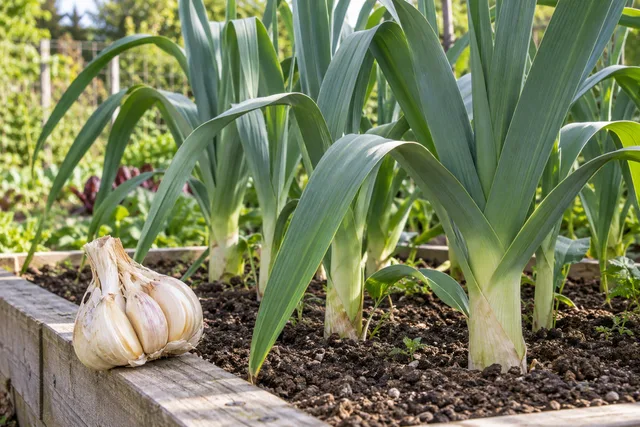
This image was created with AI from described plant characteristics and growing advice. It shows a possible situation and is not a photograph of a verified cultivar.
- Relatedness
- Allium ampeloprasum, related to leek
- Start
- Plant large cloves, preferably in autumn
- Growing location
- Sunny and free-draining
- Flavour
- Mildly garlic- and leek-like
This growing advice helps you choose. Your variety, growth stage, weather and conditions in your space determine the actual timing.
Sowing under cover and raising seedlings
Plant cloves · Elephant garlic
October–November, if outdoor soil is very wetLet suitable cloves root under cover in pots with good drainage.
- Germination and temperature
- No warm germination tray needed; choose suitable planting stock and well-drained soil.
- After emergence
- Let cloves root in well-drained soil. Keep pots outside or under cover; avoid persistently wet soil.
- Pricking out and potting on
- Do not prick out: you plant cloves. Pots are transplanted later with the whole root ball.
- Hardening off and planting out
- Plant cloves directly. In very wet soil, you can first root them in pots according to product guidance.
Autumn and spring garlic are not interchangeable. Elephant garlic is a relative of leek; use its own planting-stock guidance.
Sources and use
RHS · knoflook ↗Britse teeltrichtlijn voor een gematigd klimaat; de genoemde perioden zijn richtlijnen voor Nederland en Vlaanderen.
Feggies · Herfstknoflook Olifant Knoflook Biologisch ↗Nederlandse producent of teeltbron; de rasinstructie blijft leidend.
Royal Horticultural Society · Allium ampeloprasum Elephant ↗Soort- of productgebonden bron; buitenlandse perioden zijn geen vaste Nederlandse zaaidatum.
Guideline periods for the Netherlands and Flanders. Check the variety, available light, soil and measured temperatures. Greenhouse heating does not guarantee enough winter light.
A different flavour, a different harvest.
Choose by more than the name. Discover how these varieties and crop types taste, what you can use them for and what growing them involves.
1 of 1 choices · 0 named varieties
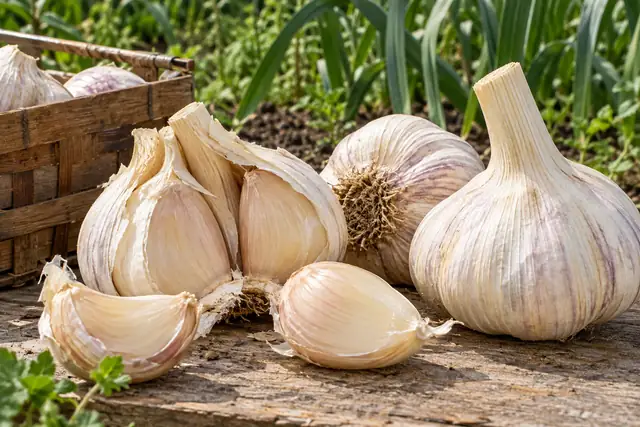
This image was created with AI from described plant characteristics and growing advice. It shows a possible situation and is not a photograph of a verified cultivar.
Elephant garlic
Large cloves with a mild aroma from a relative of leek.
Choose it for exceptional clove size and gentle allium aroma. Botanically it belongs to Allium ampeloprasum, offering a different growing and kitchen idea as a distinct crop.
Flavour, kitchen and growing
How does it taste?
Elephant garlic tastes milder than ordinary garlic and has a leek-like character. You can use larger pieces while the aroma stays gentle; first taste a slowly roasted clove.
This flavour description applies to the crop; there is no separate tasting result for this variety.In the kitchen
Roast a large clove as a side dish or slice it for a vegetable dish. Gentle cooking softens the texture; combine with few strong herbs.
A space in the garden
Plant the large cloves preferably in autumn in sun and well-drained soil. Give more room than small garlic cloves and avoid wet winter soil.
Harvesting
Sometimes one large, undivided bulb grows. You can eat it or replant the following autumn; according to the RHS, early planting more often gives a bulb with several cloves.
Also listed as: Olifantenknoflook.
Read the source notes →Choose your way to grow
From a garden bed to a suitable pot or support: give your plant a place that suits your garden and the care you can provide.
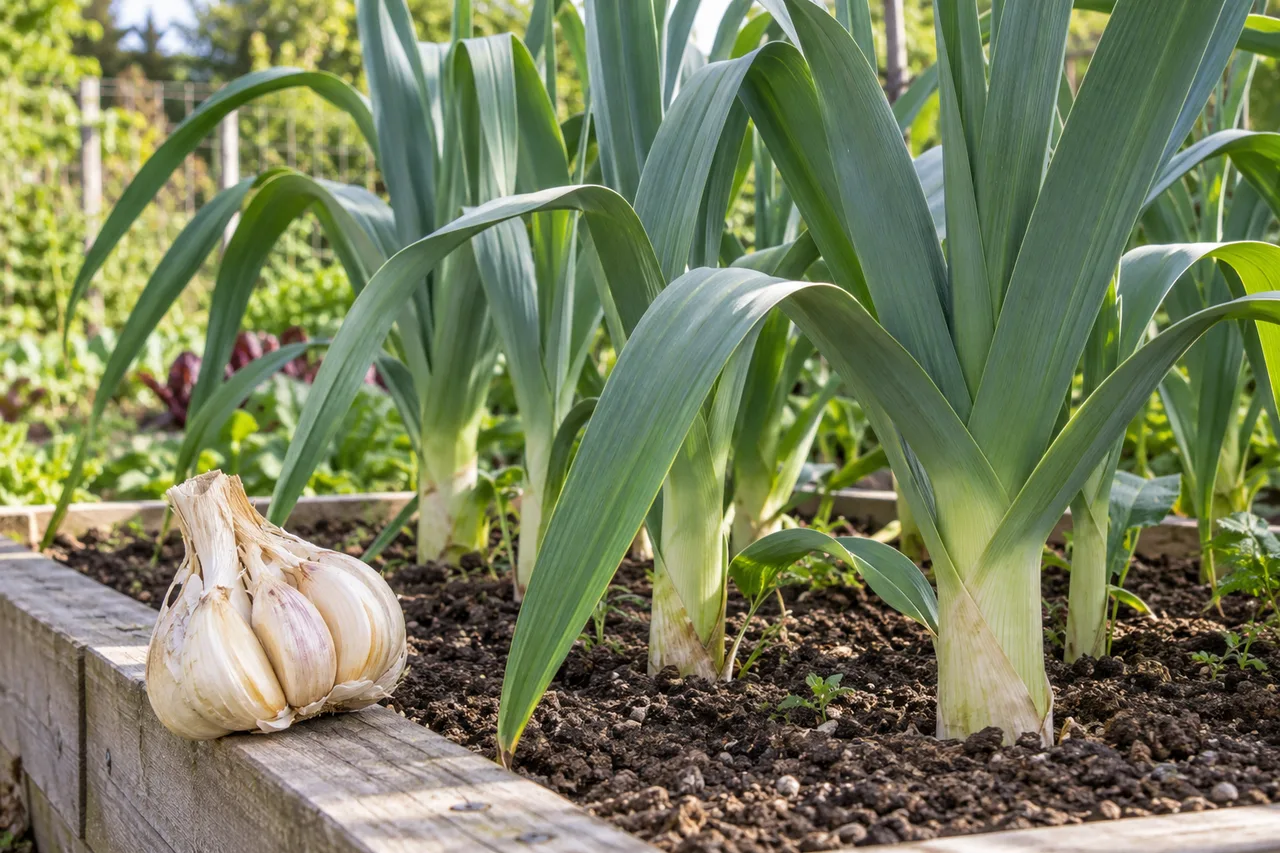
This image was created with AI from described plant characteristics and growing advice. It shows a possible situation and is not a photograph of a verified cultivar.
In a well-drained bed
Give the large bulb a sunny position without winter waterlogging.
- Loosen a sunny bed; use a raised bed on wet soil.
- Plant healthy, large cloves pointed end up with room for broad leaves.
- Lift carefully at maturity and let bulbs dry with airflow.
For a permanent bed from autumn to the following summer.
Tick off your supplies →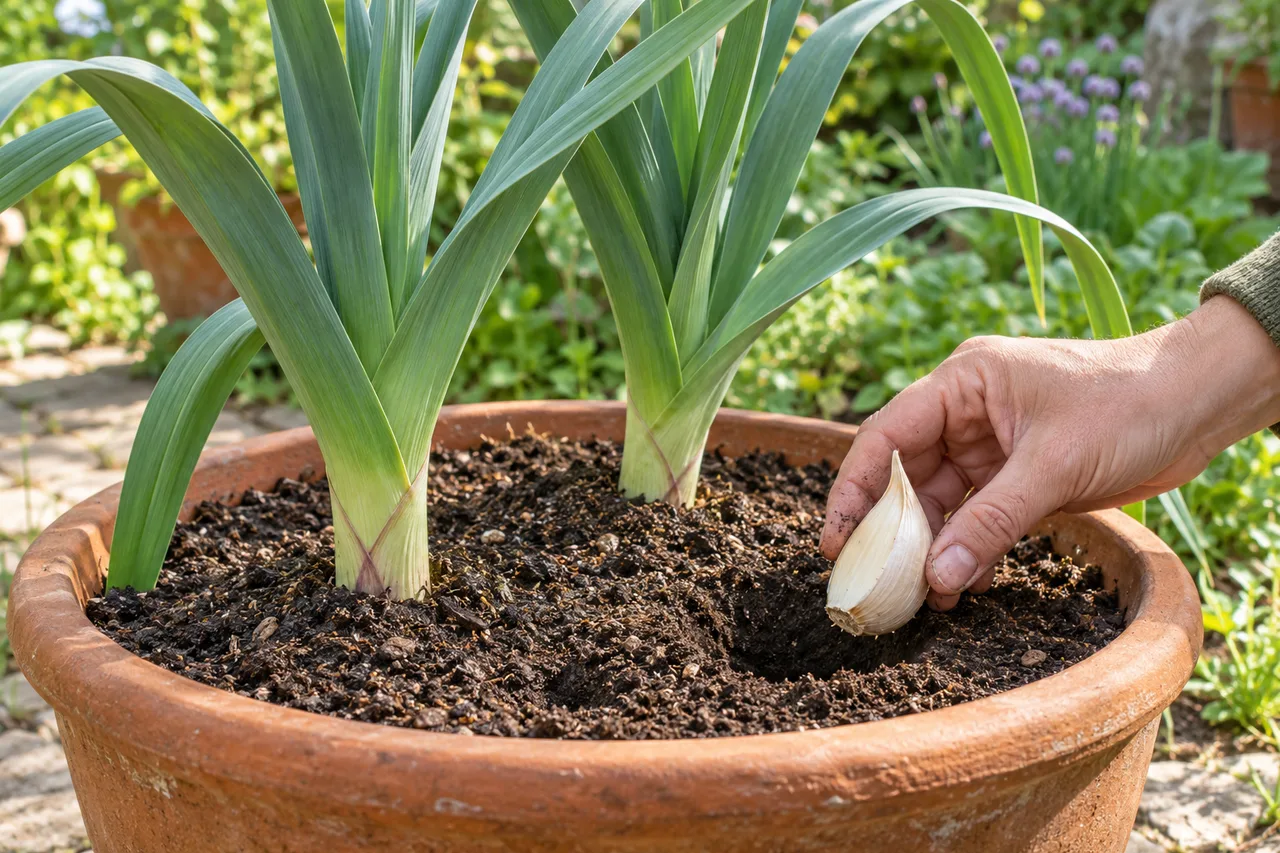
This image was created with AI from described plant characteristics and growing advice. It shows a possible situation and is not a photograph of a verified cultivar.
In a large, deep pot
Use a pot if garden soil stays too wet in winter.
- Choose a large pot with drainage holes and free-draining compost.
- Plant a few large cloves with sufficient spacing.
- Check moisture, remove standing water and dry the harvest after lifting.
For patios or heavy, wet garden soil; pots need more moisture checks.
Tick off your supplies →Choose by flavour, shape and use
Elephant garlic: Large cloves with a mild aroma from a leek relative. Roast a large clove as a side dish or slice for a vegetable bake. Slow cooking softens texture; combine with few strong herbs.
Elephant garlic tastes milder than ordinary garlic and has a leek-like character. You can use larger pieces while the aroma stays gentle; first taste a slowly roasted clove.
Large garlic with its own identity
Elephant garlic belongs to Allium ampeloprasum, a leek relative. Bulbs often contain a few huge cloves. Broad leaves and size distinguish it from ordinary garlic. Expect milder aroma; choose for this character and allow enough room.
Sun and drainage for winter rain
Choose a sunny, sheltered position with fertile soil staying well drained. Prolonged wet winter soil can damage bulbs even in hardy crops. Raise beds where needed. Pot drainage holes and a clear base distinguish moist from constantly saturated conditions.
Plant a large clove
Use healthy intended planting stock, with clove tips upwards. The RHS recommends autumn planting for a long season. This British guidance suits a mild Dutch autumn as a starting point, but do not wait for frozen or waterlogged soil.
Let the leaves fan out
Allow more space than small ordinary garlic cloves. Broad leaves need room without compression. Follow received stock instructions for spacing and depth. Label: later you want to know which bulb came from which starting material.
Care mainly for the root zone
Keep weeds away and water at soil level during a dry, active growing period. A pot dries faster than a bed. Do not leave water standing in a saucer. As ripening approaches, the bulb must be able to dry; extra wetness once foliage dries does not improve storage quality.
Sometimes you get one large bulb
An undivided solo bulb is possible and does not automatically mean failure. Use it in cooking or replant the following autumn. The RHS describes early planting as increasing divided bulbs. Assess results over a full season.
Lift and dry without bruising
Check a bulb as foliage begins to mature. Loosen the soil carefully and do not pull hard on the leaves. Let the harvest finish drying beneath a dry, ventilated roof. Use damaged bulbs first and store only dry, sound specimens; an American monthly calendar is not a fixed Dutch harvest date.
Let the mildness shine
Slowly roast a large clove until soft and spread through mash or onto bread. Thin slices can cook in vegetables. Mild garlic-and-leek character needs few strong herbs. Store whole dried bulbs airy and use a cut clove promptly in another meal.
What you need
Tick what you already have. The extras depend on how you grow.
0 of 4 ticked off
Your ticks are saved in this browser.
Discover and grow more
More background, sources and image information
SeedSteps editorial team · updated on 11 October 2026. The AI images illustrate species and practical growing situations; they do not prove an exact cultivar, observations from your own garden or yield.
Britse gewasadviezen worden gecombineerd met Nederlandse en Vlaamse informatie waar beschikbaar. Amerikaanse Extension-bronnen ondersteunen plantprincipes en herkenning; hun kalenderdata, lokale plaagdruk, bestrijdingsmiddelen en mestdoseringen worden niet rechtstreeks op Nederland of Vlaanderen toegepast. Vorst, bodemwarmte, standplaats en expliciete rasinformatie blijven de lokale controle. Commerciële bronnen onderbouwen uitsluitend benoemde ras- en plantkenmerken; zij zijn geen affiliate-aanbeveling.
- World Checklist of Vascular Plants — 4 juni 2026Royal Botanic Gardens, Kew · accessed 2026-10-07
- Herfstknoflook Olifant Knoflook BiologischFeggies · accessed 2026-10-11
- How to grow garlicRoyal Horticultural Society · accessed 2026-10-11
- Preserving garlicOregon State University Extension · accessed 2026-10-11
- Allium ampeloprasum ElephantRoyal Horticultural Society · accessed 2026-10-11
Supporting evidence by chapter: Choose by flavour, shape and use: Feggies, Royal Horticultural Society. Large garlic with its own identity: Feggies, Royal Horticultural Society, Oregon State University Extension. Sun and drainage for winter rain: Royal Horticultural Society, Royal Horticultural Society. Plant a large clove: Royal Horticultural Society, Feggies. Let the leaves fan out: Feggies, Royal Horticultural Society. Care mainly for the root zone: Royal Horticultural Society, Royal Horticultural Society. Sometimes you get one large bulb: Royal Horticultural Society. Lift and dry without bruising: Oregon State University Extension, Royal Horticultural Society. Let the mildness shine: Feggies, Oregon State University Extension.