
Daikon: give a long, white root space
Beneath rough green leaves, daikon can form a strikingly long, crisp root. Give it soil that roots can penetrate deeply and choose a variety for your sowing time. A short row lets you discover its space needs and harvest timing before reserving a whole bed for large roots.
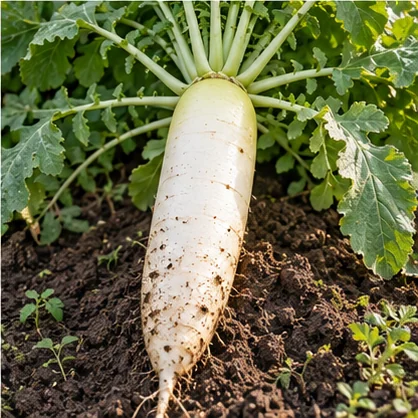
This image was created with AI from described plant characteristics and growing advice. It shows a possible situation and is not a photograph of a verified cultivar.
- Growing
- Sow directly
- Soil
- Deep and minimally compacted
- Harvest
- Long root, depending on cultivar
- Planning
- Follow the cultivar's growing window
This growing advice helps you choose. Your variety, growth stage, weather and conditions in your space determine the actual timing.
Sowing under cover and raising seedlings
Sow directly for young leaves or roots · Daikon
July–August, depending on cultivarSow directly into deep soil; thin in time.
- Germination and temperature
- Wait for workable, warmed soil; follow the cultivar’s minimum sowing temperature.
- After emergence
- Keep the seed row evenly moist during emergence and identifiable with a label.
- Pricking out and potting on
- Sow thinly and thin in the final position where needed. For cutting leaves, every seedling need not stand separately.
- Hardening off and planting out
- Stays where sown; hardening off and planting out are unnecessary for direct sowing.
Many winter radishes suit summer sowing. Use a cultivar suited to the chosen day length and sowing period.
Sources and use
Royal Horticultural Society · Radijs en winterrettich kweken ↗Soort- of productgebonden bron; buitenlandse perioden zijn geen vaste Nederlandse zaaidatum.
Utah State University Extension · Radishes in the garden ↗Soort- of productgebonden bron; buitenlandse perioden zijn geen vaste Nederlandse zaaidatum.
Guideline periods for the Netherlands and Flanders. Check the variety, available light, soil and measured temperatures. Greenhouse heating does not guarantee enough winter light.
Choose your way to grow
From a garden bed to a suitable pot or support: give your plant a place that suits your garden and the care you can provide.
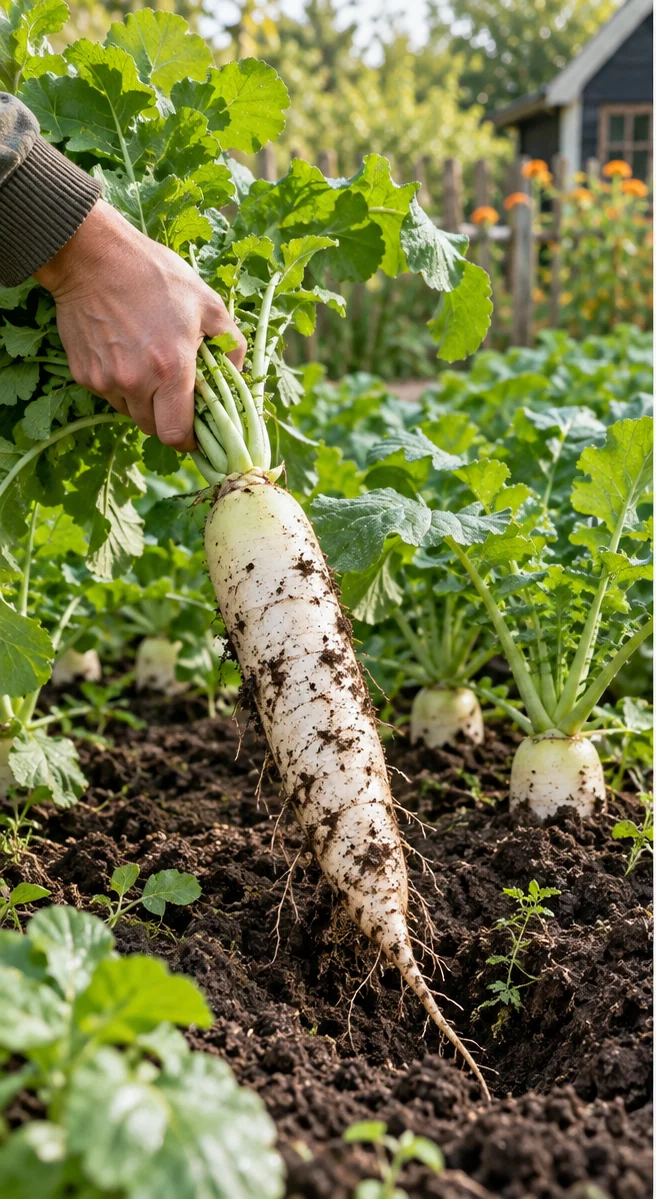
This image was created with AI from described plant characteristics and growing advice. It shows a possible situation and is not a photograph of a verified cultivar.
Long roots in a deep bed
Loose, deep soil suits long daikon roots.
- Check for hard layers and stones.
- Sow thinly within the appropriate variety window.
- Thin early and loosen the soil for harvesting.
For a garden with sufficient soil depth.
Tick off your supplies →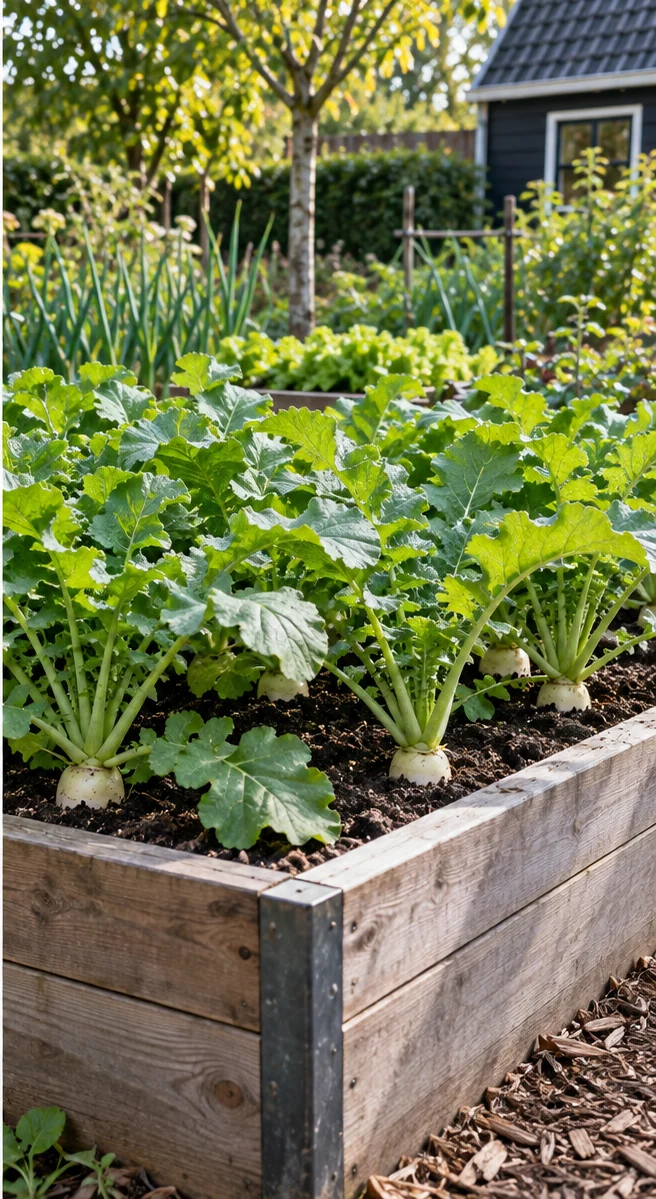
This image was created with AI from described plant characteristics and growing advice. It shows a possible situation and is not a photograph of a verified cultivar.
A deep raised bed
A deep bed can help where the subsoil is difficult.
- Measure the available root depth.
- Use a free-draining, even filling.
- Choose a root shape that actually fits the bed.
For compacted soil; a shallow container does not suit long roots.
Tick off your supplies →Choose size and season
Daikon or mooli often has a long, white root, but shape varies by variety. Choose for your sowing and harvest period. Small red radishes are no timing benchmark: long roots need more time and rootable space.
Look beneath the attractive top layer
Remove large stones and check for a hard layer under loose soil. It can restrict or deform roots. A deep raised bed may help if excess water drains. Standing water at a container's base gives no healthy root space.
Sow directly in the final position
Direct sowing keeps the first root in place. Sow thinly according to packaging and keep the surface moist. Appropriate timing limits early flowering. Mark the row: daikon can stand longer than small radishes beside it.
Thin before roots crowd one another
Daikon needs more space than salad radish. Use variety spacing and thin dense emergence early. Work gently to keep neighbours firm. The rosette needs light; dense leaves do not promise a usable long root.
Let the root grow evenly
Feel the root zone in drought and water the soil. Heat, drought and overcrowding can restrict root formation. Weed shallowly while small. Avoid repeated severe drying followed by sudden soaking.
Include the cabbage family in your bed plan
Family relationships matter for rotation and damage identification. Fine mesh can protect young plants if edges close. Check slugs and growing room beneath it too. A bed with serious soil problems in cabbages or related roots is no automatic follow-on site.
Plenty of foliage and little root: investigate the start
Crowded emergence, warmth or wrong timing can limit harvests. Cutting a flower stem does not create a new young root. Check stones and compaction if branching. Use findings for a new short row somewhere more suitable.
Free a long root first
Check the root shoulder and desired size. Loosen soil beside it with a fork before pulling to keep it whole. Remove foliage for storage, cool and use damaged roots first. Longer storage depends on variety and conditions.
Cut a trial root open and inspect texture before harvesting the whole row. A usable small root may already suffice for a meal; leaving it longer does not guarantee more crispness.
What you need
Tick what you already have. The extras depend on how you grow.
0 of 6 ticked off
Your ticks are saved in this browser.
Discover and grow more
More background, sources and image information
SeedSteps editorial team · updated on 11 October 2026. The AI images illustrate species and practical growing situations; they do not prove an exact cultivar, observations from your own garden or yield.
Britse gewasadviezen worden gecombineerd met Nederlandse en Vlaamse informatie waar beschikbaar. Amerikaanse Extension-bronnen ondersteunen plantprincipes en herkenning; hun kalenderdata, lokale plaagdruk, bestrijdingsmiddelen en mestdoseringen worden niet rechtstreeks op Nederland of Vlaanderen toegepast. Vorst, bodemwarmte, standplaats en expliciete rasinformatie blijven de lokale controle. Commerciële bronnen onderbouwen uitsluitend benoemde ras- en plantkenmerken; zij zijn geen affiliate-aanbeveling.
- World Checklist of Vascular Plants — 4 juni 2026Royal Botanic Gardens, Kew · accessed 2026-10-07
- Radijs en winterrettich kwekenRoyal Horticultural Society · accessed 2026-10-10
- Radishes in the gardenUtah State University Extension · accessed 2026-10-10
Supporting evidence by chapter: Choose size and season: Royal Horticultural Society, Utah State University Extension. Look beneath the attractive top layer: Royal Horticultural Society, Utah State University Extension. Sow directly in the final position: Royal Horticultural Society, Utah State University Extension. Thin before roots crowd one another: Royal Horticultural Society, Utah State University Extension. Let the root grow evenly: Royal Horticultural Society, Utah State University Extension. Include the cabbage family in your bed plan: Royal Horticultural Society, Utah State University Extension. Plenty of foliage and little root: investigate the start: Royal Horticultural Society, Utah State University Extension. Free a long root first: Royal Horticultural Society, Utah State University Extension.