
Celery: grow crisp stalks with attention to water
Juicy celery starts with soil that does not keep drying out. The plant takes a long time to raise and needs more water checks than many other vegetables. Choose a green or self-blanching type for a straightforward crop, or deliberately try the traditional blanching of leaf stalks.
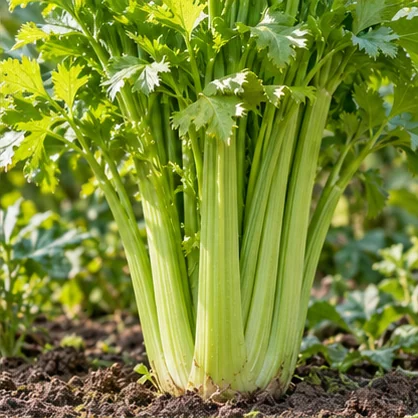
This image was created with AI from described plant characteristics and growing advice. It shows a possible situation and is not a photograph of a verified cultivar.
- Start
- Raise indoors in spring
- Location
- Fertile, moisture-retentive soil
- Growing
- Bed or large container
- Attention
- Moisture and cold young plants
This growing advice helps you choose. Your variety, growth stage, weather and conditions in your space determine the actual timing.
Sowing under cover and raising seedlings
Start early indoors · Celery
March; celery mid-March–early AprilStart indoors in good light and prevent a cold-induced growth check in young plants.
- Germination and temperature
- Germinate in warm, bright conditions according to species guidance. Protect young plants from prolonged cold; keep celeriac above about 10 °C.
- After emergence
- Give seedlings light immediately after emergence. A dark loft needs suitable grow lights; warmth alone is insufficient. Ventilate and keep the compost moist without saturating it.
- Pricking out and potting on
- Sow fine seed shallowly according to the packet; prick out manageable seedlings into individual modules.
- Hardening off and planting out
- Gradually acclimatise indoor-raised plants to sun, wind and outdoor temperatures; shelter them again on cold nights. Plant in late spring or early summer during milder weather. Keep the heart of celeriac above ground.
Celeriac has a long season. Celery and leaf celery have different harvest aims; use their own cultivar instructions.
Sources and use
RHS · knolselderij ↗Britse teeltrichtlijn voor een gematigd klimaat; de genoemde perioden zijn richtlijnen voor Nederland en Vlaanderen.
Royal Horticultural Society · Bleekselderij kweken ↗Soort- of productgebonden bron; buitenlandse perioden zijn geen vaste Nederlandse zaaidatum.
Utah State University Extension · Celery in the garden ↗Soort- of productgebonden bron; buitenlandse perioden zijn geen vaste Nederlandse zaaidatum.
Guideline periods for the Netherlands and Flanders. Check the variety, available light, soil and measured temperatures. Greenhouse heating does not guarantee enough winter light.
A different flavour, a different harvest.
Choose by more than the name. Discover how these varieties and crop types taste, what you can use them for and what growing them involves.
3 of 3 choices · 3 named varieties
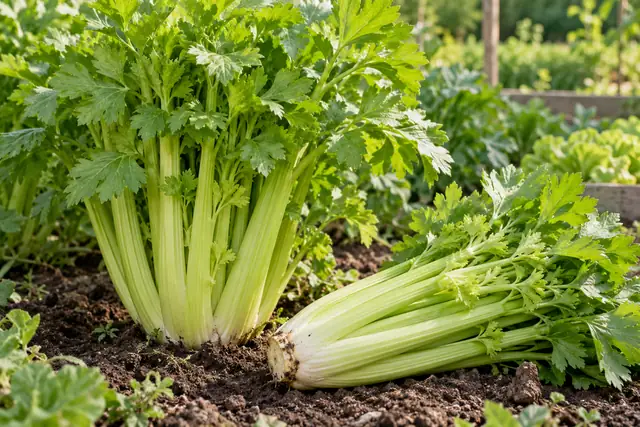
This image was created with AI from described plant characteristics and growing advice. It shows a possible situation and is not a photograph of a verified cultivar.
Blanc Pascal
Blanc Pascal is distinguished by short, broad, fleshy ribs. The pale colour results from excluding light.
Choose this variety for broad ribs and if you want to blanch it as an extra growing step. The name does not mean the crop will automatically turn white.
Flavour, kitchen and growing
How does it taste?
The source emphasises tender, fleshy ribs but no distinct aroma profile. A sweetness comparison with Tall Utah is lacking.
This flavour description applies to the crop; there is no separate tasting result for this variety.In the kitchen
Cut the ribs into firm pieces for cooking or use thin slices where a juicy texture is wanted.
A space in the garden
Raise steadily and plant in fertile, moisture-retentive soil. Add a blanching arrangement only once the plant is sufficiently developed.
Harvesting
Harvest healthy ribs after the desired development. During blanching, check the heart for trapped moisture and rotting leaves.
Read the source notes →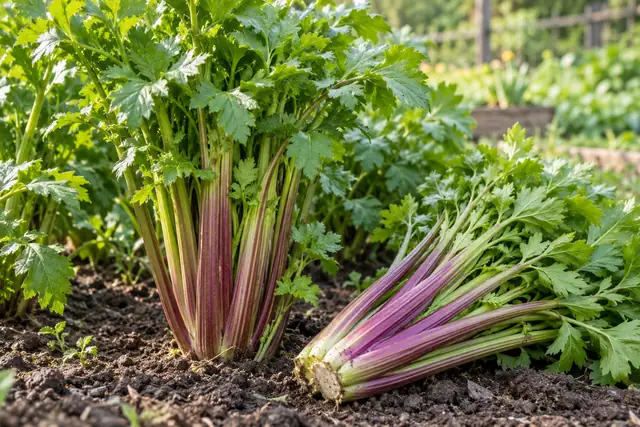
This image was created with AI from described plant characteristics and growing advice. It shows a possible situation and is not a photograph of a verified cultivar.
Violette
Violette brings reddish ribs to a celery bed. Alongside colour, the product description emphasises early, sturdy development.
Choose Violette if you mainly use celery in cooked dishes and find coloured ribs appealing. Colour alone does not prove a flavour difference.
Flavour, kitchen and growing
How does it taste?
The source calls this selection very aromatic. This supports a clear choice for celery flavour, but not a fixed perfume or sweetness level.
In the kitchen
Use ribs and leaves as a fragrant soup base. Thinly sliced ribs also suit dishes where colour remains visible.
A space in the garden
Give pre-grown plants a fertile position with even moisture. Do not let the root zone dry out for long during development.
Harvesting
Harvest ribs when firm enough for your dish. For soup, take healthy aromatic leaves too.
Read the source notes →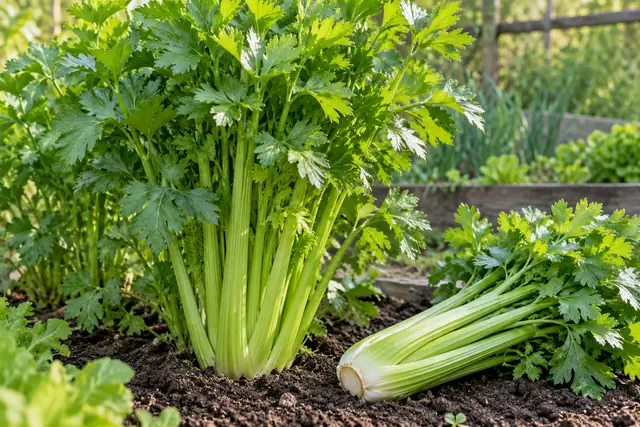
This image was created with AI from described plant characteristics and growing advice. It shows a possible situation and is not a photograph of a verified cultivar.
Tall Utah
Tall Utah is a named celery selection. The source gives growing instructions, but does not substantiate a unique rib colour or fixed plant size here.
Choose Tall Utah as a recognisable celery selection, then assess it against your propagation space and intended use of the ribs.
Flavour, kitchen and growing
How does it taste?
The aroma description applies to celery as a crop. A cultivar-specific comparison with Violette or Blanc Pascal is not available.
This flavour description applies to the crop; there is no separate tasting result for this variety.In the kitchen
Use ribs in salad or juice them with vegetables. The leaves can flavour a cooked base.
A space in the garden
Sow the light-germinating seeds early under cover and grow on steadily. Plant out after the cold period in fertile soil that retains moisture.
Harvesting
Harvest according to rib development rather than a fixed number of days. Regular checks show when the ribs are juicy and usable.
Read the source notes →Choose your way to grow
From a garden bed to a suitable pot or support: give your plant a place that suits your garden and the care you can provide.
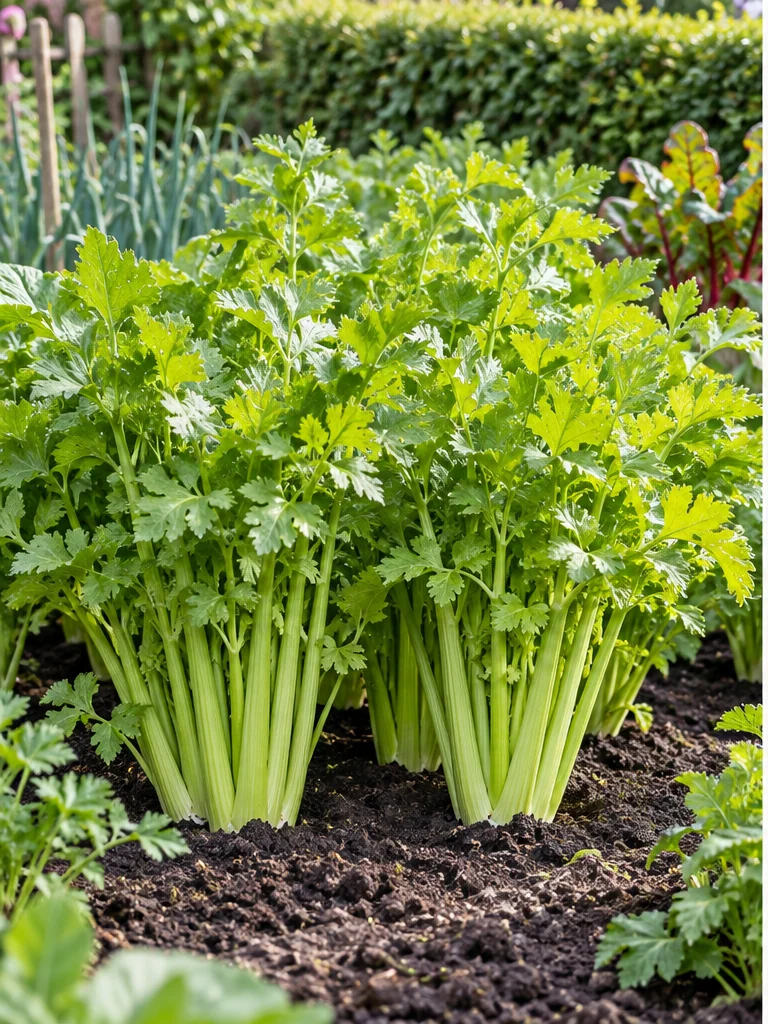
This image was created with AI from described plant characteristics and growing advice. It shows a possible situation and is not a photograph of a verified cultivar.
A block of self-blanching celery
A block lets plants partly shade one another.
- Choose a green or self-blanching variety.
- Plant hardened-off young plants at the variety's spacing.
- Keep moisture even and check the outer stalks.
For a moisture-retentive bed with regular care.
Tick off your supplies →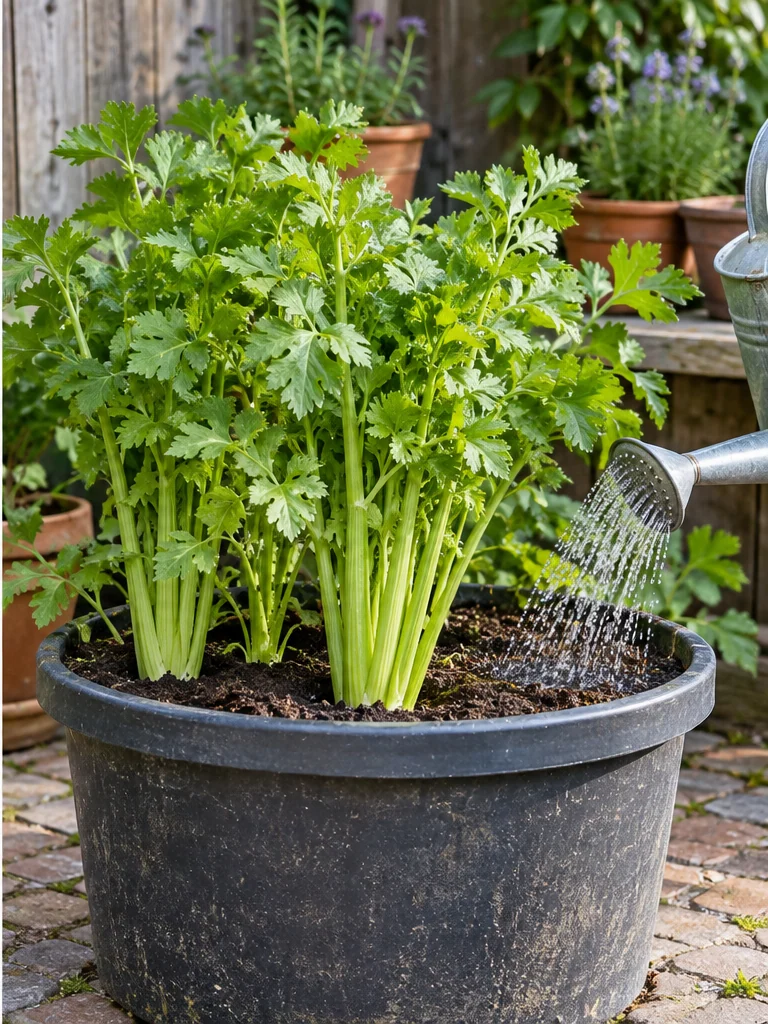
This image was created with AI from described plant characteristics and growing advice. It shows a possible situation and is not a photograph of a verified cultivar.
A large container near the tap
A large container gives accessible stalks and requires reliable moisture checks.
- Use a large container with drainage and fertile compost.
- Give every plant sufficient width.
- Check daily during warm, dry weather.
For a patio where watering is easy.
Tick off your supplies →Explore the varieties
See the confirmed differences. Characteristics without supporting evidence are left blank.
5 of 5 varieties
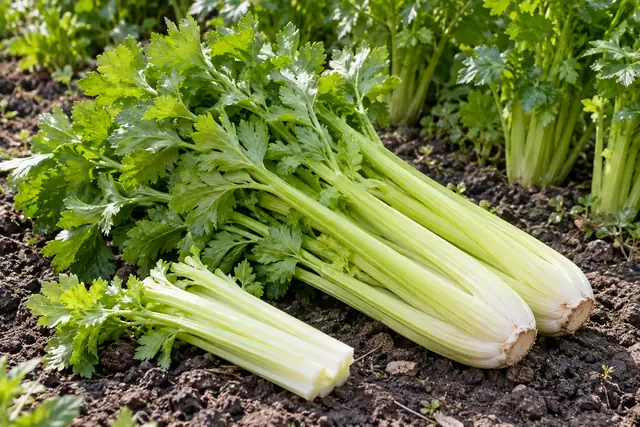
This image was created with AI from described plant characteristics and growing advice. It shows a possible situation and is not a photograph of a verified cultivar.
Celebrity
Explore this variety and use the growing guide to choose a place for your plant.
View variety →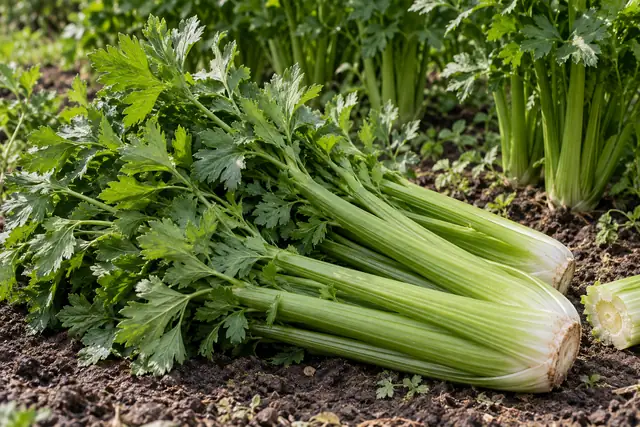
This image was created with AI from described plant characteristics and growing advice. It shows a possible situation and is not a photograph of a verified cultivar.
Hadrian
Explore this variety and use the growing guide to choose a place for your plant.
View variety →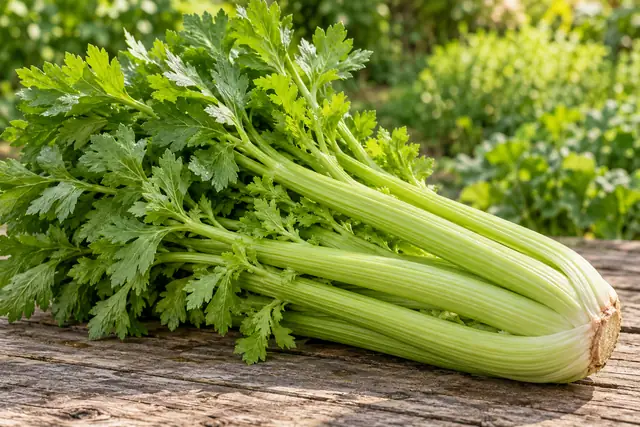
This image was created with AI from described plant characteristics and growing advice. It shows a possible situation and is not a photograph of a verified cultivar.
Tall Utah 52/70
Explore this variety and use the growing guide to choose a place for your plant.
View variety →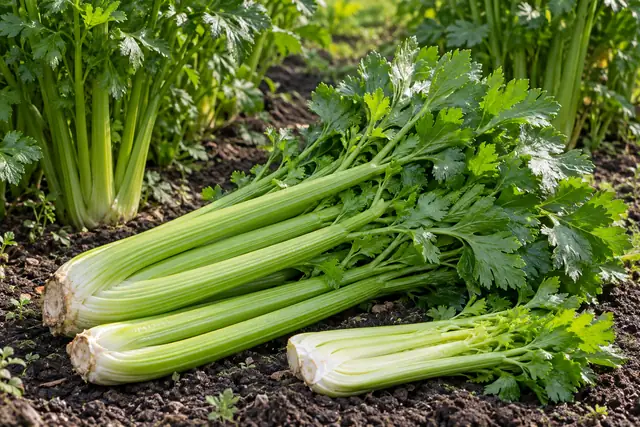
This image was created with AI from described plant characteristics and growing advice. It shows a possible situation and is not a photograph of a verified cultivar.
Tango
Explore this variety and use the growing guide to choose a place for your plant.
View variety →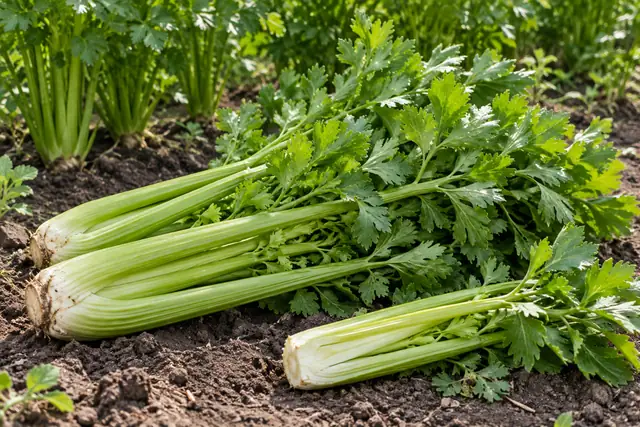
This image was created with AI from described plant characteristics and growing advice. It shows a possible situation and is not a photograph of a verified cultivar.
Victoria
Explore this variety and use the growing guide to choose a place for your plant.
View variety →Choose two to four varieties to compare their source data side by side.
Choose by flavour, shape and use
Blanc Pascal: Blanc Pascal is distinguished by short, broad, fleshy ribs. The pale colour is produced by excluding light. Cut ribs into substantial pieces for cooking or use thin slices where juicy texture is wanted.
The source emphasises tender, fleshy ribs but no distinct aroma profile. A sweetness comparison with Tall Utah is lacking.
Violette: Violette brings reddish ribs to a celery bed. Besides colour, the product description emphasises early, sturdy development. Use ribs and leaves as a fragrant soup base. Thinly sliced ribs also suit dishes where colour remains visible.
The source calls this selection very aromatic. This supports a clear choice for celery flavour, but not a fixed perfume or sweetness level.
Tall Utah: Tall Utah is a named celery selection. The source gives growing guidance but does not substantiate a unique rib colour or fixed plant size here. Use ribs in salad or juice them with vegetables. The leaves can flavour a cooked base.
The aroma description applies to celery as a crop. A cultivar-specific comparison with Violette or Blanc Pascal is not available.
Choose how much blanching work you want
Green and self-blanching varieties can grow in blocks. Traditional types need more light exclusion around stalks. Start with a clearly described variety, not unknown leftover plants. Stalks are leaf stalks; upper leaves remain necessary for growth.
Fine seed needs time and light
Sow indoors in moist seed compost in spring. Barely cover small seeds so light can aid germination. Keep warm enough and provide light after emergence. Germination may be slow. Avoid drying seedlings then trying to restore them with a large watering.
Keep young plants out of prolonged cold
Young celery can bolt later after cold exposure. Match starting to sufficiently warm planting time. Prick out or thin modules promptly and maintain steady growth. Purchased young plants are practical without a suitable light raising area at home.
Plant in fertile, moisture-retentive soil
Harden plants off gradually and plant only when cold will not cause a prolonged growth check. Use well-drained soil with enough organic matter. For block planting, follow cultivar spacing. Water after planting and leave the heart clear; do not bury young leaf stalks deep in wet earth.
Make moisture checks part of every garden round
Celery responds poorly to drought stress: stalks often stay thin or fibrous. Feel the root zone and water the soil gently. A container dries much faster than a moisture-retentive bed. Mulch can help, but leave the base clear. Feed selectively; water and healthy roots remain the first requirements.
Exclude light without wrapping wet foliage
If blanching stalks, follow variety type and work close to harvest. Fit paper or cardboard sleeves around stalks, leaving upper leaves free. Check trapped moisture and soft patches. Green or self-blanching block crops do not all need the same action.
Thin stems call for a broad check
With poor growth, assess moisture, soil and roots. Premature flowers suit disrupted young crops. Inspect spotted leaves and slug damage separately. Do not automatically lime dark heart tissue: nutrient uptake also depends on water and healthy roots.
Harvest stalks or a whole plant
Take usable outer stalks while the centre grows, or harvest the whole plant at its base. Act before coarseness and fibres. Consider variety frost sensitivity. Cool and protect from drying; use fresh stalks and clean leaves in cooking.
What you need
Tick what you already have. The extras depend on how you grow.
0 of 6 ticked off
Your ticks are saved in this browser.
Discover and grow more
More background, sources and image information
SeedSteps editorial team · updated on 11 October 2026. The AI images illustrate species and practical growing situations; they do not prove an exact cultivar, observations from your own garden or yield.
Britse gewasadviezen worden gecombineerd met Nederlandse en Vlaamse informatie waar beschikbaar. Amerikaanse Extension-bronnen ondersteunen plantprincipes en herkenning; hun kalenderdata, lokale plaagdruk, bestrijdingsmiddelen en mestdoseringen worden niet rechtstreeks op Nederland of Vlaanderen toegepast. Vorst, bodemwarmte, standplaats en expliciete rasinformatie blijven de lokale controle. Commerciële bronnen onderbouwen uitsluitend benoemde ras- en plantkenmerken; zij zijn geen affiliate-aanbeveling.
- World Checklist of Vascular Plants — 4 juni 2026Royal Botanic Gardens, Kew · accessed 2026-10-07
- Bleekselderij Blanc Pascal zaden biologischFeggies · accessed 2026-10-11
- Bleekselderij Violette zaden biologischFeggies · accessed 2026-10-11
- Organic Bleekselderij Tall Utah zadenFeggies · accessed 2026-10-11
- Bleekselderij kwekenRoyal Horticultural Society · accessed 2026-10-10
- Celery in the gardenUtah State University Extension · accessed 2026-10-10
Supporting evidence by chapter: Choose by flavour, shape and use: Feggies, Feggies, Feggies. Choose how much blanching work you want: Royal Horticultural Society, Utah State University Extension. Fine seed needs time and light: Royal Horticultural Society, Utah State University Extension. Keep young plants out of prolonged cold: Royal Horticultural Society, Utah State University Extension. Plant in fertile, moisture-retentive soil: Royal Horticultural Society, Utah State University Extension. Make moisture checks part of every garden round: Royal Horticultural Society, Utah State University Extension. Exclude light without wrapping wet foliage: Royal Horticultural Society, Utah State University Extension. Thin stems call for a broad check: Royal Horticultural Society, Utah State University Extension. Harvest stalks or a whole plant: Royal Horticultural Society, Utah State University Extension.