
Growing celeriac: a long summer for an aromatic autumn root
Celeriac needs an early start and months of patience. The reward sits half visible above the ground: a firm swollen base beneath fresh, scented leaves. A moist bed is the easiest growing space; a large container can work for a small trial too.
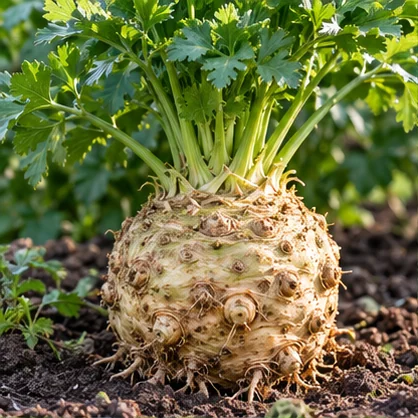
This image was created with AI from described plant characteristics and growing advice. It shows a possible situation and is not a photograph of a verified cultivar.
- Sowing
- Early indoors, usually around March
- Growing duration
- A long season of at least approximately six months
- Plants
- Keep the crown above soil level
This growing advice helps you choose. Your variety, growth stage, weather and conditions in your space determine the actual timing.
Sowing under cover and raising seedlings
Start early indoors · Celeriac
MarchStart indoors in good light and prevent a cold-induced growth check in young plants.
- Germination and temperature
- Germinate in warm, bright conditions according to species guidance. Protect young plants from prolonged cold; keep celeriac above about 10 °C.
- After emergence
- Give seedlings light immediately after emergence. A dark loft needs suitable grow lights; warmth alone is insufficient. Ventilate and keep the compost moist without saturating it.
- Pricking out and potting on
- Sow fine seed shallowly according to the packet; prick out manageable seedlings into individual modules.
- Hardening off and planting out
- Gradually acclimatise indoor-raised plants to sun, wind and outdoor temperatures; shelter them again on cold nights. Plant in late spring or early summer during milder weather. Keep the heart of celeriac above ground.
Celeriac has a long season. Celery and leaf celery have different harvest aims; use their own cultivar instructions.
Sources and use
Royal Horticultural Society · Knolselderij kweken ↗Soort- of productgebonden bron; buitenlandse perioden zijn geen vaste Nederlandse zaaidatum.
Velt · Knolselder bewaren en verwerken ↗Soort- of productgebonden bron; buitenlandse perioden zijn geen vaste Nederlandse zaaidatum.
Guideline periods for the Netherlands and Flanders. Check the variety, available light, soil and measured temperatures. Greenhouse heating does not guarantee enough winter light.
A different flavour, a different harvest.
Choose by more than the name. Discover how these varieties and crop types taste, what you can use them for and what growing them involves.
2 of 2 choices · 2 named varieties
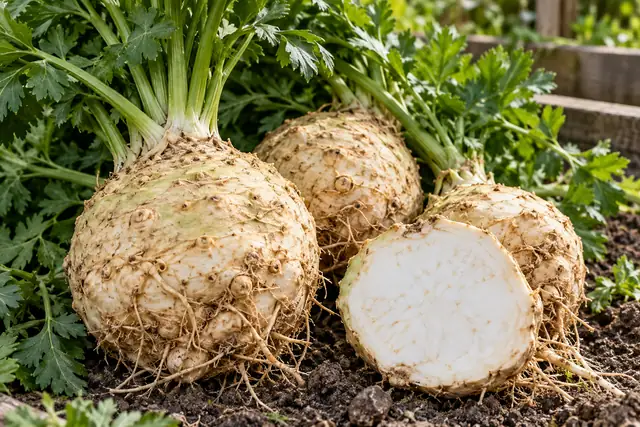
This image was created with AI from described plant characteristics and growing advice. It shows a possible situation and is not a photograph of a verified cultivar.
Alba
Round, white swollen root of an improved Monarch type.
Choose Alba for round swollen roots of the Monarch type. The supplier mentions Septoria resistance; this remains a variety description and does not eliminate every leaf problem.
Flavour, kitchen and growing
How does it taste?
The white flesh has the savoury celery character of celeriac. No separate sweetness difference is proven for Alba; the round bulb shape is the clearest selection criterion.
This flavour description applies to the crop; there is no separate tasting result for this variety.In the kitchen
Grate fine strips for remoulade with a little lemon, or roast cubes. Equal pieces make the white swollen root easy to combine with potato.
A space in the garden
Start under cover in good time and plant young plants without burying the heart. Celeriac needs a long season and soil that remains sufficiently moist.
Harvesting
Harvest swollen roots at size in autumn and winter. The table's sixty-day statement is unsuitable as a full sowing-to-harvest promise; allow this crop several months to grow.
Read the source notes →
This image was created with AI from described plant characteristics and growing advice. It shows a possible situation and is not a photograph of a verified cultivar.
Monarch
Vigorous, rounded swollen root for autumn and winter.
Choose Monarch for a traditional storage root. The source describes roots mainly beneath the rounded bulb, helping you clean a usable kitchen piece.
Flavour, kitchen and growing
How does it taste?
Monarch has white flesh with this crop’s mild celery aroma. Cooking softens the firm root and makes it well suited to mash.
This flavour description applies to the crop; there is no separate tasting result for this variety.In the kitchen
Make a mixed mash with potato or cut thin slices for the oven. Remove the root base carefully and use the undamaged white parts of the swollen root.
A space in the garden
Start early under cover; after hardening off, plant in a moisture-retentive position. Keep young growing hearts clear and prevent soil drying out during summer.
Harvesting
Let swollen roots grow steadily and assess size from autumn. For storage, remove leaves and small roots carefully without deeply damaging the bulb.
Read the source notes →Choose your way to grow
From a garden bed to a suitable pot or support: give your plant a place that suits your garden and the care you can provide.
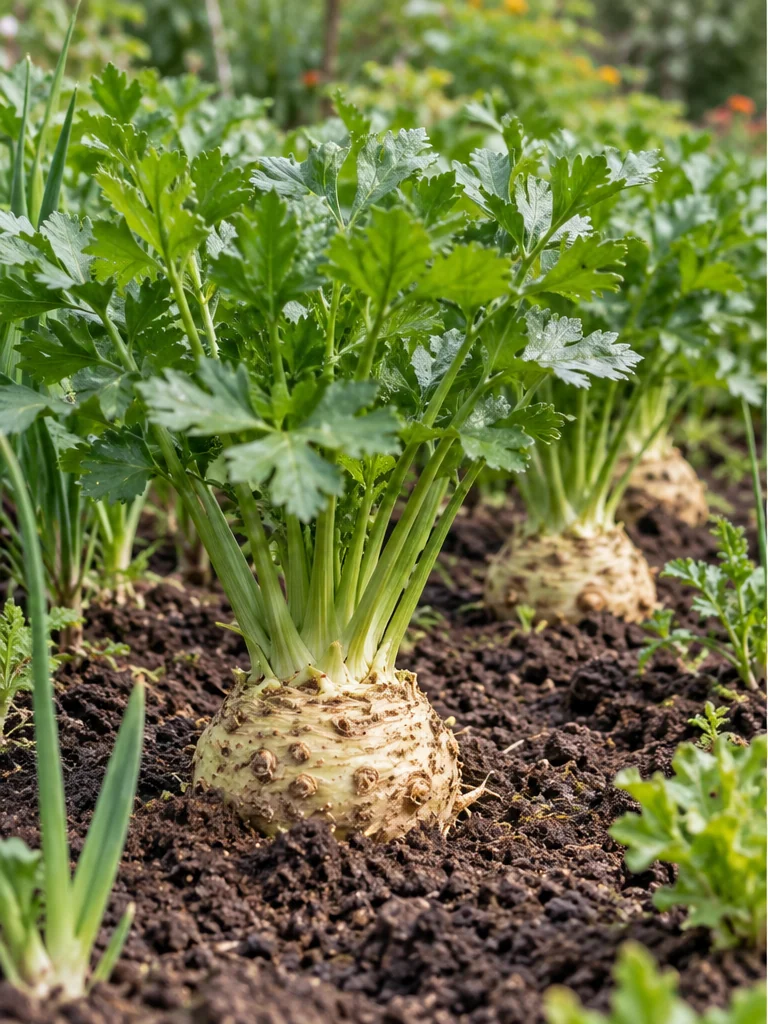
This image was created with AI from described plant characteristics and growing advice. It shows a possible situation and is not a photograph of a verified cultivar.
A moist, fertile bed
Let pre-grown plants develop gradually in their final position.
- Sow fine seed on the surface in warm, light conditions.
- Let young plants grow steadily and harden them off without prolonged cold.
- Plant after cold nights with the crown above soil and sufficient room.
For a garden where summer soil remains regularly moist.
Tick off your supplies →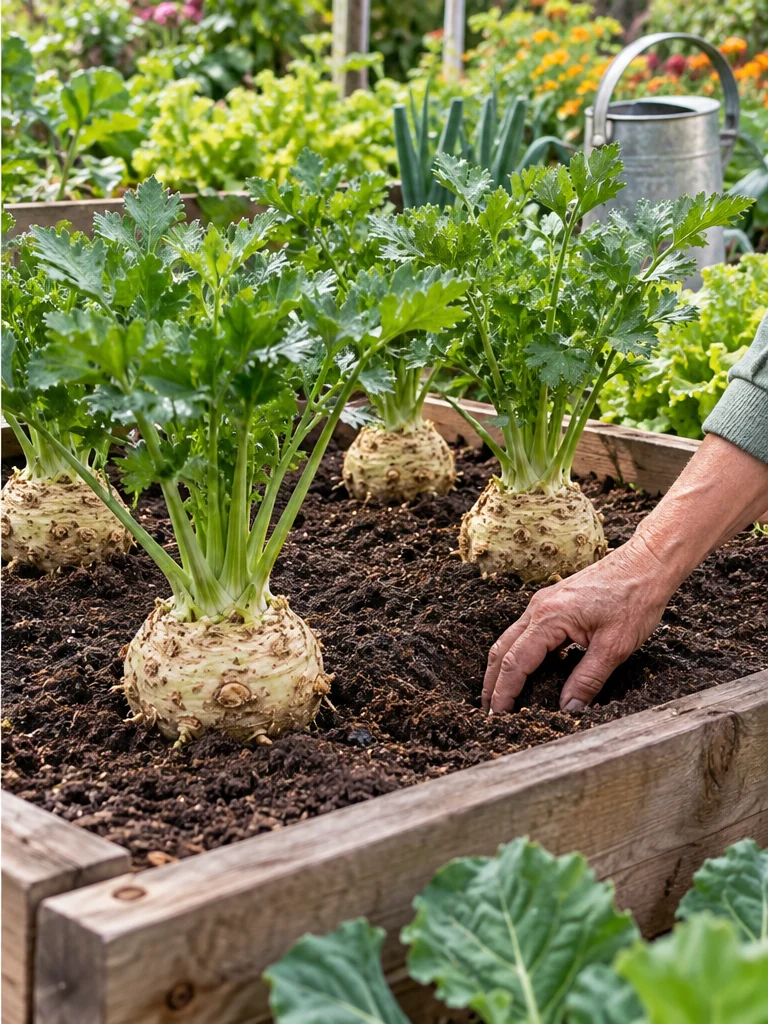
This image was created with AI from described plant characteristics and growing advice. It shows a possible situation and is not a photograph of a verified cultivar.
A small harvest from a large container
A large container makes moisture and swollen-root checks easy.
- Choose a generous container with drainage and space between plants.
- Fill with moisture-retentive, airy substrate and plant as shallowly as in the bed.
- Monitor the root zone all summer and harvest at the intended root size.
For a small patio trial; a container needs watering more often than open ground.
Tick off your supplies →Explore the varieties
See the confirmed differences. Characteristics without supporting evidence are left blank.
3 of 3 varieties
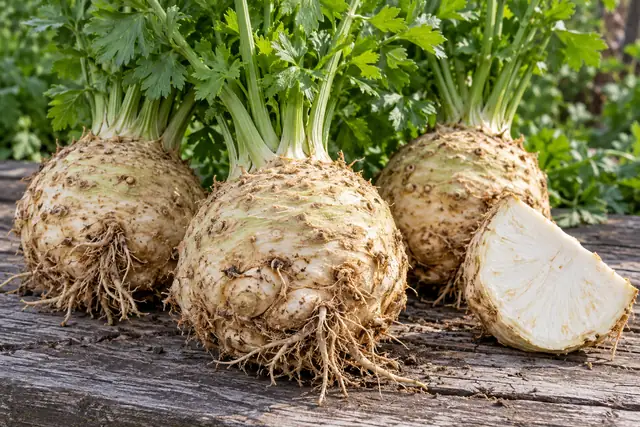
This image was created with AI from described plant characteristics and growing advice. It shows a possible situation and is not a photograph of a verified cultivar.
Asterix
Explore this variety and use the growing guide to choose a place for your plant.
View variety →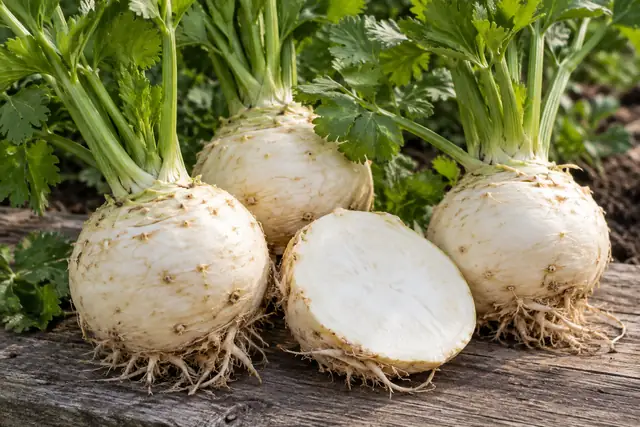
This image was created with AI from described plant characteristics and growing advice. It shows a possible situation and is not a photograph of a verified cultivar.
Ibis
Explore this variety and use the growing guide to choose a place for your plant.
View variety →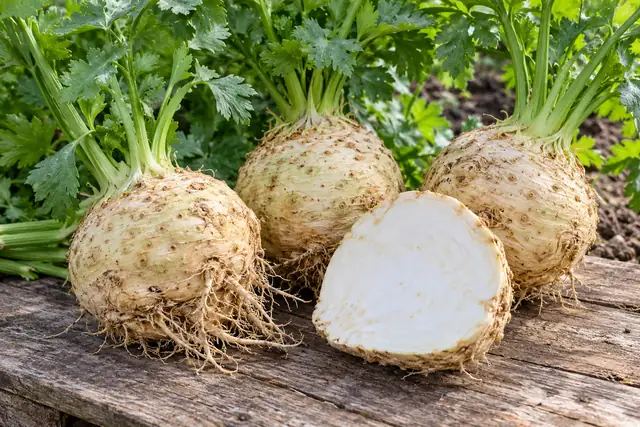
This image was created with AI from described plant characteristics and growing advice. It shows a possible situation and is not a photograph of a verified cultivar.
Prinz
Explore this variety and use the growing guide to choose a place for your plant.
View variety →Choose two to four varieties to compare their source data side by side.
Choose by flavour, shape and use
Alba: Round, white swollen root of an improved Monarch type. Grate fine strips for remoulade with a little lemon, or roast cubes. Equal pieces make the white swollen root easy to combine with potato.
The white flesh has the savoury celery character of celeriac. No separate sweetness difference is proven for Alba; the round bulb shape is the clearest selection criterion.
Monarch: Vigorous, rounded root for autumn and winter. Make a combined mash with potato or cut thin slices for the oven. Carefully remove the root base and use the sound white parts.
Monarch has white flesh with this crop’s mild celery aroma. Cooking softens the firm root and makes it well suited to mash.
Plan the spot for a whole season
Celeriac occupies the bed for a long time. Choose somewhere not needed for another crop mid-summer. Leaves develop first; swelling becomes clearer later. No visible swollen root on a young plant need not mean failure. Look for steady, healthy development.
Start early and handle the fine seed carefully
Sow indoors around March and press fine seed lightly onto compost. It needs light, not a thick soil layer. Keep moist with a fine rose. After emergence, provide light and room for individual plants to grow.
Prevent a cold interruption in young plants
Prolonged low temperatures can later cause celeriac bolting. Raise sufficiently warm; the RHS warns of periods below 10 °C. Hardening means gradual outdoor acclimatisation, not early exposure to cold nights. Assess actual local conditions in late May or June.
Do not bury the growing point
Plant roughly at raising-pot depth, with the crown clear above soil. The swollen root is not earthed up like potato. Allow roughly 30 cm between plants and more between rows; follow labels for differing variety growth.
Moist soil supports tuber growth
Celeriac tolerates drying poorly. Check below the surface in heat and water roots. Mulch can reduce evaporation but keep clear of growing points. Base feeding on soil and product. Repeated extra fertiliser cannot compensate for dry or compacted soil.
Watch for bolting, leaf condition and stalled growth
Rising flower stems move plants beyond desired harvest stages. With slow growth, first assess water, space and depth. Remove damaged or diseased leaves carefully and investigate recurring symptoms. Older horizontal outer leaves can later be removed to expose swollen roots.
Harvest for the pan or let it grow on
Harvest usable swollen roots from autumn. Loosen surrounding soil and lift without piercing. Smaller roots can already suit soup; suitable sites allow more weight with waiting. Protect remaining harvests when severe cold is expected.
Keep the tuber cool and prevent drying out
Use cut leaves promptly, for example as stock herbs. Swollen roots need cool storage protected from drying. Remove coarse soil without needless skin damage and inspect soft spots. Separate intact and damaged crops and check regularly to catch doubtful specimens.
What you need
Tick what you already have. The extras depend on how you grow.
0 of 6 ticked off
Your ticks are saved in this browser.
Discover and grow more
More background, sources and image information
SeedSteps editorial team · updated on 11 October 2026. The AI images illustrate species and practical growing situations; they do not prove an exact cultivar, observations from your own garden or yield.
Britse gewasadviezen worden gecombineerd met Nederlandse en Vlaamse informatie waar beschikbaar. Amerikaanse Extension-bronnen ondersteunen plantprincipes en herkenning; hun kalenderdata, lokale plaagdruk, bestrijdingsmiddelen en mestdoseringen worden niet rechtstreeks op Nederland of Vlaanderen toegepast. Vorst, bodemwarmte, standplaats en expliciete rasinformatie blijven de lokale controle. Commerciële bronnen onderbouwen uitsluitend benoemde ras- en plantkenmerken; zij zijn geen affiliate-aanbeveling.
Bewaring en keukenverwerking; teelt is onderbouwd door RHS.
- World Checklist of Vascular Plants — 4 juni 2026Royal Botanic Gardens, Kew · accessed 2026-10-07
- Knolselderij Alba zaden biologischFeggies · accessed 2026-10-11
- Knolselderij Monarch zaden biologischFeggies · accessed 2026-10-11
- How to grow CeleriacRoyal Horticultural Society · accessed 2026-10-11
- Knolselderij kwekenRoyal Horticultural Society · accessed 2026-10-10
- Knolselder bewaren en verwerkenVelt · accessed 2026-10-10
Supporting evidence by chapter: Choose by flavour, shape and use: Feggies, Royal Horticultural Society, Feggies. Plan the spot for a whole season: Royal Horticultural Society. Start early and handle the fine seed carefully: Royal Horticultural Society. Prevent a cold interruption in young plants: Royal Horticultural Society. Do not bury the growing point: Royal Horticultural Society. Moist soil supports tuber growth: Royal Horticultural Society. Watch for bolting, leaf condition and stalled growth: Royal Horticultural Society. Harvest for the pan or let it grow on: Royal Horticultural Society. Keep the tuber cool and prevent drying out: Velt, Royal Horticultural Society.