
Rotonda bianca sfumata di rosa: discover its flavour and how to grow it
Round, fleshy white aubergines with a pink-purple blush offer a gentle colour alongside deep-purple varieties. Choose this variety for a round aubergine with pale skin and firm texture, unlike the small, white eggplant.
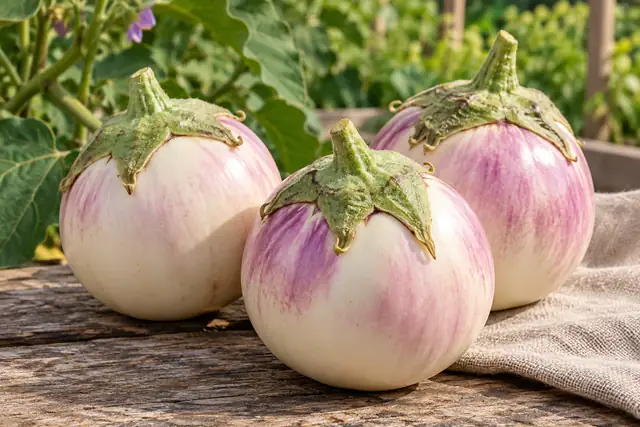
This image was created with AI from described plant characteristics and growing advice. It shows a possible situation and is not a photograph of a verified cultivar.
- Sow under cover
- Late winter to early spring
- Location
- Warm and sunny
- Growing
- Greenhouse or sheltered pot
- Harvest
- Glossy, full-grown fruits
This growing advice helps you choose. Your variety, growth stage, weather and conditions in your space determine the actual timing.
Sowing under cover and raising seedlings
Start under cover in warmth · Aubergine
February–MarchStart indoors in warmth and reserve enough bright space for raising plants.
- Germination and temperature
- Germination: at least around 21 °C. Growing on: bright conditions at about 16–18 °C.
- After emergence
- Give seedlings light immediately after emergence. A dark loft needs suitable grow lights; warmth alone is insufficient. Ventilate and keep the compost moist without saturating it.
- Pricking out and potting on
- Prick out once the first true leaves are manageable. Hold a seedling by a leaf. Pot on when the roots fill the root ball.
- Hardening off and planting out
- Gradually acclimatise indoor-raised plants to sun, wind and outdoor temperatures; shelter them again on cold nights. A heated greenhouse can be used in April; an unheated greenhouse later in spring, and outdoors only after frost with sustained warmth.
January is an option only with a suitable heated growing-on space and enough light. For outdoor growing, generally start in March.
Sources and use
Royal Horticultural Society · Aubergines kweken ↗Soort- of productgebonden bron; buitenlandse perioden zijn geen vaste Nederlandse zaaidatum.
Utah State University Extension · Eggplant in the garden ↗Soort- of productgebonden bron; buitenlandse perioden zijn geen vaste Nederlandse zaaidatum.
Guideline periods for the Netherlands and Flanders. Check the variety, available light, soil and measured temperatures. Greenhouse heating does not guarantee enough winter light.
What makes Rotonda bianca sfumata di rosa different?
- Fruit shape
- round
- Main colour
- white with a pink-purple blush
- Flavour
- Firm flesh and few seeds are described. The flavour is appreciated, but there is no reliable ranking against other varieties.
- Texture
- firm, few seeds
The source context and any limitations are in the background information at the bottom.
Compare with another varietyFlavour and kitchen
Firm flesh and few seeds are described. The flavour is appreciated, but there is no reliable ranking against other varieties.
Cut broad, round grilling slices or stuff half a fruit; its fleshiness supports a substantial main dish.
Why choose it? Choose this variety for a round aubergine with pale skin and firm texture, unlike the small, white eggplant.
How to grow aubergine
The options below belong to the plant. From these, choose the method that suits your variety's growth habit.
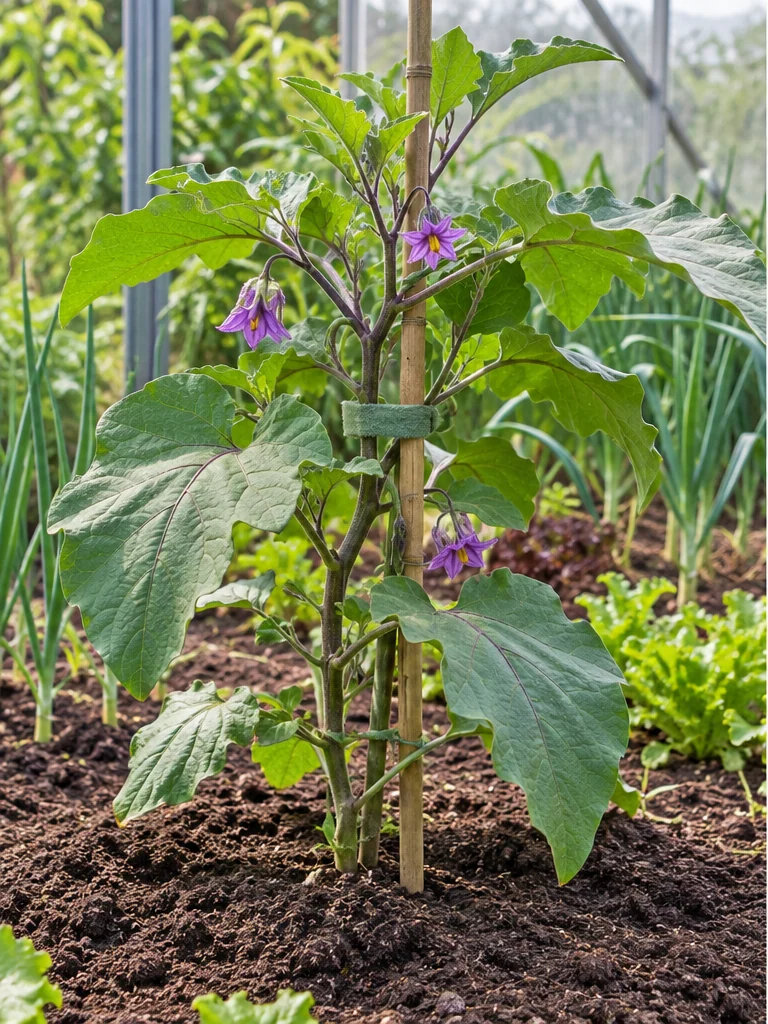
This image was created with AI from described plant characteristics and growing advice. It shows a possible situation and is not a photograph of a verified cultivar.
A plant in the greenhouse
A warm greenhouse gives fruits more room to grow.
- Plant out only when nights remain sufficiently warm.
- Place a stake beside the plant for the fruit load.
- Ventilate in heat and direct water at the roots.
For a greenhouse with sunny space and regular garden rounds.
Tick off your supplies →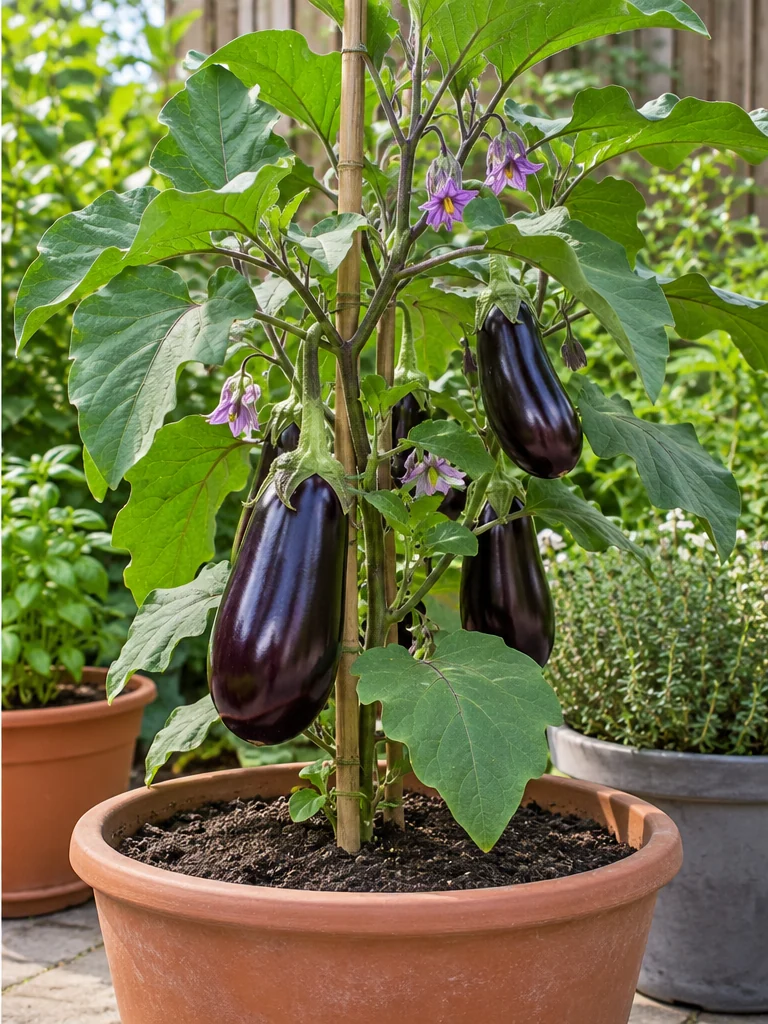
This image was created with AI from described plant characteristics and growing advice. It shows a possible situation and is not a photograph of a verified cultivar.
A large pot in a warm position
A variety documented as compact suits a sheltered patio.
- Use a pot with drainage and sufficient root space.
- Keep the plant out of cold wind and harden it off.
- Check pot moisture and support branches with heavy fruit.
For a sunny patio; outdoor harvesting remains weather-dependent.
Tick off your supplies →Why grow Rotonda bianca sfumata di rosa?
Round, fleshy white aubergines with a pink-purple blush offer a gentle colour alongside deep-purple varieties.
Choose this variety for a round aubergine with pale skin and firm texture, unlike the small, white eggplant.
How this choice tastes
Firm flesh and few seeds are described. The flavour is appreciated, but there is no reliable ranking against other varieties.
From harvest to kitchen
Cut broad, round grilling slices or stuff half a fruit; its fleshiness supports a substantial main dish.
What needs attention when growing
A vigorous plant needs a warm position, regular watering and support for heavily laden branches. Do not give it a cramped pot.
Harvest young fruits with fresh skin. Do not wait for deep purple throughout: pale colour belongs to the variety.
Choose by flavour, shape and use
Aswad: An Iraqi aubergine with large, almost black, teardrop-shaped fruits: a real centrepiece in the greenhouse. Cut thick slices for grilling or roast a whole fruit for baba ganoush; its substantial size provides plenty of usable flesh.
The distinction lies in firm, relatively dry flesh. After roasting, expect primarily a substantial aubergine texture, not a proven different aroma.
Violetta Lunga 3: Slender, dark purple fruits with a green calyx give this fairly early cultivar a classic Italian appearance. Cut long slices for ricotta rolls or even rounds for a small ovenproof dish.
A separate flavour profile is not described. The general aubergine flavour comes into its own when the slender fruits are fried or grilled until cooked.
Bambino: A compact plant full of round, purple cocktail aubergines: small fruit is what makes the difference here. Halve the cocktail fruits for a vegetable traybake or serve them as small stuffed bites.
No separate aroma has been established. The small aubergines offer the same versatile crop flavour, in short pieces that cook evenly with ease.
Black Beauty: The familiar broad, glossy, purple-black aubergine: recognisable, versatile and attractive beside white or striped cultivars. Use broad slices for moussaka or fry cubes for a tomato sauce. Roasting with oil softens the flesh.
The supplier describes a mild, slightly sweet flavour and soft, creamy flesh. That creamy character develops particularly with sufficient cooking.
Choose a fruit shape that suits your space
Aubergines vary in size and colour, from round purple fruits to elongated or paler forms. Above all, choose a cultivar with documented growth suited to your greenhouse or pot. An impressively large fruit on a packet says little about how easy it will be to grow on a cool balcony.
Start early, but provide light too
Sow indoors in late winter or early spring; aubergines need warmth to germinate and a long period of raising. Keep the seed compost moist without saturating it. Once plants emerge, light matters just as much as warmth. Very early sowing on a dark windowsill may produce weak, leggy plants.
Give every seedling growing space
Prick out carefully once true leaves are present and move the young plant into a larger pot in good time. Protect the rootball and support the plant when moving it. Keep growth steady with even moisture and enough light. Buying a young plant is a good option when raising plants at home would be too dark.
Warmth determines the chance of a harvest
A greenhouse or tunnel makes growing more reliable in a cool climate. Outdoors, choose your warmest sheltered position and plant only after the risk of frost. Harden the plant off gradually. Follow night temperatures: a warm afternoon can be followed by cold that stalls growth for a long time.
Retain moisture without waterlogging
Use fertile, well-drained soil. A pot needs enough volume for a useful water reserve. Water the soil and check regularly in warm weather. Adapt feeding to the soil and product label. Extra fertiliser does not compensate for cold roots or low light; assess those conditions before adding feed.
Provide support as the fruit load increases
A stake beside the young plant avoids having to push through the roots later. Tie the main stem loosely with soft material and check that room remains for thickening. A heavy fruit can also load a side branch. Prune or pinch out only with a suitable growing plan; random cutting does not automatically bring an earlier harvest.
Follow flowers, leaves and greenhouse air
Plants growing poorly need checks for warmth, moisture and root space. When damage appears, inspect the undersides of leaves, where spider mites or whitefly may occur. Ventilate a warm greenhouse and avoid prolonged leaf wetness. A dropped flower has several possible causes; do not treat on a guess.
Pick while the skin is still glossy
Harvest a fruit at a useful size for the cultivar while it is still firm and glossy. Leaving it too long produces coarser seeds and tougher flesh. Cut the stalk with scissors without tugging the branch. Use the aubergine soon after harvesting or keep it briefly in a cool place.
What you need
Tick what you already have. The extras depend on how you grow.
0 of 6 ticked off
Your ticks are saved in this browser.
Discover and grow more
More background, sources and image information
SeedSteps editorial team · updated on 11 October 2026. The AI images illustrate species and practical growing situations; they do not prove an exact cultivar, observations from your own garden or yield.
Britse gewasadviezen worden gecombineerd met Nederlandse en Vlaamse informatie waar beschikbaar. Amerikaanse Extension-bronnen ondersteunen plantprincipes en herkenning; hun kalenderdata, lokale plaagdruk, bestrijdingsmiddelen en mestdoseringen worden niet rechtstreeks op Nederland of Vlaanderen toegepast. Vorst, bodemwarmte, standplaats en expliciete rasinformatie blijven de lokale controle. Commerciële bronnen onderbouwen uitsluitend benoemde ras- en plantkenmerken; zij zijn geen affiliate-aanbeveling.
- World Checklist of Vascular Plants — 4 juni 2026Royal Botanic Gardens, Kew · accessed 2026-10-07
- Aubergine Rotonda bianca sfumata di rosa — ras- en teeltbeschrijvingFeggies · accessed 2026-10-11
- Aubergine Aswad — ras- en teeltbeschrijvingFeggies · accessed 2026-10-11
- Aubergine Bambino — ras- en teeltbeschrijvingFeggies · accessed 2026-10-11
- Aubergine Barbentane — ras- en teeltbeschrijvingFeggies · accessed 2026-10-11
- Aubergine Black Beauty — ras- en teeltbeschrijvingFeggies · accessed 2026-10-11
- Aubergine Blaukönigin — ras- en teeltbeschrijvingFeggies · accessed 2026-10-11
- Aubergine Casper — ras- en teeltbeschrijvingFeggies · accessed 2026-10-11
- Aubergine Japanse Pickling — ras- en teeltbeschrijvingFeggies · accessed 2026-10-11
- Aubergine Lao Green Stripe — ras- en teeltbeschrijvingFeggies · accessed 2026-10-11
- Aubergine Listada de Gandia — ras- en teeltbeschrijvingFeggies · accessed 2026-10-11
- Aubergine Longue de Dourga — ras- en teeltbeschrijvingFeggies · accessed 2026-10-11
- Aubergine Ma-Zu Purple — ras- en teeltbeschrijvingFeggies · accessed 2026-10-11
- Aubergine Monsterlijke aubergine van New York — ras- en teeltbeschrijvingFeggies · accessed 2026-10-11
- Aubergine Noon Ta Klong Pea — ras- en teeltbeschrijvingFeggies · accessed 2026-10-11
- Aubergine Rond wit/eiplant — ras- en teeltbeschrijvingFeggies · accessed 2026-10-11
- Aubergine Thais wit geribbeld — ras- en teeltbeschrijvingFeggies · accessed 2026-10-11
- Aubergine Thaise lange groene — ras- en teeltbeschrijvingFeggies · accessed 2026-10-11
- Aubergine Violetta Lunga 3 — ras- en teeltbeschrijvingFeggies · accessed 2026-10-11
- Noon Ta Klong Pea — soort en kiemadviesAssociation Kokopelli · accessed 2026-10-11
- Aubergines kwekenRoyal Horticultural Society · accessed 2026-10-10
- Eggplant in the gardenUtah State University Extension · accessed 2026-10-10
Supporting evidence by chapter: Why grow Rotonda bianca sfumata di rosa?: Feggies. How this choice tastes: Feggies. From harvest to kitchen: Feggies. What needs attention when growing: Feggies. Choose by flavour, shape and use: Feggies, Feggies, Feggies, Feggies. Choose a fruit shape that suits your space: Royal Horticultural Society, Utah State University Extension. Start early, but provide light too: Royal Horticultural Society, Utah State University Extension. Give every seedling growing space: Royal Horticultural Society, Utah State University Extension. Warmth determines the chance of a harvest: Royal Horticultural Society, Utah State University Extension. Retain moisture without waterlogging: Royal Horticultural Society, Utah State University Extension. Provide support as the fruit load increases: Royal Horticultural Society, Utah State University Extension. Follow flowers, leaves and greenhouse air: Royal Horticultural Society, Utah State University Extension. Pick while the skin is still glossy: Royal Horticultural Society, Utah State University Extension.
Fruit shape: round Beschrijving van de genoemde rasbron; geen eigen tuinwaarneming. Feggies
Main colour: white with a pink-purple blush Beschrijving van de genoemde rasbron; geen eigen tuinwaarneming. Feggies
Flavour: Firm flesh and few seeds are described. The flavour is appreciated, but there is no reliable ranking against other varieties. Smaakbeschrijving van de rasbron, vertaald naar eigen woorden. Rijpheid, teelt en bereiding beïnvloeden de smaak. Feggies
Texture: firm, few seeds Beschrijving van de genoemde rasbron; geen eigen tuinwaarneming. Feggies