
Growing asparagus pea: red flowers and small winged pods
Asparagus pea is a low, spreading crop with red flowers and small, distinctively winged pods. The young pods are cooked whole. Try a small crop along a sunny edge where you can see the flowers and easily pick several times a week.
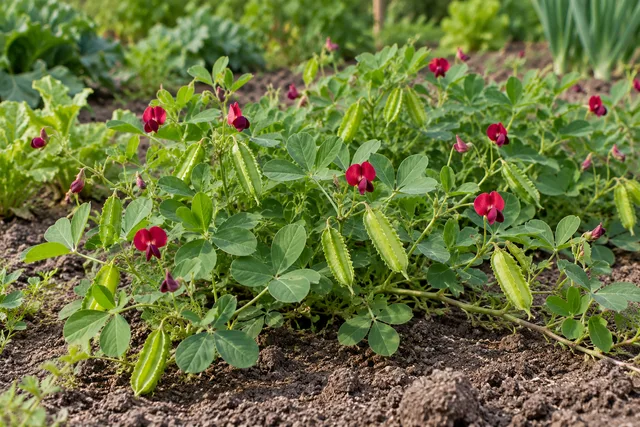
This image was created with AI from described plant characteristics and growing advice. It shows a possible situation and is not a photograph of a verified cultivar.
- Crop
- Lotus tetragonolobus
- Growth
- Low and spreading
- Harvest
- Young tender whole mangetout pods
- Picking size
- About 3 cm, before becoming tough
This growing advice helps you choose. Your variety, growth stage, weather and conditions in your space determine the actual timing.
Sowing under cover and raising seedlings
Start briefly under cover or sow directly · Asparagus pea
Late April–MayStart briefly under cover in individual pots. Ensure you can plant out into warmth after a few weeks.
- Germination and temperature
- Sow in warmth; cold, persistently wet soil increases the risk of failure.
- After emergence
- Give seedlings light immediately after emergence. A dark loft needs suitable grow lights; warmth alone is insufficient. Ventilate and keep the compost moist without saturating it.
- Pricking out and potting on
- Sow in individual pots or deep modules. Do not prick out bare-rooted; move the whole root ball before the roots become restricted.
- Hardening off and planting out
- Gradually acclimatise indoor-raised plants to sun, wind and outdoor temperatures; shelter them again on cold nights. Plant out after the last frost with the whole root ball; install supports beforehand for climbing types.
Asparagus pea is a different crop from shelling pea. Choose a warm, sheltered start and plant out after the risk of frost.
Sources and use
Feggies · Aspergeerwt zaden biologisch ↗Nederlandse producent of teeltbron; de rasinstructie blijft leidend.
Royal Horticultural Society · Lotus tetragonolobus ↗Soort- of productgebonden bron; buitenlandse perioden zijn geen vaste Nederlandse zaaidatum.
Guideline periods for the Netherlands and Flanders. Check the variety, available light, soil and measured temperatures. Greenhouse heating does not guarantee enough winter light.
A different flavour, a different harvest.
Choose by more than the name. Discover how these varieties and crop types taste, what you can use them for and what growing them involves.
1 of 1 choices · 0 named varieties
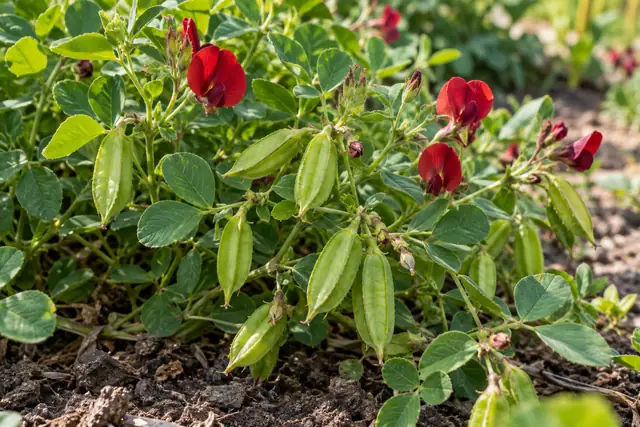
This image was created with AI from described plant characteristics and growing advice. It shows a possible situation and is not a photograph of a verified cultivar.
Asparagus pea
A low-growing crop with red flowers and winged young pods.
Choose this distinct crop for red flowers and a small edible pod. The botanical name Lotus tetragonolobus distinguishes it from ordinary peas and tropical winged beans.
Flavour, kitchen and growing
How does it taste?
Young asparagus pea pods have a mild vegetable aroma. The name suggests a preparation idea, not proven flavour identical to asparagus; young picking mainly determines tenderness.
This flavour description applies to the crop; there is no separate tasting result for this variety.In the kitchen
Cook the complete young pods briefly and serve with butter or a little lemon. Use in a simple meal so that the unusual winged shape remains visible.
A space in the garden
Sow in a warm position in loose, free-draining soil and prevent night-frost damage. Give creeping stems a low, broad space rather than a tall bean pole.
Harvesting
Pick regularly when the pods are about three to four centimetres and still tender. Older pods become tough; checking twice a week helps catch the young harvest stage.
Read the source notes →Choose your way to grow
From a garden bed to a suitable pot or support: give your plant a place that suits your garden and the care you can provide.
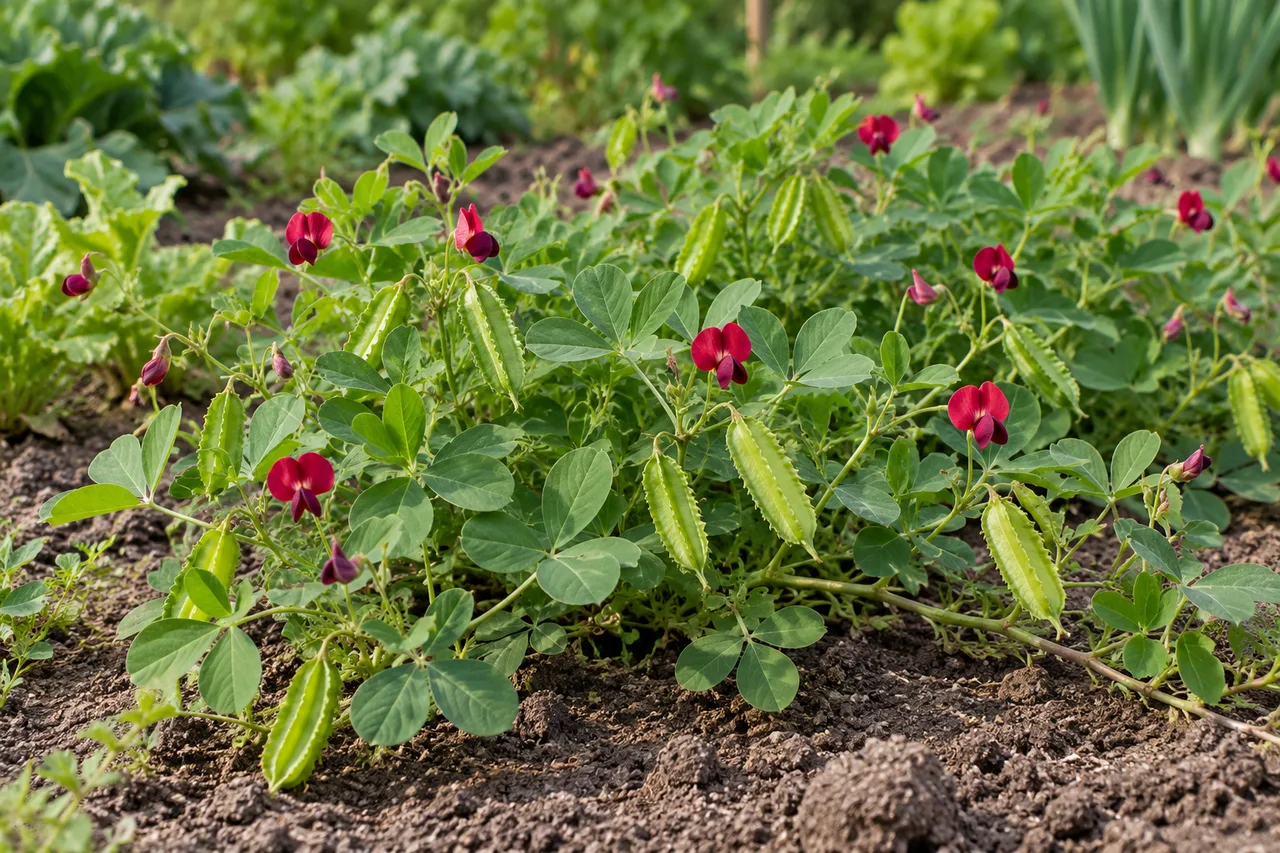
This image was created with AI from described plant characteristics and growing advice. It shows a possible situation and is not a photograph of a verified cultivar.
A low, sunny position
Let spreading stems grow in an accessible position.
- Sow in loose, free-draining soil once frost risk has passed.
- Let low plants spread and keep young growth weed-free.
- Check regularly after flowering for small, tender, winged pods.
For a small, sunny trial plot that is easy to reach.
Tick off your supplies →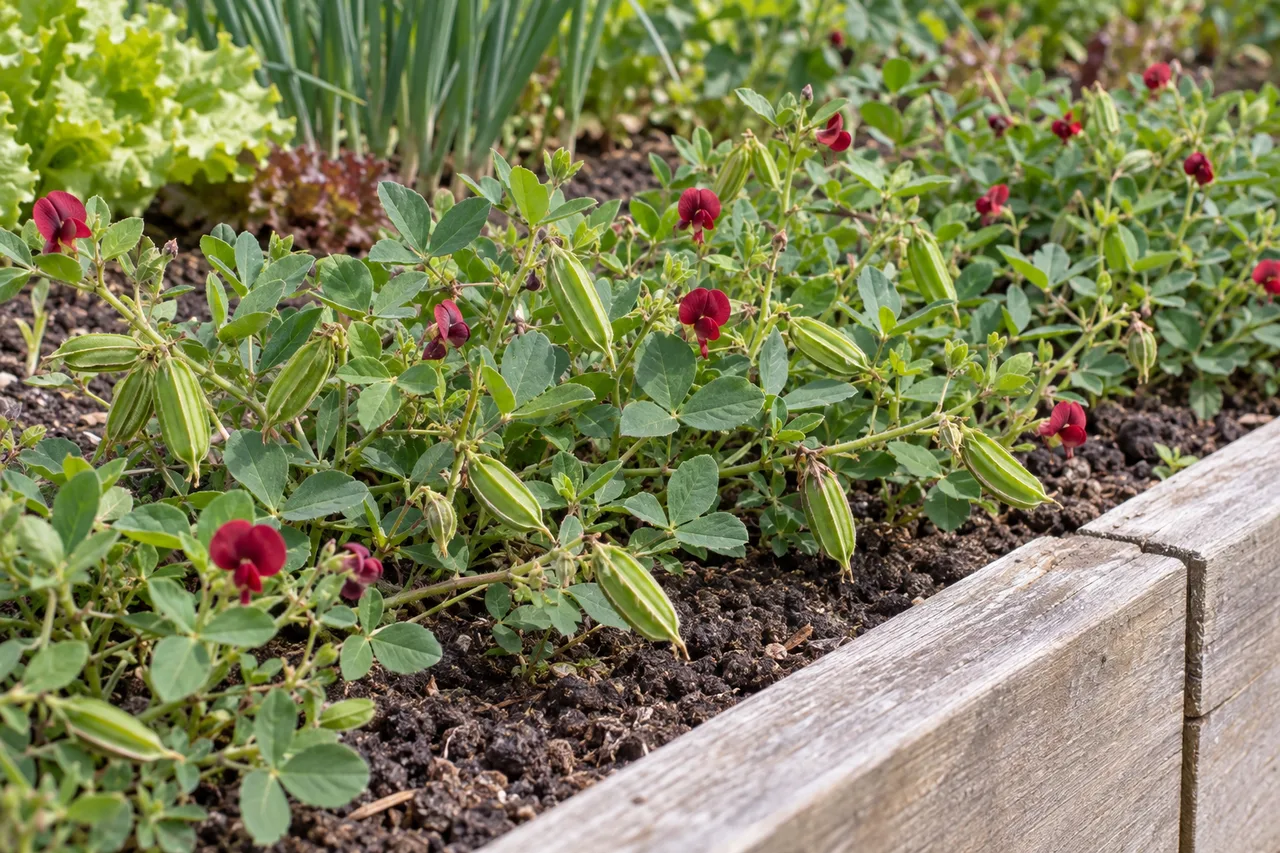
This image was created with AI from described plant characteristics and growing advice. It shows a possible situation and is not a photograph of a verified cultivar.
At the edge of a raised bed
Position flowers and young pods where they are easy to see.
- Choose a sunny bed edge with loose soil and room to spread.
- Sow directly or plant briefly pre-grown plants with intact rootballs after frost.
- Keep the edge accessible and pick small pods before they toughen.
For anyone wanting to follow flowers and harvest near home.
Tick off your supplies →Choose by flavour, shape and use
Asparagus pea: Low-growing crop with red flowers and winged young pods. Cook the complete young pods briefly and serve with butter or a little lemon. Use in a simple meal so that the unusual winged shape remains visible.
Young asparagus pea pods have a mild vegetable aroma. The name suggests a preparation idea, not proven flavour identical to asparagus; young picking mainly determines tenderness.
Identify the correct crop
Asparagus pea is Lotus tetragonolobus. Its culinary name does not make it an ordinary pea. RHS confirms identity. Check when ordering: similar names can describe other legumes. Here seek low spreading plants, red flowers and small winged pods.
Low growth, easy observation
Provide sun and loose, draining soil. Low stems need sideways room, not tall bean poles. A bed edge displays flowers and pods clearly. Leave enough space to pick later without repeatedly pressing stems.
Start in warmth after the cold period
The British supplier describes sheltered spring starting and direct outdoor sowing after frost risk. Use this as guidance and assess your Dutch site locally. Cold, wet starts do not help. Choose warm workable soil or start a few plants in separate small pots.
Minimise root disturbance
Sow thinly in final positions or start briefly in separate pots. Transplant intact roots after acclimatising to light and wind. A Romanian trial describes both starts, but measured development is no fixed Dutch day count. Label and keep early emergence moist.
Monitor the small plants
Keep weeds small early and check soil moisture during drought. A raised edge usually dries sooner than a low bed. Water directly at the soil and avoid prolonged waterlogging. Also check young growth for slugs and snails so a few damaged plants do not silently determine the whole small trial.
Flowering helps you look ahead
Red flowers are followed by small pods with four winged edges. They quickly outgrow the fine kitchen stage, so inspect close after flowering. Their unusual form is enjoyable to follow; do not wait for large round seeds when choosing pods.
Pick really small
Suppliers describe about three to four centimetres as the young stage; for the first tasting, choose around three centimetres and feel whether the pod is tender. Check at least a few times a week. Pods that are already tough will not give the intended delicate result. Collecting small portions helps you keep track of quality.
A simple first tasting
Boil or steam whole young pods briefly and serve with butter or lemon. Research mentions simple preparation for their own aroma. Asparagus pea's name does not promise everyone detects asparagus; assess mild pod character and tenderness of your harvest.
What you need
Tick what you already have. The extras depend on how you grow.
0 of 4 ticked off
Your ticks are saved in this browser.
Discover and grow more
More background, sources and image information
SeedSteps editorial team · updated on 11 October 2026. The AI images illustrate species and practical growing situations; they do not prove an exact cultivar, observations from your own garden or yield.
Britse gewasadviezen worden gecombineerd met Nederlandse en Vlaamse informatie waar beschikbaar. Amerikaanse Extension-bronnen ondersteunen plantprincipes en herkenning; hun kalenderdata, lokale plaagdruk, bestrijdingsmiddelen en mestdoseringen worden niet rechtstreeks op Nederland of Vlaanderen toegepast. Vorst, bodemwarmte, standplaats en expliciete rasinformatie blijven de lokale controle. Commerciële bronnen onderbouwen uitsluitend benoemde ras- en plantkenmerken; zij zijn geen affiliate-aanbeveling.
- Plants of the World Online — Lotus tetragonolobus L.Royal Botanic Gardens, Kew · accessed 2026-10-11
- Aspergeerwt zaden biologischFeggies · accessed 2026-10-11
- Lotus tetragonolobusRoyal Horticultural Society · accessed 2026-10-11
- Asparagus Pea: zaaien en jonge oogstJ. Parker’s · accessed 2026-10-11
- Onderzoek naar vegetatieve groei en vruchtvorming van Lotus tetragonolobusUniversity of Agronomic Sciences and Veterinary Medicine of Bucharest · accessed 2026-10-11
Supporting evidence by chapter: Choose by flavour, shape and use: Feggies, Royal Horticultural Society. Identify the correct crop: Royal Horticultural Society, Feggies. Low growth, easy observation: Feggies, J. Parker’s. Start in warmth after the cold period: J. Parker’s, University of Agronomic Sciences and Veterinary Medicine of Bucharest. Minimise root disturbance: University of Agronomic Sciences and Veterinary Medicine of Bucharest, J. Parker’s. Monitor the small plants: J. Parker’s, Feggies. Flowering helps you look ahead: Feggies, University of Agronomic Sciences and Veterinary Medicine of Bucharest. Pick really small: Feggies, J. Parker’s. A simple first tasting: University of Agronomic Sciences and Veterinary Medicine of Bucharest, Feggies.