
Imperial Star: discover its flavour and how to grow it
Imperial Star is grown for round flower buds. The large plant also provides a clear vertical form outside the vegetable bed. Choose it if you want to start early and have room for a large plant. A first-year yield is possible, not guaranteed.
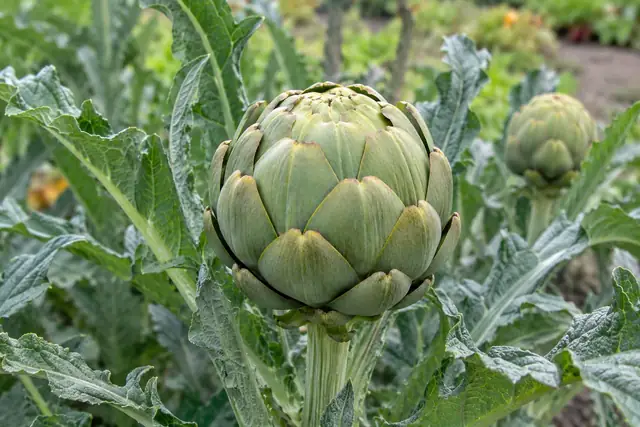
This image was created with AI from described plant characteristics and growing advice. It shows a possible situation and is not a photograph of a verified cultivar.
- Harvested part
- Closed flower buds
- Location
- Sunny and sheltered
- Space
- Generous; follow cultivar spacing
- Winter
- Protection and good drainage
This growing advice helps you choose. Your variety, growth stage, weather and conditions in your space determine the actual timing.
Sowing under cover and raising seedlings
Start under cover or use young plants · Artichoke
March–AprilSow under cover in pots and reserve space for the substantial young plants.
- Germination and temperature
- Germinate in bright, sheltered conditions according to seed guidance; protect young plants from severe cold.
- After emergence
- Give seedlings light immediately after emergence. A dark loft needs suitable grow lights; warmth alone is insufficient. Ventilate and keep the compost moist without saturating it.
- Pricking out and potting on
- Prick out once the first true leaves are manageable. Hold a seedling by a leaf. Pot on when the roots fill the root ball.
- Hardening off and planting out
- Gradually acclimatise indoor-raised plants to sun, wind and outdoor temperatures; shelter them again on cold nights. Plant sturdy plants in a spacious, sheltered position; assess cold sensitivity for each type.
Early propagation does not guarantee a first-year harvest. Globe artichoke and cardoon have different harvest aims.
Sources and use
Royal Horticultural Society · Artisjokken kweken ↗Soort- of productgebonden bron; buitenlandse perioden zijn geen vaste Nederlandse zaaidatum.
Utah State University Extension · Artichoke in the garden ↗Soort- of productgebonden bron; buitenlandse perioden zijn geen vaste Nederlandse zaaidatum.
Guideline periods for the Netherlands and Flanders. Check the variety, available light, soil and measured temperatures. Greenhouse heating does not guarantee enough winter light.
What makes Imperial Star different?
- Fruit shape
- Round, closed flower buds
The source context and any limitations are in the background information at the bottom.
Compare with another varietyFlavour and kitchen
The product pages give no specific aroma comparison for Imperial Star. The flavour choice therefore remains that of artichoke as a crop.
This flavour description applies to the crop; a separate taste test for this variety is not supported by evidence.Boil or steam closed buds and eat fleshy bract bases and the heart. Spent flowers serve another purpose.
Why choose it? Choose this variety if you want to start early and have room for a large plant. A first-year yield is possible, not guaranteed.
How to grow artichoke
The options below belong to the plant. From these, choose the method that suits your variety's growth habit.
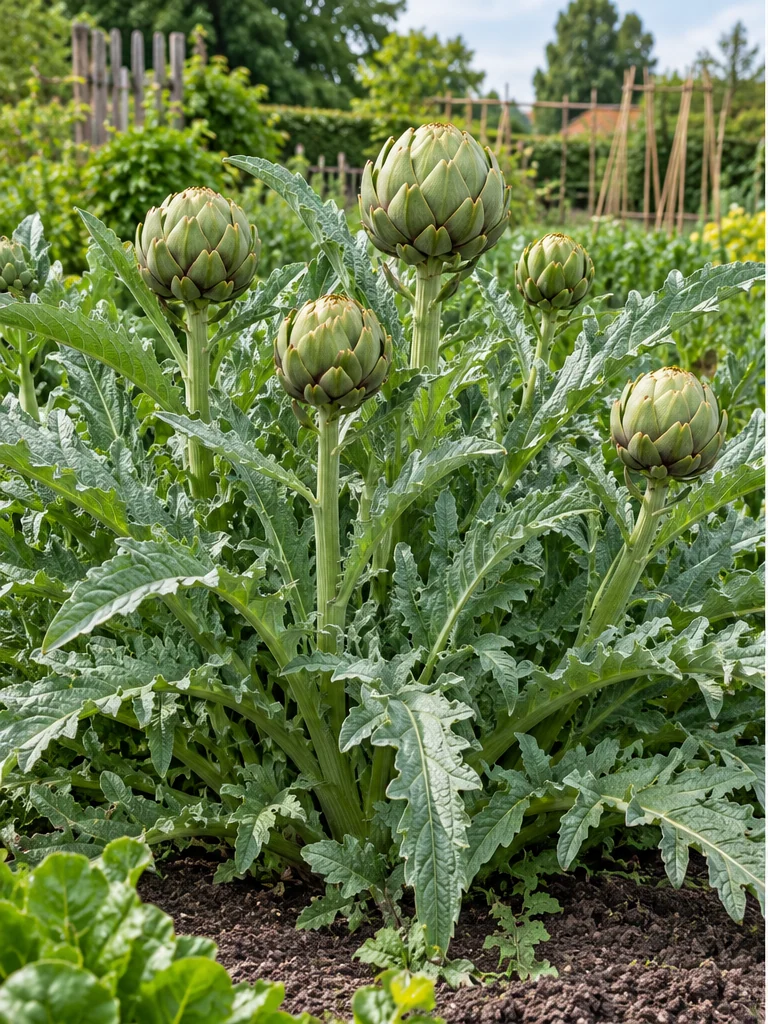
This image was created with AI from described plant characteristics and growing advice. It shows a possible situation and is not a photograph of a verified cultivar.
A permanent plant in the garden bed
A permanent corner lets the substantial leaf rosette shine.
- Improve drainage and reserve sufficient width.
- Plant a healthy young plant with an intact rootball.
- Protect the base in hard frost without trapping moisture.
For anyone who can keep space free for several years.
Tick off your supplies →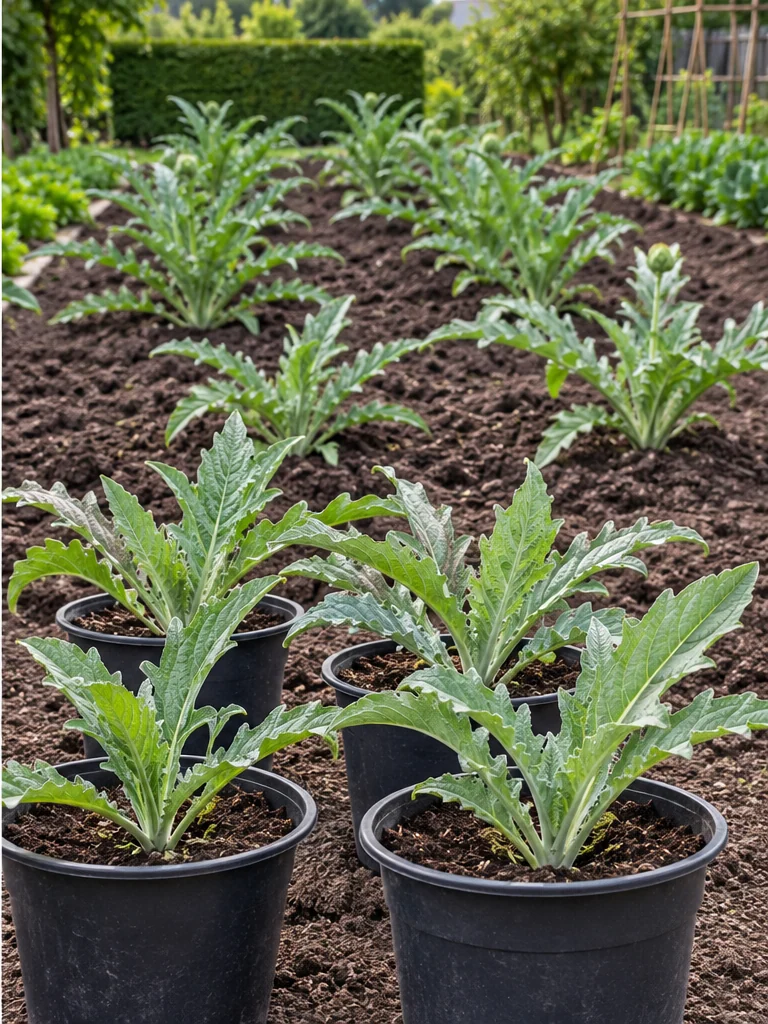
This image was created with AI from described plant characteristics and growing advice. It shows a possible situation and is not a photograph of a verified cultivar.
An annual crop with a suitable variety
A variety described for a first-year harvest can be grown as an annual trial.
- Choose an explicitly annual-cropping variety.
- Sow early indoors with plenty of light and space.
- Harden off and plant outdoors once conditions suit.
For a trial crop; first-year flowering still depends on variety and season.
Tick off your supplies →Why grow Imperial Star?
Imperial Star is grown for round flower buds. Its substantial plant also gives a clear vertical form beyond the vegetable bed.
Choose this variety if you want to start early and have room for a large plant. A first-year yield is possible, not guaranteed.
How this choice tastes
The product pages give no specific aroma comparison for Imperial Star. The flavour choice therefore remains that of artichoke as a crop.
From harvest to kitchen
Boil or steam closed buds and eat fleshy bract bases and the heart. Spent flowers serve another purpose.
What needs attention when growing
Start under cover promptly and plant in a sunny, sheltered position with deep, fertile soil. Allow for mature width.
Harvest buds while bracts are still closed. Letting them open means choosing flowers rather than food.
Choose by flavour, shape and use
Imperial Star: Grown for round flower buds. Substantial plants give clear vertical form outside the vegetable bed too. Boil or steam closed buds, using fleshy bract bases and hearts. Open flowers serve another purpose.
The product pages give no specific aroma comparison for Imperial Star. The flavour choice therefore remains that of artichoke as a crop.
Harvest buds or leave flowers
Eat fleshy bracts and the base of a still-closed bud. Left growing, it becomes a striking purple flower and no longer serves as tender vegetables. Deliberately leave one bud for display, marking kitchen and flowering plants.
Check the route to the first harvest
Not all varieties flower readily in their first year. From seed, choose one with a substantiated description for your plan. Healthy young plants or rooted offsets shorten raising. Mature size matters more than the small sale pot.
Give leaves and roots generous space
Choose full sun and shelter from strong wind. Soil must be fertile without holding standing winter water. Allow access to buds around the plant. A tall edge in a small bed can shade vegetables; a permanent corner is often more practical.
Sow indoors with room for growth
Starting from late winter through spring can give an early start. Sow separately or prick out gently to avoid a cramped root ball during long raising. Keep young plants light, warm and evenly moist. Repot promptly once roots fill space.
Make the transition outdoors gradual
Harden indoor artichokes off and transplant intact root balls into prepared soil. Young plants need more protection than established ones. Use variety spacing and water gently. Mulch around them, keeping bases clear of persistent wetness.
Give extra attention during bud formation
Check roots in dry periods and water as soil dries. Growth and buds need sufficient nutrients; use soil and labels to determine feeding. Abundant leaves need water, not constant saturation. Remove competing weeds while rosettes are small.
Cut while the bud is closed and firm
The main stem's largest bud often comes before smaller side buds. Harvest usable buds before bracts clearly open. Cut with some stem, preserving the plant. Use fresh; cool storage protected from drying helps a short wait before cooking.
Protect against cold and winter wet
Perennial artichokes in the Netherlands and Flanders need variety and site assessment. Cover bases with suitable dry material in severe frost and drain rainwater. Check rotting leaves during mild spells. Winter survivors still need room, water and care next spring.
What you need
Tick what you already have. The extras depend on how you grow.
0 of 6 ticked off
Your ticks are saved in this browser.
Discover and grow more
More background, sources and image information
SeedSteps editorial team · updated on 11 October 2026. The AI images illustrate species and practical growing situations; they do not prove an exact cultivar, observations from your own garden or yield.
Britse gewasadviezen worden gecombineerd met Nederlandse en Vlaamse informatie waar beschikbaar. Amerikaanse Extension-bronnen ondersteunen plantprincipes en herkenning; hun kalenderdata, lokale plaagdruk, bestrijdingsmiddelen en mestdoseringen worden niet rechtstreeks op Nederland of Vlaanderen toegepast. Vorst, bodemwarmte, standplaats en expliciete rasinformatie blijven de lokale controle. Commerciële bronnen onderbouwen uitsluitend benoemde ras- en plantkenmerken; zij zijn geen affiliate-aanbeveling.
- World Checklist of Vascular Plants — 4 juni 2026Royal Botanic Gardens, Kew · accessed 2026-10-07
- Common catalogue of varieties of vegetable species — 27 januari 2023Europese Commissie · accessed 2026-10-07
- Artichoc Imperial Star zaden biologischFeggies · accessed 2026-10-11
- Artisjok 'Imperial Star' zaden biologischFeggies · accessed 2026-10-11
- Artisjokken kwekenRoyal Horticultural Society · accessed 2026-10-10
- Artichoke in the gardenUtah State University Extension · accessed 2026-10-10
Supporting evidence by chapter: Why grow Imperial Star?: Feggies, Feggies. How this choice tastes: Feggies, Feggies. From harvest to kitchen: Feggies, Feggies. What needs attention when growing: Feggies, Feggies. Choose by flavour, shape and use: Feggies, Feggies. Harvest buds or leave flowers: Royal Horticultural Society, Utah State University Extension. Check the route to the first harvest: Royal Horticultural Society, Utah State University Extension. Give leaves and roots generous space: Royal Horticultural Society, Utah State University Extension. Sow indoors with room for growth: Royal Horticultural Society, Utah State University Extension. Make the transition outdoors gradual: Royal Horticultural Society, Utah State University Extension. Give extra attention during bud formation: Royal Horticultural Society, Utah State University Extension. Cut while the bud is closed and firm: Royal Horticultural Society, Utah State University Extension. Protect against cold and winter wet: Royal Horticultural Society, Utah State University Extension.
Fruit shape: Round, closed flower buds Beschrijving van de genoemde rasbron; geen eigen tuinwaarneming. Feggies, Feggies