Skip to content
SeedStepsYour vegetable garden, one step at a time.My garden
Plants and varieties for your garden

Discover what you can grow.

Vegetables, fruit, flowers and herbs. Start with a plant and discover its varieties.

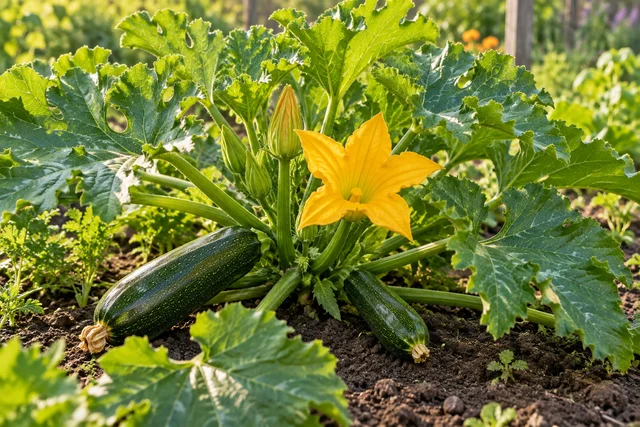
Courgette plant with a flower and young fruit
AI illustration

This image was created with AI from described plant characteristics and growing advice. It shows a possible situation and is not a photograph of a verified cultivar.

New · Courgette

A summer of harvests starts here.

Discover round, striped, yellow and trailing courgettes, their flavours and ways to grow them.

Discover courgettes →
Clear filters

883 results

Page 27
Gardening guide

Prince Borghese: discover its flavour and cultivation

Fleshy, scarlet tomatoes with a small point and a trailing growth habit. This Italian selection combines a pointed egg shape with determinate growth. It suits trying a loosely supported plant or a large hanging pot as a growing method.

Read more
Gardening guide

Profusion White: growing zinnias

Low selection with single white flowers.

Read more
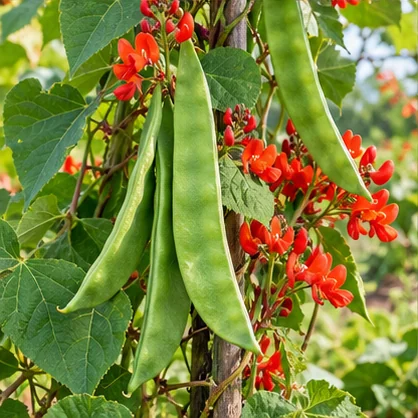
Illustrative species image of Runner beans: a flowering wall to pick from all summer
AI illustration

This image was created with AI from described plant characteristics and growing advice. It shows a possible situation and is not a photograph of a verified cultivar.

Gardening guide

Runner beans: a flowering wall to pick from all summer

Runner beans give the bean frame a second purpose: flowers come first, followed by long pods. Put them somewhere easy to pick and make the frame a visible part of your garden.

Read the growing guide →
Gardening guide

Growing plums: a garden full of flavour

Plums offer a whole journey of flavours: an early dessert plum, a sweet greengage and a late fruit for compote. If you have room for one tree, let use and pollination decide together. Think too about reaching heavily laden branches.

Read more
Gardening guide

Précoce Migoule: flavour and growing

Hybrid, early ripening.

Read more
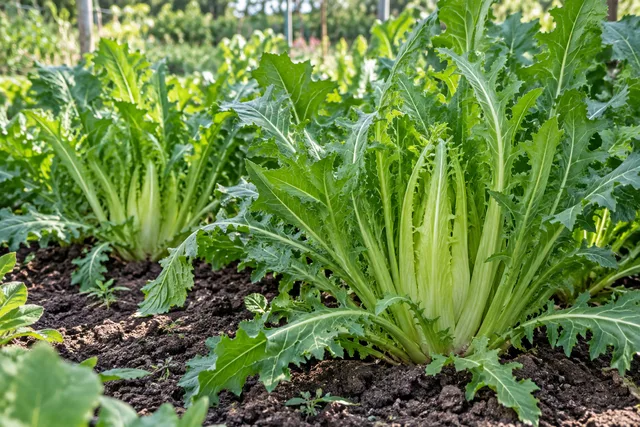
Illustrative species image of Puntarelle
AI illustration

This image was created with AI from described plant characteristics and growing advice. It shows a possible situation and is not a photograph of a verified cultivar.

Gardening guide

Puntarelle

Puntarelle

Read the growing guide →
Gardening guide

Purple Bumble Bee: discover its flavour and how to grow it

Small, purple cherry tomatoes with light stripes: a colourful snack variety with its own name. Choose Purple Bumble Bee for sweet, small, striped fruits instead of uniformly dark Black Cherry.

Read more
Gardening guide

Purple Calabash: discover its flavour and how to grow it

Dark reddish-brown, wrinkled tomatoes with striking lobes. Choose these when you want a distinctive shape alongside classic smooth rounds. The medium-sized, flattened fruits create a different look from a dark round cherry tomato.

Read more
Gardening guide

Purple Frills: discover its flavour and how to grow it

Purple Frills combines strongly divided leaves with deep purple colour. A small amount therefore stands out in a bowl. Choose Purple Frills when leaf colour and fine structure both matter. It is an accent crop, not heading lettuce.

Read more
Gardening guide

Purple Russian: discover its flavour and how to grow it

Elongated, plum-shaped tomatoes ripen dark pink to purplish-red or chocolate-brown: dark fruit with abundant juicy flesh. Choose Purple Russian for a dark tomato usable fresh and cooked rather than a small, round cherry.

Read more
Gardening guide

Purple Teepee: discover its flavour and how to grow it

Straight, purple pods that turn green after cooking. Choose this low-growing bean if you want a purple harvest without climbing supports. The colour difference makes young pods recognisable among the plant's green leaves.

Read more
Gardening guide

Purple Velvet: growing larkspur

Deep violet-blue with a dark eye.

Read more
Gardening guide

Purple: discover its flavour and how to grow it

Purple-brown fruits with thick flesh: a dark chilli for substantial, hot sauces. Choose Purple for dark ripening colour and fleshy, hot fruits rather than thin chillies for quick drying.

Read more
Gardening guide

Purpurascens: growing sage

Purple-grey foliage as a visible culinary variant.

Read more
Gardening guide

Purpureum: growing herb fennel

Bronze fennel for strongly visible foliage contrast.

Read more
Gardening guide

Queue de Truite: discover its flavour and how to grow it

Queue de Truite has green leaves with red speckles and forms a small cos lettuce. It is Lactuca lettuce despite the shop alias 'Witloof panaché'. Choose this selection for speckled leaves and a compact romaine shape. Use the alias when searching, not to create a different crop.

Read more
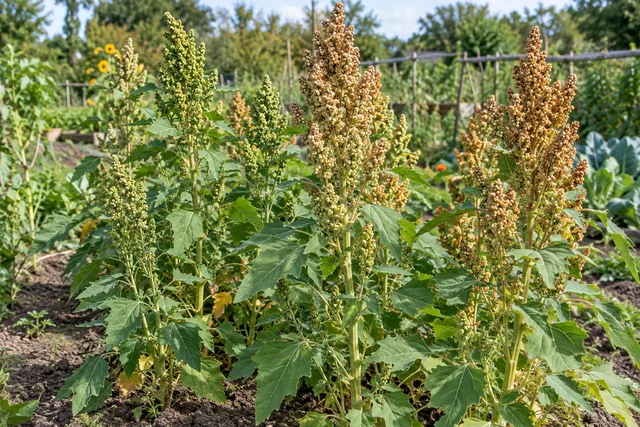
Illustrative species image of Quinoa
AI illustration

This image was created with AI from described plant characteristics and growing advice. It shows a possible situation and is not a photograph of a verified cultivar.

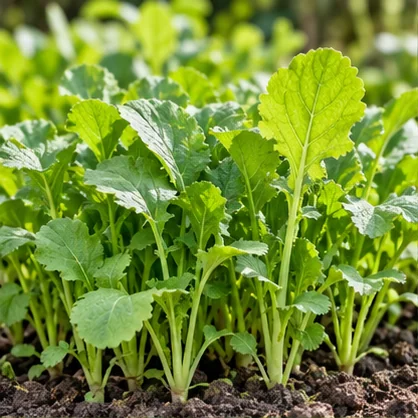
Illustrative species image of Turnip greens: the first tender leaves for your spring harvest
AI illustration

This image was created with AI from described plant characteristics and growing advice. It shows a possible situation and is not a photograph of a verified cultivar.

Gardening guide

Turnip greens: the first tender leaves for your spring harvest

A short row of turnip greens provides a usable leafy vegetable while still young. You grow them for stalks and leaves, not to form large turnips. This makes them suitable for a small spring sowing or a space between two larger crops.

Read the growing guide →
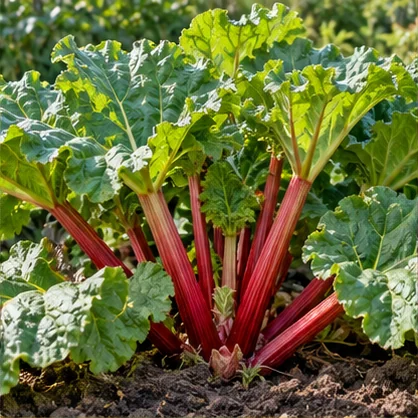
Illustrative species image of Rhubarb: a permanent position for the first spring stalks
AI illustration

This image was created with AI from described plant characteristics and growing advice. It shows a possible situation and is not a photograph of a verified cultivar.

Gardening guide

Rhubarb: a permanent position for the first spring stalks

Rhubarb gives the vegetable garden volume early in the season, with large leaves above juicy stalks. Give it a permanent space and time to build its roots. The reward is a returning spring harvest; only the leaf stalks go to the kitchen.

Read the growing guide →
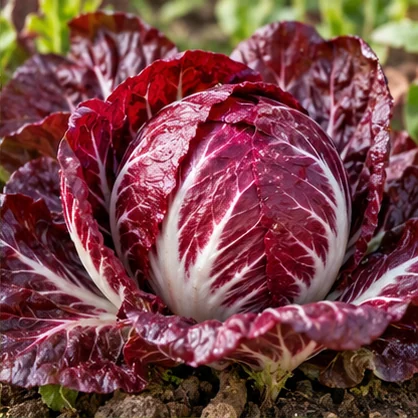
Illustrative species image of Radicchio: red leaves for a colourful autumn harvest
AI illustration

This image was created with AI from described plant characteristics and growing advice. It shows a possible situation and is not a photograph of a verified cultivar.

Gardening guide

Radicchio: red leaves for a colourful autumn harvest

A red head of radicchio makes a striking finish to summer growing. The leaves have a distinctive bitter note, raw or briefly grilled. You can also harvest young leaves, but variety choice and enough space matter when growing closed heads.

Read the growing guide →
Gardening guide

Radichetta: discover its flavour and how to grow it

Radichetta produces broad, dark green, cut leaves without a closed lettuce heart. The shape supports repeated cutting or picking. Choose Radichetta for dark green, loose-leaf lettuce. The name does not mean it is a Cichorium radicchio.

Read more
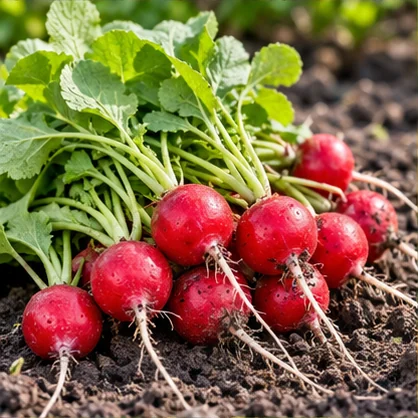
Illustrative species image of Radishes: a short row for a quick, crisp harvest
AI illustration

This image was created with AI from described plant characteristics and growing advice. It shows a possible situation and is not a photograph of a verified cultivar.

Gardening guide

Radishes: a short row for a quick, crisp harvest

Radishes quickly show you what a good seedbed and regular watering can achieve. Sow a short row, harvest young and make room for something else. This makes them a small recurring garden ritual rather than one large harvest peak.

Read the growing guide →
Gardening guide

Radja: discover its flavour and how to grow it

Yellow snack peppers about 7–8 cm long on strong, short plants: a sunny colour for small fresh portions. Choose Radja for yellow snacks and a relatively short crop. The variety description clearly establishes colour and size.

Read more
Gardening guide

Raisin Vert: discover its flavour and how to grow it

Round, yellow-green cherry tomatoes stay greener near the stalk in small trusses often containing several fruits. Choose Raisin Vert for small, green-ripe fruits as a manageable alternative to large Aunt Ruby’s German Green.

Read more