Why grow Merveille de Kelvedon?
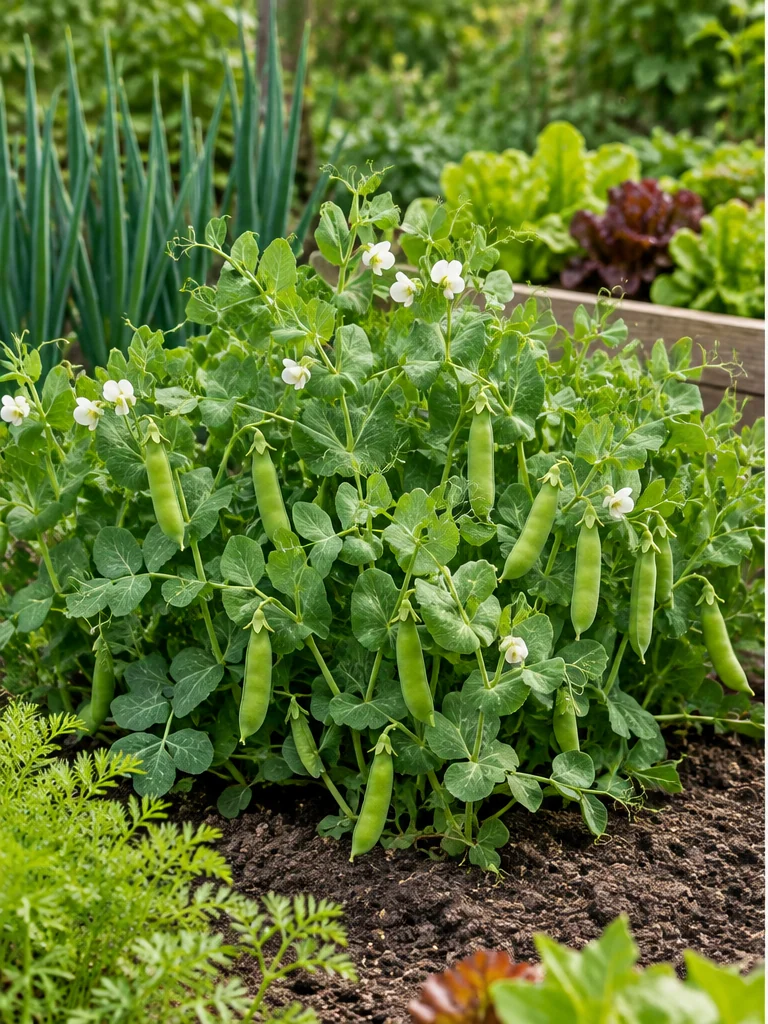
Early, low-growing shelling pea of about fifty centimetres.
Choose this variety for an early harvest without tall climbing supports. A low row makes a manageable bed and can give way to the next crop after harvesting. Kelvedon Wonder names the same variety, not another choice.
How this choice tastes
The young seeds have the sweetish character of peas. Early, low growth is clearly supported; greater sweetness than other shelling peas has not been established.
From harvest to kitchen
Shell young, filled pods and briefly cook the peas with a little butter. Pair with potato in a simple meal to taste the pea’s own flavour.
What needs attention when growing
Sow in spring in a free-draining position. Use low pea sticks in wind or to keep plants off the ground, and water during dry pod filling.
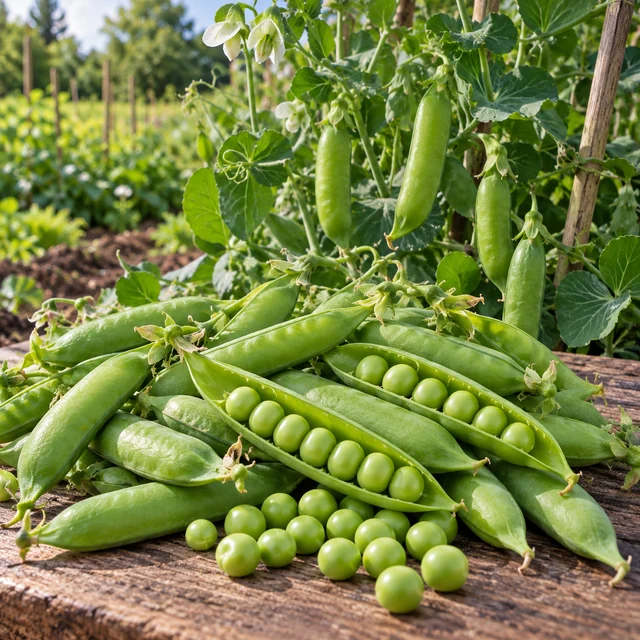
Harvest filled pods before seeds harden. Shell soon after picking and plan several pickings, as not all pods reach kitchen size on the same day.
Choose by flavour, shape and use
Blauwschokker: Climbing shelling pea with striking purple pods. Shell the pods and briefly cook the young peas as a vegetable. The pod wall is not eaten; for a dried supply, let a separate portion mature fully.
Young shelled peas have the gentle character of peas; fully mature seeds need a different, firmer preparation. The purple pod mainly helps with identification at harvest.
Karina: Dwarf shelling pea with straight dark green pods. Shell a portion just before cooking and cook briefly for risotto or a vegetable pan dish. Use the peas; their firmness also adds bite to a cooked pea meal.
Karina is described as sweet and firm. Fresh young peas retain that bite more clearly than a long-cooked or fully mature harvest.
Merveille de Kelvedon: Early dwarf shelling pea around fifty centimetres tall. Shell young, filled pods and briefly cook the peas with a little butter. Pair with potato in a simple meal to taste the pea’s own flavour.
The young seeds have the sweetish character of peas. Early, low growth is clearly supported; greater sweetness than other shelling peas has not been established.
Sima: Dwarf winter shelling pea for a possible early spring harvest. Briefly cook the small fresh peas for a spring dish. They suit a small portion alongside potato or mixed through rice, without using the pod wall.
Semailles describes the small peas as sweet. Shelling young gives a tender bite; the early harvest aim matters more here than an assumed flavour ranking.
Choose which pea you want to eat
Shelling peas are grown for seeds inside the pod. Mangetout are harvested flat and young; sugar snaps have a thicker edible wall. Choose the type you want. Short and tall shelling peas need different support, space and a distinct picking route through the bed.
A cool start with workable soil
Peas suit a cooler season, but not a persistently cold, waterlogged seedbed. Choose the cultivar’s growing window and assess the soil. A warm period can shorten the later harvest. A calendar helps planning but does not predict the same growing duration in every garden.
Keep young roots intact
Sow healthy seed at the packet depth and spacing. Direct sowing suits appropriate soil. Starting under cover can help where animals take a lot of seed, but move the young root ball intact. Do not pinch or pull the delicate stems when planting out.
Tendrils seek a fine foothold
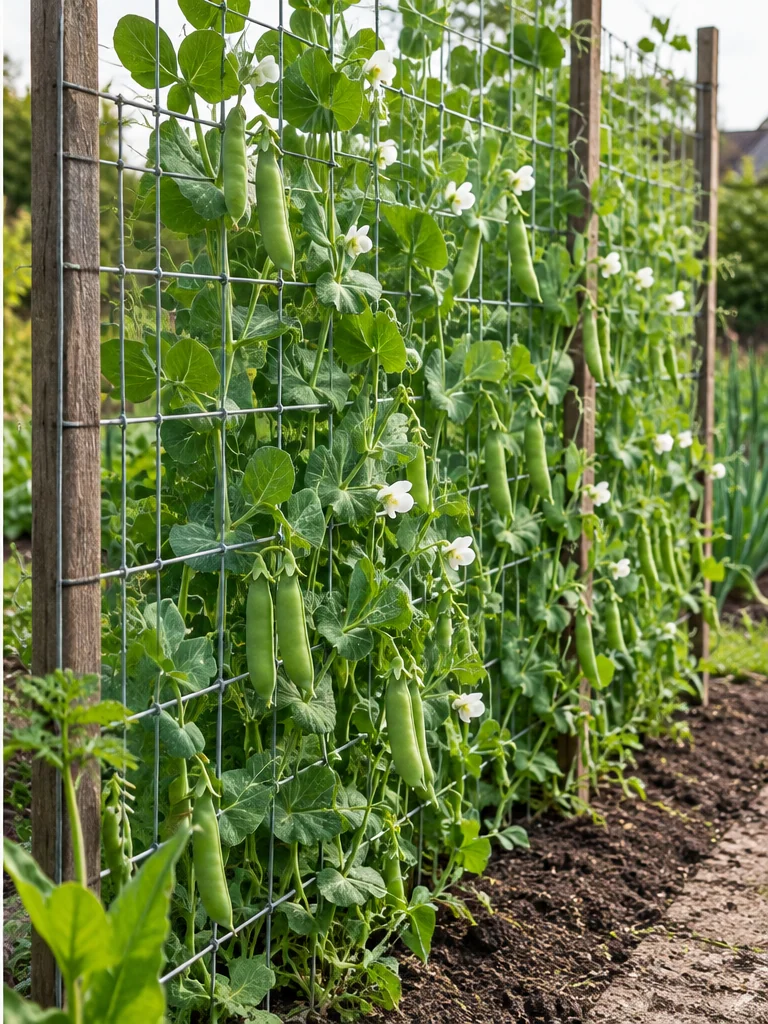
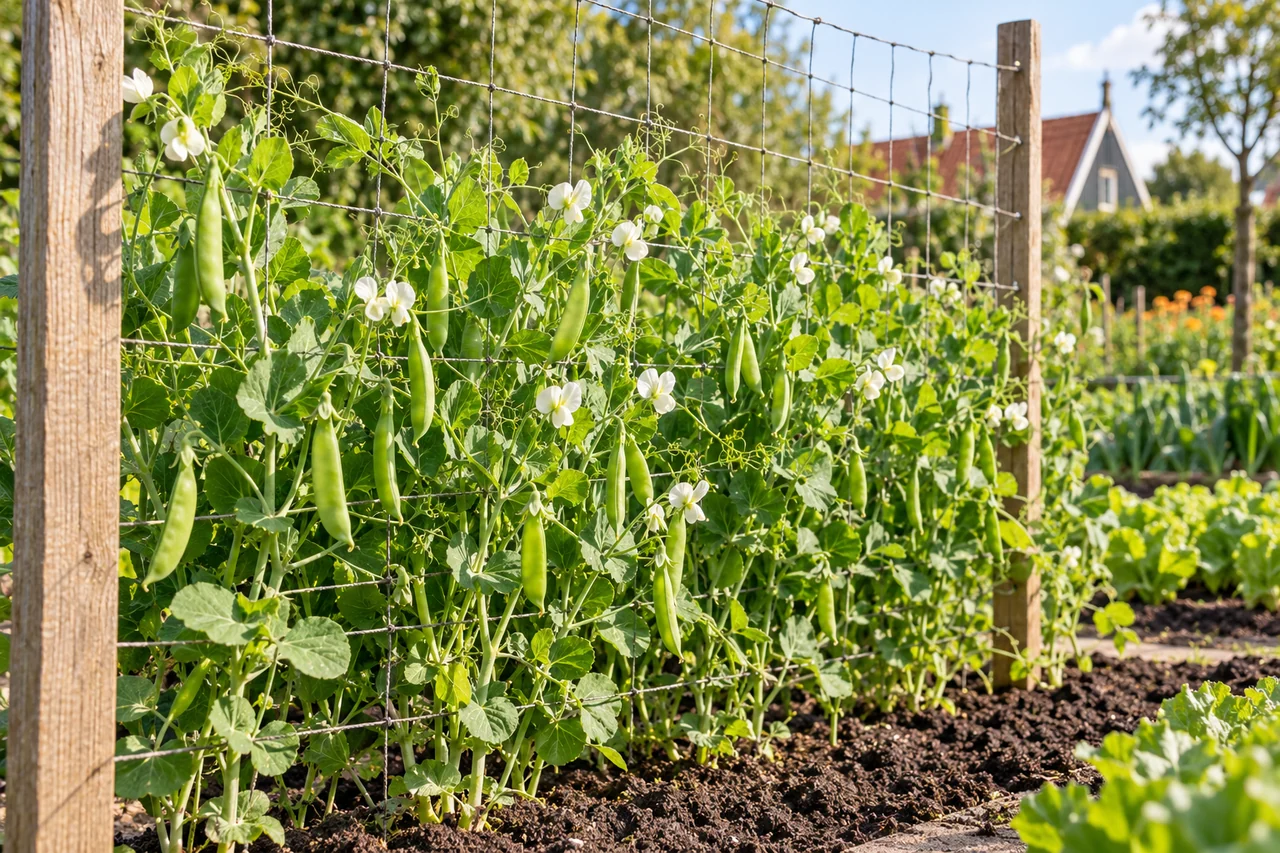
Put supports in place before the shoots tumble together. Short cultivars can use twiggy sticks; tall plants need a sturdy frame. Tendrils grasp something thin. A smooth, thick post alone does not give every cultivar a good route upwards.
Let the roots work undisturbed
Choose sun and good drainage and remove persistent weeds before starting. Heavy nitrogen feeding is not standard practice; assess the existing soil. Work shallowly around plants during growth. Keep a path clear for moisture checks and picking.
Follow flowering and pod filling
During drought, check below the soil surface, especially around flowering and young pods. Water the soil when needed. Look for loose shoots at the same time. A full green wall can hide dry soil at its base; check there too.
Yellow leaves can have several causes
Heat can quickly age a late crop. Wet soil, root problems or pests and diseases can also cause yellowing. Examine the pattern, soil and growth stage before treating. White fungal patches or feeding damage call for targeted identification. Keep monitoring the row after an intervention.
Pick filled seeds while they are tender
Feel a pod and open a test one. Harvest before the peas become hard and mealy. Support the stalk and work steadily from both sides. Chill and process the harvest promptly. Freshness matters; leaving a full basket somewhere warm does not help quality.
Pick regularly during the harvest stage, including behind the leaves. An old, full pod can go unnoticed while the visible side looks young. Record the first and last picking dates to fit the next early round to your available time.