Loading the garden guide…
Loading the garden guide…
Astia brings courgette growing close to home. Learn to observe pot space, flowers and young fruit, with separate sources for the variety and general care.
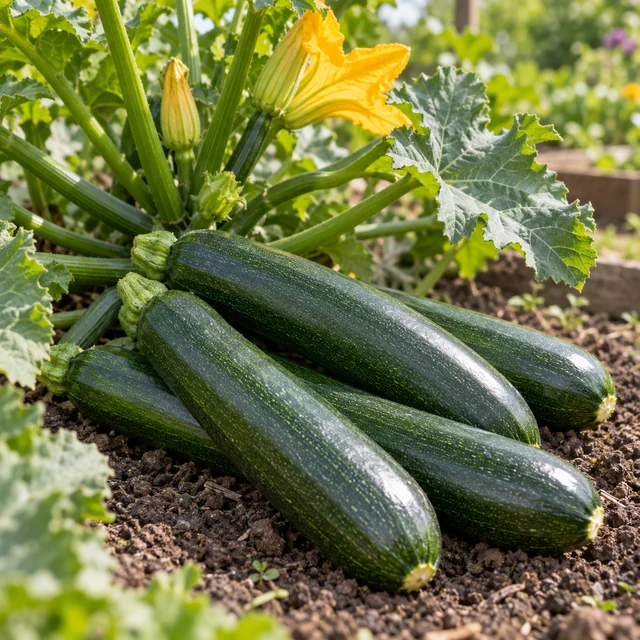
This image was created with AI from described plant characteristics and growing advice. It shows a possible situation and is not a photograph of a verified cultivar.
This growing advice helps you choose. Your variety, growth stage, weather and conditions in your space determine the actual timing.
Start under cover in warmth · Pumpkin & courgette (Cucurbita pepo)
April–early MayStart indoors in warmth and reserve enough bright space for raising plants.
These plants grow quickly. Do not start in February if you cannot plant out until late May.
RHS · courgette ↗Britse teeltrichtlijn voor een gematigd klimaat; de genoemde perioden zijn richtlijnen voor Nederland en Vlaanderen.
Royal Horticultural Society · Zomer- en winterpompoenen kweken ↗Soort- of productgebonden bron; buitenlandse perioden zijn geen vaste Nederlandse zaaidatum.
University of Minnesota Extension · Zomerpompoen en courgette kweken ↗Soort- of productgebonden bron; buitenlandse perioden zijn geen vaste Nederlandse zaaidatum.
Guideline periods for the Netherlands and Flanders. Check the variety, available light, soil and measured temperatures. Greenhouse heating does not guarantee enough winter light.
The source context and any limitations are in the background information at the bottom.
Compare with another varietyThe options below belong to the plant. From these, choose the method that suits your variety's growth habit.
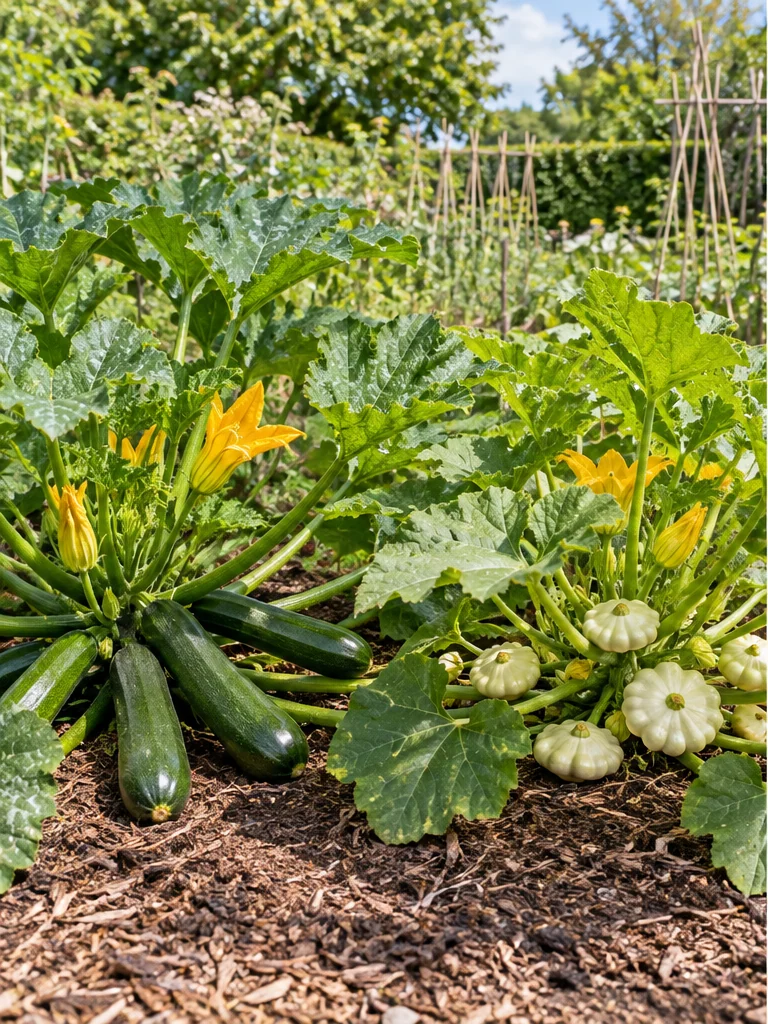
This image was created with AI from described plant characteristics and growing advice. It shows a possible situation and is not a photograph of a verified cultivar.
Courgette or pattypan remains a different project from trailing storage squash.
For many bush courgette and pattypan varieties; not every variety stays equally compact.
Tick off your supplies →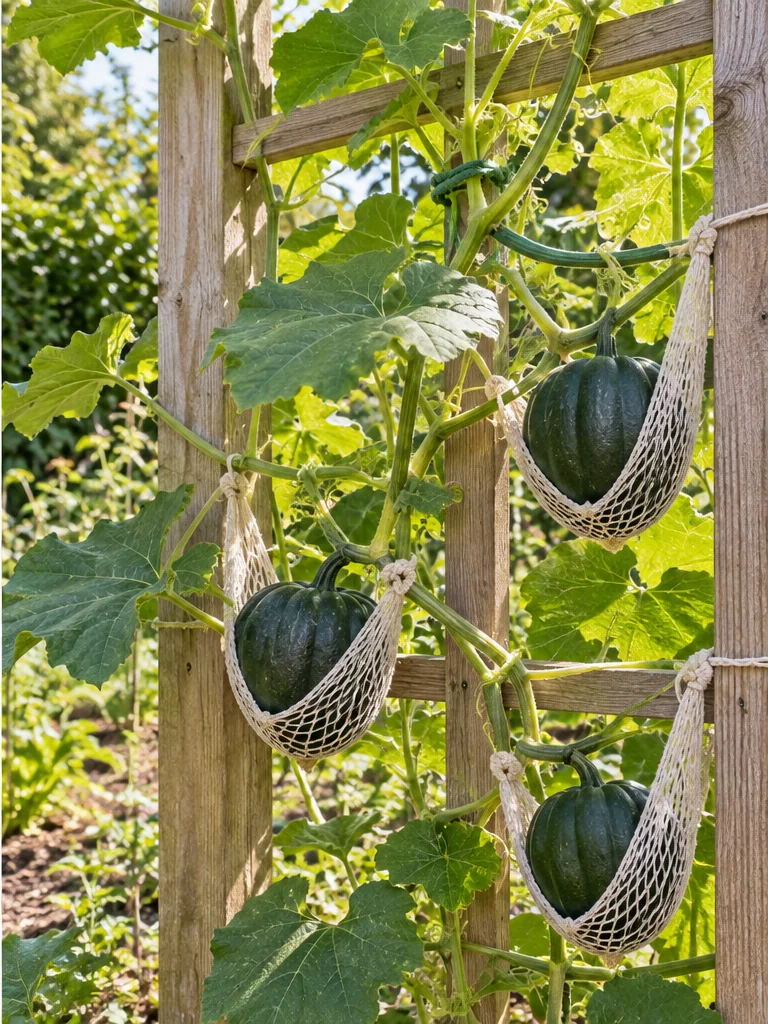
This image was created with AI from described plant characteristics and growing advice. It shows a possible situation and is not a photograph of a verified cultivar.
A suitable trailing type can grow upwards if variety and structure suit it.
For suitable small winter fruits; give large, heavy types a ground bed.
Tick off your supplies →RHS describes Astia as compact for large containers, with straight dark green fruit. Compact growth suits patios but says little about actual pot space. British measurements are references; observe leaf development in your situation.
Fertile, well-drained soil supports courgettes. Avoid damaging roots at transplanting. Young plants must establish before heavy cropping. Note pot or bed conditions in My garden to review how growing began.
Container courgettes need regular moisture care. General RHS guidance recommends generous containers at least 45 centimetres wide, one plant each. Practical species advice, not a proven minimum for every situation. Check excess drainage too.
Male and female flowers differ. Small ovaries sit behind female flowers, absent in males. First flowers may all be male. Observe calmly before calling absent fruit a failure. Note when the first female flower appears.
Bees move pollen between flowers. Cool, cloudy or rainy weather may disrupt pollination and limit fruit set. Covering during bloom must allow pollinator access. Observe flowers and small fruit; abundant leaves alone reveal little about harvests ahead.
The RHS profile gives Astia some powdery mildew resistance, not invulnerability. Observe and record leaf changes. Do not treat this mention as proof against other diseases. Dated photos help review progression later.
Courgettes are harvested as young summer fruits. If left to grow longer, their skin can toughen and quality decline. Check regularly between the leaves during harvest and handle fruits carefully. The hard-skin test for storage squash belongs to a different harvesting method and does not suit a young courgette.
Note when Astia flowered, when you picked and what changed in your pot. When watering, focus on the root zone; constantly wet leaves are not the aim. Saving your garden moments against the same plant lets you compare a future crop with this summer. A variety description then gains meaning in your own garden.
Tick what you already have. The extras depend on how you grow.
0 of 6 ticked off
Your ticks are saved in this browser.
SeedSteps editorial team · updated on 11 October 2026. The AI images illustrate species and practical growing situations; they do not prove an exact cultivar, observations from your own garden or yield.
Britse gewasadviezen worden gecombineerd met Nederlandse en Vlaamse informatie waar beschikbaar. Amerikaanse Extension-bronnen ondersteunen plantprincipes en herkenning; hun kalenderdata, lokale plaagdruk, bestrijdingsmiddelen en mestdoseringen worden niet rechtstreeks op Nederland of Vlaanderen toegepast. Vorst, bodemwarmte, standplaats en expliciete rasinformatie blijven de lokale controle. Commerciële bronnen onderbouwen uitsluitend benoemde ras- en plantkenmerken; zij zijn geen affiliate-aanbeveling.
Supporting evidence by chapter: Compact still means allowing space: Royal Horticultural Society. Start with space beneath the leaves: Utah State University Extension. Choose a pot that can cope with summer: Royal Horticultural Society. A flower is the start of a possible fruit: University of Minnesota Extension. Leave space for visits to the flowers: University of Minnesota Extension. Some resistance remains a limited property: Royal Horticultural Society. Do not wait for a hard skin on courgettes: Utah State University Extension. Your patio writes the next part of this story: University of Minnesota Extension.
Frost-sensitive: Yes Brits RHS-rasprofiel; beschrijving voor Britse groeiomstandigheden, geen vaste maat of opbrengstgarantie voor jouw tuin. Royal Horticultural Society
Fruit shape: Slender and even RHS beschrijft specifiek grote potten. Compact betekent niet dat een kleine pot voldoende wortelruimte biedt. Royal Horticultural Society
Variety type: Courgette RHS beschrijft specifiek grote potten. Compact betekent niet dat een kleine pot voldoende wortelruimte biedt. Royal Horticultural Society
Growth habit: Compact RHS beschrijft specifiek grote potten. Compact betekent niet dat een kleine pot voldoende wortelruimte biedt. Royal Horticultural Society
Height: 50–100 cm Brits RHS-rasprofiel; beschrijving voor Britse groeiomstandigheden, geen vaste maat of opbrengstgarantie voor jouw tuin. Royal Horticultural Society
Light: Full sun Brits RHS-rasprofiel; beschrijving voor Britse groeiomstandigheden, geen vaste maat of opbrengstgarantie voor jouw tuin. Royal Horticultural Society
Main colour: Dark green Brits RHS-rasprofiel; beschrijving voor Britse groeiomstandigheden, geen vaste maat of opbrengstgarantie voor jouw tuin. Royal Horticultural Society
Suitable for pots: Yes RHS beschrijft specifiek grote potten. Compact betekent niet dat een kleine pot voldoende wortelruimte biedt. Royal Horticultural Society
Resistances: Some resistance to powdery mildew Het RHS-rasprofiel noemt enige weerstand tegen echte meeldauw; aantasting blijft mogelijk. Dit is geen CMV-claim en geen immuniteit. Royal Horticultural Society
Width: 100–150 cm Brits RHS-rasprofiel; beschrijving voor Britse groeiomstandigheden, geen vaste maat of opbrengstgarantie voor jouw tuin. Royal Horticultural Society
