Growing Veronica: romanesco towers in your vegetable garden
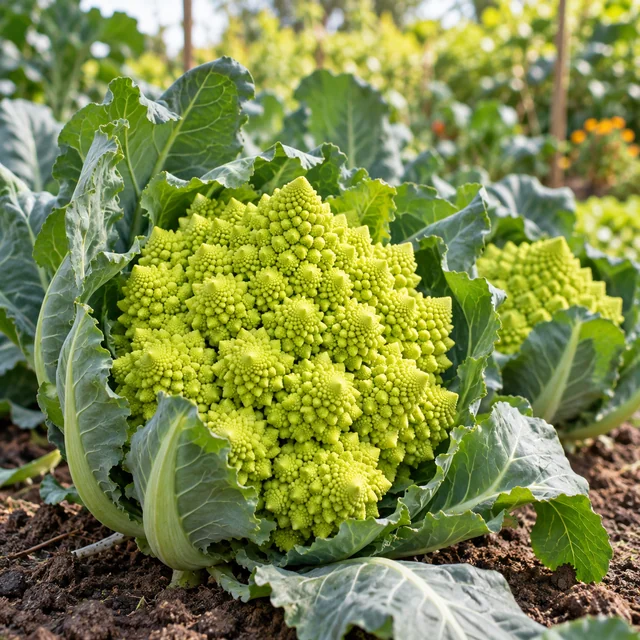
Veronica is a romanesco with striking pointed florets. Follow growing with Dutch variety guidance and learn to observe structure, growth and the right harvest time.
Loading the garden guide…
Veronica is a romanesco with striking pointed florets. Follow growing with Dutch variety guidance and learn to observe structure, growth and the right harvest time.

This image was created with AI from described plant characteristics and growing advice. It shows a possible situation and is not a photograph of a verified cultivar.
This growing advice helps you choose. Your variety, growth stage, weather and conditions in your space determine the actual timing.
Start under cover in cool conditions in modules or a seedbed · Cauliflower
March–May, only for a suitable harvest typeSow somewhere cool and bright and avoid long, weak growth.
Early, summer, autumn and winter cultivars have their own windows. The spring period shown is a basic route; use cultivar guidance for overwintering and winter cauliflower.
RHS · kolen ↗Britse teeltrichtlijn voor een gematigd klimaat; de genoemde perioden zijn richtlijnen voor Nederland en Vlaanderen.
Feggies · Bloemkool 'Flora Blanca' Biologisch ↗Nederlandse producent of teeltbron; de rasinstructie blijft leidend.
Feggies · Bloemkool Neckarperle zaden biologisch ↗Nederlandse producent of teeltbron; de rasinstructie blijft leidend.
Guideline periods for the Netherlands and Flanders. Check the variety, available light, soil and measured temperatures. Greenhouse heating does not guarantee enough winter light.

The source context and any limitations are in the background information at the bottom.
Compare with another varietyThe options below belong to the plant. From these, choose the method that suits your variety's growth habit.

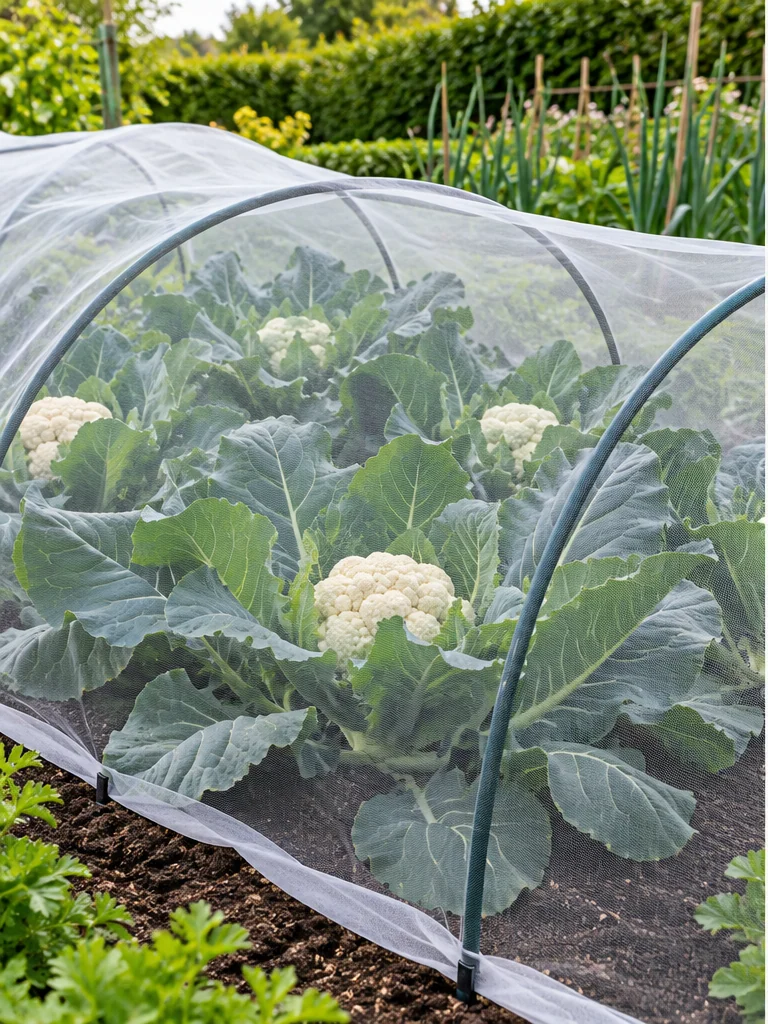
This image was created with AI from described plant characteristics and growing advice. It shows a possible situation and is not a photograph of a verified cultivar.
An accessible cabbage bed gives leaves and heads room.
For a garden bed with room for broad leaves.
Tick off your supplies →
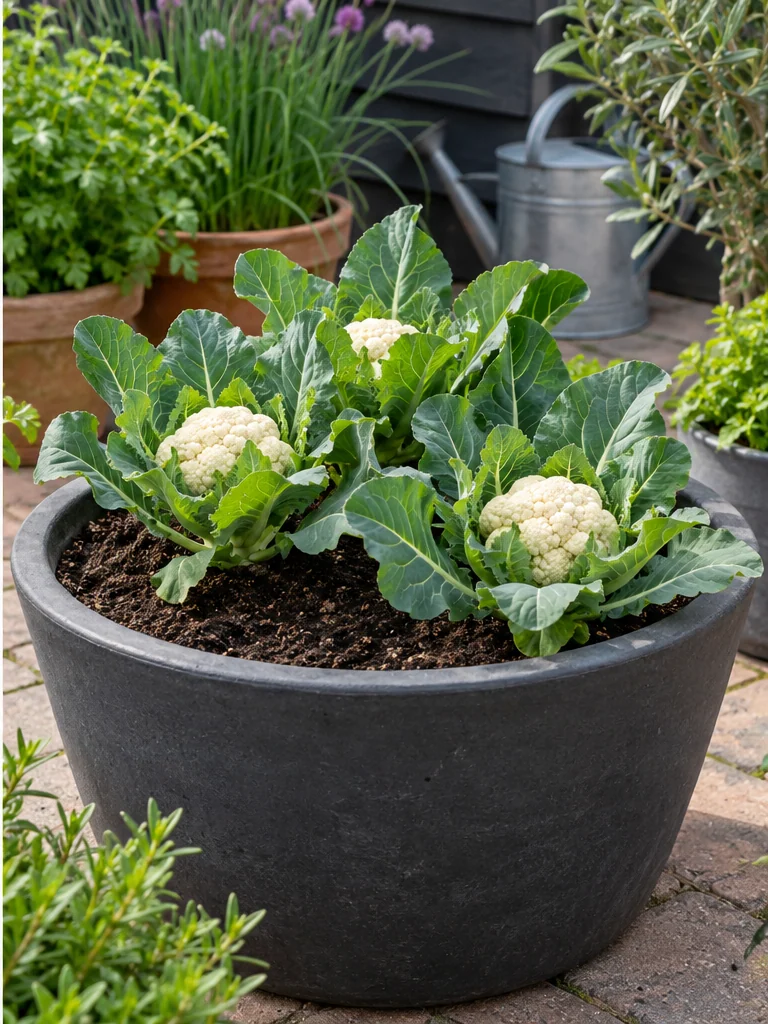
This image was created with AI from described plant characteristics and growing advice. It shows a possible situation and is not a photograph of a verified cultivar.
A true mini variety can make small heads in limited space.
For a small harvest; container growing needs extra moisture checks.
Tick off your supplies →The Dutch producer describes Veronica's yellow-green towers and hybrid seed type. Guideline spacing is 75 × 50 centimetres. Label clearly. Unusual appearance comes from variety choice while care still follows soil, weather and plant development.
The producer places raising in May–June, planting in June–July and harvesting from late August to mid-October. Conditional outdoor variety guidance, with variable heat or drought performance. Treat months as an inspection window, not a harvest promise.
Seedlings do not yet show final heads. Record variety and date from the start. Give light after emergence and keep raising compost moist without soaking. Provide space promptly to avoid long stays in undersized pots.
Cauliflower needs a consistent moisture supply. Severe drought stress can affect head formation and quality. Check soil around the roots, especially during dry periods. Romanesco's beautiful pattern does not prove special drought resistance. Adapt care to conditions and follow what your plant actually does.
Covering coloured cauliflower to keep white is not an automatic growing step. Do not copy without checking your variety. Follow floret colour and development. Care advice is useful when matching the type actually in your bed.
Cabbage caterpillars can damage leaves. Fine mesh helps keep adult butterflies and moths out, provided they cannot reach leaves through it. Also check plants beneath the protection and adjust the clearance as they grow. Look at new leaves and possible eggs, rather than only at the net itself.
Cauliflower's usable stage is a compact head. Inspect floret cohesion during rounds rather than waiting for separation. Distinctive shape identifies the harvest but does not replace checking. Cut with surrounding leaves and handle carefully.
Cook florets or try small raw pieces; chop and use cores too. Note date, growing conditions and results. The striking crop gains personal garden history based on experience rather than an assumed origin story.
Tick what you already have. The extras depend on how you grow.
0 of 6 ticked off
Your ticks are saved in this browser.
SeedSteps editorial team · updated on 11 October 2026. The AI images illustrate species and practical growing situations; they do not prove an exact cultivar, observations from your own garden or yield.
Britse gewasadviezen worden gecombineerd met Nederlandse en Vlaamse informatie waar beschikbaar. Amerikaanse Extension-bronnen ondersteunen plantprincipes en herkenning; hun kalenderdata, lokale plaagdruk, bestrijdingsmiddelen en mestdoseringen worden niet rechtstreeks op Nederland of Vlaanderen toegepast. Vorst, bodemwarmte, standplaats en expliciete rasinformatie blijven de lokale controle. Commerciële bronnen onderbouwen uitsluitend benoemde ras- en plantkenmerken; zij zijn geen affiliate-aanbeveling.
Supporting evidence by chapter: The harvest is a landscape of little towers: De Bolster. A Dutch schedule for this specific variety: De Bolster. Preserve identity from the propagation pot: Royal Horticultural Society. Steady growth makes the difference in the root zone: University of Minnesota Extension. A coloured cauliflower is not a white one: Iowa State University Extension and Outreach. Let protection grow with the crop: Royal Horticultural Society. Look between the towers for cohesion: University of Maryland Extension. Take your observations into the next season: Velt.
Harvest season: Summer and autumn Seizoensindeling in Britse RHS-teeltgids; geen vaste oogstdatum voor Nederland of Vlaanderen. Royal Horticultural Society
Brassica type: Romanesco: pointed florets Brits rasprofiel; referentiewaarde, geen garantie voor jouw tuin. Royal Horticultural Society
Height: 75 cm Rasbeschrijving van Nederlandse zaadproducent; commerciële bron, geen onafhankelijke proef of opbrengstgarantie. De Bolster
Light: Full sun Rasbeschrijving van Nederlandse zaadproducent; commerciële bron, geen onafhankelijke proef of opbrengstgarantie. De Bolster
Main colour: Lime green Brits rasprofiel; referentiewaarde, geen garantie voor jouw tuin. Royal Horticultural Society
Open-pollinated / F1: F1-hybride Rasbeschrijving van Nederlandse zaadproducent; commerciële bron, geen onafhankelijke proef of opbrengstgarantie. De Bolster
Plant spacing: 75 × 50 cm Rasbeschrijving van Nederlandse zaadproducent; commerciële bron, geen onafhankelijke proef of opbrengstgarantie. De Bolster