Loading the garden guide…
Loading the garden guide…
Capsicum annuum includes sweet peppers and many hot chillies. They share basic needs for warmth, light and steady root growth, but fruit size, flavour and harvest stage differ. Use this group article to choose your project, then read the specific article for chillies or sweet peppers.
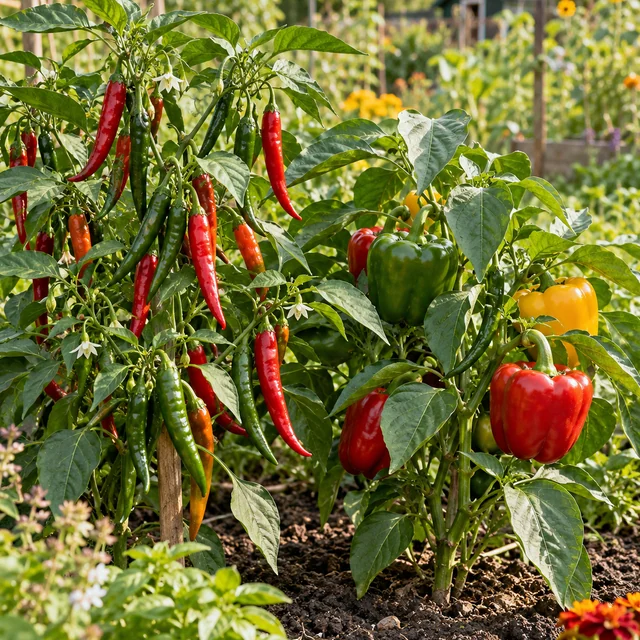
This image was created with AI from described plant characteristics and growing advice. It shows a possible situation and is not a photograph of a verified cultivar.
This growing advice helps you choose. Your variety, growth stage, weather and conditions in your space determine the actual timing.
Start under cover in warmth · Chillies & sweet peppers
Mid-February–early March for greenhouse growingStart indoors in warmth and reserve enough bright space for raising plants.
Sweet pepper needs a long season. Very early sowing without enough light gives no head start. For outdoor growing, a suitable early cultivar may be sown later; follow seed guidance.
RHS · paprika ↗Britse teeltrichtlijn voor een gematigd klimaat; de genoemde perioden zijn richtlijnen voor Nederland en Vlaanderen.
Guideline periods for the Netherlands and Flanders. Check the variety, available light, soil and measured temperatures. Greenhouse heating does not guarantee enough winter light.
Choose by more than the name. Discover how these varieties and crop types taste, what you can use them for and what growing them involves.
36 of 36 choices · 34 named varieties
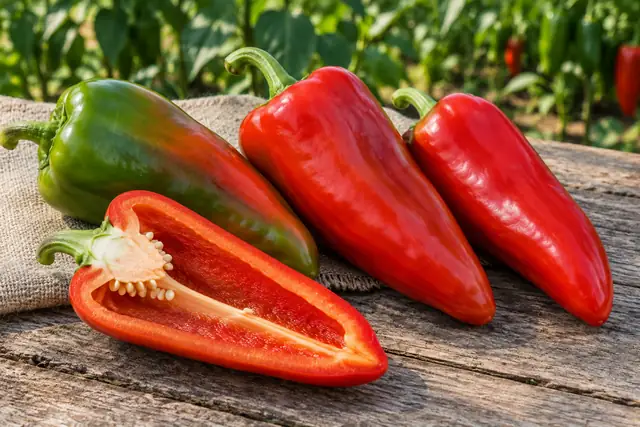
This image was created with AI from described plant characteristics and growing advice. It shows a possible situation and is not a photograph of a verified cultivar.
A relatively low-growing sweet pepper with elongated fruits turning green to red; a manageable greenhouse variety.
Choose Jubilandska for a lower greenhouse crop without complicated pruning.
The flavour is described as sweet. Red-ripe fruits are the choice for a sweet pepper dish; green represents a different stage of ripening.
Cut red strips for a vegetable dish or use firm halved fruits in the oven. Combine green and red only if you want that variation in flavour.
Start in warmth and allow approximately 50 cm. Even without pruning, a stake can help branches laden with fruit.
Pick green for early use or let fruits turn fully red. Harvest with scissors to keep branches intact.
Read the source notes →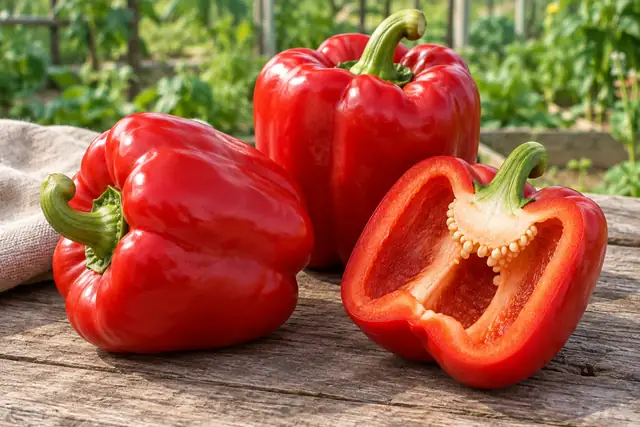
This image was created with AI from described plant characteristics and growing advice. It shows a possible situation and is not a photograph of a verified cultivar.
Large bell peppers with abundant flesh: an old variety for generous portions and a substantial greenhouse position.
Choose Chinese Giant Sweet for large bell peppers to contrast with small Mini Bell or round Sweet Cherry.
Mild and sweet is the described profile. The cultivar focuses on plenty of flesh rather than a distinctly hot flavour.
Stuff large halves with rice or vegetables, or cut broad strips for grilling. One large fruit provides several portions.
Start indoors in warmth and provide a sunny, sheltered position. Support branches as large fruits become heavier.
Assess full fruit shape and ripeness on the plant. Harvest for kitchen quality without promising an unknown fixed fruit weight.
Read the source notes →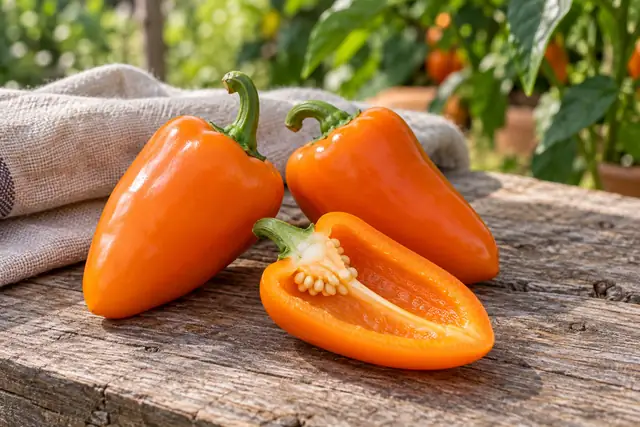
This image was created with AI from described plant characteristics and growing advice. It shows a possible situation and is not a photograph of a verified cultivar.
Small snack peppers on a fairly compact plant, suitable for a pot on a warm balcony or patio.
Choose Flynn mainly for small, sweet portions when compact plants matter more than large bell-shaped fruits.
The source describes sweet, juicy fruits. This profile suits raw snacking, without implying that every snack pepper is the same cultivar.
Eat the young, ripe harvest fresh or cut small strips for a lunchbox. This keeps the juicy texture recognisable.
Use a large pot with drainage and warm shelter. Check moisture more often in warm weather because compost dries quickly.
Let small fruits ripen well and pick regularly. Use the seed label for your selection's precise final colour.
Read the source notes →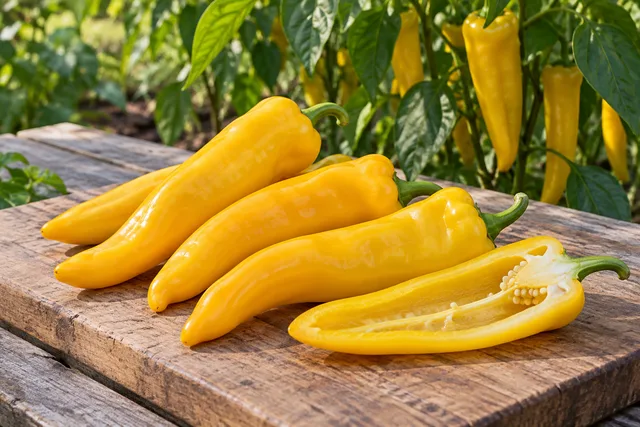
This image was created with AI from described plant characteristics and growing advice. It shows a possible situation and is not a photograph of a verified cultivar.
Elongated Italian sweet peppers ripening yellow: a horn-shaped alternative to square bell peppers.
Choose Corno di Toro geel for long, sweet fruits and yellow ripening alongside red Marconi Rosso.
The described flavour is sweet and fragrant. Ripe yellow fruit gives this cultivar its own kitchen profile and colour.
Halve long fruits for grilling or cut yellow strips for a salad. An opened half is also suitable for stuffing.
Provide a warm greenhouse position, sufficient root space and support for fruit-bearing branches. Let long fruits develop freely.
Harvest fully yellow for the described ripe profile. Picking green is earlier but gives another stage of the same fruit.
Read the source notes →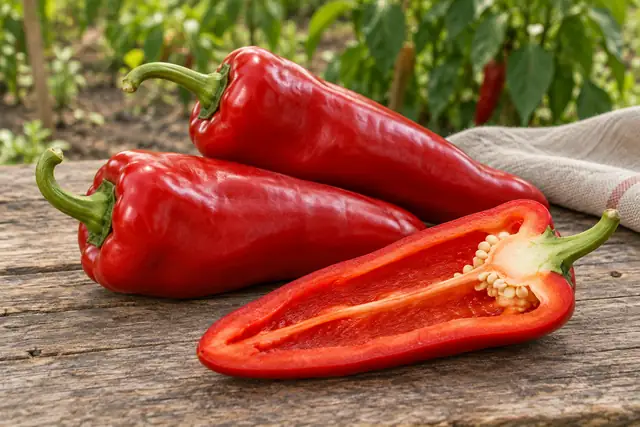
This image was created with AI from described plant characteristics and growing advice. It shows a possible situation and is not a photograph of a verified cultivar.
An early, old Basque variety with fleshy, elongated, red fruits around 15 cm.
Choose Long des Landes for early, elongated, sweet peppers. Earliness combined with fleshy fruit makes it practical.
Sweet and fragrant is the described flavour profile. This is a sweet pepper for an aromatic meal, not a hot cayenne despite its long shape.
Fry red strips with potatoes or roast long fruits for a warm vegetable dish.
Start early indoors in warmth and provide warm shelter. Maintain even watering when several long fruits are growing at once.
Pick red for ripe aroma. Stated fruit length is a guide; skin and full colouring determine ripeness.
Read the source notes →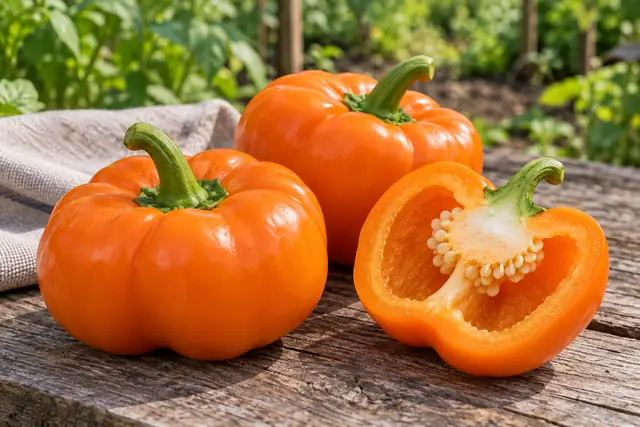
This image was created with AI from described plant characteristics and growing advice. It shows a possible situation and is not a photograph of a verified cultivar.
A very early variety with orange fruits shaped like flattened tomatoes: clearly different from a long, pointed sweet pepper.
Choose Mandarine for early development and a broad, orange shape alongside red and yellow sweet peppers.
Thick flesh and good flavour are described. The name and orange colour do not prove a mandarin aroma.
This flavour description applies to the crop; there is no separate tasting result for this variety.Cut broad salad slices or stuff a young, ripe fruit. The flattened shape makes a striking presentation.
Provide a warm, sunny position and sufficient room around the plant. Early development still needs a warm start.
Let the fruit turn orange and pick it when firm and juicy. Do not expect a fixed harvest date based on earliness alone.
Read the source notes →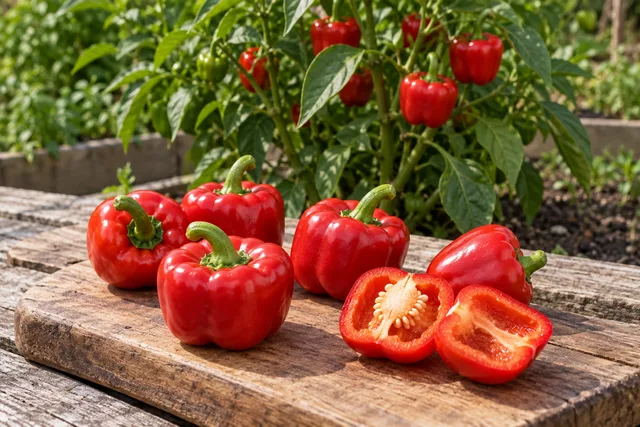
This image was created with AI from described plant characteristics and growing advice. It shows a possible situation and is not a photograph of a verified cultivar.
Small, square sweet peppers of approximately 3–5 cm on a low plant around 40 cm tall: a true miniature.
Choose Mini Bell rood for miniature bell shapes and pot growing. Unlike long snack peppers, fruits remain clearly square.
Thick flesh with a sweet, fruity flavour is described. This makes the small fruit more than an ornamental pepper.
Stuff mini halves with a little soft cheese or serve raw on a snack platter.
Provide a large pot and warm position. Even a low plant regularly uses water and feed during fruit growth.
Pick fully red minis for the ripe, sweet profile. Look beneath leaves where small fruits easily remain hidden.
Read the source notes →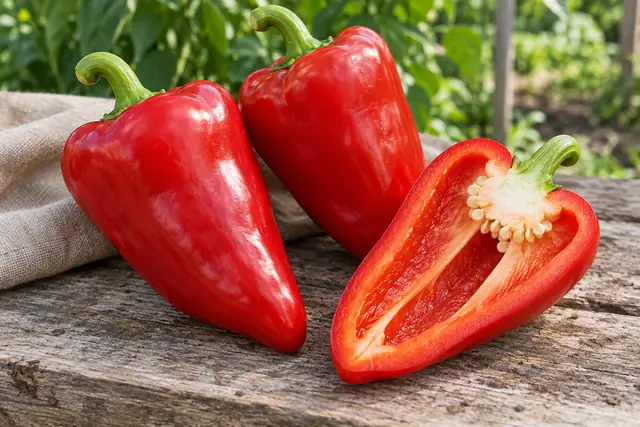
This image was created with AI from described plant characteristics and growing advice. It shows a possible situation and is not a photograph of a verified cultivar.
A vigorous mid-late variety with conical, red fruits and thick, juicy flesh.
Choose Pantos when thick, juicy flesh matters more than the earliest possible harvest.
The description mainly concerns thick, juicy texture; flavour is rated good without a precise sweetness comparison.
This flavour description applies to the crop; there is no separate tasting result for this variety.Eat red strips raw or use fleshy fruit in an oven dish. The juicy bulk suits both uses.
Provide a long, warm season and support the vigorous plant. Mid-late development often makes a greenhouse useful in the Netherlands.
Let the cones turn completely red for a ripe harvest. Towards autumn, retain only new fruit that still has a chance of ripening.
Read the source notes →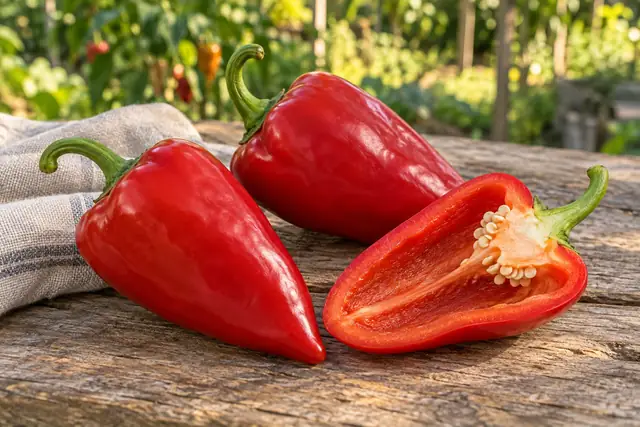
This image was created with AI from described plant characteristics and growing advice. It shows a possible situation and is not a photograph of a verified cultivar.
A sweet pepper with a rich, full flavour for anyone wanting to use the harvest in a cooked dish.
Choose Piquillo when a described full flavour matters without necessarily seeking a large bell pepper.
Sweet and full is the described profile. No precise heat level is given; this selection is listed among sweet peppers.
Roast the fruit and use the flesh in a sauce or as a vegetable garnish. Assess the skin and fruit size from your own harvest.
Provide warmth and sun in a greenhouse or sheltered garden. Start indoors and plant out after cold and frost pass.
Pick ripe, firm fruits regularly. In the Netherlands, a long harvesting period also depends on shelter and warm late-summer days.
Read the source notes →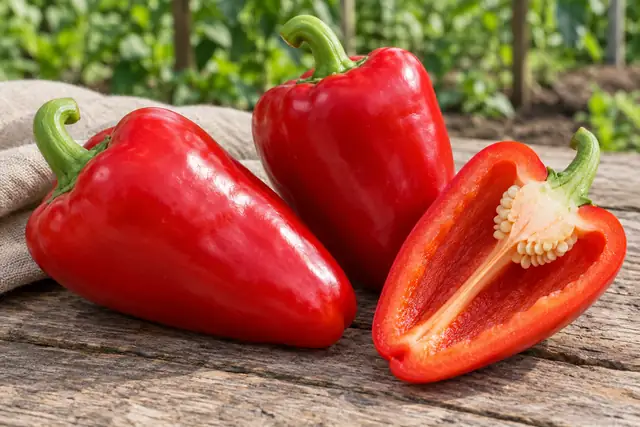
This image was created with AI from described plant characteristics and growing advice. It shows a possible situation and is not a photograph of a verified cultivar.
An early variety with conical fruits turning red at maturity: an easily recognised red sweet pepper shape.
Choose Rosso for early, red cones and a described gently sweet flavour beside later, juicy Pantos.
The flesh is described as soft and sweet. This profile suits both raw strips and cooked preparations.
Use red strips in a salad or add pieces to a quick vegetable stir-fry. Avoid cooking the tender flesh for longer than necessary.
Grow in warmth and shelter with sufficient root space. Even an early sweet pepper can stall on cold nights.
Pick fully red for ripe flavour. Let colour develop on the plant and cut carefully from the branch.
Read the source notes →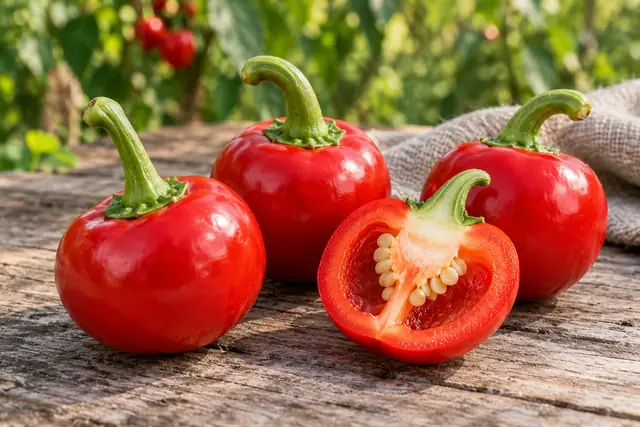
This image was created with AI from described plant characteristics and growing advice. It shows a possible situation and is not a photograph of a verified cultivar.
Round fruits approximately 3–4 cm across turn from dark green to bright red; an early, sweet cherry pepper.
Choose Sweet Cherry for round, sweet minis rather than the square fruits of Mini Bell rood.
The flavour is described as very sweet and fruity. Roundness says nothing about heat here: this is the sweet selection.
Use very small ripe fruit as snacks or stuff halves as nibbles. Remove the seed cavity if it gets in the way in a small portion.
Start in warmth and keep the crop in a sunny, sheltered position. Numerous small fruits need regular checks.
Harvest bright red for the described ripe profile. Small green fruit is at an earlier stage and gives a different flavour result.
Read the source notes →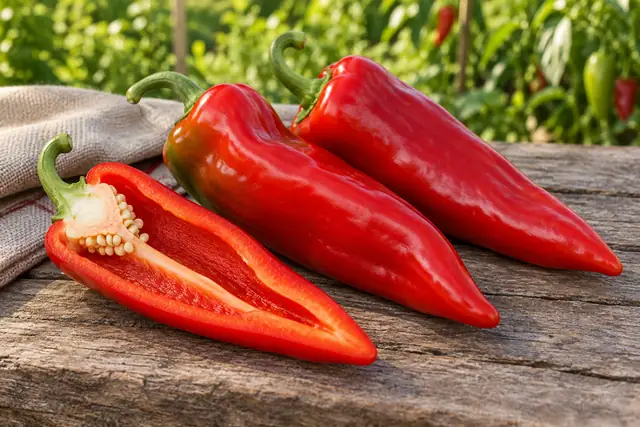
This image was created with AI from described plant characteristics and growing advice. It shows a possible situation and is not a photograph of a verified cultivar.
Elongated, pointed sweet peppers turning green to bright red: a traditional European variety with a recognisable slender shape.
Choose Red Augsburger for a traditional red, pointed shape without the short bell shape of a snack pepper.
No distinct aroma is described. General sweet pepper flavour is the culinary base; red pointed shape is the certain variety trait.
This flavour description applies to the crop; there is no separate tasting result for this variety.Cut long strips for a pan-cooked meal or roast halved fruits. The pointed shape gives neat, narrow portions.
Start indoors in warmth and provide a sheltered, sunny position. Support laden branches if long fruits unbalance the plant.
Let green fruits turn bright red fully. Cut the stalk rather than pulling the long point.
Read the source notes →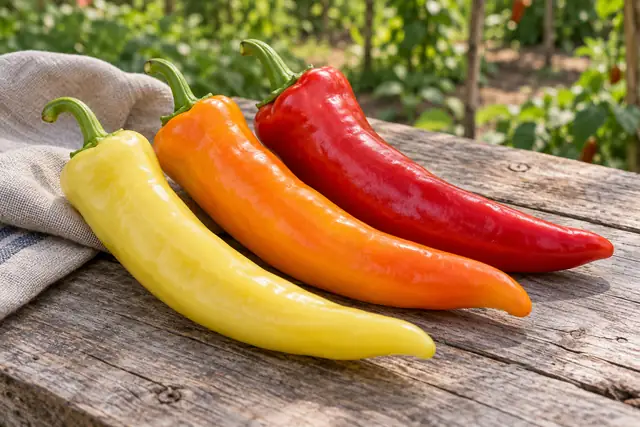
This image was created with AI from described plant characteristics and growing advice. It shows a possible situation and is not a photograph of a verified cultivar.
Slightly curved, long peppers ripening from pale yellow through yellow-orange to red: the banana name explains the shape.
Choose Sweet Banana for curved shape and successive colours instead of long, straight pointed peppers.
There is no proven banana aroma. The usual sweet pepper flavour is the starting point; taste different ripening stages to find your preference.
This flavour description applies to the crop; there is no separate tasting result for this variety.Cut curved strips for salad or fry pieces in a vegetable dish. Keep young, yellow and fully red fruits separate if desired.
Start in warmth and position the plant somewhere warm and sheltered. Let long fruits grow freely between leaves and support.
The light yellow colour is an early stage; red is fully ripe. Label what you pick to compare the different stages in the kitchen.
Read the source notes →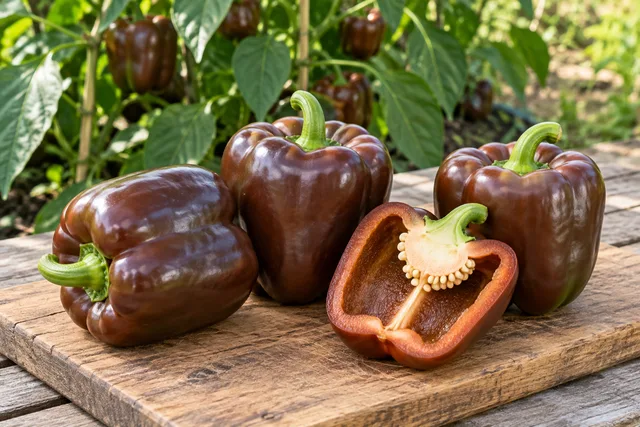
This image was created with AI from described plant characteristics and growing advice. It shows a possible situation and is not a photograph of a verified cultivar.
An early-ripening bell pepper with a striking chocolate-brown final colour and somewhat thicker skin.
Choose Sweet Chocolate for early, brown bell-shaped fruits to contrast with uniformly red or yellow peppers.
Chocolade describes the colour, not a cocoa aroma. A separate flavour profile is not recorded; the usual sweet pepper flavour remains the basis.
This flavour description applies to the crop; there is no separate tasting result for this variety.Cut brown strips for a colourful salad or roast cubes. After roasting, decide for yourself whether to remove the thicker skin.
Grow in warmth and shelter with sufficient airflow. Early ripening helps, but the plant remains cold-sensitive.
Pick fruits fully coloured chocolate brown. The colour belongs to ripeness and should not automatically suggest spoilage.
Read the source notes →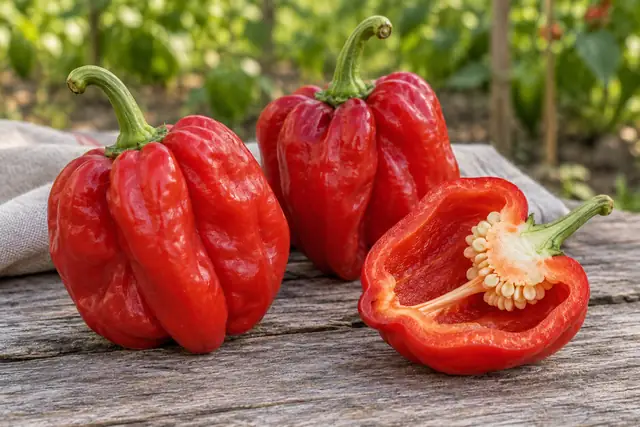
This image was created with AI from described plant characteristics and growing advice. It shows a possible situation and is not a photograph of a verified cultivar.
An old French mid-season variety with red, strongly wrinkled, lantern-shaped fruits and thin skin.
Choose Ampuis when drying is important and you want an unusual lantern shape.
A specific sweetness comparison is missing. The thin, wrinkled fruit is mainly interesting for its described use as a drying pepper.
This flavour description applies to the crop; there is no separate tasting result for this variety.Dry clean, ripe fruit with a suitable drying method and process it for kitchen storage; use fresh pieces cooked in a meal too.
Provide warm shelter and a sufficiently long season. Let wrinkled fruit hang dry and freely without pressing against wet leaves.
Harvest healthy red fruits for drying. Check folds for damage and dry only undamaged specimens.
Read the source notes →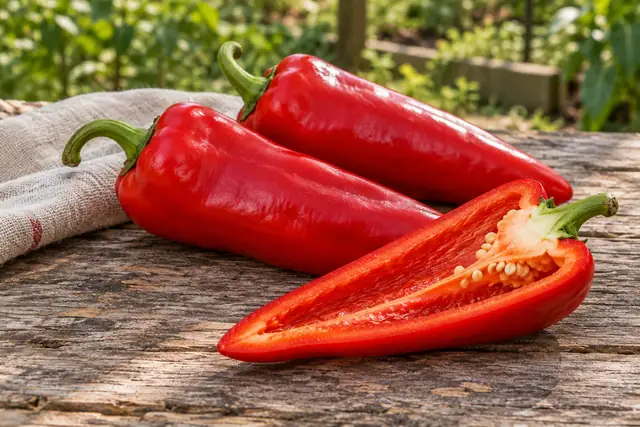
This image was created with AI from described plant characteristics and growing advice. It shows a possible situation and is not a photograph of a verified cultivar.
A red, sweet, pointed pepper for frying and stuffing: the long shape makes generous culinary halves.
Choose Marconi Rosso for long, red fruits and versatile cooking use, contrasting with yellow Corno di Toro.
When ripe and red, this offering is described as sweet. Green harvesting gives a different stage; heat is not a fixed, guaranteed characteristic.
Stuff halved fruits, fry strips or make shakshuka with the sweet, red pepper.
Start in warmth from February to early April. Germination may take several weeks; provide light as seedlings emerge.
Pick red for the ripe, sweet profile or take some green fruits earlier. Compare both stages separately in your dish.
Read the source notes →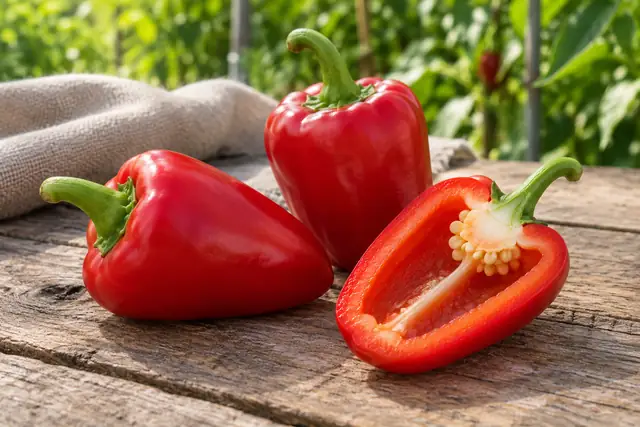
This image was created with AI from described plant characteristics and growing advice. It shows a possible situation and is not a photograph of a verified cultivar.
Red snack peppers approximately 7–8 cm long on strong, fairly short plants, developed for professional organic growing.
Choose Arwen for red snacks; compare with yellow-ripening Radja if colour and harvest time interest you.
The source states good flavour without a pronounced, distinctive aroma. General sweet snack-pepper flavour suits raw use.
This flavour description applies to the crop; there is no separate tasting result for this variety.Use red mini peppers on a snack platter or cut small strips for lunch. Their size suits eating straight after harvest.
Provide warm shelter. According to the supplier, ripe outdoor harvests come later in the season than greenhouse harvests.
Harvest fruits that have turned red, often around 30–40 grams. Weight is a guide, rather than a reason to leave a small, ripe fruit on the plant.
Read the source notes →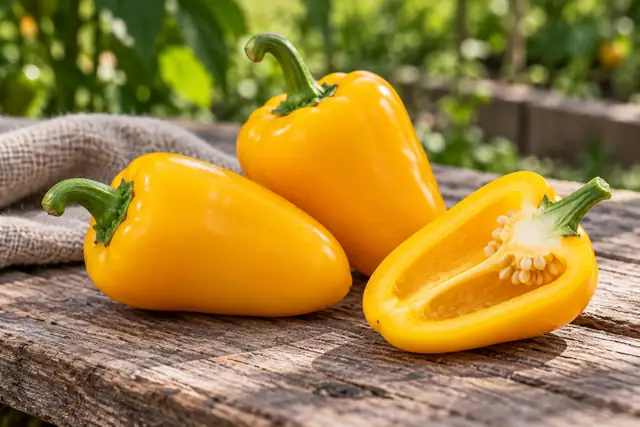
This image was created with AI from described plant characteristics and growing advice. It shows a possible situation and is not a photograph of a verified cultivar.
Yellow snack peppers about 7–8 cm long on strong, short plants: a sunny colour for small fresh portions.
Choose Radja for yellow snacks and a relatively short crop. The variety description clearly establishes colour and size.
Good flavour is described without a special aroma note. Use general sweet snack-pepper flavour as the starting point.
This flavour description applies to the crop; there is no separate tasting result for this variety.Eat ripe, yellow fruits as snacks or pair with red Arwen in a small salad. Colour differences become immediately visible.
Provide a warm greenhouse or well-sheltered outdoor position. The supplier places outdoor ripening mainly in late summer.
Pick fully yellow for ripe portions. Follow colour rather than an unknown fixed number of days.
Read the source notes →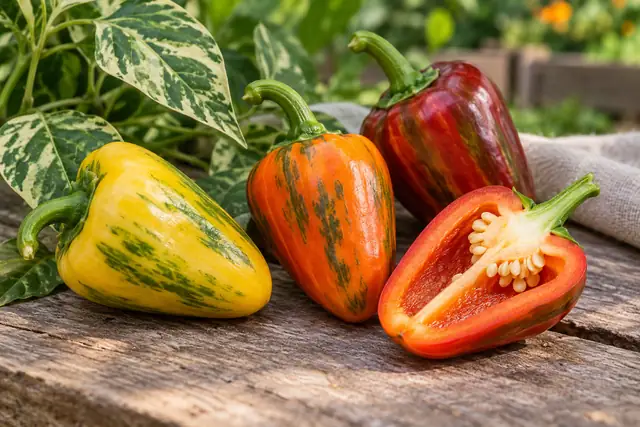
This image was created with AI from described plant characteristics and growing advice. It shows a possible situation and is not a photograph of a verified cultivar.
An ornamental and snack pepper developed especially for balcony gardens, with marbled foliage and colourful striped fruits.
Choose Madame Paraplü when both foliage and harvest should be attractive. It offers more than uniformly red snack fruits.
The grower offers the variety as a sweet snack pepper, without a separate aroma profile. Taste ripe fruit; ornamental value does not make it a hot ornamental chilli.
This flavour description applies to the crop; there is no separate tasting result for this variety.Use small, ripe fruits fresh as snacks and leave stripes visible on the plate. Colour mainly provides visual variation.
Grow in a roomy pot in a sunny, airy spot. Support the plant if its crop load requires it; the grower also describes it as suitable for outdoors.
The fruit starts green-and-white striped, turns through yellow and orange, and ripens with red-brown stripes. Use that final stage for a ripe tasting.
Read the source notes →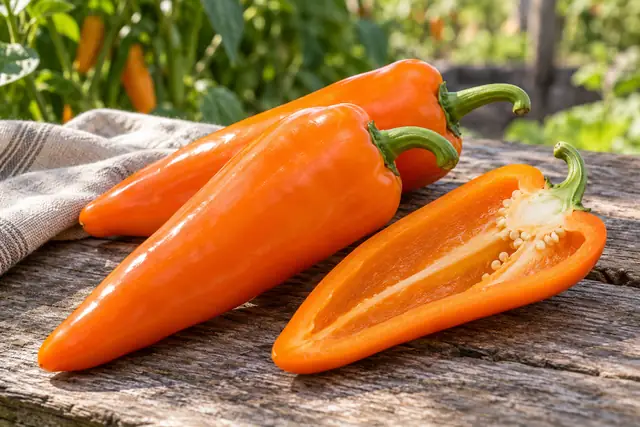
This image was created with AI from described plant characteristics and growing advice. It shows a possible situation and is not a photograph of a verified cultivar.
An orange, sweet, pointed pepper approximately 20–22 cm long with rapid colouring and a strong, open crop.
Choose Kyra for orange pointed peppers and rapid colour development rather than small snacks or bell shapes.
The flavour is described as mildly sweet, with crisp flesh. This also makes the long orange fruit appealing as raw strips.
Cut crisp, long salad strips or roast halved fruits. The orange shape pairs attractively with red pointed peppers.
The supplied instructions focus on glasshouse growing. Give the tall plant support, warm soil and airflow around long fruits.
Harvest fruit that has turned orange. The stated length and weight are guidelines; a smaller, fully ripe fruit is also usable.
Read the source notes →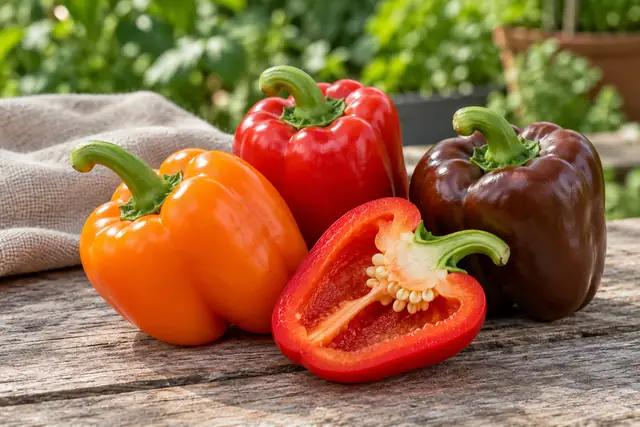
This image was created with AI from described plant characteristics and growing advice. It shows a possible situation and is not a photograph of a verified cultivar.
A mixture of red, orange and chocolate Mini Bell peppers for different small fruits in a row of pots.
Choose the mix if you enjoy a surprise. One seed becomes one plant with its own selection, not a plant that automatically bears all three ripe fruit colours.
The described flesh is meaty and sweet. The mix offers several colours without a guaranteed distinctive flavour for each seedling.
This flavour description applies to the crop; there is no separate tasting result for this variety.Use young, ripe minis as snacks or stuff small halves. Harvest from several plants for a colourful platter.
Label plants separately and give each compact plant enough root space. The supplier mentions a height of around 40 cm and suitability for pots.
Record each plant's colour at its first ripe fruit. Later, pick each plant at the correct final colour.
Read the source notes →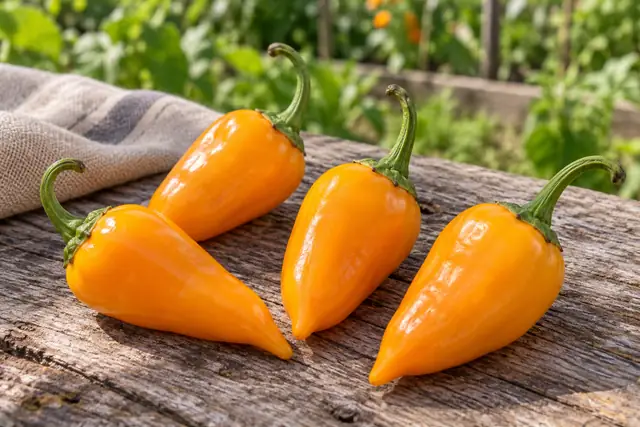
This image was created with AI from described plant characteristics and growing advice. It shows a possible situation and is not a photograph of a verified cultivar.
A very early-ripening chilli with bright yellow-orange fruits, also selected for promising warm outdoor growing.
Choose Cayorange for early orange chillies and a trial in a sunny outdoor spot, rather than a late exotic greenhouse variety.
The source mentions consistently good scent and flavour, without an exact heat rating. Orange colour does not prove that it is a mild sweet pepper.
This flavour description applies to the crop; there is no separate tasting result for this variety.Add a small amount of ripe chilli to a sauce and increase the quantity after tasting. The colour gives a different accent from red chilli.
Start in warmth in February–March and support the plant. The supplier mentions growing in a bucket of approximately ten litres.
Pick ripe yellow-orange fruit regularly. Early development and a long harvest period still depend on warmth and the season.
Read the source notes →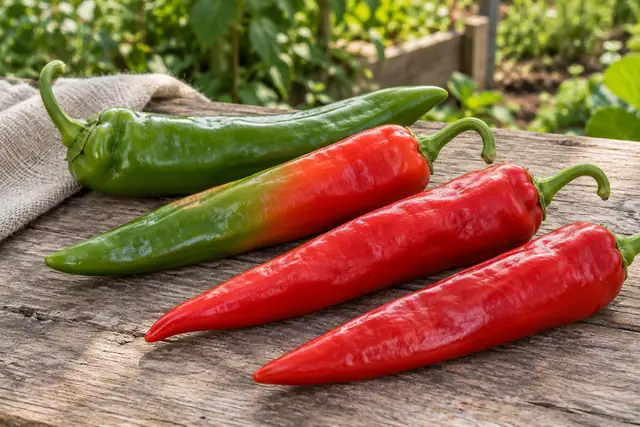
This image was created with AI from described plant characteristics and growing advice. It shows a possible situation and is not a photograph of a verified cultivar.
A familiar elongated, pointed chilli that ripens from green to red, suitable for fresh picking and drying.
Choose this classic for a practical long, red shape and various preserving uses, with a warm greenhouse or a sheltered outdoor position.
The source describes a hot flavour. Other listings differ in their heat ratings; taste your own harvest rather than relying on a fixed guarantee of heat.
Finely chop red-ripe chillies for a sauce or dry sound fruits for later. Start with little and adjust the amount.
Start in warmth and support stems with stakes or string. Producer instructions do not require routine chilli pruning.
Fruit can be harvested green or red. Compare the ripening stage yourself; green is not a reliable guarantee that a chilli will not be hot.
Read the source notes →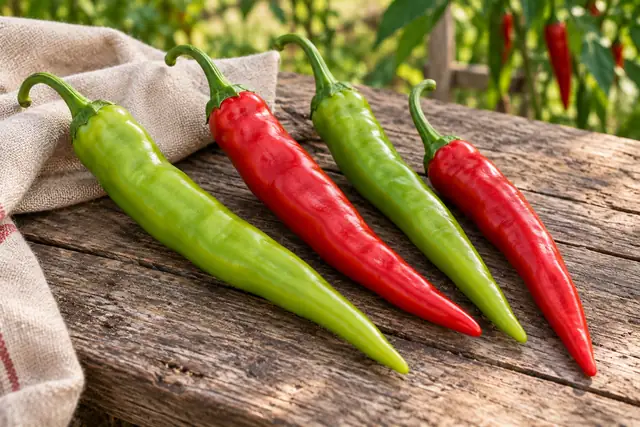
This image was created with AI from described plant characteristics and growing advice. It shows a possible situation and is not a photograph of a verified cultivar.
A second-early variety with long, slender, pointed fruits, light green turning bright red, on a heavily branched plant.
Choose Lombardo for long, relatively mild chillies and productive branching without a small ornamental chilli's compactness.
Sweet flesh and a mild profile are described. Lombardo is therefore a different choice from a hot cayenne.
Use thin rings in a vegetable dish or preserve the harvest using a proven recipe. The source recommends it for preserving.
Provide warm shelter and side-branch space. Support a heavily laden plant and keep soil evenly moist.
Pick light green fruit for an early portion or let it ripen to bright red. Taste the two stages separately to record your own kitchen preference.
Read the source notes →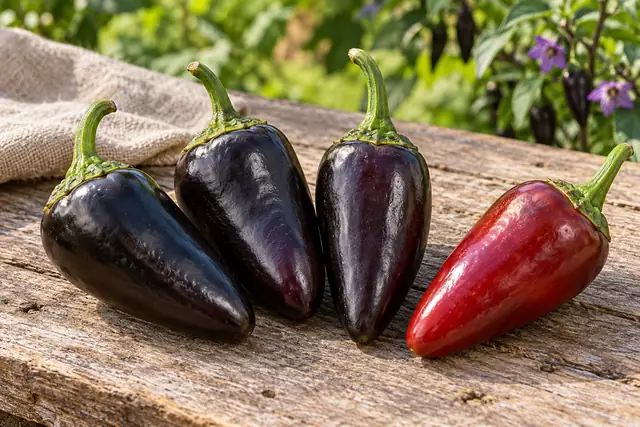
This image was created with AI from described plant characteristics and growing advice. It shows a possible situation and is not a photograph of a verified cultivar.
Purple flowers and cone-shaped, Jalapeño-like fruit ripening from almost black to dark red make this Hungarian variety distinctive.
Choose Black Hungarian for colour in flowers and fruit, and a juicy conical shape rather than long, thin cayennes.
Juicy flesh and a well-regarded flavour are described; the offering is listed among hot chillies. A fixed Scoville value has not been established.
This flavour description applies to the crop; there is no separate tasting result for this variety.Use rings in a salsa or cook small pieces with a dish. Taste a small amount before adding a whole fruit.
Grow in warmth and shelter with enough room for the vigorous plant. Label the variety so that the almost black young fruit remains recognisable.
Dark purple to almost black is a growth stage; dark red is fully ripe. Compare harvest stages without equating colour with a fixed heat level.
Read the source notes →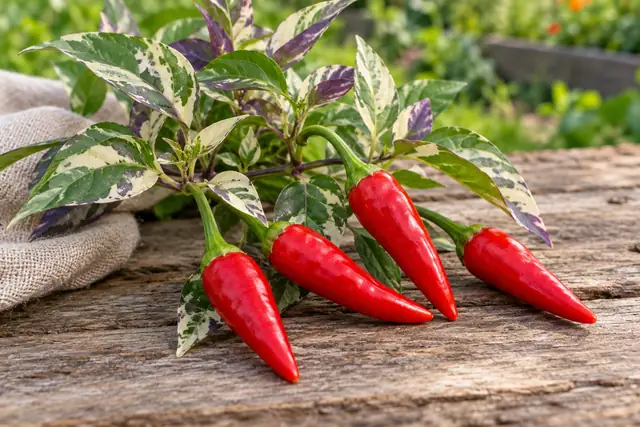
This image was created with AI from described plant characteristics and growing advice. It shows a possible situation and is not a photograph of a verified cultivar.
An early, compact chilli with variegated green-white-purple leaves and small, elongated fruits eventually ripening red.
Choose Variegata for variegated leaves and coloured chillies in pots. Trifetti is a documented alternative name for the same selection.
This offering is a hot chilli, not a sweet ornamental pepper. A separate fruity aroma is missing; the described ornamental value and compact growth are the established distinction.
This flavour description applies to the crop; there is no separate tasting result for this variety.Use small pieces as a hot sauce accent. Taste carefully and wear gloves when cutting hot fruits.
Provide a warm, sunny position and large pot with drainage. Compact growth is useful, but do not let roots dry out.
Pick fully red for a ripe harvest or leave several colour stages for ornament. Different colours on one plant are ripening stages and do not make the variety a seed mix.
Also listed as: Trifetti, Variegata/Trifetti.
Read the source notes →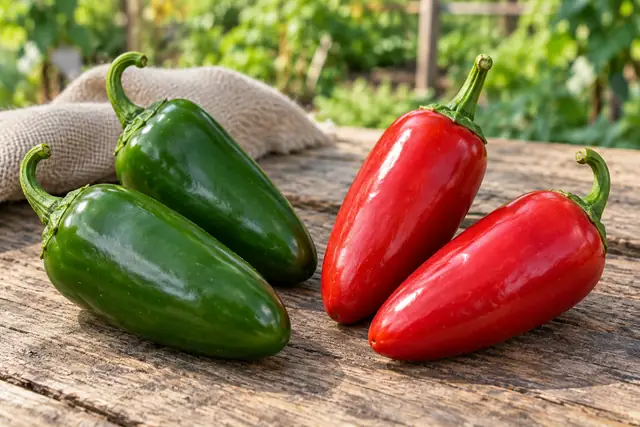
This image was created with AI from described plant characteristics and growing advice. It shows a possible situation and is not a photograph of a verified cultivar.
The familiar Mexican chilli for green picking and fully red ripening; one plant provides two recognisable kitchen stages.
Choose Jalapeño when familiar Mexican use matters and you enjoy comparing green and red harvests.
Red, ripe fruit is described as sweet and fruity with heat. Actual heat varies; green is not always the hottest stage.
Use rings in salsa or stuffed chillies. Red fruit also provides the basis for chipotle use with a suitable smoking and drying method.
Start early indoors in warmth and provide a greenhouse position or warm shelter. Overwintering frost-free in a pot is an option, not a required growing step.
Pick firm green fruits for early use or wait for red. Note the amount you use from your own harvest rather than assuming a fixed heat level.
Also listed as: Jalapeno.
Read the source notes →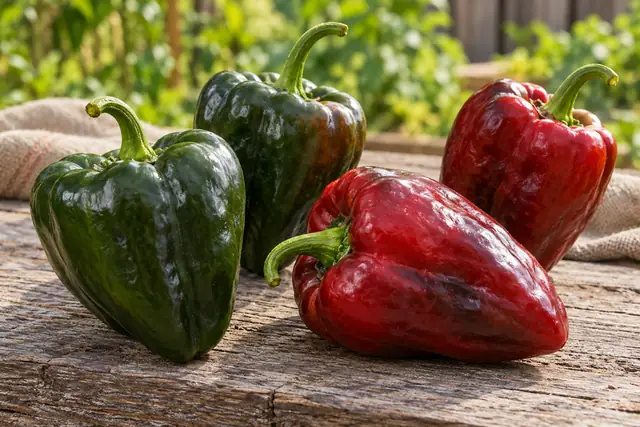
This image was created with AI from described plant characteristics and growing advice. It shows a possible situation and is not a photograph of a verified cultivar.
Fairly large, ribbed, heart-shaped Mexican chillies approximately 7–10 cm long, dark green turning dark red.
Choose this variety for broad, mild Mexican chillies and the option to use them green and red.
The variety is offered as mild and fragrant. The green kitchen stage is called poblano; that is a use description, not a second variety in this list.
Roast broad halves or use pieces in a sauce. The fleshy heart shape lends itself to different stuffing than a long, thin pepper.
Start early in warmth and preferably provide a long, sheltered season. Let large fruits hang freely and support laden branches.
Pick dark green for poblano use or let it ripen to dark red. Taste the harvest; a mild variety description does not rule out individual heat.
Read the source notes →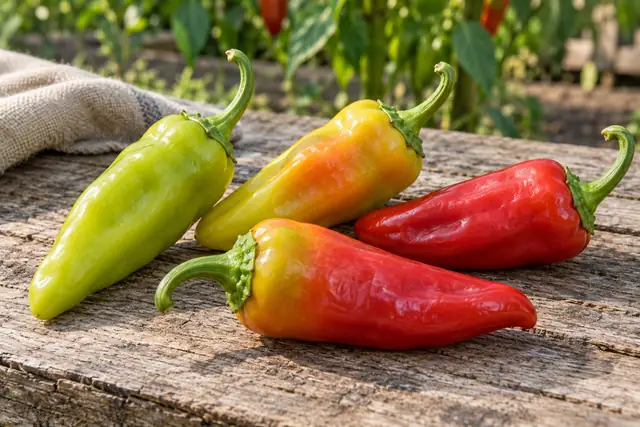
This image was created with AI from described plant characteristics and growing advice. It shows a possible situation and is not a photograph of a verified cultivar.
An old Italian selection with fruits approximately 7–10 cm long, green-yellow turning red, on a vigorous, compact plant.
Choose Pepperoncini for preserving small, milder chillies rather than an extremely hot habanero.
The source describes a sweet flavour and offers it as a mild chilli. This suits milder dishes without an absolute guarantee of mildness.
Use the harvest in a tested pickling recipe or dry ripe fruits. The supplier explicitly mentions both uses.
Start in warmth and provide a sunny, sheltered position. Even compact plants need enough water with abundant fruit set.
Pick at your preferred green-yellow or red stage and keep different sizes separate. Your own tasting determines how mild the harvest really is.
Read the source notes →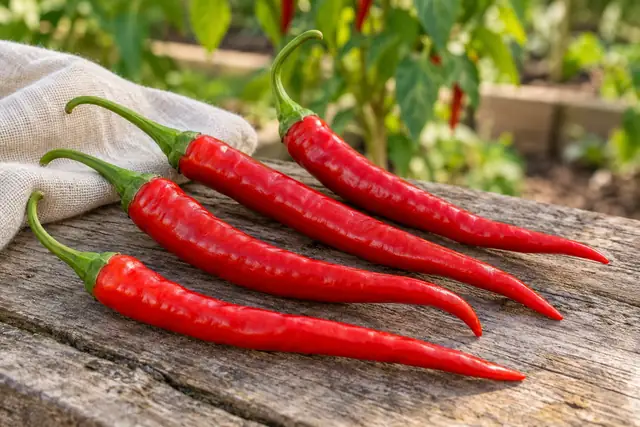
This image was created with AI from described plant characteristics and growing advice. It shows a possible situation and is not a photograph of a verified cultivar.
A hot cayenne chilli for anyone wanting a clearly spicy flavouring, also in a pot or under glass.
Choose Cayenne Long Slim for hot chilli in a practical crop. It is a named variety alongside the broader cayenne type.
The source states a hot flavour. No precise aroma note or guaranteed Scoville value is provided; add measured amounts.
Chop small amounts into sauce or use a suitable drying method for a spicy kitchen store.
Start in warmth in February–March and prick out into pots. Provide warmth and cold-night protection on balconies or outdoors.
Pick healthy, usable fruit and taste the heat of your harvest. Use only undamaged chillies for drying and let them dry completely.
Read the source notes →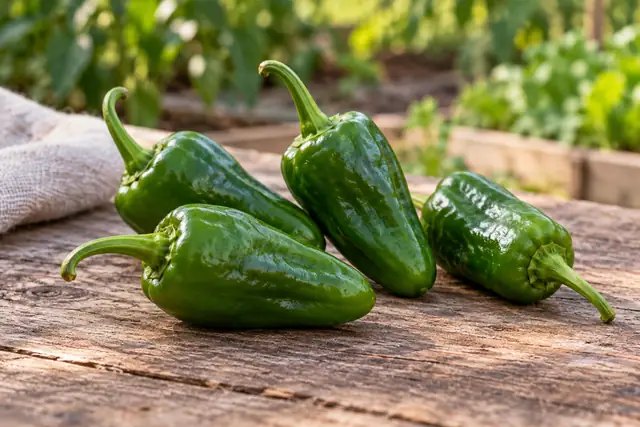
This image was created with AI from described plant characteristics and growing advice. It shows a possible situation and is not a photograph of a verified cultivar.
The Galician tapas chilli is usually picked young and green: a variety for small pan-cooked portions.
Choose Padrón for recognisable tapas and many small, green pickings rather than uniform hot sauce.
When young, this offering is usually mild to sweet, but some green fruit is already hot. Riper chillies can become stronger; surprise is part of Padrón.
Fry young whole chillies in oil and serve with salt. Tell diners that an individual chilli may be hotter.
Provide a warm greenhouse or sheltered pot position. Regular young picking maintains a supply of small table portions.
Harvest young and green for the usual tapas stage. A green appearance does not guarantee mildness, so taste again with each new harvest.
Also listed as: Padron.
Read the source notes →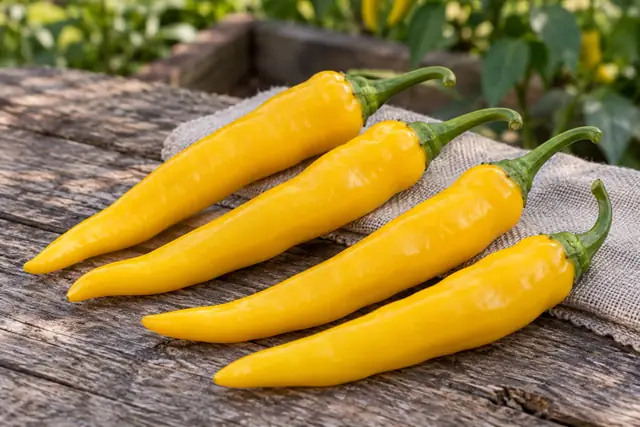
This image was created with AI from described plant characteristics and growing advice. It shows a possible situation and is not a photograph of a verified cultivar.
Straight, yellow chillies approximately 13 cm long on a relatively short crop with early fruit set.
Choose Koh Chang for yellow fruit, early fruit set and a shorter plant than orange Koh Tao.
The producer gives about 6,000 Scoville as a variety indication: clearly hotter than the stated 4,000 for Koh Tao, with variation between harvests.
Slice small yellow rings into a sauce or vegetable dish. Increase the amount gradually, especially when using several varieties together.
Start in warmth and support stems. Use the shorter-growth description as a selection aid, not a fixed height guarantee.
Pick fruits fully coloured yellow for a ripe harvest. Keep straight chillies clear of support ties and snip carefully.
Read the source notes →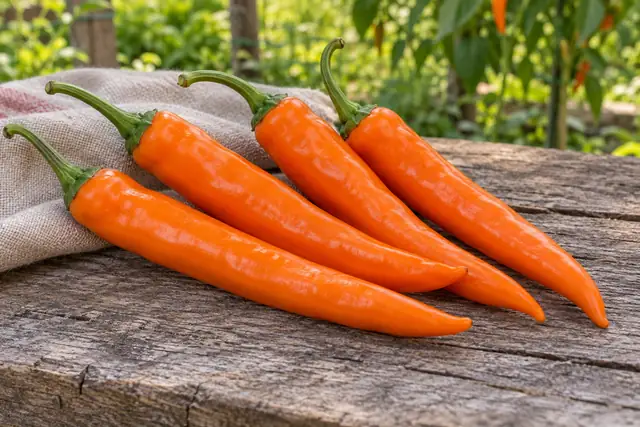
This image was created with AI from described plant characteristics and growing advice. It shows a possible situation and is not a photograph of a verified cultivar.
Straight, orange chillies approximately 14 cm long on a strong, taller crop: a colourful counterpart to Koh Chang.
Choose Koh Tao for orange ripening and a taller, productive crop; choose Koh Chang for yellow and shorter growth.
The producer gives about 4,000 Scoville as an indication. This is a variety comparison, not an exact figure for every chilli from your garden.
Use orange rings in a spicy dish or blend a small amount into sauce. Taste before adding more.
Provide warmth and taller support, as the variety forms taller plants. Leave airflow and picking space between branches.
Harvest fruit that has turned orange at a usable size. The stated length is an indication, not a minimum size for ripe fruit.
Read the source notes →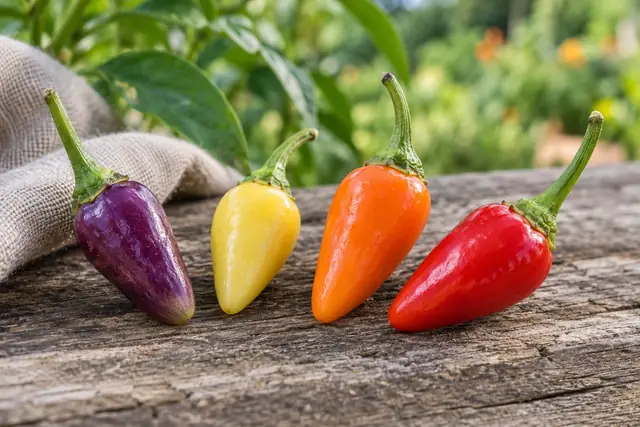
This image was created with AI from described plant characteristics and growing advice. It shows a possible situation and is not a photograph of a verified cultivar.
Small upright chillies about 1–2 cm long change from purple through yellow and orange to red on a bushy plant.
Choose Numex Twilight if a pot of many small, colourful fruits should also give an edible, hot harvest.
This offering is very hot. No separate aroma is described; its main combination is strong heat and colourful ornamental appeal.
Use only small quantities finely chopped in sauce. Wear gloves when cutting and test the amount in the dish, not by eating a whole chilli at once.
Start early in warm conditions, as the source describes late development. Provide a warm position and leave enough space around the bushy crop.
Red is the final colour stage. Leave several stages on the plant for ornament or pick healthy, ripe fruit for a small hot supply.
Read the source notes →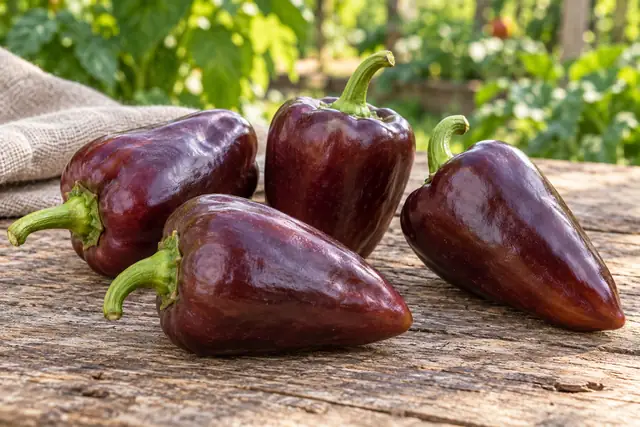
This image was created with AI from described plant characteristics and growing advice. It shows a possible situation and is not a photograph of a verified cultivar.
Purple-brown fruits with thick flesh: a dark chilli for substantial, hot sauces.
Choose Purple for dark ripening colour and fleshy, hot fruits rather than thin chillies for quick drying.
The source describes strong heat and thick flesh. The dark colour does not make this selection mild.
Use a small amount in sauce where fleshy texture is welcome too. Compare first with your usual red chilli.
Start in warmth and provide a sunny greenhouse or pot position. Keep water and feed steady during fruit growth.
Harvest healthy, firm, purple-brown ripe fruits. Final colour depends on variety; do not automatically wait for red.
Read the source notes →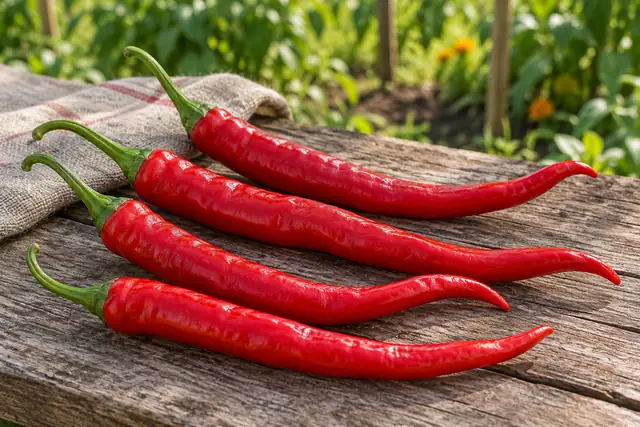
This image was created with AI from described plant characteristics and growing advice. It shows a possible situation and is not a photograph of a verified cultivar.
A cayenne offering with long slender red fruits about 15–20 cm long, intended for pungent seasoning and drying.
Choose this selection for a hot, red cayenne without pretending every cayenne type is one exact variety.
A very hot flavour is described. The type designation does not establish a uniform Scoville value or proven identity with Cayenne Long Slim.
Dry healthy, ripe chillies using a suitable method, or chop a little fresh chilli into a sauce. The slender shape suits a supply of dried chillies.
Provide a warm position and support for a plant that can reach about a metre. Start early enough to allow red ripening.
Pick undamaged, red-ripe fruits. Do not dry wet or damaged chillies; check stores are thoroughly dried.
Read the source notes →From a garden bed to a suitable pot or support: give your plant a place that suits your garden and the care you can provide.
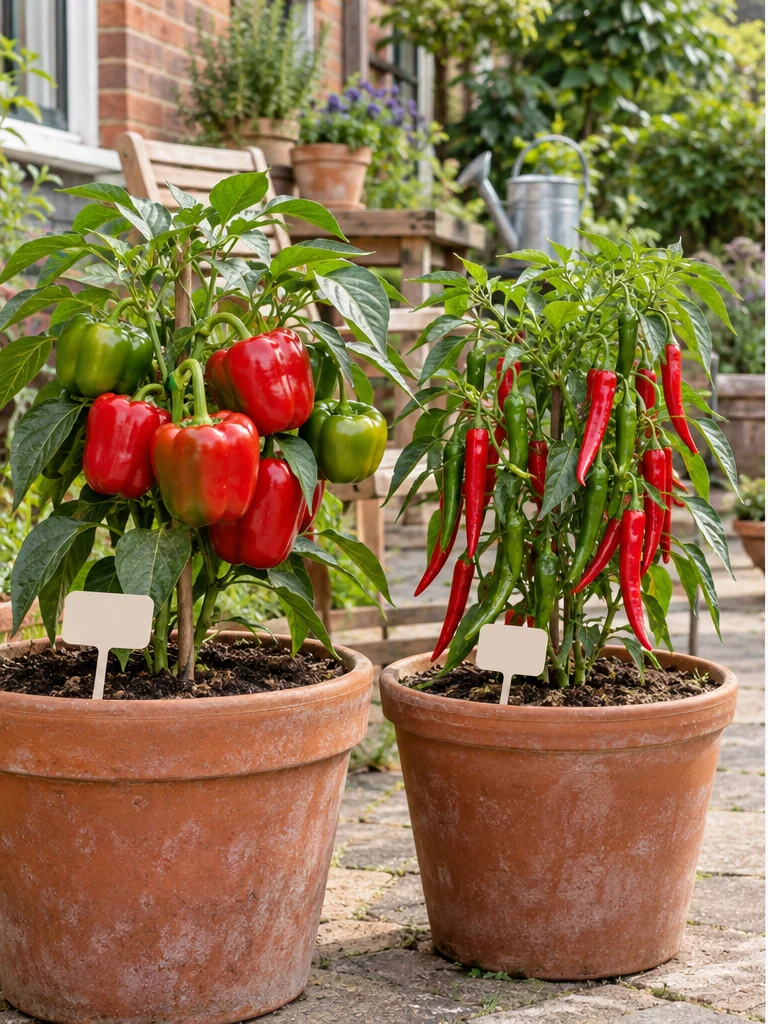
This image was created with AI from described plant characteristics and growing advice. It shows a possible situation and is not a photograph of a verified cultivar.
A sweet and a hot selection side by side make the difference visible.
For a warm, sheltered patio where both plants can receive regular care.
Tick off your supplies →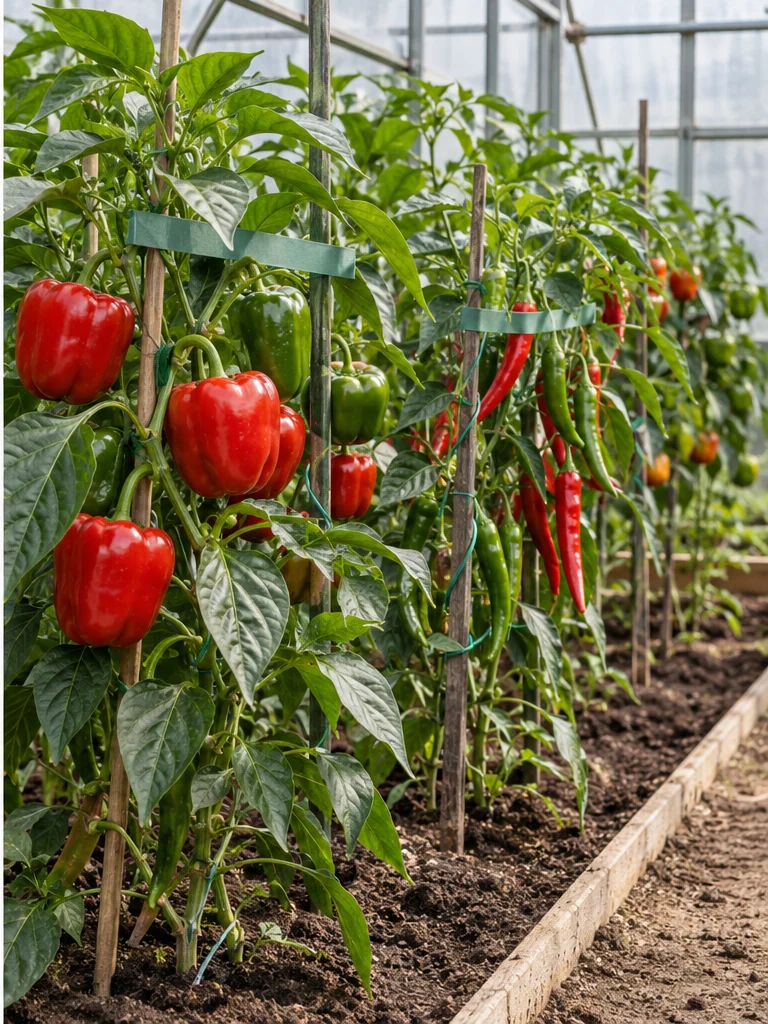
This image was created with AI from described plant characteristics and growing advice. It shows a possible situation and is not a photograph of a verified cultivar.
Under glass, sweet and hot varieties can each have their own space.
For a hobby greenhouse; one schedule must not hide differences between large sweet peppers and small chillies.
Tick off your supplies →See the confirmed differences. Characteristics without supporting evidence are left blank.
16 of 16 varieties
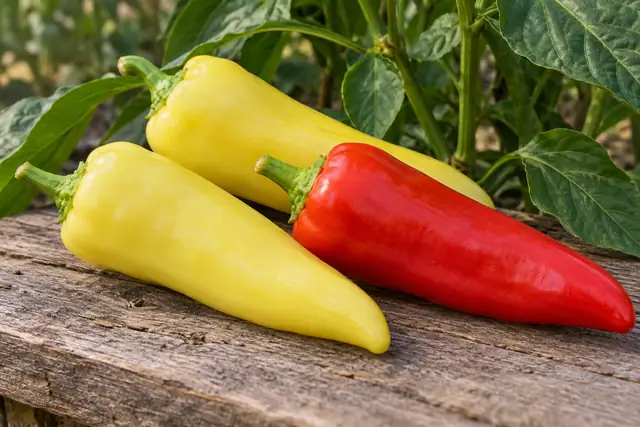
This image was created with AI from described plant characteristics and growing advice. It shows a possible situation and is not a photograph of a verified cultivar.
Explore this variety and use the growing guide to choose a place for your plant.
View variety →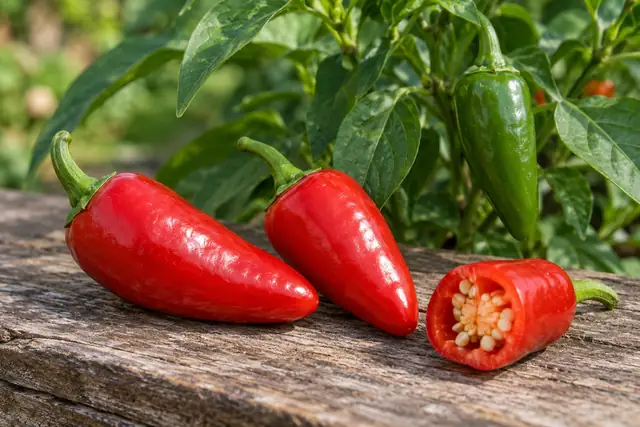
This image was created with AI from described plant characteristics and growing advice. It shows a possible situation and is not a photograph of a verified cultivar.
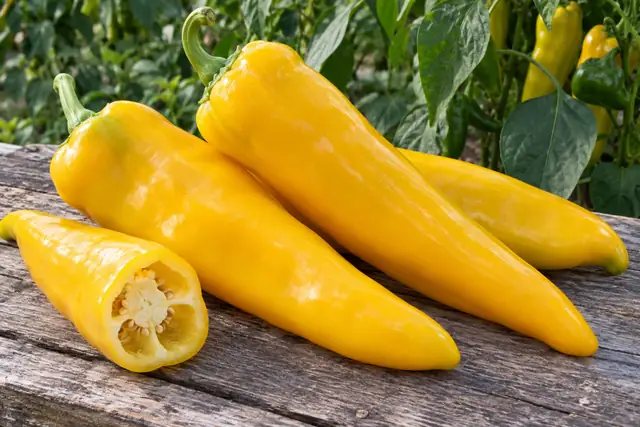
This image was created with AI from described plant characteristics and growing advice. It shows a possible situation and is not a photograph of a verified cultivar.
Explore this variety and use the growing guide to choose a place for your plant.
View variety →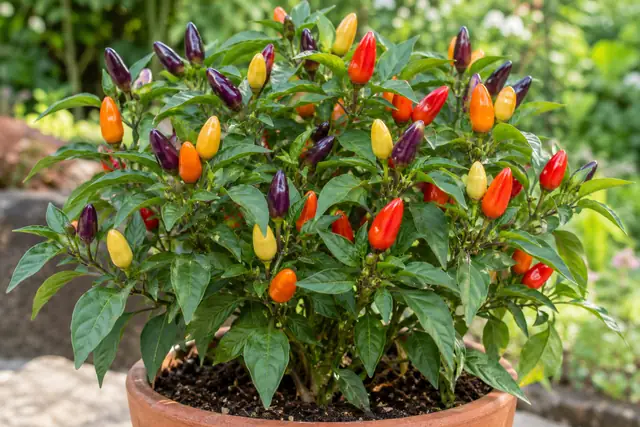
This image was created with AI from described plant characteristics and growing advice. It shows a possible situation and is not a photograph of a verified cultivar.
Explore this variety and use the growing guide to choose a place for your plant.
View variety →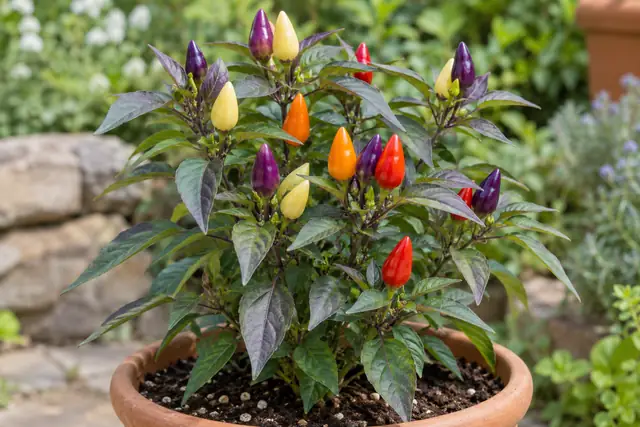
This image was created with AI from described plant characteristics and growing advice. It shows a possible situation and is not a photograph of a verified cultivar.
Explore this variety and use the growing guide to choose a place for your plant.
View variety →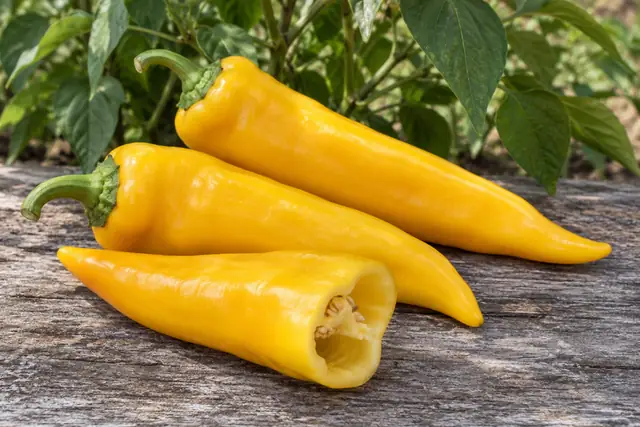
This image was created with AI from described plant characteristics and growing advice. It shows a possible situation and is not a photograph of a verified cultivar.
Explore this variety and use the growing guide to choose a place for your plant.
View variety →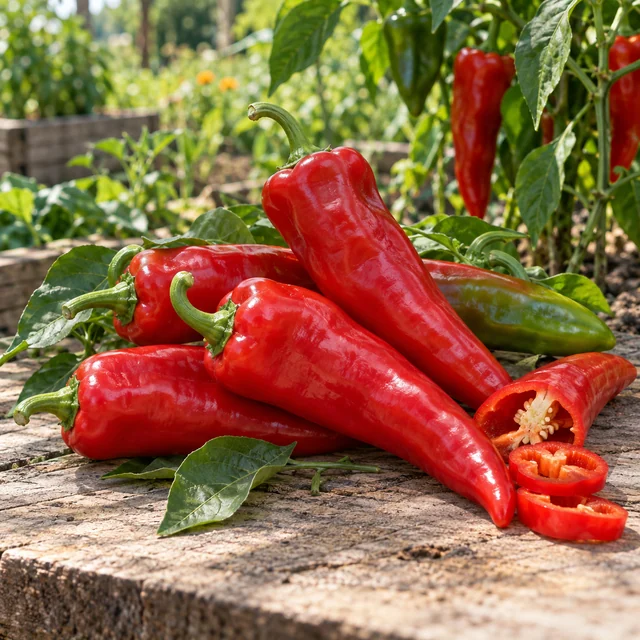
This image was created with AI from described plant characteristics and growing advice. It shows a possible situation and is not a photograph of a verified cultivar.
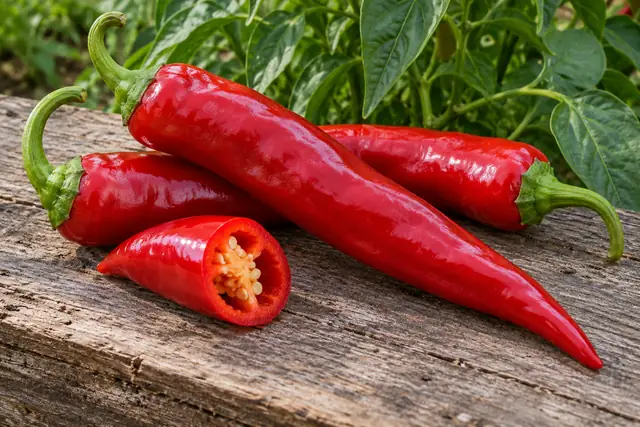
This image was created with AI from described plant characteristics and growing advice. It shows a possible situation and is not a photograph of a verified cultivar.
Explore this variety and use the growing guide to choose a place for your plant.
View variety →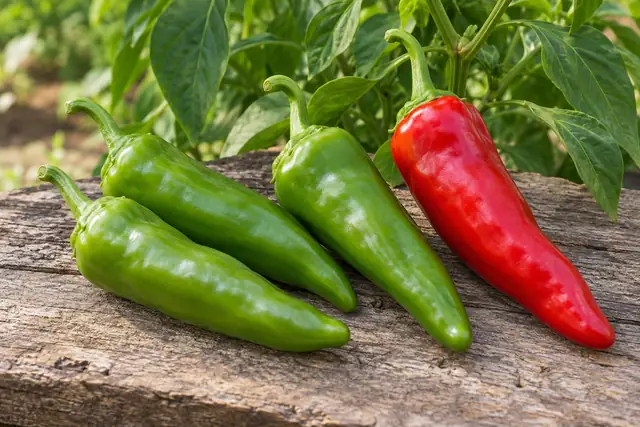
This image was created with AI from described plant characteristics and growing advice. It shows a possible situation and is not a photograph of a verified cultivar.
Explore this variety and use the growing guide to choose a place for your plant.
View variety →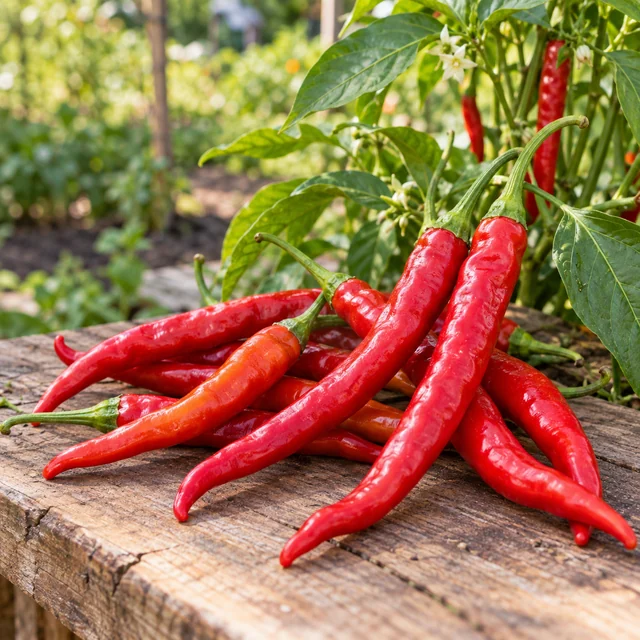
This image was created with AI from described plant characteristics and growing advice. It shows a possible situation and is not a photograph of a verified cultivar.
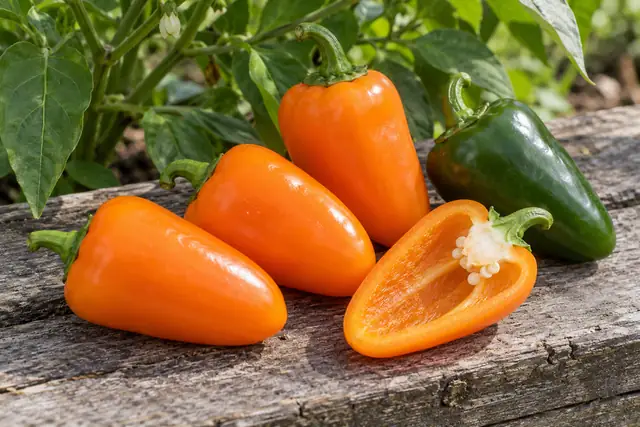
This image was created with AI from described plant characteristics and growing advice. It shows a possible situation and is not a photograph of a verified cultivar.
Explore this variety and use the growing guide to choose a place for your plant.
View variety →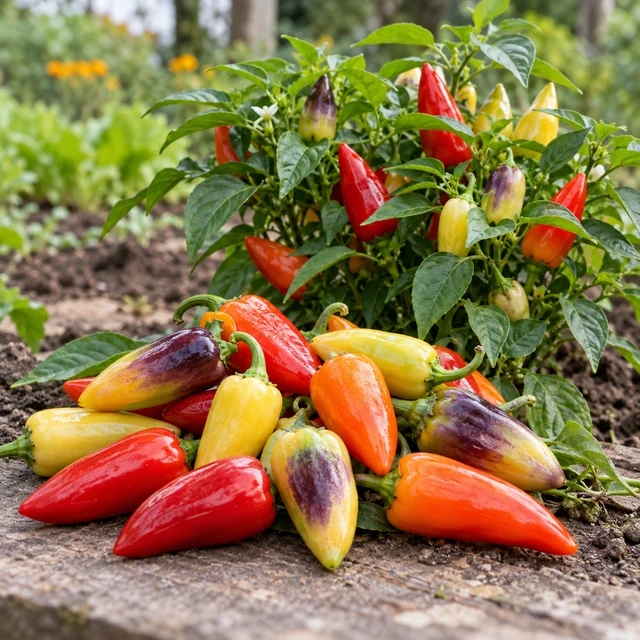
This image was created with AI from described plant characteristics and growing advice. It shows a possible situation and is not a photograph of a verified cultivar.
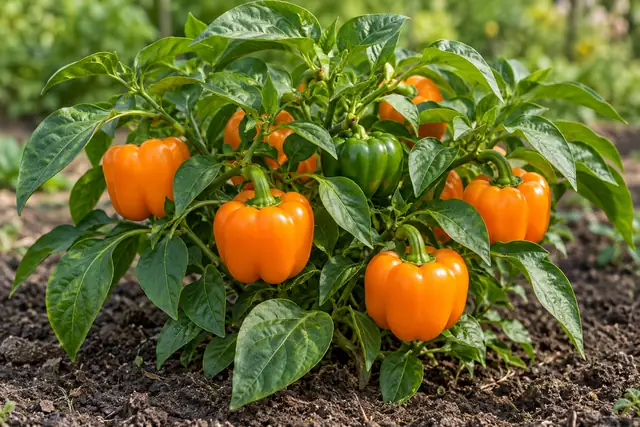
This image was created with AI from described plant characteristics and growing advice. It shows a possible situation and is not a photograph of a verified cultivar.
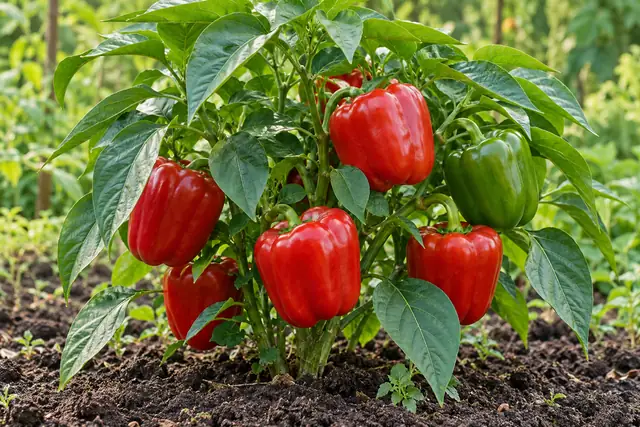
This image was created with AI from described plant characteristics and growing advice. It shows a possible situation and is not a photograph of a verified cultivar.
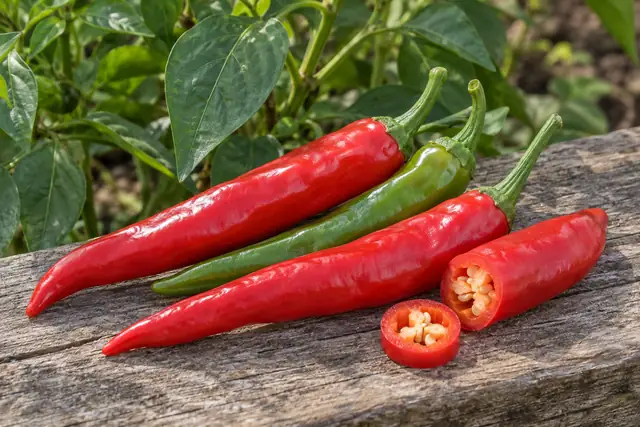
This image was created with AI from described plant characteristics and growing advice. It shows a possible situation and is not a photograph of a verified cultivar.
Explore this variety and use the growing guide to choose a place for your plant.
View variety →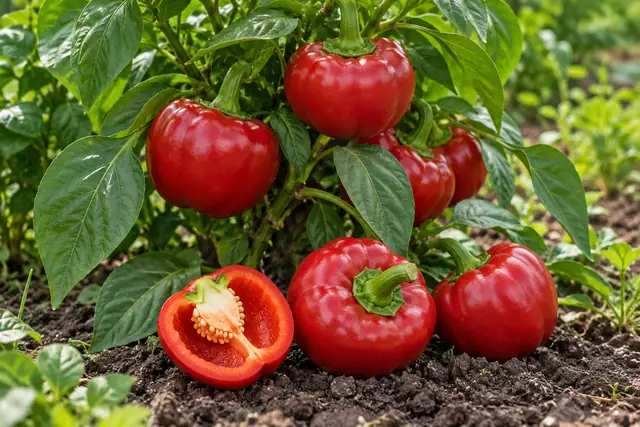
This image was created with AI from described plant characteristics and growing advice. It shows a possible situation and is not a photograph of a verified cultivar.
Choose two to four varieties to compare their source data side by side.
This article concerns Capsicum annuum, including sweet and hot fruit forms. Not every chilli belongs to this species. Sweet peppers and chillies share much care but may differ in ripening, height and fruit. Check species and variety before transferring traits.
Do you want raw sweet fruit, small hot chillies or processing crops? This guides plant numbers and ripening choices. Large fruit may need more warmth than small. Green versus fully coloured harvesting are different choices; suitability depends on variety and use.
Sow early enough for long raising only if young plants can stay light and warm. Check moisture especially with heat mats. Separate varieties recognisably after germination. Healthy purchased plants are practical if windowsills lack enough light for full raising.
Greenhouses shelter and often extend warmth. Sunny patios may work with suitable varieties, but cool nights remain limiting. Harden off and plant frost-free at existing depth. Minnesota's calendar is climate-specific; finish checking against warmth needs and local weather.
Many small chillies stay manageable; heavy sweet peppers or tall types may need support. Use stakes or small frames and loose soft ties, checking thickening stems. Topping is no universal step and can delay harvests. Prune only with purpose and appropriate information.
Small pots, large pepper plants and greenhouse beds dry differently. Feel each root zone and water directly. Avoid prolonged drought and constant saturation. Extra nitrogen may give leaves without proportionate fruit. Base feeding on soil or substrate and product instructions.
Falling flowers call for assessing heat, cold and moisture. Sticky or curled leaves prompt aphid checks. Sunken fruit tips may reflect disrupted moisture uptake; pale exposed patches sun damage. Record symptoms per variety and verify causes before changing schedules.
Cut fruit with short stalks to avoid breaking branches. Separate hot and sweet harvests and handle hands and tools carefully after hot fruit. Record colour, quantity and kitchen preferences to make next choices more concrete than generic yield promises.
Tick what you already have. The extras depend on how you grow.
0 of 6 ticked off
Your ticks are saved in this browser.
SeedSteps editorial team · updated on 11 October 2026. The AI images illustrate species and practical growing situations; they do not prove an exact cultivar, observations from your own garden or yield.
Britse gewasadviezen worden gecombineerd met Nederlandse en Vlaamse informatie waar beschikbaar. Amerikaanse Extension-bronnen ondersteunen plantprincipes en herkenning; hun kalenderdata, lokale plaagdruk, bestrijdingsmiddelen en mestdoseringen worden niet rechtstreeks op Nederland of Vlaanderen toegepast. Vorst, bodemwarmte, standplaats en expliciete rasinformatie blijven de lokale controle. Commerciële bronnen onderbouwen uitsluitend benoemde ras- en plantkenmerken; zij zijn geen affiliate-aanbeveling.
Supporting evidence by chapter: Use the group to make your choice: Royal Horticultural Society, Royal Horticultural Society, University of Minnesota Extension. Decide what you want to harvest first: Royal Horticultural Society, Royal Horticultural Society, University of Minnesota Extension. Both need a light, warm start: Royal Horticultural Society, Royal Horticultural Society, University of Minnesota Extension. Compare greenhouse and outdoor growing as separate projects: Royal Horticultural Society, Royal Horticultural Society, University of Minnesota Extension. Let plant shape determine support: Royal Horticultural Society, Royal Horticultural Society, University of Minnesota Extension. One growing position does not mean one water requirement: Royal Horticultural Society, Royal Horticultural Society, University of Minnesota Extension. Read flowers and fruiting positions carefully: Royal Horticultural Society, Royal Horticultural Society, University of Minnesota Extension. Keep hot and sweet harvests identifiable: Royal Horticultural Society, Royal Horticultural Society, University of Minnesota Extension.
