
Arwen: discover its flavour and how to grow it
Rode snackpaprika's van circa 7–8 cm aan sterke vrij korte planten, ontwikkeld voor professionele biologische teelt. Kies Arwen voor rode snacks; vergelijk met de geel rijpende Radja als kleur en oogstmoment je interesseren.
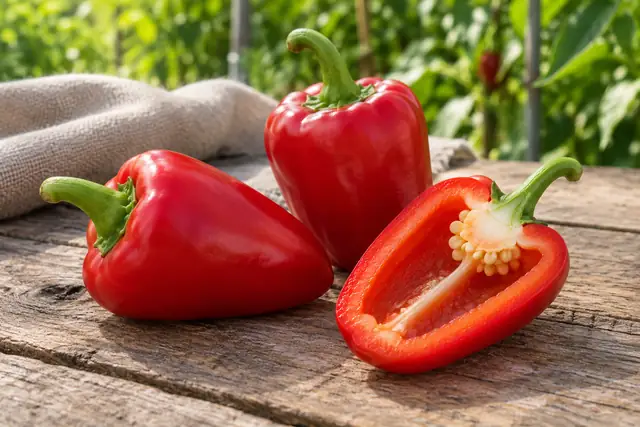
This image was created with AI from described plant characteristics and growing advice. It shows a possible situation and is not a photograph of a verified cultivar.
- Groep
- Capsicum annuum; zoete en hete typen
- Basis
- Warme start, veel licht en vorstvrije teelt
- Keuze
- Vruchtmaat, seizoen en keuken bepalen het ras
This growing advice helps you choose. Your variety, growth stage, weather and conditions in your space determine the actual timing.
Sowing under cover and raising seedlings
Warm voorzaaien · Chillies & sweet peppers
Half februari–begin maart voor kasteeltZaai warm binnen voor en reserveer voldoende lichte opkweekruimte.
- Germination and temperature
- Kiemen: circa 18–21 °C. Na opkomst: licht bij ongeveer 16–18 °C.
- After emergence
- Zet zaailingen direct na opkomst licht. Een donkere zolder vraagt geschikte groeiverlichting; warmte alleen is onvoldoende. Ventileer en houd de grond vochtig, zonder haar te verzadigen.
- Pricking out and potting on
- Verspeen zodra de eerste echte bladeren hanteerbaar zijn. Pak een zaailing aan een blad vast. Pot verder op als de wortels de kluit vullen.
- Hardening off and planting out
- Laat binnen opgekweekte planten geleidelijk aan zon, wind en buitentemperatuur wennen; zet ze bij koude nachten weer beschut. Koude kas doorgaans vanaf half mei; buiten vaak eind mei–juni, bij stabiel warme nachten (minstens circa 12 °C). Een verwarmde kas kan eerder als de temperatuur werkelijk op peil blijft.
Paprika vraagt een lang seizoen. Zeer vroeg zaaien zonder genoeg licht levert geen voorsprong op. Voor buitenteelt kan de zaaitijd van een geschikt vroeg ras later liggen; volg het zaadadvies.
Sources and use
RHS · paprika ↗Britse teeltrichtlijn voor een gematigd klimaat; de genoemde perioden zijn richtlijnen voor Nederland en Vlaanderen.
Guideline periods for the Netherlands and Flanders. Check the variety, available light, soil and measured temperatures. Greenhouse heating does not guarantee enough winter light.
What makes Arwen different?
- Vruchtvorm
- snack, circa 7–8 cm
- Groeiwijze
- vrij kort
- Hoofdkleur
- rood
The source context and any limitations are in the background information at the bottom.
Compare with another varietyFlavour and kitchen
De bron noemt een goede smaak, zonder een uitgesproken eigen aroma. De algemene zoete snackpaprikasmaak past bij rauw gebruik.
This flavour description applies to the crop; a separate taste test for this variety is not supported by evidence.Use red mini peppers on a snack platter or cut small strips for lunch. Their size suits eating straight after harvest.
Why choose it? Kies Arwen voor rode snacks; vergelijk met de geel rijpende Radja als kleur en oogstmoment je interesseren.
Zo kun je peper & paprika kweken
The options below belong to the plant. From these, choose the method that suits your variety's growth habit.
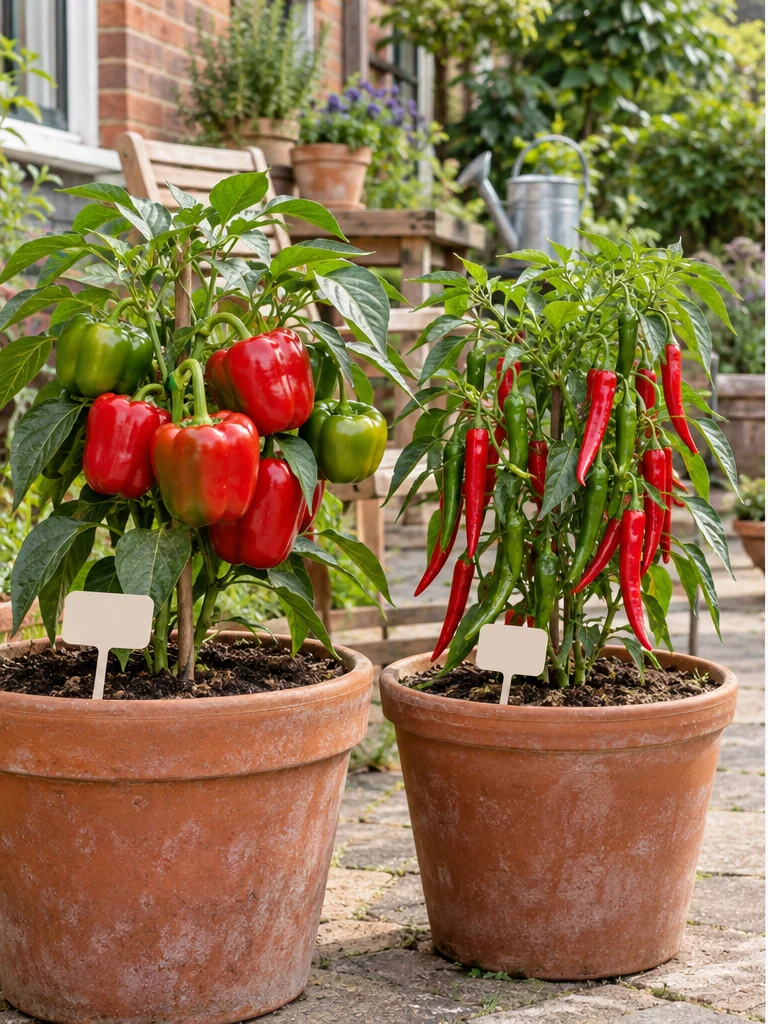
This image was created with AI from described plant characteristics and growing advice. It shows a possible situation and is not a photograph of a verified cultivar.
Twee gelabelde potten op het terras
Een zoete en een hete soortkeuze naast elkaar maken het verschil zichtbaar.
- Kies twee rassen met een passend groeiseizoen en label iedere pot duidelijk.
- Gebruik afzonderlijke ruime potten met afvoer en laat planten aan buitenlicht wennen.
- Oogst volgens ras en toepassing en noteer smaak, maat en plukmoment.
Voor een warm beschut terras waar je beide planten geregeld kunt verzorgen.
Tick off your supplies →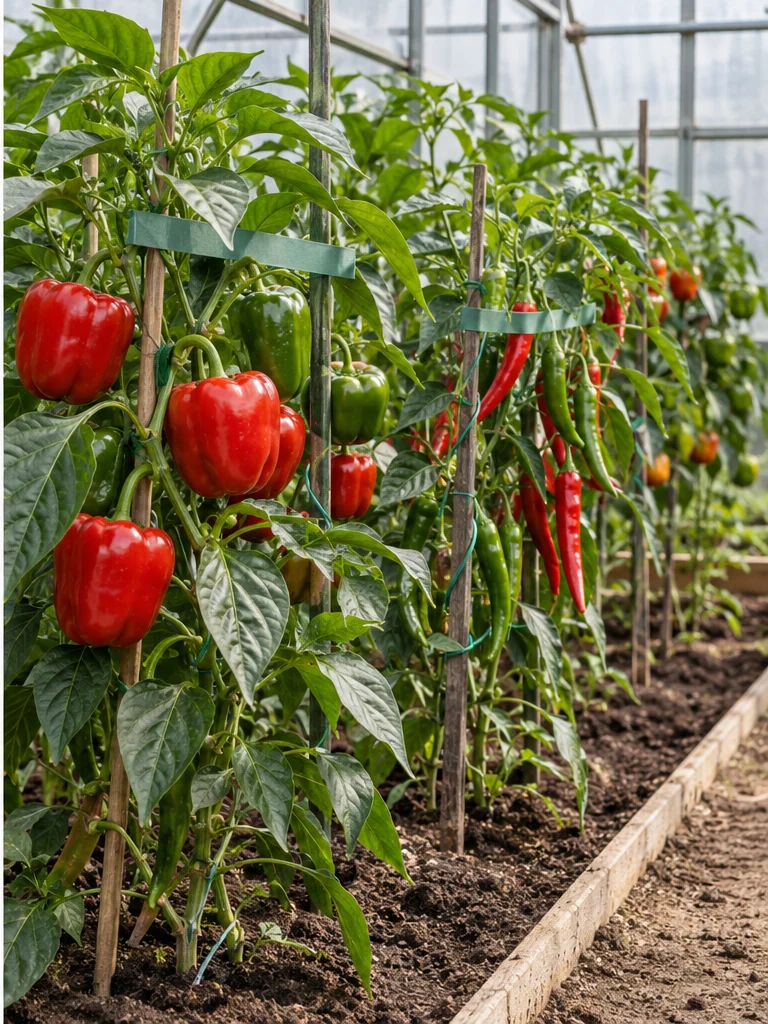
This image was created with AI from described plant characteristics and growing advice. It shows a possible situation and is not a photograph of a verified cultivar.
Een gemengde kasrij met zachte steun
Onder glas kun je zoete en hete rassen elk hun eigen ruimte geven.
- Maak een plantplan met rasnamen en verwachte plantgrootte.
- Plant op dezelfde diepte en ondersteun dragende takken met losse zachte banden.
- Ventileer bij warmte en controleer iedere plant apart op waterbehoefte.
Voor een hobbykas; één schema mag verschillen tussen grote paprika en kleine peper niet verbergen.
Tick off your supplies →Why grow Arwen?
Rode snackpaprika's van circa 7–8 cm aan sterke vrij korte planten, ontwikkeld voor professionele biologische teelt.
Kies Arwen voor rode snacks; vergelijk met de geel rijpende Radja als kleur en oogstmoment je interesseren.
How this choice tastes
De bron noemt een goede smaak, zonder een uitgesproken eigen aroma. De algemene zoete snackpaprikasmaak past bij rauw gebruik.
From harvest to kitchen
Use red mini peppers on a snack platter or cut small strips for lunch. Their size suits eating straight after harvest.
What needs attention when growing
Provide warm shelter. According to the supplier, ripe outdoor harvests come later in the season than greenhouse harvests.
Oogst rood afgekleurde vruchten, vaak rond 30–40 gram. Gewicht is een richtlijn, geen reden om een rijpe kleine vrucht te laten hangen.
Choose by flavour, shape and use
Jubilandska: A relatively low-growing pepper with elongated fruits that turn from green to red; a manageable greenhouse cultivar. Cut red strips for a vegetable dish or use firm halved fruits in the oven. Combine green and red only if you want that variation in flavour.
The flavour is described as sweet. Red-ripe fruits are the choice for a sweet pepper dish; green represents a different stage of ripening.
Chinese Giant Sweet: Large, block-shaped peppers with plenty of flesh: an old cultivar for generous portions and a substantial place in the greenhouse. Stuff large halves with rice or vegetables, or cut broad strips for grilling. One large fruit provides several portions.
Mild and sweet is the described profile. The cultivar focuses on plenty of flesh rather than a distinctly hot flavour.
Flynn: Small snack peppers on a fairly compact plant, suitable for a pot on a warm balcony or terrace. Eat the young, ripe harvest fresh or cut small strips for a lunchbox. This keeps the juicy texture recognisable.
The source describes sweet, juicy fruits. This profile suits raw snacking, without implying that every snack pepper is the same cultivar.
Corno di Toro geel: Elongated Italian peppers that ripen yellow: a horn-shaped alternative to a square block pepper. Halve long fruits for grilling or cut yellow strips for a salad. An opened half is also suitable for stuffing.
The described flavour is sweet and fragrant. Ripe yellow fruit gives this cultivar its own kitchen profile and colour.
Colour tells part of the story
A green sweet pepper is often a fruit picked earlier, while further ripening brings its final colour and flavour. Colour also depends on the cultivar: red is not the end point for every sweet pepper. Look at the cultivar choice first, then at when you want to pick.
Start with the warmest spot you can offer
Sweet peppers need warmth throughout growth. Dutch seed producer De Bolster recommends growing under glass or a polythene cover. Outdoors, a warm, sheltered spot may help, but a cool season remains a limitation. Choose that position before sowing, so raising the young plants fits the space available later.
A seedling needs time as well as light
Sweet peppers need a long period of raising under cover. The American university source starts well before the frost-free planting-out date. This is a reason to plan ahead, not a universal Dutch sowing date. Give young plants enough light and warmth. Consider whether you can keep caring for them properly indoors until their final growing position is suitable.
Plant at the same depth and let the roots grow
Let young plants acclimatise gradually before moving them outdoors. Plant sweet peppers at the same depth as in their growing-on pots. Choose soil that retains moisture while also draining excess water. The rootball needs a good start; a warm afternoon alone does not tell you how cold the following night will be.
A potted plant develops load-bearing branches too
A large pot makes growing sweet peppers possible on a terrace or balcony. Provide drainage and add support when the plant needs it. Load-bearing branches may break under the weight of fruit. Tie in with soft material and leave room for growth. Pinching out the top is not routinely necessary and may delay fruiting: choose that intervention deliberately.
Follow the flower first, then the small fruit
Not every flower becomes a fruit. Irregular moisture supply can weaken flowers and young fruits. Water the root zone and look beyond a wet surface. When a flower is lost, investigate the conditions around the plant before deciding that the cultivar does not work in your garden.
Pick green or leave on the plant to colour?
A fully grown sweet pepper can be harvested green or left on the plant longer to change colour. That choice affects its use in the kitchen and the wait for the next harvest. Do not expect harvested green peppers to ripen in the same way as tomatoes; let the desired ripe colour develop on the plant.
The harvest finds its purpose in the kitchen
Sweet peppers can be used raw in a salad, fried or roasted. Choose your harvesting stage with that dish in mind too. Compare fruits of the same cultivar at different stages of ripeness. Keep the cultivar name and tasting note in My garden: this creates an experience specific to your season.
Support a branch before it breaks
Place a stake firmly beside the plant without pushing it through the rootball. Use a wide, soft tie and make a loose connection to the load-bearing branch. Check that the material does not cut into the stem. As fruits become heavier, a second support point may be needed; keep considering the whole plant's shape.
Check fruit patches and dropping flowers
A dry, sunken patch at the bottom of a fruit may relate to blossom-end rot and irregular moisture uptake. A pale, scorched patch on an exposed side may result from strong sun. Check watering, roots and leaf cover before feeding more. Flowers can drop in heat or cold; keep the greenhouse ventilated and conditions around the roots steady.
What you need
Tick what you already have. The extras depend on how you grow.
0 of 6 ticked off
Your ticks are saved in this browser.
Discover and grow more
More background, sources and image information
SeedSteps editorial team · updated on 11 October 2026. The AI images illustrate species and practical growing situations; they do not prove an exact cultivar, observations from your own garden or yield.
Britse gewasadviezen worden gecombineerd met Nederlandse en Vlaamse informatie waar beschikbaar. Amerikaanse Extension-bronnen ondersteunen plantprincipes en herkenning; hun kalenderdata, lokale plaagdruk, bestrijdingsmiddelen en mestdoseringen worden niet rechtstreeks op Nederland of Vlaanderen toegepast. Vorst, bodemwarmte, standplaats en expliciete rasinformatie blijven de lokale controle. Commerciële bronnen onderbouwen uitsluitend benoemde ras- en plantkenmerken; zij zijn geen affiliate-aanbeveling.
- World Checklist of Vascular Plants — 4 juni 2026Royal Botanic Gardens, Kew · accessed 2026-10-07
- Common catalogue of varieties of vegetable species — 27 januari 2023Europese Commissie · accessed 2026-10-07
- Paprika Arwen — rasbeschrijvingFeggies · accessed 2026-10-11
- Koh Chang en Koh Tao — producentvergelijkingDe Bolster · accessed 2026-10-11
- Cayorange — botanische soort en vroege oogstCulinaris · accessed 2026-10-11
- Madame Paraplü — producentbeschrijving en rijpingskleurenCulinaris · accessed 2026-10-11
- Paprika Ampuis — rasbeschrijvingFeggies · accessed 2026-10-11
- Paprika Chinese Giant Sweet — rasbeschrijvingFeggies · accessed 2026-10-11
- Paprika Corno di Toro geel — rasbeschrijvingFeggies · accessed 2026-10-11
- Paprika Flynn — rasbeschrijvingFeggies · accessed 2026-10-11
- Paprika Jubilandska — rasbeschrijvingFeggies · accessed 2026-10-11
- Paprika Kyra — rasbeschrijvingFeggies · accessed 2026-10-11
- Paprika Long des Landes — rasbeschrijvingFeggies · accessed 2026-10-11
- Paprika Madame Paraplü — rasbeschrijvingFeggies · accessed 2026-10-11
- Paprika Mandarine — rasbeschrijvingFeggies · accessed 2026-10-11
- Paprika Marconi Rosso — rasbeschrijvingFeggies · accessed 2026-10-11
- Paprika Mini Bell mix — rasbeschrijvingFeggies · accessed 2026-10-11
- Paprika Mini Bell rood — rasbeschrijvingFeggies · accessed 2026-10-11
- Paprika Pantos — rasbeschrijvingFeggies · accessed 2026-10-11
- Paprika Piquillo — rasbeschrijvingFeggies · accessed 2026-10-11
- Paprika Radja — rasbeschrijvingFeggies · accessed 2026-10-11
- Paprika Red Augsburger — rasbeschrijvingFeggies · accessed 2026-10-11
- Paprika Rosso — rasbeschrijvingFeggies · accessed 2026-10-11
- Paprika Sweet Banana — rasbeschrijvingFeggies · accessed 2026-10-11
- Paprika Sweet Cherry — rasbeschrijvingFeggies · accessed 2026-10-11
- Paprika Sweet Chocolate — rasbeschrijvingFeggies · accessed 2026-10-11
- Peper Black Hungarian — rasbeschrijvingFeggies · accessed 2026-10-11
- Peper Cayenne Long Slim — rasbeschrijvingFeggies · accessed 2026-10-11
- Peper Cayorange — rasbeschrijvingFeggies · accessed 2026-10-11
- Peper Jalapeño — rasbeschrijvingFeggies · accessed 2026-10-11
- Peper Koh Chang — rasbeschrijvingFeggies · accessed 2026-10-11
- Peper Koh Tao — rasbeschrijvingFeggies · accessed 2026-10-11
- Peper Late Ancho Gigantea — rasbeschrijvingFeggies · accessed 2026-10-11
- Peper Lombardo — rasbeschrijvingFeggies · accessed 2026-10-11
- Peper Numex Twilight — rasbeschrijvingFeggies · accessed 2026-10-11
- Peper Padrón — rasbeschrijvingFeggies · accessed 2026-10-11
- Peper Pepperoncini — rasbeschrijvingFeggies · accessed 2026-10-11
- Peper Purple — rasbeschrijvingFeggies · accessed 2026-10-11
- Peper Spaanse peper uit Cayenne — rasbeschrijvingFeggies · accessed 2026-10-11
- Peper Variegata — rasbeschrijvingFeggies · accessed 2026-10-11
- Peper Westlandse Lange Rode — rasbeschrijvingFeggies · accessed 2026-10-11
- Cayenne Long Slim — botanische soortFerry-Morse · accessed 2026-10-11
- Ancho Gigantea — botanische soort en rijpheidKokopelli · accessed 2026-10-11
- Black Hungarian — botanische soortKokopelli · accessed 2026-10-11
- Padrón — botanische soort en variabele scherpteKokopelli · accessed 2026-10-11
- Pepperoncini — botanische soortKokopelli · accessed 2026-10-11
- Trifetti / Variegato — botanische determinatie van eigen teeltPepperfriends · accessed 2026-10-11
- Jalapeño — botanische soortSemailles · accessed 2026-10-11
- Paprika kweken en zaaien — De BolsterDe Bolster · accessed 2026-10-08
- Paprikarassen kiezen — RHSRoyal Horticultural Society · accessed 2026-10-08
- Growing Peppers in a Home GardenUniversity of Maryland Extension · accessed 2026-10-08
- Growing peppers in home gardensUniversity of Minnesota Extension · accessed 2026-10-08
- Paprika — VeltVelt · accessed 2026-10-08
- Peperrassen kiezen — RHSRoyal Horticultural Society · accessed 2026-10-08
Supporting evidence by chapter: Why grow Arwen?: Feggies. How this choice tastes: Feggies. From harvest to kitchen: Feggies. What needs attention when growing: Feggies. Choose by flavour, shape and use: Feggies, Feggies, Feggies, Feggies. Colour tells part of the story: Velt. Start with the warmest spot you can offer: De Bolster. A seedling needs time as well as light: University of Maryland Extension. Plant at the same depth and let the roots grow: Royal Horticultural Society. A potted plant develops load-bearing branches too: Royal Horticultural Society. Follow the flower first, then the small fruit: University of Minnesota Extension. Pick green or leave on the plant to colour?: University of Maryland Extension. The harvest finds its purpose in the kitchen: Velt. Support a branch before it breaks: Royal Horticultural Society, University of Minnesota Extension, De Bolster. Check fruit patches and dropping flowers: Royal Horticultural Society, University of Minnesota Extension, De Bolster.
Vruchtvorm: snack, circa 7–8 cm Beschrijving van de genoemde rasbron; geen eigen tuinwaarneming. Feggies
Groeiwijze: vrij kort Beschrijving van de genoemde rasbron; geen eigen tuinwaarneming. Feggies
Hoofdkleur: rood Beschrijving van de genoemde rasbron; geen eigen tuinwaarneming. Feggies